Both scams happened to me yesterday.
Scam One:
You own property. You pay taxes on it. They send you a bill. Pay the first installment December 1, the second installment April 1. Only they don’t send you a reminder until June when they’ve conveniently added in a 10% “penalty” and other costs. You cannot appeal the penalty. You’re screwed. Best approach: Always pay all real estate bills in full.
Scam two:
The phone rings. A distraught woman is calling. She’s in the Clark County Detention Center in Las Vegas being held because she crashed into a Mercedes S63, hurt an 8-year kid in the car and tested DWI. Her lawyer told me I was the “benefactor” who would send the needed $10,000 to spring her. I need to go to an Apple Store and buy 20 iTunes $500 Gift cards, and call him on his number — 888-539-6919 — when I have the cards in my hot little hand. The woman never identified herself. I did. I thought it was my dear friend Angie. So I said “Angie.” And she answered “Yes.” Her lawyer was “Frank Miller.” The legal mumbo jumbo of Angie’s charges and the steps necessary to get her out were excruciatingly detailed — impressive even to my skeptical brain.
Before I trotted off to the Apple store, I had an epiphany: Maybe I should check some? I called the Clark County Detention Center. No Angie. I called Angie at her work in Brooklyn. She answered. She hadn’t been in Las Vegas in years, but would like to go for a holiday. (Maybe a better use of my $10,000?)
I called the FBI. They weren’t interested since I hadn’t lost any money. I ws told to call the FTC (Federal Trade Commission) — 877-382-4357. They were interested and gave me a reference number. They weren’t in India, a relief.
Are we moving into a recession? Most economists think NO. Most stock market traders think the lousy employment numbers for April are good for the stockmarket, since the numbers will delay a rate hike by Feds.
Economics is called the dismal science. It is the only “science” in which it is impossible to conduct a controlled experiment. The standing joke is that an economist is someone who doesn’t have the personality to become an accountant. There is also a theory that God invented economists to make weather forecasters and astrologers look good. Economists are also superb at predicting the past. But the future? People say “If you laid every economist end to end, it would not be a bad thing.” Another variation, “If all the economists in the world were laid end to end, they still wouldn’t reach a conclusion.
The good news that economists were able to predict 12 out of the last five recessions. The most famous economist John Maynard Keynes made and lost a fortune in stocks. He was nearly wiped on in the Wall Street Crash of 1929, but he recouped and died with a net worth equivalent to $20 million today. He could have died richer but his personal ethic made him reluctant to sell on a falling market, in cases where he saw such behavior as likely to deepen a slump. Go figure.
All this is my lead-up to a piece by famous economist, Paul Krugman who wrote about Friday’s disappointing employment report in yesterday’s New York Times:
A Pause That Distresses
Friday’s employment report was a major disappointment: only 38,000 jobs added, a big step down from the more than 200,000 a month average since January 2013. Special factors, notably the Verizon strike, explain part of the bad news, and in any case job growth is a noisy series, so you shouldn’t make too much of one month’s data. Still, all the evidence points to slowing growth. It’s not a recession, at least not yet, but it is definitely a pause in the economy’s progress.
Should this pause worry you? Yes. Because if it does turn into a recession, or even if it goes on for a long time, it’s very hard to envision an effective policy response.
First things first: Why is the economy slowing? The usual suspects wasted no time blaming President Obama. But you need to remember that these same people have been warning of imminent disaster ever since Mr. Obama was elected, and have been wrong every step of the way. They predicted soaring interest rates and soaring inflation; neither happened. They declared that the Affordable Care Act would be a huge job-killer; the years after the act went into full effect were marked by the best private-sector job creation since the 1990s.
And despite this disappointing report, we should remember that private job growth under Mr. Obama has vastly exceeded George W. Bush’s record, even if you leave out the economic collapse of 2008.
So what is causing the economy to slow? My guess is that the biggest factor is the recent sharp rise in the dollar, which has made U.S. goods less competitive on world markets. The dollar’s rise, in turn, largely reflected misguided talk by the Federal Reserve about the need to raise interest rates.
In a way, however, it hardly matters why the economy is losing steam. After all, stuff always happens. America has been experiencing major economic downturns at irregular intervals at least since the 1870s, for a variety of reasons. Whatever the cause of a downturn, the economy can recover quickly if policy makers can and do take useful action. For example, both the 1974-5 recession and the 1981-2 recession were followed by rapid, “V-shaped” recoveries, because the Fed drastically loosened monetary policy and slashed interest rates.
But that won’t – in fact, can’t – happen this time. Short-term interest rates, which the Fed more or less controls, are still very low despite the small rate hike last December. We now know that it’s possible for rates to go slightly below zero, but there still isn’t much room for a rate cut.
That said, there are other policies that could easily reverse an economic downturn. And if Hillary Clinton wins the election, the U.S. government will understand perfectly well what the options are. (The likely response of a Trump administration doesn’t bear thinking about. Maybe a series of insult Twitter posts aimed at China and Mexico?) The problem is politics.
For the simplest, most effective answer to a downturn would be fiscal stimulus – preferably government spending on much-needed infrastructure, but maybe also temporary tax cuts for lower- and middle-income households, who would spend the money. Infrastructure spending makes especially good sense given the federal government’s incredibly low borrowing costs: The interest rate on inflation-protected bonds is barely above zero.
But unless the coming election delivers Democratic control of the House, which is unlikely, Republicans would almost surely block anything along those lines. Partly, this would reflect ideology: although right-wing economic predictions have been utterly wrong, there’s little indication that anyone in that camp has learned from the experience. It would also reflect an unwillingness to do anything that might help a Democrat in the White House. Remember, every Republican in the House voted against a stimulus even during the darkest days of the slump, when Mr. Obama was at the peak of his popularity.
If not fiscal stimulus, then what? For much of the past six years the Fed, unable to cut interest rates further, has tried to boost the economy through large-scale purchases of things like long-term government debt and mortgage-backed securities. But it’s unclear how much difference that made – and meanwhile, this policy faced constant attacks and vilification from the right, with claims that it was debasing the dollar and/or illegitimately bailing out a fiscally irresponsible president. We can guess that the Fed will be very reluctant to resume the program, and face accusations that it’s in the pocket of “corrupt Hillary.”
So the evidence of a U.S. slowdown should worry you. I don’t see anything like the 2008 crisis on the horizon (he says with fingers crossed behind his back), but even a smaller negative shock could turn into very bad news, given our political gridlock.
30 thoughtful Father’s Day gifts under $50, from Business Insider. Click here. There’s an Amazon Fire Table for $49.99 on which you can read books and surf the Internet. Click here. And there’ s my favorite for $39.99:
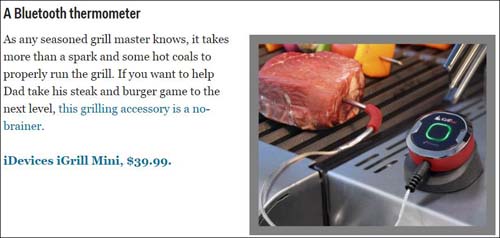
Click here. I also like one:
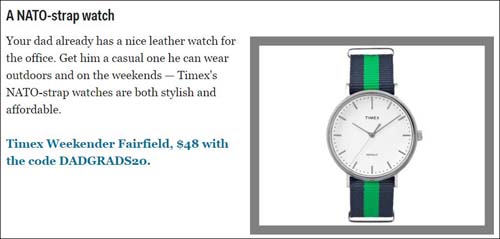
This watch also has Indiglo night light, which only Timex has. Click here. Cheaper than an Apple Watch. And tells the time without shaking it. Amazing technology.
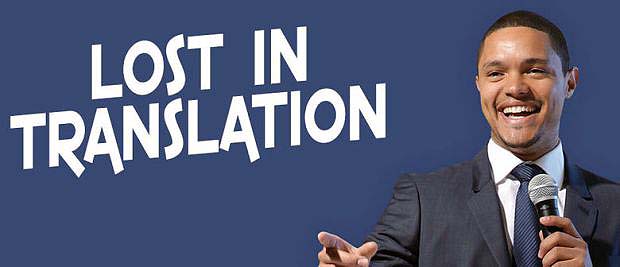
One hour standup is wonderful. Susan and I saw it last night. You can buy it for $5 from here. Download and keep it. Play it for your friends. Susan and I watch him every night on The Daily Show at 11 PM on Comedy Central. He’s good. Really good.
Friends are getting divorced. The web site Tinder has made it possible to fulfill their wildest imaginations. Like endless one-night stands. The New York Times added a little fire with a fascinating excellent piece on the weekend. If all this sounds like investing, you’re right. Indulge your idiocy:
Why You Will Marry the Wrong Person
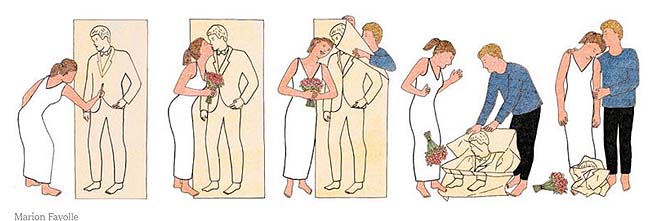
IT’S one of the things we are most afraid might happen to us. We go to great lengths to avoid it. And yet we do it all the same: We marry the wrong person.
Partly, it’s because we have a bewildering array of problems that emerge when we try to get close to others. We seem normal only to those who don’t know us very well. In a wiser, more self-aware society than our own, a standard question on any early dinner date would be: “And how are you crazy?”
Perhaps we have a latent tendency to get furious when someone disagrees with us or can relax only when we are working; perhaps we’re tricky about intimacy after sex or clam up in response to humiliation. Nobody’s perfect. The problem is that before marriage, we rarely delve into our complexities. Whenever casual relationships threaten to reveal our flaws, we blame our partners and call it a day. As for our friends, they don’t care enough to do the hard work of enlightening us. One of the privileges of being on our own is therefore the sincere impression that we are really quite easy to live with.
Our partners are no more self-aware. Naturally, we make a stab at trying to understand them. We visit their families. We look at their photos, we meet their college friends. All this contributes to a sense that we’ve done our homework. We haven’t. Marriage ends up as a hopeful, generous, infinitely kind gamble taken by two people who don’t know yet who they are or who the other might be, binding themselves to a future they cannot conceive of and have carefully avoided investigating.
For most of recorded history, people married for logical sorts of reasons: because her parcel of land adjoined yours, his family had a flourishing business, her father was the magistrate in town, there was a castle to keep up, or both sets of parents subscribed to the same interpretation of a holy text. And from such reasonable marriages, there flowed loneliness, infidelity, abuse, hardness of heart and screams heard through the nursery doors. The marriage of reason was not, in hindsight, reasonable at all; it was often expedient, narrow-minded, snobbish and exploitative. That is why what has replaced it – the marriage of feeling – has largely been spared the need to account for itself.
What matters in the marriage of feeling is that two people are drawn to each other by an overwhelming instinct and know in their hearts that it is right. Indeed, the more imprudent a marriage appears (perhaps it’s been only six months since they met; one of them has no job or both are barely out of their teens), the safer it can feel. Recklessness is taken as a counterweight to all the errors of reason, that catalyst of misery, that accountant’s demand. The prestige of instinct is the traumatized reaction against too many centuries of unreasonable reason.
But though we believe ourselves to be seeking happiness in marriage, it isn’t that simple. What we really seek is familiarity – which may well complicate any plans we might have had for happiness. We are looking to recreate, within our adult relationships, the feelings we knew so well in childhood. The love most of us will have tasted early on was often confused with other, more destructive dynamics: feelings of wanting to help an adult who was out of control, of being deprived of a parent’s warmth or scared of his anger, of not feeling secure enough to communicate our wishes. How logical, then, that we should as grown-ups find ourselves rejecting certain candidates for marriage not because they are wrong but because they are too right – too balanced, mature, understanding and reliable – given that in our hearts, such rightness feels foreign. We marry the wrong people because we don’t associate being loved with feeling happy.
We make mistakes, too, because we are so lonely. No one can be in an optimal frame of mind to choose a partner when remaining single feels unbearable. We have to be wholly at peace with the prospect of many years of solitude in order to be appropriately picky; otherwise, we risk loving no longer being single rather more than we love the partner who spared us that fate.
Finally, we marry to make a nice feeling permanent. We imagine that marriage will help us to bottle the joy we felt when the thought of proposing first came to us: Perhaps we were in Venice, on the lagoon, in a motorboat, with the evening sun throwing glitter across the sea, chatting about aspects of our souls no one ever seemed to have grasped before, with the prospect of dinner in a risotto place a little later. We married to make such sensations permanent but failed to see that there was no solid connection between these feelings and the institution of marriage.
Indeed, marriage tends decisively to move us onto another, very different and more administrative plane, which perhaps unfolds in a suburban house, with a long commute and maddening children who kill the passion from which they emerged. The only ingredient in common is the partner. And that might have been the wrong ingredient to bottle.
The good news is that it doesn’t matter if we find we have married the wrong person.
We mustn’t abandon him or her, only the founding Romantic idea upon which the Western understanding of marriage has been based the last 250 years: that a perfect being exists who can meet all our needs and satisfy our every yearning.
We need to swap the Romantic view for a tragic (and at points comedic) awareness that every human will frustrate, anger, annoy, madden and disappoint us – and we will (without any malice) do the same to them. There can be no end to our sense of emptiness and incompleteness. But none of this is unusual or grounds for divorce. Choosing whom to commit ourselves to is merely a case of identifying which particular variety of suffering we would most like to sacrifice ourselves for.
This philosophy of pessimism offers a solution to a lot of distress and agitation around marriage. It might sound odd, but pessimism relieves the excessive imaginative pressure that our romantic culture places upon marriage. The failure of one particular partner to save us from our grief and melancholy is not an argument against that person and no sign that a union deserves to fail or be upgraded.
The person who is best suited to us is not the person who shares our every taste (he or she doesn’t exist), but the person who can negotiate differences in taste intelligently – the person who is good at disagreement. Rather than some notional idea of perfect complementarity, it is the capacity to tolerate differences with generosity that is the true marker of the “not overly wrong” person. Compatibility is an achievement of love; it must not be its precondition.

Harry Newton. I’m kicking myself. I spent so much time yesterday on the phone with that scam lawyer yesterday. I should have smelled a rat early on. But his patter was so good, so detailed, so plausible. I was about to rush to the Apple store, when I thought “Due Diligence.” And the purpose of it. (Write this down.)
Due Diligence is proving that an investment is a bad idea.
Any moron can convince themselves that the investment is a good idea. Heck, just ask the promoter. But figuring it’s a lousy idea takes real work and real time. If you try real hard to diss the idea and fail, then, and only then should you invest. Until then, skepticism is your best weapon. You will always be initially enthusiastic. Every new idea sounds great. But few ideas are great. Even the ones you hear about on the gondola in Venice beneath a setting sun. Very few ideas. Want to see my playbook called Harry’s Investment Disasters?
And
