A doctor walks through what’s left of a maternity hospital in Mariupol, southern Ukraine, after it was destroyed by Russian bombs.

Three people, including a six-year-old girl, were dead after Putin’s troops blew up the maternity hospital. Women were giving birth as the bombs dropped and only survived because they were hiding in the basement.
The head of the Ukrainian Red Cross said yesterday’s strike will likely cause a complete collapse of pediatric care in Mariupol, as much of the hospital’s equipment and the pediatric care wards were reduced to ashes.

Ukrainian emergency employees and volunteers carry an injured pregnant woman from the shelled hospital.
We must help the Ukrainians
So far, readers of my blog have generously contributed over $100,00 to these two organizations. I personally have given to both:
+ The World Central Kitchen. Click here.
+ The International Rescue Committee. Click here.
Over 2.3 million Ukrainians have now escaped. More are running. Your help in feeding them and providing medical supplies is key to their survival. These two organizations do sterling work.
I wish I were younger. I’d be there helping serve meals and bandaging the wounded.
For now, my begging will have to suffice. Please send them money today. I still can’t stop crying.
In addition to sending them money for food and medicine for the Ukrainians running from Putin’s cruelty, we need to tell our lawmakers that the Ukrainians need military help — especially weapons.
Without our help, here’s a picture of what Ukraine will soon look like. This is what Putin did to Grozny, capital of Chechnya. The United Nations called Grozny the most destroyed city on Earth. Putin did this. He’s doing it to Ukraine.

I read. I watch. I listen. I weep.
How can this be?
Today the New York Times published a guest essay, which tried to figure Putin’s brain.
How Vladimir Putin Lost Interest in the Present

Thanks to Vladimir Putin’s decision to invade Ukraine, Russia is now more isolated than it has ever been. The economy is under sanctions and international businesses are withdrawing. The news media has been even further restricted; what remains spouts paranoia, nationalism and falsehoods. The people will have increasingly less communication with others beyond their borders. And in all of this, I fear, Russia increasingly resembles its president.
I have been talking to high-level businessmen and Kremlin insiders for years. In 2016 I published a book, “All the Kremlin’s Men,” about Mr. Putin’s inner circle. Since then I’ve been gathering reporting for a potential sequel. While the goings on around the president are opaque — Mr. Putin, a former K.G.B. officer, has always been secretive and conspiratorial — my sources, who speak to me on condition of anonymity, have regularly been correct. What I have heard about the president’s behavior over the past two years is alarming. His seclusion and inaccessibility, his deep belief that Russian domination over Ukraine must be restored and his decision to surround himself with ideologues and sycophants have all helped to bring Europe to its most dangerous moment since World War II.
Mr. Putin spent the spring and summer of 2020 quarantining at his residence in Valdai, approximately halfway between Moscow and St. Petersburg. According to sources in the administration, he was accompanied there by Yuri Kovalchuk. Mr. Kovalchuk, who is the largest shareholder in Rossiya Bank and controls several state-approved media outlets, has been Mr. Putin’s close friend and trusted adviser since the 1990s. But by 2020, according to my sources, he had established himself as the de facto second man in Russia, the most influential among the president’s entourage.
Mr. Kovalchuk has a doctorate in physics and was once employed by an institute headed by the Nobel laureate Zhores Alferov. But he isn’t just a man of science. He is also an ideologue, subscribing to a worldview that combines Orthodox Christian mysticism, anti-American conspiracy theories and hedonism. This appears to be Mr. Putin’s worldview, too. Since the summer of 2020, Mr. Putin and Mr. Kovalchuk have been almost inseparable, and the two of them have been making plans together to restore Russia’s greatness.
According to people with knowledge of Mr. Putin’s conversations with his aides over the past two years, the president has completely lost interest in the present: The economy, social issues, the coronavirus pandemic, these all annoy him. Instead, he and Mr. Kovalchuk obsess over the past. A French diplomat told me that President Emmanuel Macron of France was astonished when Mr. Putin gave him a lengthy history lecture during one of their talks last month. He shouldn’t have been surprised.
In his mind, Mr. Putin finds himself in a unique historical situation in which he can finally recover for the previous years of humiliation. In the 1990s, when Mr. Putin and Mr. Kovalchuk first met, they were both struggling to find their footing after the fall of the Soviet Union, and so was the country. The West, they believe, took advantage of Russia’s weakness to push NATO as close as possible to the country’s borders. In Mr. Putin’s view, the situation today is the opposite: It is the West that’s weak. The only Western leader that Mr. Putin took seriously was Germany’s previous chancellor, Angela Merkel. Now she is gone and it’s time for Russia to avenge the humiliations of the 1990s.
It seems that there is no one around to tell him otherwise. Mr. Putin no longer meets with his buddies for drinks and barbecues, according to people who know him. In recent years — and especially since the start of the pandemic — he has cut off most contacts with advisers and friends. While he used to look like an emperor who enjoyed playing on the controversies of his subjects, listening to them denounce one another and pitting them against one another, he is now isolated and distant, even from most of his old entourage.
His guards have imposed a strict protocol: No one can see the president without a week’s quarantine — not even Igor Sechin, once his personal secretary, now head of the state-owned oil company Rosneft. Mr. Sechin is said to quarantine for two or three weeks a month, all for the sake of occasional meetings with the president.
In “All the Kremlin’s Men” I described the phenomenon of the “collective Putin” — the way his entourage always tried to eagerly anticipate what the president would want. These cronies would tell Mr. Putin exactly what he wanted to hear. The “collective Putin” still exists: The whole world saw it on the eve of the invasion when he summoned top officials, one by one, and asked them their views on the coming war. All of them understood their task and submissively tried to describe the president’s thoughts in their own words.
This ritual session, which was broadcast by all Russian TV channels, was supposed to smear all of the country’s top officials with blood. But it also showed that Mr. Putin is completely fed up with his old guard: His contempt for them was clear. He seemed to relish their sniveling, as when he publicly humiliated Sergey Naryshkin, the head of the Foreign Intelligence Service, who started mumbling and tried to quickly correct himself, agreeing with whatever Mr. Putin was saying. These are nothing but yes men, the president seemed to say.
As I have reported for years, some members of Mr. Putin’s entourage have long worked to convince him that he is the only person who can save Russia, that every other potential leader would only fail the country. This was the message that the president heard going back to 2003, when he contemplated stepping down, only to be told by his advisers — many of whom also had backgrounds in the K.G.B. — that he should stay on. A few years later, Mr. Putin and his entourage were discussing “Operation Successor” and Dmitri Medvedev was made president. But after four years, Mr. Putin returned to replace him. Now he has really and truly come to believe that only he can save Russia. In fact, he believes it so much that he thinks the people around him are likely to foil his plans. He can’t trust them, either.
And now here we are. Isolated and under sanctions, alone against the world, Russia looks as though it is being remade in its president’s image. Mr. Putin’s already very tight inner circle will only draw in closer. As the casualties mount in Ukraine, the president appears to be digging in his heels; he says that the sanctions on his country are a “declaration of war.”
Yet at the same time he seems to believe that complete isolation will make a large part of the most unreliable elements leave Russia: During the past two weeks, the protesting intelligentsia — executives, actors, artists, journalists — have hurriedly fled the country; some abandoned their possessions just to get out. I fear that from the point of view of Mr. Putin and Mr. Kovalchuk, this will only make Russia stronger.
Mikhail Zygar (@zygaro), author of this essay, is the former editor in chief of the independent TV news channel Dozhd and the author of “All the Kremlin’s Men: Inside the Court of Vladimir Putin.”
What should we telling our lawmakers?
Sanctions are crippling the Russian economy. But they’re not crippling Putin. He says he sees the sanctions as “an act of war,” a justification to do more indiscriminate shelling of hospitals and killing of civilians. Russia’s talented young people are leaving in droves (especially on the train to Finland). They’re fearful that his next act in Russia will be to declare martial law and close the borders, trapping them inside his nightmare.
Ukraine needs weapons — lots of them. Drones armed with missiles. It needs Stinger missiles. From Wikipedia, “The FIM-92 Stinger is a man-portable air-defense system that operates as an infrared homing surface-to-air missile. It can be adapted to fire from a wide variety of ground vehicles and helicopters.”
What else? I don’t know. But Ukraine needs weapons a lot more than peace talks (which fail), ceasefires (which fail) and exit corridors (which fail).
It needs serious help. And now. Today. Tell your lawmakers in Washington that every day they mess around, Putin kills more Ukrainians, destroys more buildings and, sadly, gets even more emboldened to make a move on neighboring countries, like Moldova and later on NATO countries?
What should we do about our stocks?
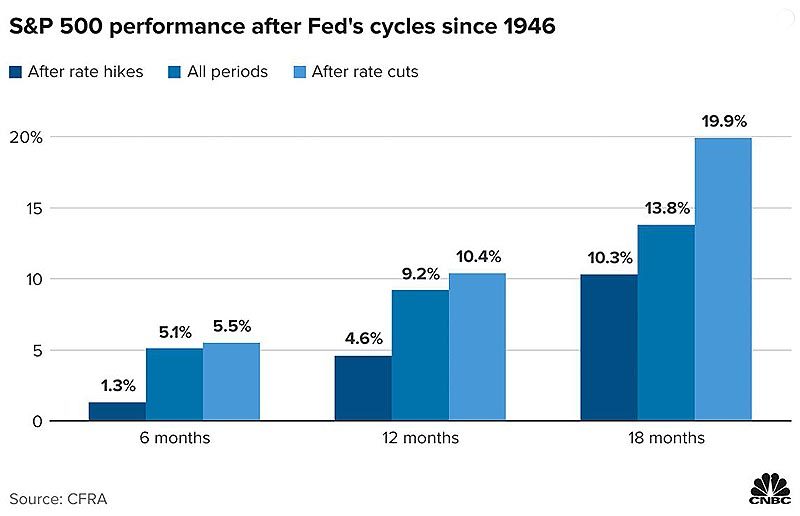
CrowdStrike, Chevron, Chipotle, Amazon and Tractor Supply are the only ones of my stocks gaining today. I am losing more than 15% on a handful, including Ford, Honeywell and Intuit. Yesterday’s huge rise and today’s huge fall taught me no one knows where this market is going — except it’s painful. Trim some positions. I’ve trimmed Ford. and Honeywell. At least I’m doing something.
A smart reader Arthur J. emailed me this morning, “This is a good time to sit on on our hands. And make lists of stocks you want to buy when this is all over.”
He consoles me, “Spring is around the corner and you’ll be playing tennis outside.”
Until then, please send some money to the two charities I mention above — The World Central Kitchen (WCK) and the International Rescue Committee (IRC).
They’re helping a lot of people.
There is only one “joke” today.
I hear from a friend that, given the high price of gas in the U.S, reform Jews are now walking to synagogue.
If you have friends who would like to receive this blog, please let me know. I’ll happily put them on the list.
Please forward this blog and ask your friends to contribute.
See you tomorrow. — Harry Newton