Here’s a shot at developing a simple investment philosophy for the rest of us.
1. Capital preservation. That’s our main goal. The chance of us making a fortune through our passive investments is nil. We make our fortune through our active investments — our day-to-day work. The concept of active versus passive is critical. “Active” is what we control. Passive is what we can’t control, e.g. shares in IBM. Passive investing is gambling, since there are thousands of unknowns, also called “gotchas.”
2. Risk management. Get out when you’re wrong. When are you wrong? When you’re losing 5%, 8% or 15%. What number you choose is irrelevant. What is relevant is that you chose a number and obey it. Sell when you’re down 5%, 8% or 15% — and do it without fail. No exceptions. You’ll hear about other risk management techniques — hedging, for example. Buy a stock you feel positive about. Sell one in the same industry you feel negative about. Or sell an index for the overal market short, in case. Too complicated. Too crazy. In my experience, it doesn’t work. The only risk management that works is an inviolate stop loss order.
3. Hard work. Everything you buy and own requires work. Cramer says an hour a week per investment. If you accept that (and I do), you’re severely limited in how many things you can actually own. In my experience, owning a small portfolio of larger positions is better.
4. Recognize your age and your income. If you have no day job, you need income from your investments. Which means bonds and dividend-paying stocks. If you have a day job, you can afford more gambles on equities. But how much free time you have outside your day job will determine how much equity gambling you can do. There is no such thing as “Buy and Hold.” It doesn’t work any longer – even for Warren Buffett. Remember equities went nowhere in the 2000-2010 decade. That’s ten years of going nowhere.
5. Diversification is a free lunch, of sorts. There are a lot more investments than equities and bonds. There is real estate. There are timber forests. There are startups. There are covered calls. There is “distress” debt. There are a zillion things you can make and lose money on. These are often called alternative investments. Finding them is critical. In recent years I have made (and lost more money) on alternative investments than with listed publicly-traded securities. I thought I could understand the “logic” of all investments by listening and researching. I couldn’t. I can’t. No one is that talented. Years of experience helps. I’m better now. I found some alternative investments — chiefly in real estate — that I do understand. But it’s been an expensive lesson.
6. Dividend-paying stocks typically do better. Especially if you re-invest the dividends. Many companies allow you and don’t charge fees.
7. Don’t ignore bonds. Especially muni bonds. Yo can get a lot of tax-free income from municipal bonds. Though some municipalities (i.e. towns) have gone bust recently, the failure rate is orders of magnitude lower than corporate equities. The bulk of my alternative investments are in muni bonds. They give me cash for living. Since I don’t have a real day job (this column is not a paying job), the cash from munis is critical. There are levels of safety in muni bonds. Some municipalities issue bonds for insane reasons — like the Southern town who issued a bunch to finance a pricey water park . Ignore them.
8. Transparency is key. Invest in a private company (perhaps a startup) and you may not hear anything — ever. Private companies are under no obligation to report to their shareholders. This contrasts with public companies. Unless you get a specific agreement to receive quarterly and annual financials, you won’t. Without such an agreement, I would not invest in a private company — no matter how enticing. Transparency is better if you’re on the board.
9. Be wary of structured investments. Wall Street is a product machine. Like any business, it creates new products hoping it will sell them to you, me, or frankly anyone. If it doesn’t, it creates (structures) others. They include everything from bets on moves in the Dow, to derivatives, to private equity funds, to distress hedge funds, to foreign currency futures. These products are like gambling in Las Vegas. The only person who makes money on them is the bank — i.e. Wall Street. It will never be you. Trust me on this one.
10. Develop your own “system.” Which means develop specialized knowledge that will give you an edge — no matter how small. A friend sells covered calls. He understands them. I couldn’t figure out how the ethanol business would ever make a real profit (i.e. without government subsidies). I stayed out. But a lot of people got suckered in by all the press. Hype and being on BubbleVision (CNBC) doesn’t make a sound investment. I could have sold the ethanol producers short. But I didn’t feel I had enough knowledge to do that, either — even though my gut was right. When in doubt, say out. See item 1.
11. Rebalancing levels out risks. Rebalancing is fashionable. The idea is you allocate 10% here, 10% there, etc. If one of the ten percents goes to 15%, you sell off the 5% and invest it in an area that’s gone to 5%. The theory is you can’t predict which category of stocks will do well. Big caps. Emerging countries. Little caps. etc. Rebalancing is often done with index funds and ETFs. You can pay Wall Street to do your rebalancing — it’s another one of their new products on which they can charge fees. Or you can do it yourself. Friends swear by rebalancing. Others are afraid of being kicked out of their stocks that are doing well.
12. Recognize insanity. When the price chart begins to go parabolic, it’s time to get out. Nothing goes up forever. It’s OK to take profits home.
13. Learn to say NO. It’s the hardest word in the English language, but also the most useful.
Bonus tip:
+ Stay away from stuff involving the Federal Government. Ethanol. Natural gas. Biotech. Pharmaceuticals. Health care. You get the message.
European contagion spreads. They can solve Europe. But their politicians don’t have the gumption. Their banks are freezing their lending. When we have a serious crisis, they’ll do something. Until then, it looks difficult for U.S. equity markets.
Books we’re reading and listening to:
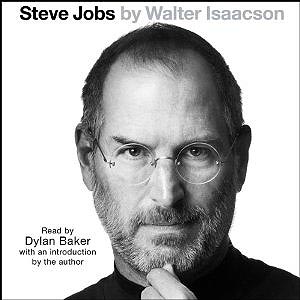
Steve Jobs was a really interesting fellow. Click here.
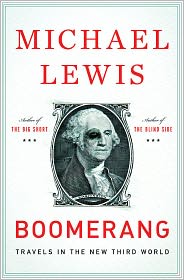
The European Sovereign debt and other recent financial events, told by master storyteller Michael Lewis. Click here.

Harry Newton

Harry, your advice above is excellent, except you don't mention foreign investment versus USA. Some countries have far greater growth rates than the US along with other attractive features. Over the years I've done very well with Pacific Rim oriented funds, Emerging Countries funds, and more recently Latin American and Emerging Europe (really eastern European countries with good tax rates, etc) funds. I stay away from old school Europe and think Canada, New Zealand and Australia, one of your favorites, could do very well.
My wife and I took several of the Online Trading Academy classes; Equities, Options, Futures, etc. I had even considered purchasing a franchise from them. The information that is taught is in fact 'decent' perspectives on trading techniques but one has to realize that if in fact these instructors were superior in trading the market, they probably would not be teaching class for a few hundred dollars a day…..just common sense, although “Common Sense Not So Common”, as Confucius has stated.
They offer 'free' retakes of the class which makes sense because different instructors have unique personalities that present the information in different ways. The catch, however, is that there is seldom, if ever, any room for the student to visit a second time or beyond!! Not good.
They also have experienced difficulty maintaining successful franchisees. They also did not have their financials properly filed when we did our due diligence on the entity. Lastly, we could find no student with whom we took the courses with that was actually making money with the information. That's not good either. This includes Equities, Options and Futures. These courses cost several thousands of dollars.
It is obvious to us, that day trading takes an incredible amount of time, knowledge and perhaps luck and the most important skill one can develop is risk management and stick to a trading strategy and I mean 'stick' to it regardless of what the market is doing!
In the final analysis, I believe that trading on a daily basis takes a special dedication and a skill set that many are just not willing to master, and, yes, there are those who appear to be “cut-out” to perform these task…..but not many. The high frequency trader system does in fact influence the market and should be ordered to cease and desist….no question here.
If one has the tenacity to pursue this vocation long enough, there is a 'gut' feeling that MAY develop that will indeed help the trader make profitable trades with enough frequency to be deemed profitable. The ability to read technical charts is invaluable, to be sure, and one soon learns that the market moves the charts and not the other way around. And, yes, knowing the fundamentals is part of the equation, and combined with technical analysis can produce sufficient signals to render the labor worth the time. The OTA is a beginning but the education should not stop there…..in fact, it never stops.
D. H. De Vore
I think day trading is akin to gambling. I'm not good at gambling, either.
Day trading is grueling. I did it for years and, looking back, I'd say it's a discipline comparable to professional athletics. It's a regime of non-stop study, mental discipline, learning to take hits, knowing when and how to capitalize in smart ways. Be a friend of math and more math. Don't kid yourself into believing you can simply jump in, especially past middle age. It's definitely a young man's game. And luck is an asset more valuable than all other factors combined.