It feels better. Most earnings (excepting telecom) are coming in strongly.
“Being gloomy is very last season, darling,” said an attractive English securities analyst on CNBC yesterday. You have to imagine the wonderful English accent.
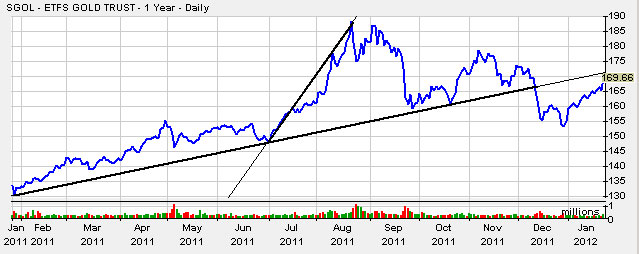
Gold is moving up, finally.
Apple blew away its numbers and jumped.
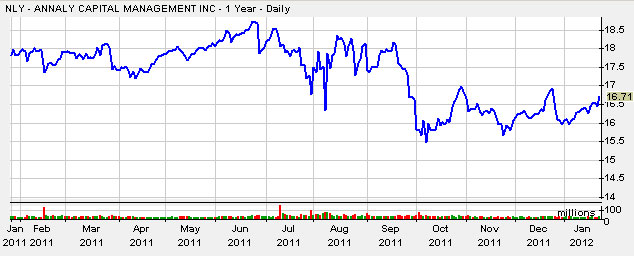
Annaly (NLY) is holding its own and paying a gigantic 14.6% dividend yield.
My miserable little portfolio on the right is doing well. Note I added DHR this morning.
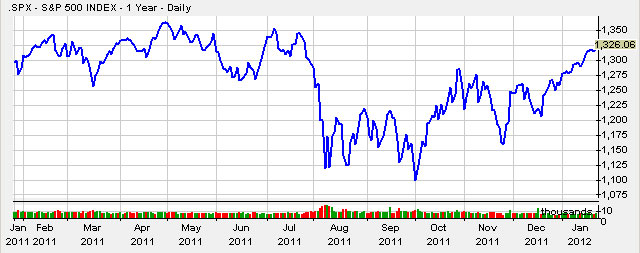
The market seems to be stronger:
Interest rates are staying forever or seemingly forever, says the Fed.
The FOMC is firmly committed to fulfilling its statutory mandate from the Congress of promoting maximum employment, stable prices, and moderate long-term interest rates. The Committee seeks to explain its monetary policy decisions to the public as clearly as possible. Such clarity facilitates well-informed decisionmaking by households and businesses, reduces economic and financial uncertainty, increases the effectiveness of monetary policy, and enhances transparency and accountability, which are essential in a democratic society.
Inflation, employment, and long-term interest rates fluctuate over time in response to economic and financial disturbances. Moreover, monetary policy actions tend to influence economic activity and prices with a lag. Therefore, the Committee’s policy decisions reflect its longer-run goals, its medium-term outlook, and its assessments of the balance of risks, including risks to the financial system that could impede the attainment of the Committee’s goals.
The inflation rate over the longer run is primarily determined by monetary policy, and hence the Committee has the ability to specify a longer-run goal for inflation. The Committee judges that inflation at the rate of 2 percent, as measured by the annual change in the price index for personal consumption expenditures, is most consistent over the longer run with the Federal Reserve’s statutory mandate. Communicating this inflation goal clearly to the public helps keep longer-term inflation expectations firmly anchored, thereby fostering price stability and moderate long-term interest rates and enhancing the Committee’s ability to promote maximum employment in the face of significant economic disturbances.
The maximum level of employment is largely determined by nonmonetary factors that affect the structure and dynamics of the labor market. These factors may change over time and may not be directly measurable. Consequently, it would not be appropriate to specify a fixed goal for employment; rather, the Committee’s policy decisions must be informed by assessments of the maximum level of employment, recognizing that such assessments are necessarily uncertain and subject to revision. The Committee considers a wide range of indicators in making these assessments. Information about Committee participants’ estimates of the longer-run normal rates of output growth and unemployment is published four times per year in the FOMC’s Summary of Economic Projections. For example, in the most recent projections, FOMC participants’ estimates of the longer-run normal rate of unemployment had a central tendency of 5.2 percent to 6.0 percent, roughly unchanged from last January but substantially higher than the corresponding interval several years earlier.
In setting monetary policy, the Committee seeks to mitigate deviations of inflation from its longer-run goal and deviations of employment from the Committee’s assessments of its maximum level. These objectives are generally complementary. However, under circumstances in which the Committee judges that the objectives are not complementary, it follows a balanced approach in promoting them, taking into account the magnitude of the deviations and the potentially different time horizons over which employment and inflation are projected to return to levels judged consistent with its mandate.
What’s coming now? Savings and money market accounts that pay absolutely nothing. The continued boom in bonds. And probably more attention to the stockmarket and gold.
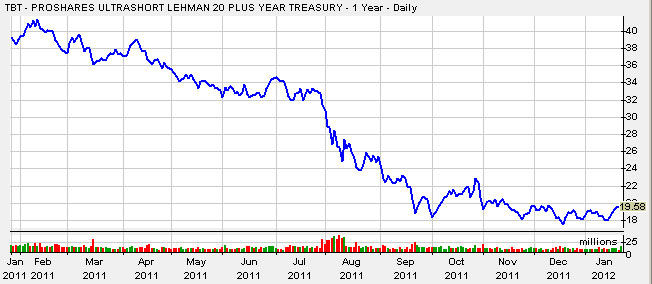
Meantime, the worst bet remains TBT — a a bet that interest rates are about to rise:
The caging of America.
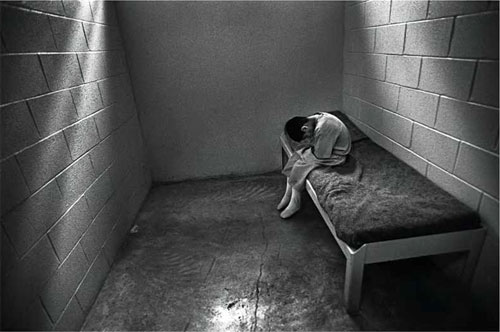
Six million people are under correctional supervision in the U.S.-more than were in Stalin’s gulags.
“The scale and brutality of our prisons are the moral scandal of American life,” writes Adam Gopnik in the latest New Yorker. Over the years I’ve visited some prisons and given to a number of prison and prisoner charities, including The Innocence Project and the Fortune Society. I met many of the fine young men and women who got enmeshed in our horrible penal system. Gopnik’s piece is the most powerful piece of writing on prisons as a major societal problem. Hence, indulge me please. Read these small excerpts and then read the entire piece please.
More than half of all black men without a high-school diploma go to prison at some time in their lives. Mass incarceration on a scale almost unexampled in human history is a fundamental fact of our country today-perhaps the fundamental fact, as slavery was the fundamental fact of 1850. In truth, there are more black men in the grip of the criminal-justice system-in prison, on probation, or on parole-than were in slavery then. Over all, there are now more people under “correctional supervision” in America-more than six million-than were in the Gulag Archipelago under Stalin at its height. That city of the confined and the controlled, Lockuptown, is now the second largest in the United States.
The accelerating rate of incarceration over the past few decades is just as startling as the number of people jailed: in 1980, there were about two hundred and twenty people incarcerated for every hundred thousand Americans; by 2010, the number had more than tripled, to seven hundred and thirty-one. No other country even approaches that. In the past two decades, the money that states spend on prisons has risen at six times the rate of spending on higher education. Ours is, bottom to top, a “carceral state,” in the flat verdict of Conrad Black, the former conservative press lord and newly minted reformer, who right now finds himself imprisoned in Florida, thereby adding a new twist to an old joke: A conservative is a liberal who’s been mugged; a liberal is a conservative who’s been indicted; and a passionate prison reformer is a conservative who’s in one.
The scale and the brutality of our prisons are the moral scandal of American life. Every day, at least fifty thousand men-a full house at Yankee Stadium-wake in solitary confinement, often in “supermax” prisons or prison wings, in which men are locked in small cells, where they see no one, cannot freely read and write, and are allowed out just once a day for an hour’s solo “exercise.” (Lock yourself in your bathroom and then imagine you have to stay there for the next ten years, and you will have some sense of the experience.) Prison rape is so endemic-more than seventy thousand prisoners are raped each year-that it is routinely held out as a threat, part of the punishment to be expected. The subject is standard fodder for comedy, and an uncoöperative suspect being threatened with rape in prison is now represented, every night on television, as an ordinary and rather lovable bit of policing. The normalization of prison rape-like eighteenth-century japery about watching men struggle as they die on the gallows-will surely strike our descendants as chillingly sadistic, incomprehensible on the part of people who thought themselves civilized. Though we avoid looking directly at prisons, they seep obliquely into our fashions and manners. Wealthy white teen-agers in baggy jeans and laceless shoes and multiple tattoos show, unconsciously, the reality of incarceration that acts as a hidden foundation for the country.
Here’s the second excerpt which comes later down in the piece:
The inhumanity of American prisons was as much a theme for Dickens, visiting America in 1842, as the cynicism of American lawyers. His shock when he saw the Eastern State Penitentiary, in Philadelphia-a “model” prison, at the time the most expensive public building ever constructed in the country, where every prisoner was kept in silent, separate confinement-still resonates:
I believe that very few men are capable of estimating the immense amount of torture and agony which this dreadful punishment, prolonged for years, inflicts upon the sufferers. . . . I hold this slow and daily tampering with the mysteries of the brain, to be immeasurably worse than any torture of the body: and because its ghastly signs and tokens are not so palpable to the eye and sense of touch as scars upon the flesh; because its wounds are not upon the surface, and it extorts few cries that human ears can hear; therefore I the more denounce it, as a secret punishment which slumbering humanity is not roused up to stay.
Not roused up to stay-that was the point. Once the procedure ends, the penalty begins, and, as long as the cruelty is routine, our civil responsibility toward the punished is over. We lock men up and forget about their existence. For Dickens, even the corrupt but communal debtors’ prisons of old London were better than this. “Don’t take it personally!”-that remains the slogan above the gate to the American prison Inferno. Nor is this merely a historian’s vision. Conrad Black, at the high end, has a scary and persuasive picture of how his counsel, the judge, and the prosecutors all merrily congratulated each other on their combined professional excellence just before sending him off to the hoosegow for several years. If a millionaire feels that way, imagine how the ordinary culprit must feel.
In place of abstraction, Stuntz argues for the saving grace of humane discretion. Basically, he thinks, we should go into court with an understanding of what a crime is and what justice is like, and then let common sense and compassion and specific circumstance take over. There’s a lovely scene in “The Castle,” the Australian movie about a family fighting eminent-domain eviction, where its hapless lawyer, asked in court to point to the specific part of the Australian constitution that the eviction violates, says desperately, “It’s . . . just the vibe of the thing.” For Stuntz, justice ought to be just the vibe of the thing-not one procedural error caught or one fact worked around. The criminal law should once again be more like the common law, with judges and juries not merely finding fact but making law on the basis of universal principles of fairness, circumstance, and seriousness, and crafting penalties to the exigencies of the crime.
The other argument-the Southern argument-is that this story puts too bright a face on the truth. The reality of American prisons, this argument runs, has nothing to do with the knots of procedural justice or the perversions of Enlightenment-era ideals. Prisons today operate less in the rehabilitative mode of the Northern reformers “than in a retributive mode that has long been practiced and promoted in the South,” Perkinson, an American-studies professor, writes. “American prisons trace their lineage not only back to Pennsylvania penitentiaries but to Texas slave plantations.” White supremacy is the real principle, this thesis holds, and racial domination the real end. In response to the apparent triumphs of the sixties, mass imprisonment became a way of reimposing Jim Crow. Blacks are now incarcerated seven times as often as whites. “The system of mass incarceration works to trap African Americans in a virtual (and literal) cage,” the legal scholar Michelle Alexander writes. Young black men pass quickly from a period of police harassment into a period of “formal control” (i.e., actual imprisonment) and then are doomed for life to a system of “invisible control.” Prevented from voting, legally discriminated against for the rest of their lives, most will cycle back through the prison system. The system, in this view, is not really broken; it is doing what it was designed to do. Alexander’s grim conclusion: “If mass incarceration is considered as a system of social control-specifically, racial control-then the system is a fantastic success.”
Northern impersonality and Southern revenge converge on a common American theme: a growing number of American prisons are now contracted out as for-profit businesses to for-profit companies. The companies are paid by the state, and their profit depends on spending as little as possible on the prisoners and the prisons. It’s hard to imagine any greater disconnect between public good and private profit: the interest of private prisons lies not in the obvious social good of having the minimum necessary number of inmates but in having as many as possible, housed as cheaply as possible. No more chilling document exists in recent American life than the 2005 annual report of the biggest of these firms, the Corrections Corporation of America. Here the company (which spends millions lobbying legislators) is obliged to caution its investors about the risk that somehow, somewhere, someone might turn off the spigot of convicted men:
Our growth is generally dependent upon our ability to obtain new contracts to develop and manage new correctional and detention facilities. . . . The demand for our facilities and services could be adversely affected by the relaxation of enforcement efforts, leniency in conviction and sentencing practices or through the decriminalization of certain activities that are currently proscribed by our criminal laws. For instance, any changes with respect to drugs and controlled substances or illegal immigration could affect the number of persons arrested, convicted, and sentenced, thereby potentially reducing demand for correctional facilities to house them.
Brecht could hardly have imagined such a document: a capitalist enterprise that feeds on the misery of man trying as hard as it can to be sure that nothing is done to decrease that misery.
To read the entire piece, “The Caging of America,” click here.
How to integrate Europe’s muslims. An insightful piece from the New York Times. Click here.
My two biggest fears solved. I’m on a trip. I have my laptop (as always). It breaks down. Bingo I have all my working files backed up on my Apricorn external hard drive. But what happens if I lose the drive, or worse, it’s stolen? Any moron can plug it into their own laptop and steal my life.
Solution: Apricorn’s new Padlock external drive.

To get into my files inside this wonderful gadget, you must punch in the numbers you selected as your password.
Suddenly, I feel safe carrying the thing and leaving it in my hotel room. Brilliant idea. Get yourself one. Only $179 for a 500 gig drive. Click here.
Images of the Costa Concordia. Huge and amazingly garish. Click here.
Latest wonderful New Yorker cartoons.
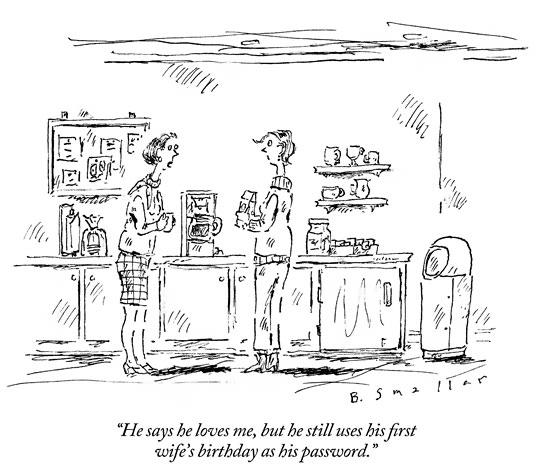
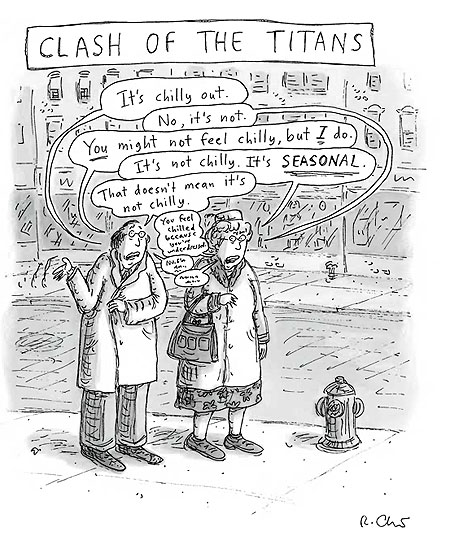

Harry Newton who won’t tell you who won the semifinals tennis this morning between Federer and Nadal. But he’s sad, having stayed up half the night. The second semi final is on tonight at 3:30 AM. But meantime, they’ll replay last night’s match endlessly. Try ESPN2 for live matches and The Tennis Channels for repeats. Women’s finals are on Saturday. Men’s on Sunday.

A murderer recently hit the news with his proud posting about his life behind bars – awaiting the death penalty, that he boasts will never happen – and bragging of his prison life of leisure, with colored TV no less, no work and all the free time anyone could dream of. Causing great pain to the family of the murdered victim, a woman I believe. We need to stop pampering them and supporting them when they're free.
I dont recommend ANY encryption.
Harry,
You may want to try steganos software for keeping your files encrypted.
Harry, make sure that fancy drive with buttons is not the only backup you have, as if it fails, you would have to pay hefty amount of money to recover it (if recoverable).
The key to safe backups is many of of them.
Let's start at the beginning.
How hard is it to behave yourself and stay out of jail?
Gee, I wonder if the liberal progressive Democrats war on poverty had anything to do with…“The Caging of America,” ………hell no…..it's really Bush's fault.
Oh, about as hard as standing up for your rights to record a public official…
http://visiontoamerica.org/731…
Sorry you happened to be beat and raped while you were waiting to get out jail. But like you said…
Harry
I stayed up watching the match like you. I will pay for it today but it was a great match. We must be tennis addicts.
Philip
We are. We are. The Murray/Djoko match is on….