The big lesson of 2011-2012 (so far) is that dividend-paying stocks returned more than non-dividend-paying stocks (with the exception of a handful of hot stocks, especially Apple, Lululemon, Chipolte and Panera Bread — but not Google). The second lesson is that bonds and bond funds continue to do well (e.g. VWALX). The third lesson is that it’s no longer easy. Diversification is the free lunch. You have to be ultra-careful with your stops. Cut quickly. Your own business still makes the most sense.
Out of the Bronx – Private equity and the cookie factory. The New Yorker ran an engrossing story in the latest February 6 issue on what happened to the Stella D’oro Biscuit Company once a private equity fund got its hands on the company. The moral of this story is not new and clear: don’t be a worker-bee in someone else’s company. It’s too dangerous. Example: I have a bunch of friends with old Citigroup options that are now worthless. You can read a summary here.
How much did MF Global pay Moody’s? The moral of this story from Bloombergs yesterday is never, ever believe what a rating agency says:
So many times when the big credit- rating companies have embarrassed themselves, the world has sighed and chalked it up to a business model that by design invites corruption and incompetence. Perhaps never before have the public’s expectations for the industry been lower.
The fundamental flaw is that the major rating companies, led by Moody’s Investors Service and Standard & Poor’s, typically are paid by the issuers of the securities they rate, or by other deeply interested parties, such as Wall Street underwriters. Too often the raters seem to be the last to know that a company they dubbed investment grade was going broke, or that a mortgage bond once deemed AAA was about to default. The public sees these things and naturally draws a link between what the raters say and how they are compensated.
Although the government can’t make the credit raters more capable, it can make them more transparent. Here’s a good place to begin: Start requiring disclosures of how much the raters’ clients pay them for their services.
Consider some of the boilerplate in Moody’s reports on MF Global Holdings Ltd., whose credit ratings were the subject of a congressional hearing yesterday. Moody’s Oct. 27 report — in which it downgraded MF Global to junk, only four days before the futures broker filed for bankruptcy — said most issuers of debt securities pay “fees ranging from $1,500 to approximately $2,500,000” for “appraisal and rating services.”
It’s anyone’s guess whether the fees MF Global paid to Moody’s fell within or outside this range. The companies know how much money changed hands. They’re just not telling us.
The disclosures in Standard & Poor’s reports are just as useless. The company’s Oct. 26 report on MF Global said “S&P may receive compensation for its ratings and certain credit- related analyses, normally from issuers or underwriters of securities or from obligors.” Coincidence or not, S&P maintained an investment-grade mark on MF Global until the day it failed.
There’s no such secrecy about the fees other types of opinion vendors charge their clients. For more than a decade, U.S. public companies have been required to disclose the annual fees they pay their outside auditors. Similarly, when companies hire stock promoters or other firms to publish research reports profiling their shares, federal securities laws require disclosures in the reports showing who paid for them, as well as the amount and form of compensation.
The auditor-fee disclosures have been useful. Fannie Mae’s proxy statement for 2003, for instance, showed the housing financier paid KPMG $2.7 million to audit its books that year. The fee was so tiny, for a company with $1 trillion of assets, that it served as a red flag for investors, signaling that KPMG’s audit quality couldn’t have been all that robust. The next year Fannie Mae had a huge accounting scandal.
At the other extreme, in its first annual report as a public company, Blackstone Group LP (BX) said it paid its auditor, Deloitte & Touche, total fees of $159.1 million for 2007, mostly for non-audit work. The fees were so huge — Blackstone’s total assets were $13.2 billion at the time — it would be reasonable for investors to wonder what influence they might have had on Deloitte’s judgment.
The parallels for credit-rating companies are obvious. Like auditors and stock promoters, they’re paid to express opinions to investors. Whatever their fees are, the public should be told. The credit raters would have us believe there’s nothing wrong with collecting cash from the same customers whose securities they grade, and that this doesn’t cloud their independence or objectivity. If that’s true, they should have no problem with us knowing the actual dollar amounts.
Unfortunately this isn’t the path the government has chosen. The Dodd-Frank Act, passed in 2010, included 19 pages of new provisions governing how credit-rating companies operate. Numerous federal banking and securities laws were amended to remove statutory references to credit ratings, for instance, so that regulators would reduce their reliance on them. Dodd-Frank didn’t mandate disclosure of the raters’ fees, however.
A rule proposed last year by the Securities and Exchange Commission would require companies such as Moody’s and S&P to disclose in a form accompanying each credit rating whether the grade was paid for by the issuer, underwriter or sponsor of the security being rated — or if it was purchased by someone else, such as an investor. The rating company would also have to disclose if the purchaser had paid it for any other services, such as consulting or advisory work. Most important, though, no dollar amounts would have to be divulged.
This is a mistake. A big reason that the public doesn’t trust credit ratings is because of the money that changes hands. What matters most, obviously, is how much. It makes little difference whether the amounts are disclosed by the rating company or by the issuer of the securities as part of its own disclosures, as long as it’s made public somewhere.
The most dubious penny-stock promoters have to disclose what they get paid for their opinions. Credit raters can at least be held to the same standards.
How did Mitt Romney organize his taxes? Carefully is the simple answer. Here’s Smart Money’s explanation.
More airline travel tips: From Men’s Health:
+ Move away from the sneezing, coughing passenger.
+ Drink lots of water before the flight.Don’t drink caffeinated drinks.
+ Use hand sanitizers. Those containing ethanol are more effective than soap and water. Squirt the stuff on your hands after you buckle your seat belt or handle objects in high-trafffic areas, like bathroom faucets and overhead bins.
+ Don’t touch your face.
+ Don’t use the seat pocket. It’s had used snotty tissues from the last passenger.
The Ten Worst Cars of All Time. According to The Street: The worst: the 2001 Pontiac Aztek.
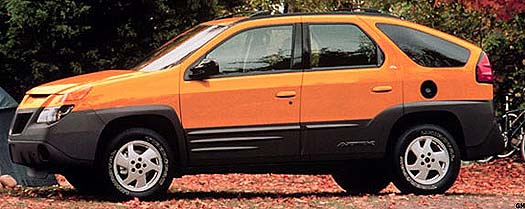
Our winner is not only extremely ugly, but also has a singular distinction: it destroyed an 84-year-old automaker.
“Only hours before we went live [with the list] did we settle on where the top three would settle out,” Oldham recalls. “We decided that none of the other 99 cars on the list had such a negative impact on such an established and successful brand. The Aztec became such a punchline for a bad car that Pontiac was damaged goods. After the Aztec, GM couldn’t save Pontiac no matter what they did.”
The car is hideously ugly, Oldham says, adding: “The joke is that the styling is its best feature.”
Best predictions of all time. No one can predict the future. But these attempts are doozies. They come from a wonderful magazine called This Week, which does a neat job of summarizing the week’s news.
“These Google guys, they want to be billionaires and rock stars and go to conferences and all that. Let’s see if they still want to run the business in two or three years.” -Bill Gates, on Google magnates Sergey Brin and Larry Page, 2003
“I predict the Internet will soon go spectacularly supernova and, in 1996, catastrophically collapse.” -Robert Metcalfe, founder of 3Com, 1995
“Men will never fly, because flying is reserved for angels.” Bishop Milton Wright, father of the Wright Brothers.
“You will be home before the leaves have fallen from the trees.” Kaiser Wilhelm II, emperor of Germany to his troops, 1914.
“In a decade, urban dwellers will have to wear gas masks to survive air pollution.. By 1985, air pollution will have reduced the amount of sunlight reaching Earth by one half..” Life magazine, 1970.
“[In the year 2000,] authors of self-help books will be required to provide proof that they have actually helped themselves.” Jane Wagner, Ms. Magazine, 1990
“There is no doubt.” General Tommy Franks, on the presence of weapons of mass destruction in Iraq, 2003.
“Sean Connery can’t play the sophisticated James Bond. He looks like a bricklayer.” Producers of the first 007 film, Dr No. 1962
“Animals, which move, have limbs and muscles. The earth does not have limbs and muscles; therefore it does not move.” Scipio Chiaramonti, Professor of Philosophy and Mathematics, University of Pisa, 1633
“What could be more palpably absurd than the prospect held out of locomotives traveling twice as fast as stagecoaches?” -The Quarterly Review, 1825
“Nuclear-powered vacuum cleaners will probably be a reality within 10 years.” -Alex Lewyt, president of the Lewyt Corp. vacuum company, 1955
“There’s no chance that the iPhone is going to get any significant market share. No chance.” Steve Ballmer, CEO of Microsoft, 2007
“Remote shopping, while entirely feasible, will flop – because women like to get out of the house, like to handle merchandise, like to be able to change their minds.” -TIME, offering predictions for the year 2000, 1966
“Before man reaches the moon, your mail will be delivered within hours from New York to Australia by guided missiles. We stand on the threshold of rocket mail.” Arthur Summerfield, U.S. Postmaster General, 1959
“God himself could not sink this ship.” Unidentified crewmember on the RMS Titanic to passenger, Mrs. Sylvia Caldwell
“We shall escape the absurdity of growing a whole chicken in order to eat the breast or wing by growing these parts separately under a suitable medium.” Winston Churchill, “Fifty Years Hence,” Popular Mechanics, 1930
“Stocks have reached what looks like a permanently high plateau.” Irving Fisher, professor of Economics, Yale University, 1929
“If a wife or husband seems to be unusually grouchy on a given evening. a spouse will pop down to the corner drugstore, buy some antigrouch pills, and slip them into the coffee.” TIME, offering predictions for the year 2000, 1966
“He has become a much more quiet, more mature and thoughtful individual during his imprisonment. and does not contemplate acting against existing authority.” Prison warden on inmate Adolf Hitler to the Bavarian Minister of Justice, 1924
“We happen to believe, despite the polls, that Bill Clinton will lose [reelection] to any Republican who doesn’t drool on stage.” The Wall Street Journal, 1995
“There is no reason anyone would want a computer in their home.” Ken Olson, co-founder of Digital Equipment Corp., 1977
“Daylight saving also has a hand in inflicting tuberculosis on young people, since it shortens the time permitted for sleeping.” Modern Mechanix and Inventions, 1932
“Fooling around with AC electricity is just a waste of time. Nobody will use it, ever.” Thomas Edison, a proponent of DC (direct current) electricity, 1899
“I cannot conceive of any vital disaster happening to this vessel. Modern ship building has gone beyond that.” Edward J. Smith, captain of the RMS Titanic, 1912
“Over the next century, Law will be simplified. Lawyers will have diminished, and their fees will have been vastly curtailed.” Junius Henri Browne, American journalist, 1893
“The Americans have need of the telephone, but we do not. We have plenty of messenger boys.” Sir William Preece, engineer-in-chief for the British Post Office, 1876
There are even more. Click here.

Harry Newton who likes the way things are shaping up in 2012 — from employment to the market. Even his shoulder rotator cuff and Achilles Tendon are responding to m sports therapist’s pummeling and a regimen of ultra-boring exercises — replete with 2.5 pound dumbbells. I’ll soon be buff and injury-free. My sports therapist tells me that 98% of the people who are told by surgeons that they need rotator cuff surgeries don’t need them. He has repaired their injuries with pummeling (he probably has a better word) and exercise.

I note that you have TIP as a recommendation; if the economy is indeed strengthening, this would work against TIP(s).
TIP has had a 35% move since October 2009; all things must pass and trees do not grow to the sky . Hedge yourself, sell the TIP, or buy outright the anti-bond, TBT. If Bernanke ever has to unwind his printing press, and show the movie in reverse, it could be a terrific Black Swan.
well the VWALX that you're always pimping took a real dive today, Harry Newton. Stock funds are doing much better than bond funds this year. You continue to give terrible advice to those foolish enough to read your site.
Three cents is not “a real dive.”
+ Move away from the sneezing, coughing passenger.
How is one supposed to do that. I flew 75,000 miles last year and I saw probably 3 empty seats…
Absolutely no idea. I did once pay a kid $50 to switch seats with me.
“Before man reaches the moon, your mail will be delivered
within hours from New York to Australia
by guided missiles. We stand on the threshold of rocket mail.” Arthur
Summerfield, U.S. Postmaster General, 1959
“When you have a gigantic technology shift like we've
experienced, it's awfully hard without substantial changes to get your head
above water,” “So local mail would be a two-day product rather than a
one-day for mail dropped in the blue mailbox.”
Postmaster General Pat Donahoe 2012
Hahaha!!!
Thanks for the laugh Harry!
“Lots of my friends,
especially those divorced, have Harleys. And some of their young girlfriends do
also.”
Motorcycle riding is indeed a
very dangerous activity. With proper training and common sense, it
becomes a just hazardous activity – HOWEVER, for men going through a mid-life
crisis, motorcycles are still MUCH safer than a (very) young girlfriend:
1.
It’s much less cheaper
2.
You can get rid of a motorcycle easier and quicker than a young girlfriend, and
3.
Once you get rid of it, you don’t have to worry about it coming back….again…again…and again .
Have a great day, Harry!
Tasteless, but fun. I like motorcycles also, but not Harleys which shake. I'm told that the vibration is part of the pleasure. Not for me. The last time I got off a Harley after a 100 mile ride, my hands had literally been shaken to sleep. Give me a nice vibration-free Japanese bike.
Amen Harry.
It's like riding a washing machine during the spin cycle. When I asked a Harley loving friend about it, he replied “you should get the XLSXS Ultrawidehardglidetail (or whatever they call it) it has bigger rubber mountings on the engine”
Good old American ingenuity. Don't fix the problem, hide it!
Its the Ducati Multistrada for me.
I've had three, all Hondas – 2 Goldwings, and an 08 1300 VTX