Korean stocks shine. Samsung, Kia and Hyundai. You can buy them on the Korean stock exchange. Pershing doesn’t handle them. But Schwab may. You can buy them on the London Stock Exchange, apparently. This needs more research. Anyone know about buying Korean stocks?
Dear investor,
In line with the rest of our industry we are making some changes to the language we use in our marketing and communications. We are writing this letter so we can explain these changes properly. Most importantly, Zilch Capital used to refer to itself as a “hedge fund” but 2008 made it embarrassingly clear we didn’t know how to hedge. At all. So like many others, we have embraced the title of “alternative asset manager”. It’s clunky but ambiguous enough to shield us from criticism next time around.
We know we used to promise “absolute returns” (ie, that you would make money regardless of market conditions) but this pledge has proved impossible to honour. Instead we’re going to give you “risk-adjusted” returns or, failing that, “relative” returns. In years like 2011, when we delivered much less than the S&P 500, you may find that we don’t talk about returns at all.
It is also time to move on from the concept of delivering “alpha”, the skill you’ve paid us such fat fees for. Upon reflection, we have decided that we’re actually much better at giving you “smart beta”. This term is already being touted at industry conferences and we hope shortly to be able to explain what it means. Like our peers we have also started talking a lot about how we are “multi-strategy” and “capital-structure agnostic”, and boasting about the benefits of our “unconstrained” investment approach. This is better than saying we don’t really understand what’s going on.
Some parts of the lexicon will not see style drift. We are still trying to keep alive “two and twenty”, the industry’s shorthand for 2% management fees and 20% performance fees. It is, we’re sure you’ll agree, important to keep up some traditions. Thank you for your continued partnership.
— Zilch Capital LLC (from the Feb 18th print edition of the Economist.)
This is an upgrade? On February 17, Ativo Research upgraded Viasat (VSAT) from MOST UNFAVORABLE to UNFAVORABLE. This is the stock that has a super-fast. very impressive satellite Internet service to your home. But sadly is doing an awful job marketing that service and meantime reporting awful financials.
Neat PDF viewer and marker-upper. Adobe Reader is free, but limited. You can’t yellow-highlight or excerpt the text from PDF documents. You can with something called the PDF-XChange Viewer. For the free version, click here. The Pro version costs $37.50. Try the free one first.
Which rental car company? Things I know about renting cars:
1. Prices are too high and always the same between the “biggies.”
2. Corporate “discounts” are nonsense.
3. Doing “research” on car rentals on the Internet doesn’t work. All the prices are the same. Surprise. Surprise.
4. They sell you stuff you don’t need, like extra insurance, or pricey gas.
5. Renting away from airports is cheaper, but also a pain.
6. You never get the car you ordered. And what they have when you get there is miserable.
7. Begging works. Sometimes you can get a better car for less money.
Maybe there’s a finally an answer? From Saturday’s New York Times:
A Rate Sleuth Making Rental Car Companies Squirm by ron Lieber
In a perfect world, we would get the lowest price for everything we buy without having to lift a finger to hunt for the best deal.
We are far from living in that world, alas. In the last couple of columns, we’ve called out car insurers that don’t tell you when you’re entitled to a 50 percent premium cut and written about the continued culture of obfuscation in auto shopping.
But there is a glimmer of hope in carland, and it exists in a most unlikely place: auto rentals, an industry known mostly for pushing insurance and charging $9 a gallon for gasoline.
A little online booking engine called AutoSlash, however, offers the following promise: Book free on its site, and a couple of times a day until your travel date it will search for coupons or lower rates. If it succeeds, it rebooks you automatically. AutoSlash claims success 85 percent of the time, a statistic born out by my own experience using it for all of my own rentals.
The reaction in some corners of the industry has been something like revulsion. Enterprise, which owns National and Alamo, won’t let AutoSlash show its cars and wouldn’t say why. Avis, which owns Budget, also steers clear and offered some feeble reasoning that I’ll explain below.
Hertz and the company behind Dollar and Thrifty are still playing ball, however, along with discounters like Fox.
It’s enough to make AutoSlash my first and only stop for auto rental booking. Using its service feels practically subversive, especially when airlines nickel and dime you for any number of services and fancy hotels want $10 a day for Internet access.
But it’s the story behind AutoSlash’s emergence that is so revealing: an industry with archaic rules sets itself up to have a third party threaten the integrity of its prices. And when it happens, the industry – auto rental companies and their partners – react by doing their utmost to keep consumers from getting the good deals.
AutoSlash might not exist but for the fact that auto rental companies mostly let you change or cancel reservations as much as you want and decline to penalize you if you don’t show up to pick up your car. And travelers don’t show up in droves – 20 percent of the time, according to a longtime industry consultant, Neil Abrams.
So why don’t they change the rules? Mr. Abrams said it was because executives in the industry lacked the proper resolve. “It is mind-boggling,” he said. “Even New York restaurants ask for a credit card when you make a reservation. It’s a freaking steak, as opposed to a $20,000 vehicle.”
Enter Jonathan Weinberg, AutoSlash’s 42-year-old co-founder. His father worked in technology for United Airlines and once took him to Kennedy Airport in New York to lay cable under the international arrivals building.
The younger Weinberg’s career includes a stint managing Radio Shacks and a near-death experience directly below the airplane impact zone in the South Tower of the World Trade Center. He later got back to travel while consulting for a company called Airfarewatchdog. The idea for AutoSlash came from his mother in Florida, who thought there was a business in all of the auto rental rate sleuthing he did before visiting her.
He hooked up with a partner, Mike Miller, and they built the site with just $25,000, pulling back the curtain in 2010. AutoSlash earns money via commissions from Travelocity, which runs AutoSlash’s booking engine in the background though not the proprietary deal hunting software.
So far, AutoSlash has booked more than 100,000 rentals. As for that 85 percent figure – the percentage of time that users achieve some savings – roughly half the time the price cut results from AutoSlash applying coupons that you could have found yourself. The beauty here, however, is that you don’t have to.
Total eventual savings after any and all price cuts averages around 25 percent for people who have booked at least a couple of weeks ahead of their travel date. Last-minute bookings give the company less time to find better deals.
All of this makes rental car companies and full-service online travel agencies squirm uncomfortably. When I asked Enterprise why it won’t let AutoSlash book reservations for its brands, it sent me an e-mail statement. “We make decisions about where to focus our online marketing efforts based on a variety of criteria,” it read. “Currently, we do not feel that AutoSlash is a good fit for us.”
When I asked about the criteria and the fit, the company went radio silent.
Mr. Weinberg has had several such discussions with major players, and one of them (he wouldn’t tell me who) simply told him point blank, “We don’t want a customer to get a discount for doing nothing.”
Avis Budget, as the company is now known, sent me a statement of its own and called out AutoSlash for using coupon codes that were supposed to be only for members of affinity groups like AAA or AARP. Mr. Weinberg admits to having done this during the first few weeks of the company’s life, but said that he quickly stopped.
Avis’s brands are not on the AutoSlash site today, a company spokesman, John Barrows, added, because the company still worries about customers who may end up with a rate code that is not intended for them. “This places the customer in a position of unknowingly becoming involved in a potentially fraudulent transaction,” his statement read. “Further, if a customer reserves a car using a discount to which they are not entitled, the reservation may be declined, creating an inconvenience for the traveler and a customer service problem for our brands.”
This attempt at tar and feathering doesn’t sit particularly well with Mr. Weinberg. He said that AutoSlash had not used ineligible codes since 2010, and he knew of no AutoSlash customers who had been turned away by rental car counter workers for having booked with one.
Hertz, too, had issues with AutoSlash’s aggressive use of the wrong coupon codes, but a company spokesman says it has no such problems with it today.
The travel analyst Henry Harteveldt, at Atmosphere Research Group, says he thinks he knows why companies remain AutoSlash partners. “Their mind-set must be: Let’s not lose any sale where we feel it’s a good sale to get,” he said.
That’s the crucial thing to remember here. The rental companies make the rules that allow AutoSlash to exist. Then they flood the market with coupons and change prices by large amounts often enough for AutoSlash to make a business out of capturing the best deals. That some of them now want to keep consumers from handing over their money is a truly bizarre state of affairs.
Alas, whenever good deals are this easy to get, the first question to ask isn’t when someone like Mr. Weinberg will become a billionaire but when some larger entity will crush him like a bug.
The auto rental companies could change the reservation rules tomorrow and put him out of business. Travelocity could cut off his access to its booking engine, though Mr. Weinberg said he has a Plan B in his back pocket for this and other possibilities.
Then there are the online travel agencies. Expedia and Orbitz could start AutoSlash copycat services of their own. Orbitz has a “Price Assurance” program that refunds money to consumers if somebody else uses Orbitz to book an identical plane or prepaid hotel reservation for at least $5 less than you did. While the odds of that happening are low, Orbitz’s sheer volume has meant that it has written over 170,000 checks for more than $10 million since 2008.
This is real money, but Orbitz isn’t doing it for rental cars and is most definitely not rebooking everybody when it finds any deal that beats those people’s reservations currently in Orbitz’s system, which is what AutoSlash does. And Orbitz and others will probably never do that, because if they did, they would earn less in commission and their suppliers might pull out in protest.
AutoSlash has some flaws besides the missing brands. It changes your reservation number with the auto rental company every time you rebook, which is a record-keeping hassle for consumers. And its customer service page asks you to send an e-mail into the ether and cross your fingers.
But sometimes patronage is about making a statement. By booking through AutoSlash and patronizing Hertz, Thrifty and the other companies that play along, you’re sending the rest of the auto rental industry a message.
That message goes something like this: It is decidedly uncool to bar consumers from accessing publicly posted deals just because those people didn’t work hard enough to find them.
There’s always a market. This nice lady took her dog for a ride. (It’s in the cage.) It is called a trike. It has an electric motor and a huge battery (under the cage). She says “it goes like a rocket” — and that’s without her peddling.
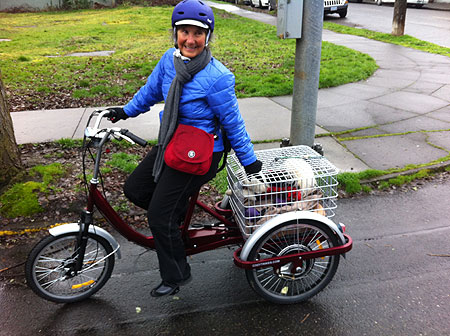
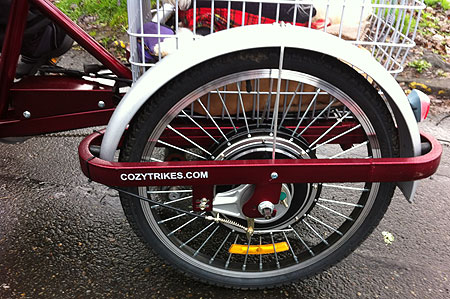
The trike costs $994. Click here.
The funniest joke ever told. Click here.
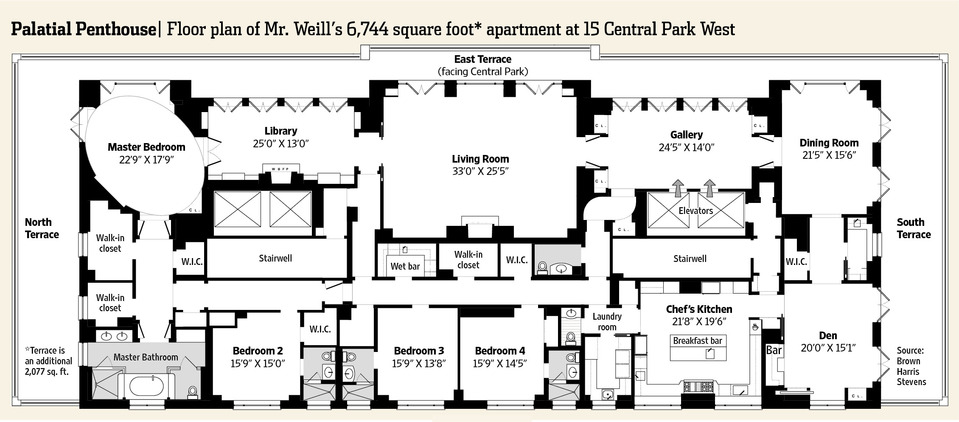
Nice little apartment for your daughter. The apartment has 6,744 square feet of interior space, plus another 2,077 sf of space on the wrap-around terrace (the terrace can be accessed from any one of 19 glass doors). While there are 6 1/2 bathrooms, there are only 4 bedrooms.

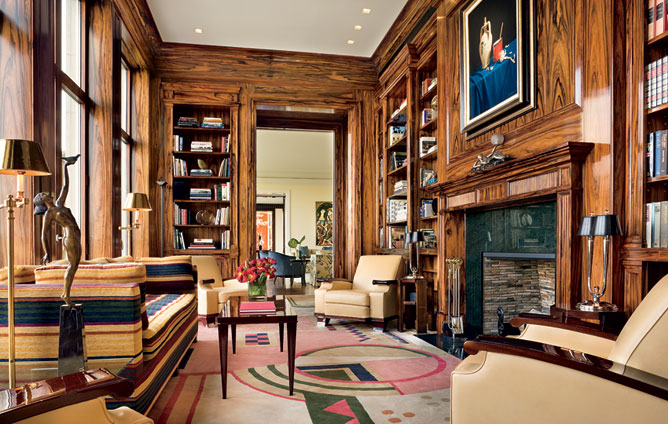

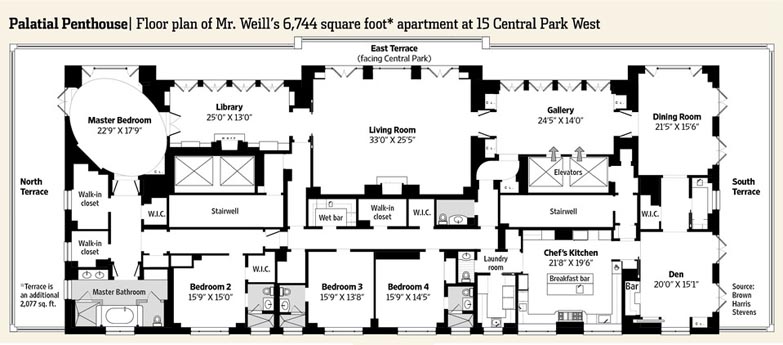
Asking price for apartment belonging to former Citigroup chairman and CEO Sandy Weill was $88 million. It went for a mere $82 million to a Russian billionaire who bought it for his daughter, making it the most expensive New York apartment ever.

Harry Newton who visited his son Michael and daughter-in-law Anne in Portland over the weekend for his son Michael’s 30th birthday. Daughter Claire and son-in-law Ted flew in from Boston. It was a truly super weekend. Michael and Anne work for Nike so we all went shopping for Nike gear. Neat stuff. I’m really impressed with the new materials being used in clothes and shoes. Athletic gear is no longer the boring, styleless stuff it was a few years ago. The new stuff is form-fitting, stylish and sports wonderful bright colors. Nike gives its employees a discount, but expects them to spend all their salaries on Nike gear. It’s “a virtuous circle.” A sound reason to recommend the stock.

An excellent Buffett commandment: buy what you know. Harry, how fluent are you in Korean and in reading & understanding Korean accounting and how they cook their books?