The piles of letters I found this weekend on my return from the west sorted into four clumps:
1. Appeals for money.
2. Some rent checks.
3. Some reports from iffy real estate syndicate investments.
4. And one “alternative investment” report from Morgan Stanley/SmithBarney, the story of which goes:
Years ago (in 2006) I got sold an investment in a private equity fund managed by a whiz at Citigroup. Well, the “whiz” later left (his magic evaporated), Citigroup gave up the business of mismanaging private equity funds and sold them to a firm called the StepStone Group, whom I’d never heard of. Anyway, I return from California to find that my $833,979 investment in the fund, now called StepStone Capital Partners II Onshore L.P. is worth $774,548 at the end of February. That’s a 7% reduction. So what happened? I call StepStone this morning. Upshot:
+ We’re doing awfully, like every private equity fund. (Romney’s are different. He gets fees. He isn’t a dummy, passive investor like me.)
+ The valuation I’m seeing is really the valuation of the fund as of September 30, 2011. StepStone is presently messing around doing its valuations. It takes them months. I don’t know why. Their only explanation is “That’s the way it is in private equity.” They tell me should have recovered the 7% because the stockmarket has performed better since September 30. Maybe.
+ Right now the fund, according to their best guesses, is worth 1.1 times what I invested in it, net of their ridiculous fees.
Think about that. I’m up a miserable 10% in six long years. They’re up at least that, and more in their “management” fees. And they didn’t invest anything, certainly not their time.
So why would anyone ever again invest in alternative investments peddled by Wall Street?
Perhaps because you’re desperate (and stupid)? Read this piece from yesterday’s New York Times:
Pensions Find Riskier Funds Fail to Pay Off
By JULIE CRESWELL
Searching for higher returns to bridge looming shortfalls, public workers’ pension funds across the country are increasingly turning to riskier investments in private equity, real estate and hedge funds.
But while their fees have soared, their returns have not. In fact, a number of retirement systems that have stuck with more traditional investments in stocks and bonds have performed better in recent years, for a fraction of the fees.
Consider the contrast between the state retirement fund for Pennsylvania and the one for Georgia.
The $26.3 billion Pennsylvania State Employees’ Retirement System has more than 46 percent of its assets in riskier alternatives, including nearly 400 private equity, venture capital and real estate funds.
The system paid about $1.35 billion in management fees in the last five years and reported a five-year annualized return of 3.6 percent. That is below the 8 percent target needed to meet its financing requirements, and it also lags behind a 4.9 percent median return among public pension systems.
In Georgia, the $14.4 billion municipal retirement system, which is prohibited by state law from investing in alternative investments, has earned 5.3 percent annually over the same time frame and paid about $54 million total in fees. The two funds represent the extremes, with Pennsylvania in a group of pension systems with some of the highest percentages of investments in alternatives and Georgia in a group of 10 with some of the lowest, according to groupings of funds identified by the London-based research firm Preqin.
An analysis of the sampling presents an unflattering portrait of the riskier bets: the funds with a third to more than half of their money in private equity, hedge funds and real estate had returns that were more than a percentage point lower than returns of the funds that largely avoided those assets. They also paid nearly four times as much in fees.
While managers for the retirement systems say that a five-year period is not long enough to judge their success, those fees nevertheless add up to hundreds of millions of dollars each year for some of the country’s largest pension funds. The $51.4 billion Pennsylvania public schools pension system, for instance, which has 46 percent of its assets in riskier investments, pays more than $500 million a year in fees. It has earned 3.9 percent annually since 2007.
Whether the higher fees charged by private equity firms and hedge funds are worth it has been hotly debated within the investment community for years. Do these investment entities, over an extended period of time, either offset the wild swings in assets during rough patches of the market or provide significantly higher gains than could be found in less-expensive bond and stock investments?
“We can’t put it in Treasury notes and bonds; that’s just not making any money,” said Sam Jordan, the chief executive of the Austin Police Retirement System in Texas.
James Wilbanks, executive director of the Oklahoma Teachers Retirement System, which has largely stayed with stocks and bonds, said that pension funds were obligated to take a cautious approach. “We all heard the stories about institutional funds that had more than half of their assets in private equity in 2008” and then had to sell, he said.
While both sides of the debate can point to various studies, the topic is taking on a sharper focus as more funds embrace the riskier strategy. By September 2011, retirement systems with more than $1 billion in assets had increased their stakes in real estate, private equity and hedge funds to 19 percent, from 10.7 percent in 2007, according to the Wilshire Trust Universe Comparison Service.
Public retirement systems are struggling to earn sufficient returns with interest rates near record lows and more and more workers qualifying for retirement. Their pension costs are growing fast, but state and local government returns are not keeping up.
A new study by the Government Accountability Office raised questions about how some of the riskier investments performed for public and private pension funds during the financial crisis. Meanwhile, some public retirement systems that increased their stakes in those investments are trying to curb those costs.
Fees for the $242 billion in California’s giant state pension system, known as Calpers, nearly doubled, to more than $1 billion a year, after it increased its holdings in private assets and hedge funds to 26 percent of its total in 2010, from 16 percent in 2006.
Calpers, which has earned 3.4 percent annually over the last five years, is pushing the managers of the funds for lower fees as well as reducing the number of outside managers it uses to try to bring costs down.
“I think it’s part of our job as public fund managers to do our best to drive a better bargain,” said Joseph A. Dear, the chief investment officer for Calpers.
Mr. Dear cautioned that there were big differences in how various alternative investments performed during the financial crisis.
He said that Calpers’s investments in real estate had been “a disaster” and that its hedge fund investments had not met their benchmarks and were under review. But he said that its private equity holdings had easily beaten public stock returns over the last decade.
“Over the longer term, that kind of outperformance represents real skill, not luck, and it’s worth paying for,” he said.
Heads of pension funds across the country feel trapped. Lower-risk bonds, like 10-year Treasury notes with a yield of around 2 percent, simply will not fill the gaps many systems face between what they have and what they owe retirees.
The Austin Police Retirement System, for example, moved 46 percent of the $505 million it oversees into alternative investments after the 2000 collapse of technology stocks produced steep losses.
However, the fund’s choice of investments – real estate in places like Las Vegas and Florida – did not provide much refuge when that bubble burst.
“Vegas was in a boom time,” Mr. Jordan, the fund’s chief executive, said. “Snowbirds were moving there from the Midwest. People were saying at one time it was going to get bigger than New York. Then the bust happened, and we owned some single-family developments, subdivisions, and there’s no one living in those.”
The fund has returned 2.5 percent annually over the last five years. Mr. Jordan still believes that over many years those investments will pay off, he said.
To be sure, it has been tough to find robust returns in any markets over the last five years. While the median return for private equity investments held by public pension funds was 7.2 percent annually, hedge funds returned only 2.74 percent, according to Wilshire TUCS. Likewise, global bonds earned 6.99 percent while global equities rose 3.68 percent.
Despite their tepid returns, retirement systems that have bet big on riskier investments are paying a hefty tab. While funds with little stakes in hedge funds and private equity pay an average of 17 cents on every $100 invested, funds with large stakes pay 77 cents.
The Pennsylvania state retirement system, which has about 46 percent of its money in alternative investments, paid those managers 77 percent of the system’s total $195 million in fees last year. Last fall, the system replaced the two consulting firms that had promoted that strategy. Over the last five years, its annual returns of 3.6 percent lagged behind its peers’.
In a series of e-mails, Pamela Hile, a spokeswoman for the Pennsylvania fund, said that the fund had made many new alternative investments from 2004 to 2007. Some of these entities, like venture-capital funds, often have negative returns in the early years as that money is invested, she said.
Noting that pension funds have time horizons that stretch into decades, Ms. Hile added that the retirement system had outperformed its 8 percent target over the last 25 years, with an 8.8 percent annual return.
Still, the allure of the riskier investments remains strong, even among public pension funds that without them have still performed better than other funds.
The Oklahoma Teachers Retirement System, which has posted returns of 5.5 percent over the last five years through a mix of stocks and bonds, is putting 10 percent of its fund into private equity and real estate funds.
When asked about the higher fees, Mr. Wilbanks, the fund’s executive director, said, “We believe the outperformance from moving into these categories can justify the additional fees.”
Son Michael swears by TurboTax. He’s used it for several years. He loves it. Ease and logic of use. Effortlessly joins in his Vanguard and Schwab accounts electronically. Keeps his previous taxes and background information on file.

Michael says it saves him hours of work and hours of pain. For TurboTax, click here.
Sugar is toxic and addictive. And we all eat too much of it. It puts us at risk for horrible diseases like diabetes and heart disease. That was the conclusion to a 60 Minutes segment last night. It’s also the conclusion of many pieces I’ve read in recent years.
Am I cutting back on my sugar consumption? Yes.
Is it hard for me? Yes, I admit to being addicted to the stuff.

You can watch the 60 Minutes segment here.
Favorite latest New Yorker cartoons.
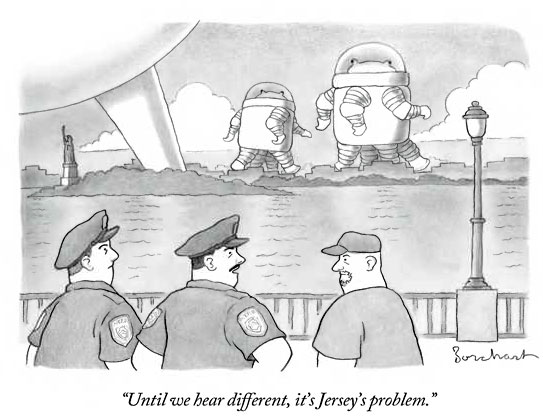
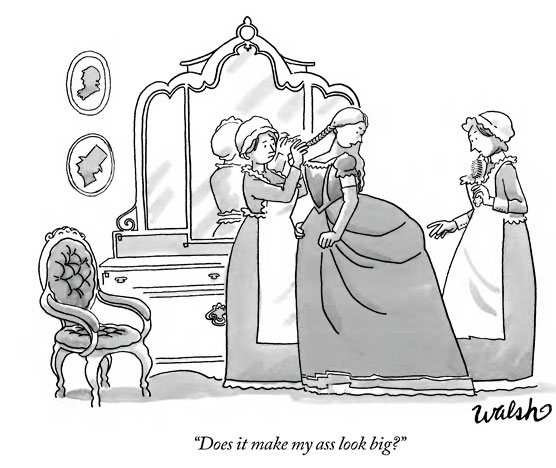
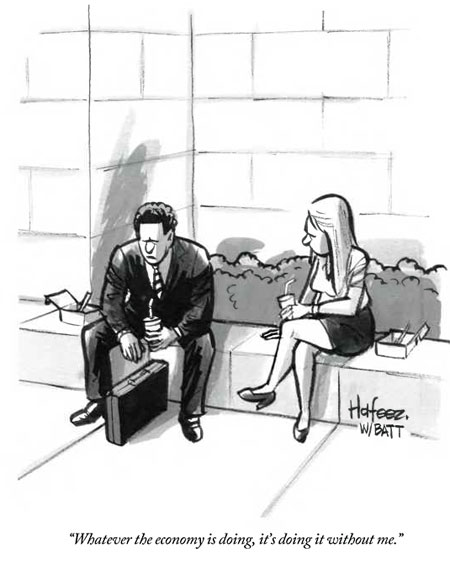
And my favorite…

Harry Newton who spent a little time over the weekend trying to coax Windows 7 to do what he wanted — and which the old Windows XP did flawlessly. I remain amazed at the orneriness of Microsoft’s designers to destroy some of the better aspects and some of my favorite parts of Windows XP. Still, Win 7 64-bit is probably a more stable system long-term, once I’ve fiddled it the way I want. But, boy, what idiots they are. For example, Windows 7 has “search” (just above Start). Microsoft ballyhooed its Win 7 “search” over its miserable and slow search in Vista and XP. But it’s total nonsense. I tested it against Search Everything, a tiny free program on the Internet. Microsoft found 79 instances. Search Everything found 445, including the instance I wanted — which Microsoft didn’t find. In contrast, the search function on a new Apple Mac (called Spotlight) is lightning fast and bullet-proof accurate. It finds words within files, not just by file name. And it does so instantly. So, why am I hesitating? Because I’m stubborn, and/or stupid and/or enjoy pain. Go figure.

Great article here, and a valuable reference. Prior to reading this,
Harry, there's something wrong with your calendar tool. It looks like maybe February having a leap day messed things up. As now March has only 29 days as well:
– http://www.technologyinvestor….
Like in the Graduate, the new mantra is one word Harry: Tungsten. Watch and see. A great hard asset for the future, unless you think wars are passe…
Another convert here, Harry. I left the MS Windows world a little more than 2 years ago by diving in with a 15″ MacBook Pro and have NEVER been more satisfied with a computer ever since. I hated the thought of paying double the price for a laptop but soon found out that headache free computing is really worth the extra price that Apple demands for its products. While I never owned an Apple product except an iPod, Microsoft encouraged me with the introduction of Vista. What a crappy software that was. Like you, I stuck with XP even when it was no longer offered with new machines because I knew it worked. Unfortunately, it became increasingly difficult to find a new laptop that was not designed to push people away from XP and into the newer and inferior iteration. I got my second bite of Apple's way of doing things when I bought my iPhone 3G which introduced me to the concept of trouble-free ownership and true pleasure of using a technology product that did not require headaches to be a normal part of the ownership experience. Even with the XP, the blue screen of death was a semi-regular acquaintance of my computing life. It has now been a little more than 2 years since I had a program or my laptop lock-up or freeze on me. Not only is the frustration gone but the actual experience derived from its intuitiveness is an absolute pleasure. The power, the intuitiveness, the sleek design, and many other features clearly show that Apple makes its products with the user in mind. Even upgrading to the Lion version set me back all of $29 – compare that to Microsoft's price to upgrade to its latest version of Windows which is about 3 to 4 times as much. In the long run, Apple computers are not that much more expensive if you factor in the software upgrade prices and obsolescence of the hardware they run which forces upgrades. Trust me, Harry. It will make your computing life much easier. I know you've mentioned in the past that you have a software that is critical for you that is not available for the Mac. My suggestion is for you to get someone to write it for you. Go to oDesk or Freelancer and hire someone to do it for you and start enjoying life without the blue screen of death!
And Harry, just use Parallels on your new Mac (don't set it up in Bootcamp as some recommend) to run your Windows-only apps, side-by-side with Mac apps. You'll need to get a copy of Windows as well to run inside it. And you may find over time that you won't be so stuck on those Windows apps anyway, once you start running the Mac. At least, that's what my Mac guy tells me – says it happens to all his customers.
Harry get the MacBook Air 13” already
or wait for new slim MacBook Pro’s. I switched from my old Windows XP ThinkPad
T60 over 18 months ago with no regrets. Even got used to the Apple keyboard,
just give your fingers a chance to learn it. With Apple’s Time Machine
automatic backup to my 2TB Time Capsule you can dispense with your clone disk
routine. I keep a HP Windows 7 machine around to run Fidelity Active Trader Pro
on some large monitors but all my daily stuff is on my 13” MacBook Air. Long
time reader – Gary.
I'm with Gary. I am a recent convert to Mac. I still have Windows 7 in my office, which is a huge improvement over Vista, but I just spent 2 weeks on the road with my 13″ MacBook Air and nothing else, and it was a pleasure. Fast, long battery life, light, great screen, and can do everything I need to do. I dread returning to Windows.
Harry, as I recall you have mentioned you live on central park; would it be a fair guess to speculate that instead of all the Goldman, etc, private investments and the various nerve-wracking securities investments, you might have done better investment-wise, by buying more apartments in your present building. Would be an interesting computation. I used to live in Greenwich Village in a big loft and when I sold it after 15 years there, the return hugely outweighed any other kind of investments return. Maybe sticking to investing in NYC condos, rented in the interim, is not a bad strategy?