It’s hard to be depressed when the news is so ebullient. To wit, today’s “10 Things you need to know before the opening bell” from Business Insider include:
- Asian markets were up in overnight trading with the Hang Seng up 0.9% boosted by Chinese trade data. Europe is rallying and U.S. futures are modestly higher.
- Chinese exports climbed 14.7% in April, and imports were up 16.8%. Economists are again attributing the strong export data to over-reporting on the part of exporters.
- German industrial production increased 1.2% month-over-month in March. This beat expectations for a 0.1% fall. On a year-over-year basis production was down 2.5%.
- Japanese automaker Toyota reported a net profit of 313.9 billion yen ($3.17 billion), beating expectations for 263.8 billion yen. The company also said its net income is projected to increase 42% in the year ending March 2014, but this missed analyst expectations.
- Investors will meet at the Lincoln Center this afternoon for the 18th annual Sohn Investment Conference. This year’s speakers include heavy weights like Bill Ackman, David Einhorn, Kyle Bass, and Paul Singer. Follow the event LIVE at Business Insider >
- Walt Disney reported a 32% rise in Q2 profit beating expectations. It reported net income of $0.83 per share, on revenue of $10.55 billion.
You can sign up for Business Insider’s interesting (and occasionally useful) free email newsletters here.
I’ll be at the Sohn Investment Conference this afternoon and will report on it tomorrow. Many of last year’s recommendations were stellar and some were awful. Here’s the take. Click here. If you’re in town, please attend. The conference starts at 12 noon. Proceeds go to charity. For more, click here.
Meantime, the big news for my portfolio is the super good news from Whole Foods. See below.
For more on our stockmarket, I take you to a story that was on Bloomberg this morning:
U.S. Stock Futures Little Changed; Whole Foods Advances
U.S. stock futures were little changed after the benchmark Standard & Poor’s 500 Index extended its all-time high, as investors awaited earnings from News Corp. and Monster Beverage Corp.
Whole Foods Market Inc. (WFM) gained 8 percent in pre-market New York trading after the biggest U.S. natural-goods grocer posted better-than-estimated earnings and raised its full-year profit forecast. Electronic Arts Inc. rallied 7.9 percent In Germany after the video-game maker predicted annual profit that exceeded analyst projections. Symantec Corp. lost 4.8 percent in New York after it said quarterly sales and revenue will miss analyst estimates.
S&P 500 futures expiring in June rose less than 0.1 percent to 1,621.3 at 7:26 a.m. in New York. The gauge for U.S. equities advanced 0.5 percent yesterday. The benchmark topped 1,600 for the first time on May 3. Contracts on the Dow Jones Industrial Average (INDU) added 11 points, or 0.1 percent, to 14,994 today.
“The earnings season has confirmed that we are in a low growth environment, with companies missing sales estimates and reporting sluggish top-line growth, but beating earnings-per- share estimates,” said Ivo Weinoehrl, who helps oversee about $657 billion at Deutsche Asset & Wealth Management in Frankfurt. “Companies are managing to squeeze out profits while margins are already at record highs. Share buybacks are also driving EPS through reduced share count.”
About 72 percent of the S&P 500 companies that have released results since April 8 have exceeded profit projections, while 52 percent have missed sales estimates, data compiled by Bloomberg show. News Corp. and Monster Beverage are among five companies reporting earnings today.
The S&P 500 (SPX) rose to its fourth straight record close yesterday and the Dow closed above 15,000 for the first time as companies reported better-than-estimated earnings. U.S. stocks are in the fifth year of a bull market amid three rounds of bond purchases by the Federal Reserve.
“`It’s hard to justify these levels in the market,” Weinoehrl said. “Liquidity and a re-pricing of equities versus other asset classes is driving the market higher and this may continue, but there’s no fundamental data that has made me more positive in the long run. On a standalone basis, risk-reward does not look particularly attractive.”
Whole Foods gained 8 percent to $100.20 in pre-market New York trading. Net income rose to about $142 million, or 76 cents a share, from $118 million, or 64 cents, a year earlier, the Austin, Texas-based company said yesterday. Analysts had projected profit of 73 cents a share, the average of 24 estimates compiled by Bloomberg.
My friends believe we should intervene in Syria. I don’t. Neither does Fareed Zakaria who writes on foreign affairs for Time. His latest piece, which makes sense to me, appears in this week’s issue:
With or Without Us
Those urging the U.S. to intervene in Syria are certain of one thing: If we had intervened sooner, things would be better in that war-torn country. Had the Obama Administration gotten involved earlier, there would be less instability and fewer killings. We would not be seeing, in John McCain’s words of April 28, “atrocities that are on a scale that we have not seen in a long, long time.”
In fact, we have seen atrocities much worse than those in Syria very recently, in Iraq under U.S. occupation only few years ago. From 2003 to 2012, despite there being as many as 180,000 American and allied troops in Iraq, somewhere between 150,000 and 300,000 Iraqi civilians died and about 1.5 million fled the country. Jihadi groups flourished in Iraq, and al-Qaeda had a huge presence there. The U.S. was about as actively engaged in Iraq as is possible, and yet more terrible things happened there than in Syria. Why?
The point here is not to make comparisons among atrocities. The situation in Syria is much like that in Iraq–and bears little resemblance to that in Libya–so we can learn a lot from our experience there. Joshua Landis, the leading scholar on Syria, points out that it is the last of the three countries of the Levant where minority regimes have been challenged by the majority. In Lebanon, the Christian elite were displaced through a bloody civil war that started in the 1970s and lasted 15 years. In Iraq in 2003, the U.S. military quickly displaced the Sunni elite, handing the country over to the Shi’ites–but the Sunnis have fought back ferociously for almost a decade. Sectarian killings persist in Iraq to this day.
Syria is following a similar pattern. the country has a Sunni majority. The regime is Alawite, a Shi’ite subsect that makes up 12% of the population, but it also draws some support from other minorities–Druze, Armenians and others–who worry about their fate in a majoritarian Syria. These fears might be justified. Consider what has happened to the Christians of Iraq. There were as many as 1.4 million of them before the Iraq war. There are now about 500,000, and many of their churches have been destroyed. Christian life in Iraq, which has survived since the days of the Bible, is in real danger of being extinguished by the current regime in Baghdad.
All the features of Syria’s civil war that are supposedly the result of U.S. nonintervention also appeared in Iraq despite America’s massive intervention there. In Iraq under U.S. occupation, many Sunni groups banded together with jihadi forces from the outside; some even broke bread with al-Qaeda. Shi’ite militias got support from Iran. Both sides employed tactics that were brutal beyond belief–putting electric drills through people’s heads, burning others alive and dumping still breathing victims into mass graves.
These struggles get vicious for a reason: the stakes are very high. The minority regime fights to the end because it fears for its life once out of power. The Sunnis of Iraq fought–even against the mighty American military–because they knew that life under the Shi’ites would be ugly, as it has proved to be. The Alawites in Syria will fight even harder because they are a smaller minority and have further to fall.
Would U.S. intervention–no-fly zones, arms, aid to the opposition forces–make things better? It depends on what one means by better. It would certainly intensify the civil war. It would also make the regime of Bashar Assad more desperate. Perhaps Assad has already used chemical weapons; with his back against the wall, he might use them on a larger scale. As for external instability, Landis points out that if U.S. intervention tipped the balance against the Alawites, they might flee Syria into Lebanon, destabilizing that country for decades. Again, this pattern is not unprecedented. Large numbers on the losing side have fled wars in the Middle East, from Palestinians in 1948 to Iraq’s Sunnis in the past decade.
If the objective is actually to reduce the atrocities and minimize potential instability, the key will be a political settlement that gives each side an assurance that it has a place in the new Syria. That was never achieved in Iraq, which is why, despite U.S. troops and arms and influence, the situation turned into a violent free-for-all. If some kind of political pact can be reached, there’s hope for Syria. If it cannot, U.S. assistance to the rebels or even direct military intervention won’t change much: Syria will follow the pattern of Lebanon and Iraq–a long, bloody civil war. And America will be in the middle of it.
Favorite recent cartoons.
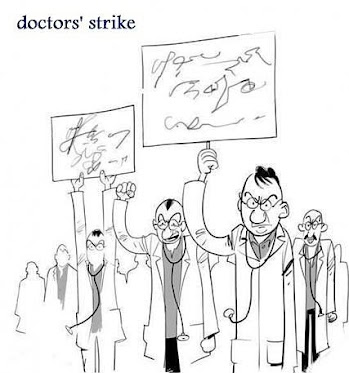

And my absolute favorite…..
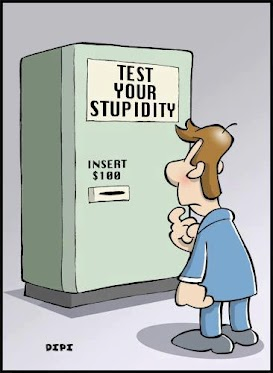
I’ve put money into those machines. Many of those machines. Worse, they never gave me a chit, “Welcome to The Stupid Club.” Had they, I could plaster a large wall…

Harry Newton who eyes the day with great excitement. His son-in-law is visiting tonight. And this weekend his daughter joins her husband (my son-in-law) for a Bat Mitzvah celebration of a dear friend’s daughter. I went to his Bar Mitzvah many years ago. Now I’m going to his daughter’s Bat Mitzvah. How time flies. She’s a wonderful kid. Her name is Rhea.

The rich in America are doing fine, but with 9%+ unemployment in Calif. and many millions more having given up, or just plain enjoying comfortable welfare, and so not being counted, it’s hardly a time to cheer. Perhaps if politicians pay got reduced 50% if unemployment is above 5% and 75% if above 7%, we’d see some real reasons to cheer. More likely, the numbers would get further played with.
Another loser who missed the market run up. This was the greatest opportunity to get rich in a generation and you blew it.
” It’s easier to make cars than to sell them” Founder Kiichiro
Toyoda….Brilliant man, Great company.
Harry,
It’s great you’re so positive about the market and seem to be in a buying mood. Too bad you weren’t so bent on buying when the market was struggling, which is the time to scoop up huge bargains. This market may well have a 10-15% upside before the (probably mild) correction. But those who think the market is going to the moon are the same morons who thought it was going to zero in 2009. Most of the TV talking heads on CNBC and the like are abject, complete idiots. They are very dangerous people and do a lot of damage to those who listen.
First of all, they’re not abject complete idiots.Second, most of them do an excellent job, reporting the news, ferreting out background material and doing informative interviews. No one is forcing anyone to act on their suggestions. in fact, if someone did, one could argue they weren’t that bright, or at the very least lazy. Your own research is what counts. I’m glad you did so well b scooping up the bargains. But what now?