The BIG story is Japan. Japan is spending money and embracing growth — in total contrast to Europe’s nutty, self-destroying obsession with austerity.
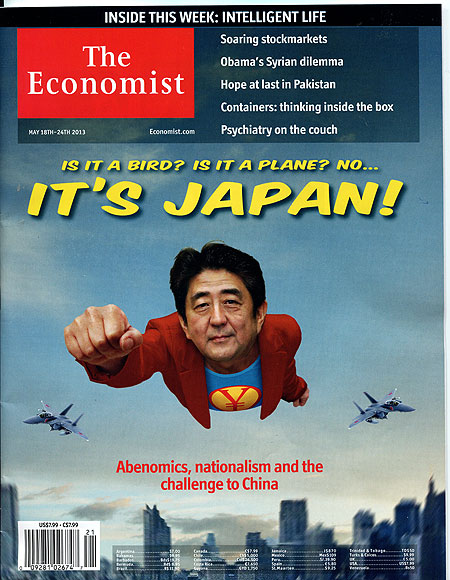
Says the Economist:
WHEN Shinzo Abe resigned after just a year as prime minister, in September 2007, he was derided by voters, broken by chronic illness, and dogged by the ineptitude that has been the bane of so many recent Japanese leaders. Today, not yet five months into his second term, Mr Abe seems to be a new man. He has put Japan on a regime of “Abenomics”, a mix of reflation, government spending and a growth strategy designed to jolt the economy out of the suspended animation that has gripped it for more than two decades. He has supercharged Japan’s once-fearsome bureaucracy to make government vigorous again. And, with his own health revived, he has sketched out a programme of geopolitical rebranding and constitutional change that is meant to return Japan to what Mr Abe thinks is its rightful place as a world power.
Mr Abe is electrifying a nation that had lost faith in its political class. Since he was elected, the stockmarket has risen by 55%. Consumer spending pushed up growth in the first quarter to an annualised 3.5%. Mr Abe has an approval rating of over 70% (compared with around 30% at the end of his first term). His Liberal Democratic Party is poised to triumph in elections for the upper house of the Diet in July. With a majority in both chambers he should be able to pass legislation freely.
Pulling Japan out of its slump is a huge task. After two lost decades, the country’s nominal GDP is the same as in 1991, while the Nikkei, even after the recent surge, is at barely a third of its peak. Japan’s shrinking workforce is burdened by the cost of a growing number of the elderly. Its society has turned inwards and its companies have lost their innovative edge.
Mr Abe is not the first politician to promise to revitalise his country-the land of the rising sun has seen more than its share of false dawns-and the new-model Abe still has everything to prove. Yet if his plans are even half successful, he will surely be counted as a great prime minister.
The reason for thinking this time might be different is China. Economic decline took on a new reality in Japan when China elbowed Japan aside in 2010 to become the world’s second-largest economy. As China has gained confidence, it has begun to throw its weight around in its coastal waters and with Japan directly over the disputed Senkaku/Diaoyu islands. Earlier this month China’s official People’s Daily even questioned Japanese sovereignty over Okinawa.
Mr Abe believes that meeting China’s challenge means shaking off the apathy and passivity that have held Japan in thrall for so long. To explain the sheer ambition of his design, his people invoke the Meiji slogan fukoku kyohei: “enrich the country, strengthen the army”. Only a wealthy Japan can afford to defend itself. Only if it can defend itself will it be able to stand up to China-and, equally, avoid becoming a vassal of its chief ally, the United States. Abenomics, with its fiscal stimulus and monetary easing, sounds as if it is an economic doctrine; in reality it is at least as much about national security.
Perhaps that is why Mr Abe has governed with such urgency. Within his first weeks he had announced extra government spending worth ¥10.3 trillion (about $100 billion). He has appointed a new governor of the Bank of Japan who has vowed to pump ever more money into the financial system. In so far as this leads to a weaker yen, it will boost exports. If it banishes the spectre of deflation, it may also boost consumption. But printing money can achieve only so much and, with a gross debt of 240% of GDP, there is a limit to how much new government spending Japan can afford. To change the economy’s long-run potential, therefore, Mr Abe must carry through the third, structural, part of his plan. So far, he has set up five committees charged with instigating deep supply-side reforms. In February he surprised even his supporters by signing Japan up to the Trans-Pacific Partnership, a regional trade agreement that promises to force open protected industries like farming.
Nobody could object to a more prosperous Japan that would be a source of global demand. A patriotic Japan that had converted its “self-defence forces” into a standing army just like any other country’s would add to the security of North-East Asia. And yet those who remember Mr Abe’s first disastrous term in office are left with two worries.
The danger with the economy is that he goes soft, as he did before. Already there are whispers that, if second-quarter growth is poor, he will postpone the first of two consumption-tax increases due in 2014-15 for fear of strangling the recovery. Yet a delay would leave Japan without a medium-term plan for limiting its debt and signal Mr Abe’s unwillingness to face up to tough choices. The fear is that he will bow to the lobbies that resist reform. Agriculture, pharmaceuticals and electricity are only some of the industries that need to be exposed to competition. Mr Abe must not shrink from confronting them, even though that means taking on parts of his own party.
The danger abroad is that he takes too hard a line, confusing national pride with a destructive and backward-looking nationalism. He belongs to a minority that has come to see Japan’s post-war tutelage under America as a humiliation. His supporters insist he has learned that minimising Japan’s wartime guilt is unacceptable. And yet he has already stirred up ill will with China and South Korea by asking whether imperial Japan (for which his grandfather helped run occupied Manchuria) really was an aggressor, and by allowing his deputy to visit the Yasukuni shrine, where high-ranking war criminals are honoured among Japan’s war dead. Besides, Mr Abe also seems to want more than the standing army Japan now needs and deserves. The talk is of an overhaul of the liberal parts of the constitution, unchanged since it was handed down by America in 1947, Mr Abe risks feeding regional rivalries, which could weaken economic growth by threatening trade.
Mr Abe is right to want to awaken Japan. After the upper-house elections, he will have a real chance to do so. The way to restore Japan is to focus on reinvigorating the economy, not to end up in a needless war with China.
The easiest way to play this is through DXJ, which fortunately, I’ve been recommending for some time and has been a big winner.
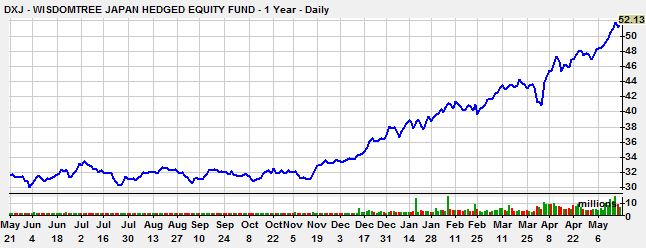
For another story on Japan — So far the battery charger is working in Japan — click here.
I always spend much of the weekend reading. I found some neat stuff:
Pakistan’s continues its decline. Ever since I read Freedom at Midnight, a wonderful book on how India got its freedom from England and Pakistan was created, I’ve always been fascinated by that part of the world. I made it to India and Afghanistan not Pakistan. Politics and corruption are what destroy countries. And few countries exemplify that as much as poor Pakistan. A New York Times writer reports on his long train ride across the country.
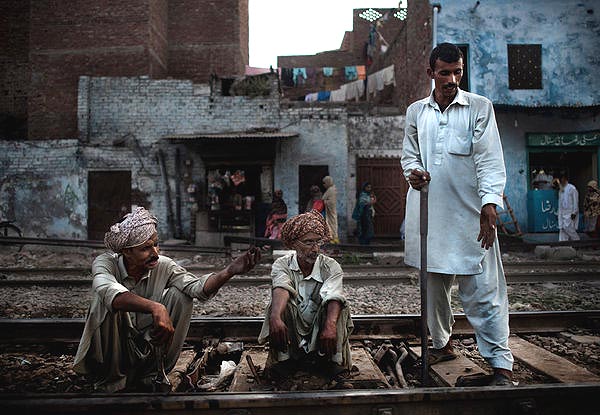
Trying to fix the tracks near Lahore. Pakistan’s railways, which once linked a fractious young nation, have been neglected. More photos, click here.
After Decades of Neglect, Pakistan Rusts in Its Tracks
In a Journey on a Crumbling Railway, a Picture of a Nation’s Troubles
For the full journey, Click here.
Pakistan is so badly managed, it just expelled the best foreign correspondent in the country — a man called Declan Walsh. For more on that gruesome story, click here.
What caused the civil war n Syria? Hint; It’s wasn’t the Arab Spring. It was water — a huge drought, government inaction and seriously awful corruption. Thomas Friedman just visited Syria and heard the story:
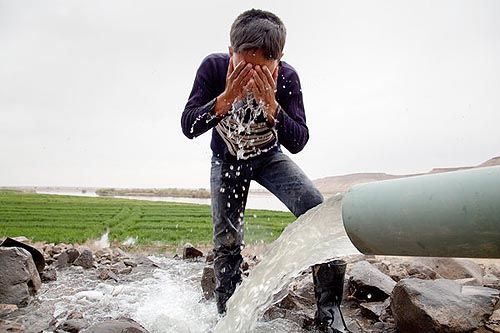
Without water, revolution
The Syrian regime ignored a devastating drought, radicalizing its citizens.
Read his story here.
Samsung Galaxy S4 vs. iPhone: Advantage iPhone. Which should I buy? (Hint, iPhone 5.)
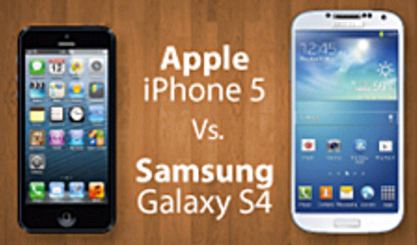
From IDG Connect, the summary:
The G4 is essentially a Moore’s Law update of the same Android platform we’ve had. It packs a few exciting new HTML5 features like WebGL and IndexedDB; and fills out HTML5 support in other areas. But some of the new HTML5 features are a little uneven and the rough performance of Android’s core engine makes them feel in need of a patch update before we can really count on them. For the highest performing, highest quality HTML5 platform, we still have to give our continuing thumbs up to the year-old iPhone 5 vs. the Samsung Galaxy S4.
For the full review, comparing the two phones, click here.
Ten useful tips for troubleshooting Outlook problems. From TechRepublic, click here.
Persuasive marketing. Outside a bar in Coral Gables, Florida.


Harry Newton who recommends an iPad Mini for Fathers’ Day. Tomorrow I’ll list some of the best iPad apps.

I would appreciate the benefit of your personal, portable computing experience.
On January 25, 2013 you commented:
“I want one. This is the huge Samsung Galaxy Note II. and it puts my puny iPhone 5 to shame”
On May 16, 2013 your comment was:
“I schlepp my ThinkPad X220 laptop everywhere. To get onto the Internet I use Personal HotSpot on my Verizon iPhone 5”
You have also many times recommended MiFi (Mobile Hot Spots) in place of the cellphone Personal Hotspot. How do you decide which to use when?
On May 20, 2013 the comment was:
“Samsung Galaxy S4 vs. iPhone: Advantage iPhone. Which should I buy? (Hint, iPhone 5.)”
On May 20, 2013 you suggested:
“Harry Newton who recommends an iPad Mini for Fathers’ Day”
Is this the iPad Mini without the cellphone built-in?
All of these are excellent suggestions that work but I am bogged down in the cost/benefit/feature/function analysis. What would you carry if you were going to travel the world and could only take the least number of gadgets (preferably one and not more than two) like Wandering Earl. Like does 3G or 4G exist everywhere?
I have read your trip accounts with interest and it is amazing how similar your equipment and Wandering Earl’s is. Unfortunately I have slightly different needs so the laptop and some kind of MiFi Hot Spot comes closest but I love the tablets. What to do? So many sheep, so little time.
An iPhone 5 from AT&T (with GSM) and an iPad mini with WiFi. should work fine for you. The real question is how much typing do you do? If you do a lot, you’ll need a laptop with a real keyboard. On the other hand, my wife uses her full-blown iPad to type on and finds it fine. Get yourself to an Apple store and play with the equipment.