I bought some New York MTA muni bonds yesterday. One will pay me 5.08% triple tax-free, which is far better than a slap in the belly with a cold fish. I’ll bet I’ll sell it for a profit in a few months.
There are some years that bonds are a better investment than equities. That was the case in the last few years when interest rates plummeted and bond prices rose. Now the opposite is happening. Interest rates are rising and bond prices are falling. Sometimes some bonds fall too much.
Bonds trade by appointment. That’s a silly way of saying there is no public market in them — like there is for equities. Some days when things are weird (like the last few days), buyers just dry up and you can pick up bargains.
I’m not doing anything with my equities — except kicking out stuff that has hit my stops. I can feel the panic ebbing. I feel optimistic.
The fashions in Get Rich Quick schemes. The ONLY guaranteed way to achieve a small fortune is to start with one. That would be the end of the story, except for ethanol, California desert land, dot com, sub-prime mortgages, solar energy, financial derivatives, electric cars (think Fisker) and water. This month’s Harper’s Magazine has a delicious piece on “Glaciers for Sale. A (heart-warming?) global-warming get-rich-quick scheme.” Some excerpts:
The Canadian dentist behind what may or may not have been the world’s first global-warming Ponzi scheme either lives or does not live in Iceland. His name is Otto Spork, and when I first learned of him, in 2008, he had secured the water rights to a glacier north of Reykjavík and quit his dental practice to run the most successful hedge fund in Canada. His Toronto investment firm, Sextant Capital Management – the name was chosen to honor his paternal grandfather, Johan Marinus Spork, a Dutch sea captain – had recently been claiming 730 percent returns for its investors. Spork’s sales pitch was simple: the world was warming and parts of it were running dry, so Sextant bought water companies. Hundreds of Canadian and offshore investors were persuaded to buy in – and Spork earned millions of dollars in management fees as money poured into his funds. The arrangement succeeded magnificently until December 8, 2008, three days before Bernie Madoff was arrested, when the Ontario Securities Commission accused Spork of a massive fraud. …
Iceland has more water per capita than any other country on earth: 142 million gallons of annual runoff for each of its 300,000 residents, roughly six times more than water-rich Canada, fifty times more than the United States, 250 times more than China, and 25,000 times more than the United Arab Emirates. Until the global financial crisis that locals call the kreppa – from a verb meaning “to clench” – Iceland also had more bubble per capita: there was no country more in the thrall of commercial banking and paper wealth. In 2008, three formerly high-flying banks had to be nationalized, the International Monetary Fund stepped in with a bailout, and the government collapsed. All this helped explain why no one in Iceland seemed worried about building an economy on water, not when the last one had been built on air….
“I think the next war in the world is about water,” he said. “Because, you know, you need water if you want to live.” The Major is one of the longest-serving mayors in Iceland: he has run the 1,700-person, 260-square-mile Snæfellsbær municipality since 1998, when he was thirty-three. Water seekers had come to Rif from all over the world. “Companies from England, from Norway, from Denmark,” he said. “An Arab from Kuwait. An agent for a guy from China, or something like that. Most of them, they are thinking the same thing: using old oil ships. Old oil ships, they have just one hull” – considered unsafe and outlawed in the United States after the Exxon Valdez spill – “so they have nothing to do now.” If the Arctic melted enough, Iceland could become the next Singapore, and ships conveying bulk water could go to Asia over the top of the world. But there were no publicly announced water deals with China yet. Only rumors. “Before, people said, `We have a lot of Arabs who want to buy water,’ ” the Major told us. “Now, they’re not talking about Arabs. Now it is China.” …
One guess as to how Spork the dentist was transformed in 2006 into Spork the hedge-fund manager is that he emulated a Canadian self-made billionaire named Eric Sprott. Spork knew Sprott: for almost thirty years, his sister Anne was Sprott’s deputy. While Otto filled cavities, she co-managed a Sprott hedge fund, investing in such commodities as molybdenum, a trace element crucial to the global desalination boom (each new reverse-osmosis plant requires as much as a million pounds of it). Anne helped the fund grow by 600 percent over the course of a decade and became supremely rich in the process. Sprott had later hired Spork’s eldest daughter, J’Aime, to work at Sprott Asset Management headquarters in Royal Bank Plaza. (Spork sometimes got Sprott’s mail.)
Sprott had made wildly successful bets on gold and silver; in 2011, Bloomberg Businessweek reported that his company “oversaw more gold than Brazil held in its reserves.” He and a thirty-five-year-old protégé named Kevin Bambrough had authored “Investment Implications of an Abrupt Climate Change” in 2006 – one of the first reports of its kind. “Harsher summers and intense winters are in the offing,” wrote Sprott and Bambrough,
and they generally cause agriculture yields to drop sharply. Rising sea levels that intrude into coastal aquifers and lead to hotter summers also sap water resources. Mankind is staring starkly at the possibility of a severe crisis in water and food supply.
Unlike Spork, Sprott never found the right way to invest in water. “Governments get involved and don’t allow companies to raise prices exorbitantly,” Bambrough explained to a reporter from the National Post in 2007. “It’s hard to make outsized returns.” Instead, Bambrough and Sprott began investing in farmland as the grain belt moved north. In 2009, they founded One Earth Farms, leasing cheap, underutilized lands in Canada’s prairie provinces from First Nations tribes. The company now controls more farmland than anyone else in the country. …
Only one Sextant investor was willing to talk to me. Jeremy Charlesworth was CEO of Moonraker, a U.K.-based investment firm, and when I cold-called him in London one afternoon, he was delighted to know that there were other people still stuck on Spork. In 2007, he decided to bet his fund’s funds on water. He landed on Sextant, which was then sending out press releases with such titles as “Water Shock has Sextant Global Water Fund on Fire.” Spork seemed to ignore typical water investments – the utility stocks, the desalination companies, the makers of valves and gaskets – in favor of the thing itself. “Of the seven or eight funds we looked at, he was the only one who actually had water rights,” Charlesworth said. “The rest were plays on utilities” – political plays, really, because governments, not markets, set utility prices. “You can invest in gold shares,” he said, “or you can invest in gold.” …
In August 2008, on the verge of the global financial crisis, Spork sent his funds’ clients an upbeat newsletter: “Even though the broad markets are down and most commodities have been heading for a 50% retrenchment from their recent highs,” he wrote, “I am very happy to report to you, the Investors in our Sextant Funds, that you are in invested in ‘Water’. Congratulations!!!” The letter enumerated the reasons for water’s rise as a commodity — climate change, population growth, pollution, urbanization, China — and disparaged desalination as pumping out a product that tasted bad and a byproduct, brine, that was bad for the environment. “This month’s return for your Fund is, we believe, only the tip of the iceberg,” Spork continued. “Consider adding to your investment before the rest of the world discovers us.”
By the summer of 2008, at least one investor, Baron Lambert, began to think that Sextant’s numbers were too good to be true. The baron asked Dino Ekonomidis to explain how the funds could possibly be doing so well. He was ignored. He then asked for his $7 million investment back, plus any profits. He was again ignored, until late September, when Dino issued an official notice of redemption — only to then claim he lacked the authority to actually release Baron Lambert’s money. Like Beca, Lambert filed an injunction in an unsuccessful attempt to get his money back before Spork disappeared.
Other investors were shown letters of intent from three of the thirstiest water utilities on the planet: the Los Angeles Department of Water and Power, the San Diego County Water Authority, and the Orange County Water District. “Whereas, IGP is the exclusive provider of the pure water derived from the Snow Mountain Glacier in Iceland and delivered in bulk,” read the LADWP letter, “and it makes these waters available globally in all packaging sizes; and whereas, Mr. Wally Know is a qualified business entity . . . ” The letters looked official, but the LADWP commissioner’s real name was Wally Knox. They were forgeries.
For the full article, click here.
Wi-Fi is now available on more and more planes flying around the U.S.. The service is pricey but useful. Often there are “deals.” Read more. Click here.
More travel tips.
+ Rent a MiFi unit from Xcom Global. Save you traipsing everywhere in search of Wi-Fi. And it’s much more secure. About $15 a day. You save on data roaming. You can make free Skype calls. You can download your email and big files. Data is umlimited, though they ask you not to abuse the service — e.g. by downloading a two-hour movie. I’ve used these guys before. They’re good and their equipment made by Novatel works fine. You give them your travel plans, pay for your rental. Your unit arrives the day before you leave. Make sure you send it back immediatley on your return, otherwise you’ll get charged overtime. FedEx shipping is included in the price. Click here.
+ I signed up for the U.S. Government’s GOES program. On return to the U.S. you swipe your passport in a ATM-like machine. And you’re in. Saves standing in the line in front of the Immigration booth. Susan loves it and has used her pass several times. Makes her feel special, which she is. You can fill in all the stuff they need online. And you’ll need an interview. I haven’t done mine yet, but Susan did. She said it was easy. American Express Platinum will actually pay the $100 fee. To begin your application, click here.
This is so beautiful;
A little boy says to his mother, “Mummy, how come I’m black and you’re white?”
His mother replied, “Don’t even go there! From what I can remember about that party, you’re lucky you don’t bark!
The question.
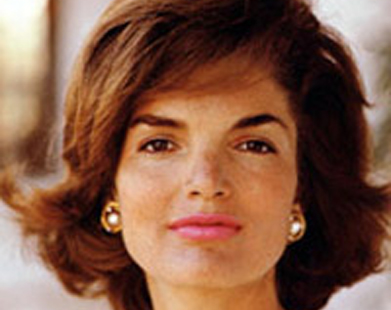
Henry Kissinger once asked Chou En-Lai to theorize on what might have happened if Nikita Khrushchev had been assassinated instead of John F. Kennedy.
After a moment’s thought, Chou En-Lai answered: “I don’t believe Mr. Onassis would have married Mrs. Khrushchev.”

Harry Newton who enjoys watching Wimbledon tennis (ESPN, The Tennis Channel and later ABC). Meanwhile, my favorite player, a Russian called Maria Kirilenko, who was the tenth seed, sadly got beaten by Laura Robson of the U.K. and is out of Wimbledon:
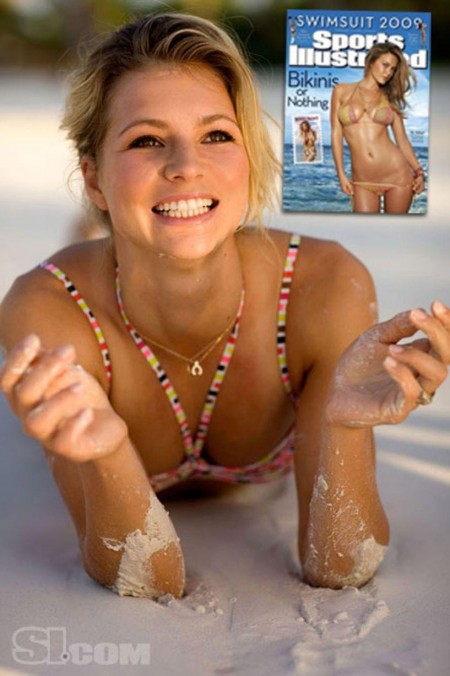
This is her modeling for Sports Illustrated. Todd can’t stop burbling about how gorgeous this lady is. “Puts Sharapova to shame.” Pity his tennis game doesn’t match his taste in women.

Favorite Henry line,“Nobody will ever win the battle of the sexes. There is too much fraternizing
with the enemy.”