Apple will introduce the new iPhone 5S on September 10. That’s the latest rumor. It will be faster, have a better camera, have a better flash, and an improved operating system which will have a fingerprint reader. Click here. I’m sure this rumor will do something for the stock, probably positive.
There is buzz about gold. It seems to be inching up.
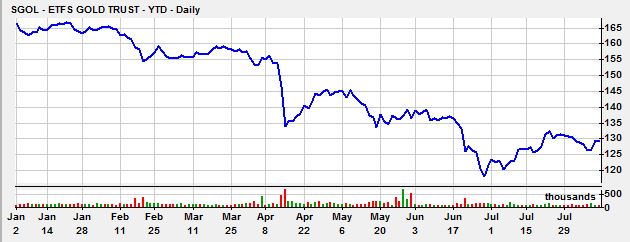
From Richard Russell’s latest newsletter:
The great Dow Theorist, George Schaefer, set up two equal-dollar amount accounts early in the fabulous bull market that started in 1949. One account consisted of blue chip stocks and the other consisted of low-priced “cats and dogs.” Schaefer told his subscribers that towards the end of the bull market his low-priced account would far outstrip his blue chip account. And sure enough, that’s exactly what happened.
The reader verdict on Sprouts? Most (not all) readers seem to like it. I don’t think buying SFM is a slam dunk. It’s not Whole Foods. For reader comments on Friday’s site, click here.
JPMoran’s Tom Lee: “I Had Lunch With 80 Wealth Advisers, And What They Told Me Has Me More Bullish.”
In his latest note to clients, JPMorgan chief U.S. equity strategist Tom Lee – who has the highest year-end S&P 500 price target on Wall Street – passes along a few interesting anecdotes. Click here.
Strength of indices defies climate of declining earnings
We hear a lot about the jobless recovery. In much of Europe, unemployment is at almost unthinkable levels. Even in the US, jobs are not returning as swiftly as improvements in other economic indicators suggest they should.
But the stock market’s profitless recovery may be even more baffling. Another quarter of corporate results is almost in the bag, 2013 is half over and stock markets, led by the US and Japan, are rallying. And yet corporate earnings offer no great support, companies are talking down their prospects, and the gap between the US and the rest is widening.
According to Bloomberg data, trailing 12-month earnings per share for the S&P 500 are 16 per cent above their level of October 2007 (when both earnings and share prices peaked before the financial crisis). On the same basis, earnings for the MSCI EAFE index, covering the rest of the developed world, are down 37 per cent. Those for the FTSE-Eurofirst 300 are down 42 per cent.
Earnings for the MSCI emerging markets index are up since October 2007 – but by only 13 per cent, having peaked and started to decline two years ago.
Look closely at the raw numbers for the US (with thanks to the regular Equity Market Arithmetic research produced by Société Générale’s Andrew Lapthorne), and they turn out to be less inspiring. S&P 500 companies are on course to increase earnings by 3.6 per cent year on year for the second quarter. But they have declined by 1.3 per cent once financials are excluded. During those 12 months, bear in mind, the S&P gained 18 per cent, and its financials index gained 33 per cent.
As in economics, however, what looks like a drab story of slow progress in the US turns into something far more impressive when compared with the rest of the world. Companies in MSCI’s World excluding the US index have suffered an average 6.5 per cent decline in earnings over the past year. Earnings are down 24 per cent from its peak.
Mining companies, hobbled by falling metals prices, have been a lead weight on performance. But financials have enjoyed an unrepeatable good year, thanks to a low base. For example, this year’s earnings in Europe excluding the UK are expected to rise by 27 per cent, according to the consensus. Strip out the financials, and this becomes a fall of 1.3 per cent.
Revenues, driven by the US economy, are behind the gap. Since October 2007, S&P 500 companies’ revenues are up 17 per cent. In Europe, they have been static. Looking at smaller US companies, more exposed to the US economy, revenues for the Russell 2000 index are up by a third since the start of the crisis; those for the top 50 mega-caps, presumably more globally exposed, are up only 3 per cent.
Stock markets are supposed to react primarily to changes in expectations for the future. But there is no great positive momentum in brokers’ sentiment.
Globally, upgrades are only 42 per cent of changes in estimates. The rest are downgrades, and so earnings momentum remains downwards. Japan, where this ratio is 55 per cent for this year, is the only major market where upgrades outnumber downgrades. Emerging markets, at 33 per cent, have the most sluggish momentum.
No sector is enjoying net upgrades for this year, while miners, already deeply out of favour, continue to downgrade. Globally, upgrades make up only 22 per cent of their forecast changes.
So do earnings give any reasons to rally? First, while companies are guiding expectations downwards, they are doing so at a slower rate than for several quarters, says Thomson Reuters. Negative pre-announcements for the third quarter outnumber positive ones by only 3.7 to one.
Second, the quarter just gone saw some successful earnings management. 67 per cent of US companies surprised investors positively, compared to the low bar they had set for themselves. Those that missed expectations were rewarded by sharp sell-offs (HSBC last week was a good example), but a pattern of positive surprises kept stocks moving upwards amid the low volumes of the northern hemisphere summer. Further, 55 per cent of US companies beat expectations for revenues – the best out-turn in four quarters.
Finally, US margins have barely dipped from their record highs. They are geared to profit from a more robust recovery.
But the real reason has to do with cash. US companies are not generating that much in revenues but, over the past 12 months, they returned a record amount of it to investors, according to JPMorgan. This is an admission that they see few opportunities to invest for growth. But, in an environment where investors take little on trust and are desperate for a yield from anywhere, it has helped the rally keep going. This is not a strategy that can last forever. At some point, companies must start generating more revenues and profits with which to make these payouts.
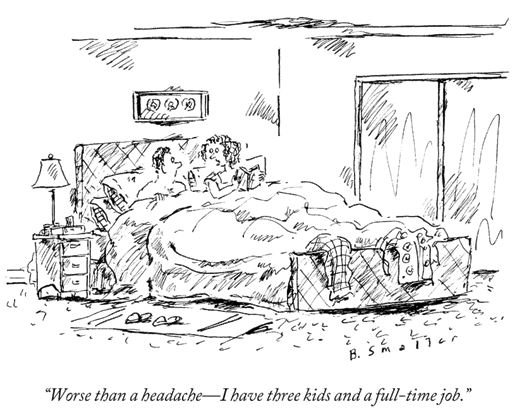
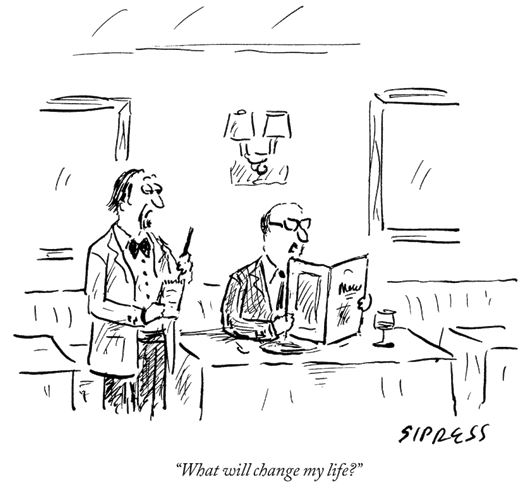
Favorite latest New Yorker cartoons.


Harry Newton spent the weekend updating his dictionary (deadline this morning), playing tennis and reading this fascinating book:
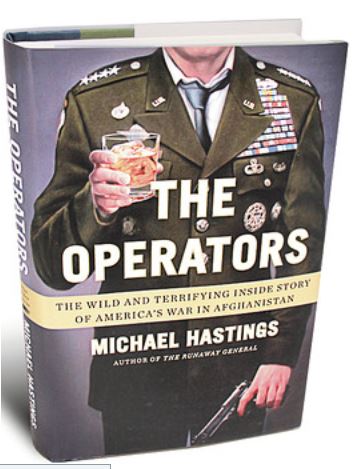
Michael Hastings is the Rolling Stone reporter whose article got General Stanley McChrystal, commander of the coalition forces in Afghanistan, fired for unattributed remarks which Hastings included. It seemed inconceivable to me and others that a magazine article would get one of our best-ever generals fired. Maybe Obama was just looking for a reason? Suffice, the book is a fascinating look at the war in Afghanistan and how we’ve mishandled it from the get-go. There are enough lessons in this book to stop us doing something stupid again — like going into Syria or Iran. Maybe. The Wall Street Journal did a review of the book. Click here.

Interesting views, Harry. If it wasn’t for our “interference” in the Pacific not that many decades ago, the Australians would be speaking Japanese, no?
Just finished reading General McChrystal’s memoir. Amazing read. Thankful we had men like him trying to fix that mess. Those who can’t criticize those who do.