Looking at startups: Everyone and his uncle is starting a new company and asking us for money.
When I look at businesses, I look at the number of “Tasks to Solve to Make This Successful.” I look at how many of the “Tasks” are in the “First Time” category — never been done before by the company (or, often, anyone else), i.e. all the risks. I also look at what’s necessary to make the business successful. Is it within the managers’ control?
Yesterday I looked at one. I listed all the tasks the management had to accomplish to make the thing successful. It was close to 30.
I also looked at how much of the business was affected by the mess that’s goes under the rubric of “government regulation.” It was a mess of regulations “in process,” i.e. most were still being decided. It was awful.
I kept comparing the business to something simple: like making soda pop. All the tasks from flavors to bottles have been done before. We need a niche, some marketing, some distribution and some luck. Not that difficult.
All within the management’s control. But when those tasks are other people’s decisions — and we set up to rely too much on outsiders, I worry.
I like simple businesses I understand and the management can control.
Recent things I’ve learned:
+ Roku is brilliant. We brought it to California. It’s tiny. Everyone (except me) has been watching movies, TV shows, etc. (Me? I’ve been trying to figure this market — with no success.)
+ Ask to save money. Every retail checkout counter has discount coupons. Every airline and every hotel has a deal they can dredge up. Especially if two of you are traveling. Or you’re old. Or you’re poor. Whatever. You got to ask. Don’t be shy.
+ Install your new clothes washer on the left and the dryer on the right. Don’t install them the other way round. You’ll be messed up with illogical, stupid opening doors. The house we rented in California has them the other way. It’s really stupid.
+ Please put your contact information at the bottom of each email you send. An email without a phone number is useless.
+ Sunblock is the great invention since sliced bread. Slosh it on. Especially on the arm nearest your car window. Skin cancer is awful and rapid. I had a friend who died recently of melanoma. I like Banana Boat.
+ User comments on Amazon, Trip Advisor and other web sites can be immensely useful — before you buy. But take some of the negative ones with a grain of salt.
+ I don’t like password managers, like the popular one called Lastpass. I can think of nothing worse than giving an outside company a list of all my passwords and logins – especially if they store the information in the cloud, wherever that is.
Rules on booking travel.
+ Use Priceline to book your car rental.
+ Talk to the hotel you want to stay at directly. On the phone. There are “deals” for everyone. They aren’t on the Internet. You have to ask.
+ Use the Internet to find your preferred flight. Then only book it through the airline’s own web site. These days airlines often sell seats at a lower price than the “discount” travel sites, like Expedia, etc.
For more, read this latest New York Times piece “Third party hotel book sites can mislead consumers.” Click here.
You’re going flying soon. Some readers asked that I repeat (and expand) this piece from last November:
My friends are still sick from their recent plane trips. Some have been sick for three weeks. One has yellow eyes and is still coughing his guts out. Getting sick from a plane trip is is the worst — because you don’t know where the sickness comes from — Somalia, Sudan, Ethiopia, or worse, Australia — and you can get really sick.
The best research shows airplane passengers are 113 times more likely to catch a cold during a flight than during normal daily life. (I didn’t make that number up.)
Upcoming Spring and Summer travel will put all of us on planes. Hence I repeat my warnings and repeat my tips — the key one being: Take this seriously.
Before you go: This is what you need to take with you (with some input from Caring.com)
1. Cough-suppressant drops. They’re good for you, yes, but there’s another reason to carry them on flights. Offering them to fellow passengers who are coughing on you is a polite way to indicate that their coughing is bothering you.
2. Nose protection. Make sure your accessible toiletries contain nasal mist or saline nose spray to combat the dry air inside the plane. Tea bags are another useful item to carry, as drinking hot liquids throughout the flight keeps your nasal passages moist, which can help fend off viruses.
3. Hand sanitizer. Studies show that sanitizing gel is a good alternative when you can’t get up to wash your hands. Use it before you eat.
4. Alcohol-based disinfectant wipes. Use them to wipe down your tray table, your arm rests, your seat and all the surfaces you’ll be touching. Remember no one cleaned the plane. And the people who sat in your seat came from places you and I would never visit.
5. Eye mask and ear plugs. They help you sleep. Sleep boosts your immune system.
6. Take a face mask. You’ll need it if you end up close to someone coughing.
On the plane (with help from Yahoo Health):
While recirculated air is most often blamed when people get ill after a flight, the researchers’ conclusions were much more surprising. The prime culprits: Dry air and the body’s physiological response to lack of humidity top the list, followed by “small cabin space per person,” then limited air circulation. Hence:
Step 1: Stay well hydrated. Planes lack the humidity to keep your nasal passages moist. When the mucus membranes of the nose and throat get dry, it screws up the natural drainage system that carries any viruses or bacteria encountered down to the stomach to be flushed out. Drinking water keeps the mucus membranes in the nose and throat moist and better equipped to fight germs.
What helps: Drink a bottle of water before you get on the flight. Start your journey well hydrated.
Step 2: Travel with nose protection.
Use a saline nasal solution or nasal mist to keep your nasal passages moist (just follow the directions on the bottle), which boosts your body’s own germ-flushing action. Or try applying a small amount of Neosporin or petroleum jelly just inside the nostrils (use a Q-tip if your hands aren’t freshly washed). The steam from hot drinks, like tea and hot chocolate, is also an effective way to keep the mucous membranes moist. (Skip the coffee. It’s dehydrating.)
Step 3: Don’t eat airline food.
Although you may like the convenience of in-flight meals on shorter flights, those served on longer flights and in first class may not be the perk they appear to be. In 2010 the FDA issued a warning about food-borne illness from airplane food, reporting that cockroaches, ants, flies, and debris had been found during an inspection of the Denver facility of the world’s largest airline caterer, LSG Sky Chefs, which provides 405 million meals a year worldwide for more than 300 airlines. The FDA also detected the deadly bacteria listeria in samples taken from a kitchen floor.
Since then, LSG Sky Chefs says it has taken measures to remedy the problems. But such information isn’t exactly reassuring, and FDA inspection reports show that unsanitary and unsafe conditions have been found in many of the catering operations that have provided food to airlines in the last two years.
What helps: Since heat kills most food-borne bacteria, pay close attention to whether your airline meal is served piping hot. If you see evidence that a meal wasn’t heated thoroughly, such as a still-frozen or cold spot in the center, send it back. Make sure all snacks and sandwiches are served in plastic.
Better yet, bring your own food from home.
Step 4: Beware your fellow passengers.
The bad news: One person with the flu who’s coughing and sneezing can infect many others. The good news: You’re generally only in danger of catching the flu if you’re within two rows or seat lengths of the sick person, according to new research. In a study conducted after the advent of H1N1 flu in 2009 and published in the Centers for Disease Control (CDC) publication Emerging Infectious Diseases, passengers were found to be at a 3.6-percent increased risk for flu if they sat within two rows of someone with symptoms, and the risk jumped to 7.7 percent for those who sat within two seats of the sick passenger.
Best strategy: move.
If moving isn’t an option, take steps to protect yourself. If someone behind you is coughing or sneezing, don’t tip your seat back, which brings you closer. If the person hacking away is in the row in front of you, tip your seat back; gaining even a few inches can be protective. And when possible, travel with a face mask — available at any drug store — and put it on when you have no other options.
Step 5: Disinfect, disinfect, disinfect.
According to the National Institute of Allergy and Infectious Diseases, the rhinoviruses that cause the common cold can live up to three hours on shared surfaces such as armrests, tray tables, and bathroom door handles. And the seat pocket in front of you? The passenger before you may have put his used tissues or discarded napkins there.
What helps: Pack disinfectant wipes, and use them to wipe down tray tables, seat arms, remote control devices, and TV touch screens. Try not to stash personal items such as eyeglasses and Kleenex in the seat pocket. Instead, keep them in your carry-on.
For public surfaces such as bathroom door handles, use a tissue or paper towel between your hand and the object.
Step 6: Wash your hands.
Hand washing is first line of defense against all types of illness. Wash your hands before and after you get on the plane. Use a paper towel to turn off the faucet so you don’t pick up more germs before you’re out the door. Scrub under your nails; up to 70 percent of germs live there. Use your Purell when you can’t get to the bathroom to wash.
Don’t touch your eyes or nose with your hands. Experts say this is the most common route for cold and flu transmission.
Step 7: Open the air vent above you and breathe its air.
The air coming out is is filtered. (It’s the only air in the plane that is filtered.) Also, the blowing air can help push away the germs that float into your space from a nearby sick passenger. If the air is cold, put on a sweater. But don’t shut the vent down.
Step 8: Fight for your rights in a delay on the runway.
Beware of any situation (such as a delay on the runway) in which you’re held on a plane with the ventilation system turned off; there have been documented outbreaks of flu on airlines under these conditions. In one case study, 72 percent of passengers who were delayed for three hours before takeoff because of engine problems became ill within two days. The researchers traced the flu strain back to one sick passenger.
FAA rules require that passengers should be removed from an aircraft within 30 minutes of shutting off the ventilation system, but they’re not always enforced. If you’re on a delayed flight and you notice the air go off, watch the time, and remind flight attendants that regulations require that the ventilation be turned on.
Don’t be shy.
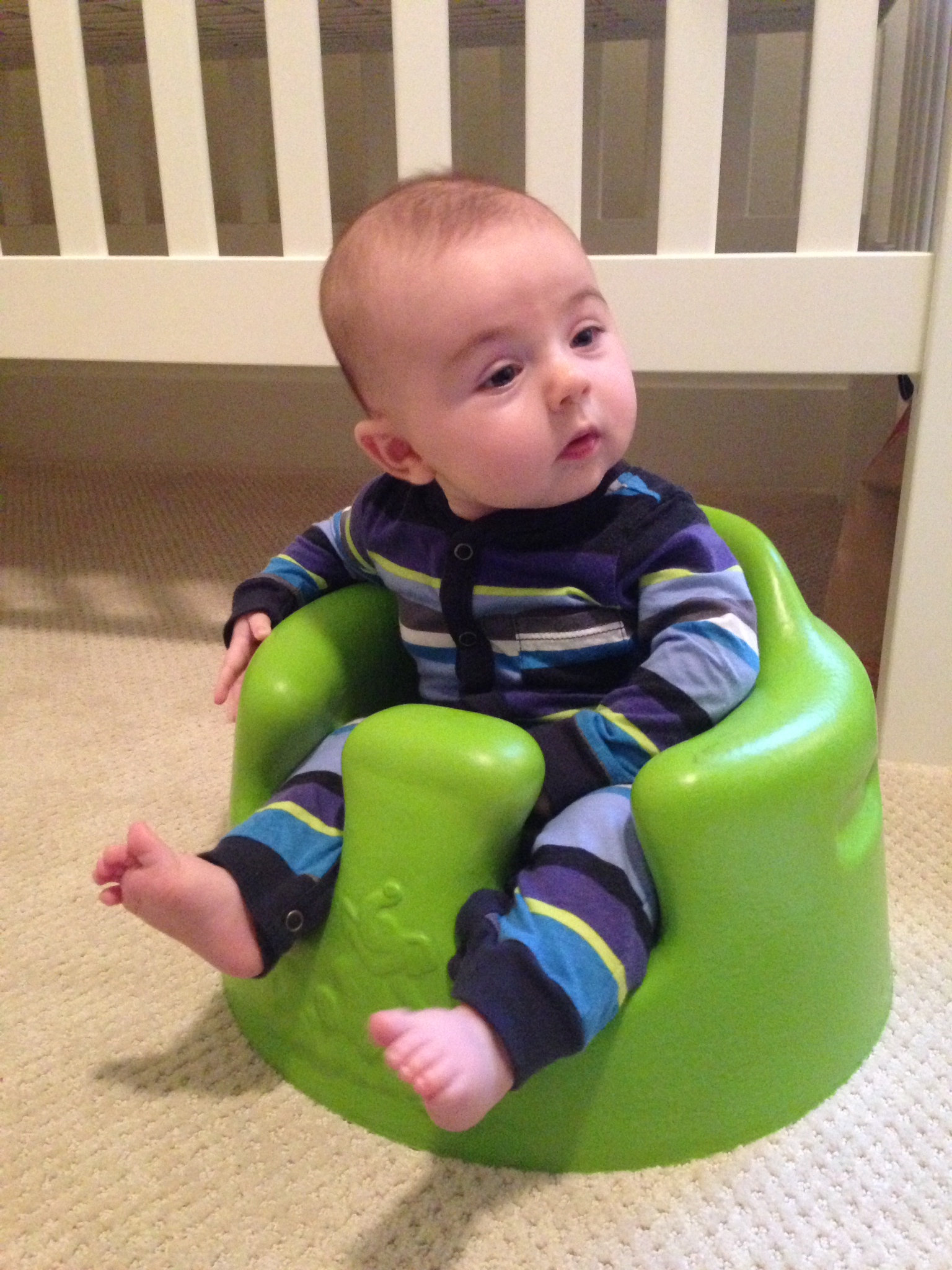
Eleanor in her Bumbo chair. The baby business is exploding.
. 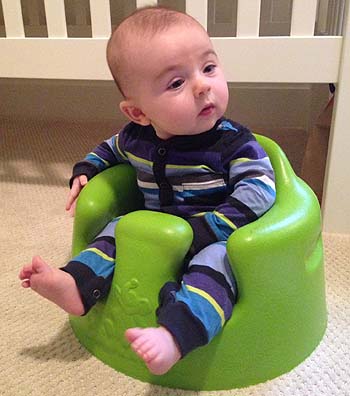
There is no shortage of neat, new baby stuff to buy. It’s positive boom. Only $39.44 from Amazon. Don’t buy it if your baby has thick legs. (I don’t make this stuff up.) Always read the reviews. Some are useful. Some are hysterical.

Harry Newton who’ll be back in New York this weekend, and promises his Monday column will be up before the market opens. Fortunately today our stocks are going up. This afternoon Russia will annex Moldova and down we’ll go. I wonder how much business Google, Berkshire Hathaway or Costco do in Moldova. This is my favorite map of Moldova, courtesy Wikipedia:

Don’t say you never learned anything from my blog. Now you know where Moldova is.

We moved into our cute place about three years ago, but never thought of having the heater filter replaced and its ducts and the clothes dryer ducts cleaned. A few months ago we did and got enough “stuff” out to literally fill a couple full-size pillows. Opened our eyes and we had the chimney professionally cleaned, too. Not only a severe fire hazard, but health hazard too. Do it!
Harry,
Place the washer and dryer to allow convenient connections to gas fed, electrical outlets, lint/exhaust vent and clearing between top loading washing machines and overhead cabinets. Install units. Use Phillips head screw driver on perhaps four to six small screws and reverse symmetrical dryer door if necessary.
Dick