Oodles to read over the weekend. The New York Times devoted its Sunday book review to reviews of books about money.

The Economist had its big essay on
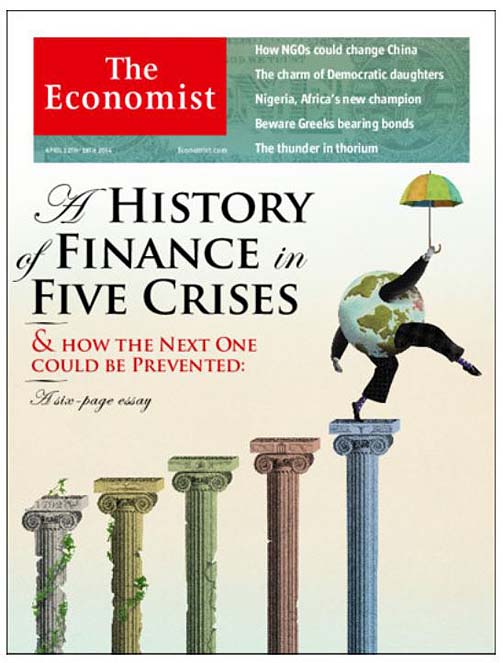
And the overwhelming lessons? Threefold:
1. Most things that go up fast come down fast. Especially stocks and real estate.
2. You’d better do your due diligence. If it seems too good to be true, it probably is.
3. If the media is giving it too much press, it won’t last. The media likes hype, not steady and secure. Boring! Go back to 1.
The lessons are appropriate, given the sharp drops in the price of nosebleed stocks, like Netflix, Tesla, Amazon.
None of the articles were especially useful for pointing the way going forward from here..
At one stage I thought I’d listen to VectorVest and go completely to cash. But panic doesn’t work. What works is our Stop Loss Rule, some patience and perhaps focusing more on “value” and not “momentum” stocks (which did so well in 2013).
Then I came across this excellent piece by James Stewart of the New York Times.
A Chance for a Market’s Wallflowers to Bloom
In January, Seth Klarman, a billionaire who runs the Boston-based Baupost Group investment partnership, warned in his annual letter to clients that “a skeptic would have to be blind not to see bubbles inflating” and cited the “nosebleed stock market valuations” of companies like Netflix and Tesla Motors.
And that was before the maker of Candy Crush Saga went public.
“All the crazy stocks were up,” said Bruce Greenwald, the director of a value investing program at Columbia Business School. “It’s been absolutely ridiculous.” King Digital Entertainment, the maker of Candy Crush, “is a perfect example,” he said. “No company has ever had a valuation like that based on one hit game.”
This week, the bubbles have been popping. After closing at $455 a share in March, Netflix closed on Friday at $326.71, a drop of 28 percent. Tesla closed at $255 in March. This week it fell to $203.78, down 20 percent.
They’re not the only so-called momentum stocks that have deflated. Twitter was down a staggering 44 percent from its recent high, Facebook was off nearly 18 percent and Amazon has dropped 23 percent.
“Growth gets so much publicity, especially during a hot market,” James Cullen, a longtime value investor and chief executive of Schafer Cullen Capital Management. Credit Chester Higgins Jr./The New York Times
Their plunge seemed to lead the broad market lower this week, even though market averages remain close to record highs.
The sell-off has been bad news for many hedge funds and growth-oriented investors, but it’s providing a rare moment in the sun for so-called value investors, who focus on out-of-favor stocks with relatively low valuations, often measured by price-to-earnings ratios. Although Warren E. Buffett, arguably the country’s most famous and successful investor, is a longtime champion of value investing, value investors rarely garner the celebrity or media attention of their flashier high-growth counterparts.
“Growth gets so much publicity, especially during a hot market,” James Cullen, a longtime value investor, told me during the market turmoil this week. Mr. Cullen is chief executive of Schafer Cullen Capital Management, which manages about $19 billion. “It’s always been that way. The market keeps hitting new highs and people get excited. They want to chase momentum.”
That is one of the enduring paradoxes of the stock market: Numerous studies demonstrate that over extended periods, value stocks outperform growth stocks by a significant amount. Mr. Cullen said that his firm’s research showed that $1 million invested in the Standard & Poor’s 500-stock index in 1968 would have been worth $79 million by the end of 2013. But $1 million invested in the 20 percent of the S.&P. 500 with the lowest price-to-earnings ratios would have been worth $578 million.
On an annualized basis for the period from 1968 to 2012, growth stocks (the top 20 percent of the S.&P. 500 based on price-to-earnings ratios) returned 7.9 percent, while value stocks returned 13.8 percent, according to Mr. Cullen’s research. Growth stocks outperformed value stocks in only four of the 46 rolling five-year periods during that time span.
Academic studies have reached similar conclusions. A seminal work by Eugene Fama, a professor at the University of Chicago, and Kenneth French, a professor now at Dartmouth, in 1993 demonstrated that value stocks and stocks from small capitalization companies – companies with a market value of $300 million to $2 billion – have higher expected rates of return. Professor Fama and Professor French recently updated their work with the benefit of an additional 20 years of data, and found that “the value effect shows up consistently” no matter the size of the company, although, “as is well known, the value effect is stronger among small stocks.”
Why would such an anomaly persist? Professor Greenwald points to what is known as the “lottery preference.” People “will always overpay to try to get rich quick,” he said. “That’s why lotteries never fail even though they’re bad investments.” People also believe stories with “complete certainty that they cannot know to be true,” he added. “Portfolio managers are always saying things like, `Tesla is the future,’ or `Amazon will dominate the web.’ “
Mr. Cullen agrees that the answer lies in behavioral science. When he started in the business at Merrill Lynch in 1965, he said, “The older guys were wearing suspenders and smoking cigars and talking about dividend-paying stocks. We said, `Dividends are boring.’ It was a bull market. Color TV was new, and everyone wanted one. You had IBM, Xerox, airlines. The potential seemed phenomenal. So who cared about dividends? I didn’t have a clue, but I should have listened to those older guys. Sixteen years later, the Dow was still at 1,000, and the high-flying stocks went nowhere. But if you bought the bottom 25 percent of the S.&P., you were up over 1,000 percent in the same period.”
Value stocks almost never generate much excitement or garner headlines and media coverage. Mr. Cullen’s firm examined the top-performing market segments in every year from 1985 to 2004. Value stocks of large cap companies – companies with a market value of more than $10 billion – had the highest average annualized rates of return, 14.5 percent. But they were the top-performing asset class in only two of those 19 years. They were never the worst-performing asset class.
By comparison, Mr. Cullen’s firm found, foreign stocks were the best-performing asset class in six years, as were small-cap stocks – the kind of performance that receives attention. But foreign stocks were also the worst-performing asset class in seven years, and small-cap stocks were the worst in six.
Another problem may be that value investors are rarely, if ever, the life of the party. They may not be as dour as short-sellers, who bet on market declines, but by nature they tend to worry. Consider Mr. Klarman’s missive to his investors: “When the markets reverse, everything investors thought they knew will be turned upside down and inside out. `Buy the dips’ will be replaced with `What was I thinking?’ Just when investors become convinced that it can’t get any worse, it will. They will be painfully reminded of why it’s always a good time to be risk-averse, and that the pain of investment loss is considerably more unpleasant than the pleasure from any gain.”
The four rolling five-year periods in which growth stocks did better than value stocks were 1986-90, 1987-91, 1995-99, and 1996-2001, which isn’t especially comforting considering that the stock market crashed in 1997 and 2000. “In a big bull market like the 1990s, you’re going to underperform,” Mr. Cullen said. “People kept asking, `When are you going to be right?’ Until you’ve lived through something like that, you just don’t get it. Young people today are making the same mistakes.”
That’s not to say that value investors think the market is on the brink of another crash. “By many measures, it’s overvalued, but it’s not 2007,” Professor Greenwald said. “Small-cap and midcap value stocks aren’t cheap by historical measures,” he said. But what’s interesting are the big, stable large-cap stocks that are trading at low multiples. He mentioned Nestlé, which has a high dividend and has a global, diversified stable of products. He added, “Microsoft and Oracle look good on valuation measures. It’s the nonsizzle stocks that will make money.”
Mr. Cullen said his firm was shifting from consumer staples stocks to health care and technology companies. “We like cash cows with good dividends.” He also cited Microsoft, along with Intel and Samsung, as among his top holdings.
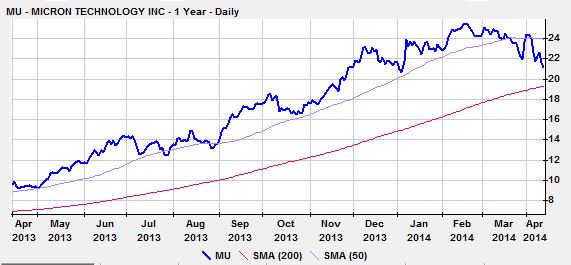
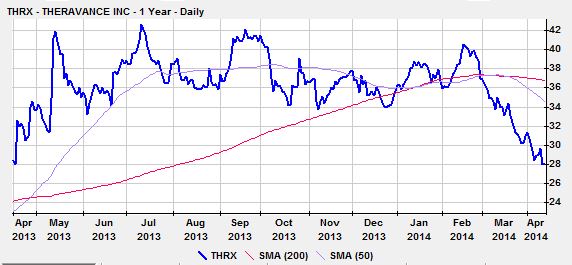
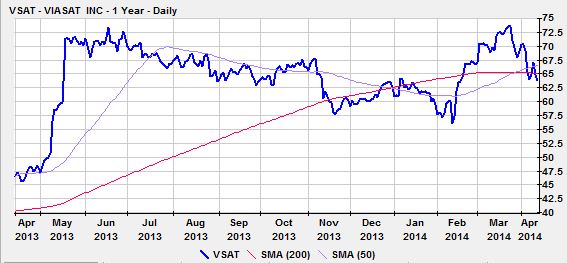
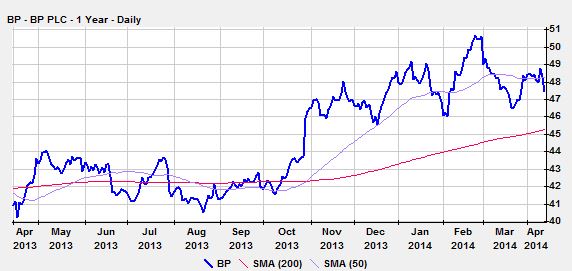
Mr. Klarman would not comment, but his letter said he was still finding opportunities in various asset classes. (He recently invested in some shopping centers in Spain.) At the end of the year, Mr. Klarman’s largest holdings were the chip maker Micron Technology, the biotechnology company Theravance, the satellite broadcaster ViaSat and the oil giant BP.
Mr. Cullen said that after periods of market turmoil, clients tended to be a little more receptive to his message. “After a week like this, I used to always send a note to my clients. I try to keep them from thinking short term and keep preaching the same concept and hope they stay out of trouble.”
I couldn’t resist charting Mr. Klarman’s largest holdings. They were at the end of 2013. Maybe he’s sold them all by now?
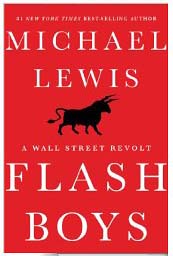
More on Michael Lewis’ Flash Boys. This Sunday review was by James Stewart — the man is, if anything, prolific.
Sunday Book Review
For Brad Katsuyama, then a young equities trader at Royal Bank of Canada, a life-changing revelation about the stock market began in June 2007 with a mystery: Why, when he tried to buy stocks at the offered prices on his computer screen, did the offers instantly vanish and the prices pop higher?
Katsuyama’s struggle to first understand why he couldn’t execute the trades showing up on his screen, and then to combat the problem by starting his own stock exchange, is the spine of “Flash Boys: A Wall Street Revolt,” Michael Lewis’s latest excursion onto the trading floors of Wall Street, a venue he portrayed so memorably in his now-classic “Liar’s Poker.”
When it comes to narrative skill, a reporter’s curiosity and an uncanny instinct for the pulse of the zeitgeist, Lewis is a triple threat, as he’s demonstrated in best–selling books like “The Big Short” and “Moneyball.” But those formidable talents are only intermittently on display in this ultimately unsatisfying probe of high–frequency traders, who may (or may not) be ripping off investors and destabilizing the global financial system.
In Katsuyama, Lewis has found a good guide into the esoteric and highly technical world of high-frequency trading. A mild-mannered Canadian Everyman with a capacity for moral judgment all too rare on Wall Street, Katsuyama seemed as befuddled as the rest of us by the explosion of the superfast, computer-driven trading that now accounts for an estimated 50 percent of all transactions in the stock market.
He teams up with Ronan Ryan, an awkward young Irish immigrant with a knack for high-speed telecommunications technology, who joins RBC as head of high-frequency trading strategies, even though he has no idea what he’s supposed to do. Thanks to their combined expertise, the answer to the mystery of the vanishing sell offers soon becomes clear: High–frequency traders are merely “pinging” the market with bids to tease out genuine buy orders. Then, at blazing speed, they cancel the offers, buy the shares, drive up the price by a few cents and resell them to a real buyer. This seems an amalgam of insider trading and front-running, both illegal in other contexts but, evidently, perfectly lawful here.
High-frequency traders have plenty of accomplices, as Katsuyama and Ryan discovered. Foremost among them seem to be the exchanges – the New York Stock Exchange, Nasdaq and BATS, to name some – which are happy to sell their order flow to high-frequency traders and thus have a financial stake in perpetuating their practices. So, too, do the big banks that run so-called dark pools, matching buyer and seller, and that sell their trading information. Armed with knowledge of large buy and sell orders, high-frequency traders dart in ahead of the trades, capturing a tiny spread between bid and ask prices that may last for a millisecond or two.
Lewis singles out Goldman Sachs as among the most egregious offenders. Rich Gates, who ran a mutual fund called TFS Capital, was “a bit surprised that Goldman, and only Goldman, seemed to be running a pool that allowed someone else to front-run his orders to the public stock exchanges.” He was “shocked” that “no one seemed much to care that 35,000 small investors could be so exposed to predation inside Wall Street’s most prominent bank.”
Among those who seemed unconcerned were reporters at The Wall Street Journal, to whom Gates took his claims, and officials at the Securities and Exchange Commission who turned a deaf ear. Why would this be? One of the frustrating aspects of Lewis’s reporting is that readers never hear anyone else’s side to a story. No one from Goldman, The Journal, the New York or other stock exchanges, or the S.E.C. offers any explanation, and it isn’t clear whether Lewis gave them the opportunity.
Taking the book’s assertions at face value, how big a threat is high-frequency trading? Something certainly seems rotten here. Lewis relegates to a footnote the startling fact that Virtu Financial, one of the largest high-frequency trading firms, boasts that in five and a half years, it had only one day when it failed to make money, and that was the result of “human error.” So there can’t be any risk.
But the average investor probably wouldn’t even notice. Most don’t care about a penny or two here and there, although in the aggregate those pennies can add up to big numbers. Defenders of high–frequency trading point out that since its advent soon after the market was computerized in 2000, the spread between bid and ask prices has narrowed, the cost of trading has dropped and investors have saved billions. The case for high–frequency trading is that it provides the liquidity that makes a more efficient, lower-cost, computer-driven market possible.
Lewis clearly doesn’t buy this argument, calling high-frequency trading “less a market enabler than a weird sort of market burden.” Technology should have reduced the cost of intermediation. “Instead this new beast rose up in the middle of the market and the tax increased – by billions of dollars,” Lewis writes. “Or had it?” He says he can’t answer that, because “the new intermediaries were too good at keeping their profits secret.” (IBISWorld, a market research firm that produces reports on high-frequency trading, estimates that it’s a $29 billion industry.)
But perhaps there’s something far more dangerous here than mere intermediation. On May 6, 2010, the Dow Jones industrial average plunged 600 points, and then recovered, in mere minutes, in what is now known as “the flash crash.” Despite an S.E.C. investigation and ensuing report, the causes of that confidence-shaking incident remain obscure. Were high-frequency traders and their Wall Street allies to blame? That’s a mystery worthy of a book, but Lewis mentions it only in passing.
Katsuyama and his band concluded that high-frequency traders, working hand in glove with the exchanges and big banks, were ripping off investors to the tune of billions of dollars. When, like Mickey Rooney and Judy Garland setting out to stage a backyard musical, they decided to quit their jobs at RBC and create their own exchange, their idea was to create a market free from conflicts of interest and openly at odds with the high-frequency traders. In Lewis’s telling, their motives were largely idealistic and altruistic. “They loved the idea of a stock exchange that protected investors from Wall Street’s predators.” But presumably there was also a profit to be made once the high–volume traders – Vanguard, Fidelity and other big fund companies – gravitated to their new exchange and away from their corrupt rivals.
That proved harder than expected. Katsuyama shocked a group of investors when he told them how the banks were colluding against them.
“Which bank is the worst?” one asked.
“I can’t tell you,” Katsuyama replied.
“Do you know how frustrating it is to sit here and hear this and not know who that broker is?” another asked.
“What we want to do is highlight the good brokers,” Katsuyama replied, in classic P.R.-speak. Evidently idealism has its limits.
But surely Goldman Sachs must be among the villains? Lewis repeatedly castigates Goldman for its alleged complicity in the financial crisis, and the firm played the role of the heavy in the saga of Sergey Aleynikov, about whom Lewis wrote at length in Vanity Fair and whom he rather awkwardly inserts into his narrative here. After Aleynikov left Goldman, where he was well paid but little more than a cog in the bank’s own high-frequency trading operation, he was arrested and charged with stealing Goldman’s computer code and covering his tracks. “The only Goldman Sachs employee arrested by the F.B.I. in the aftermath of a financial crisis Goldman had done so much to fuel was the employee Goldman asked the F.B.I. to arrest,” Lewis dryly observes.
So it comes as an unexpected twist that Goldman, the bank nearly everyone, including Lewis, seems to love beating up on, emerges as the new exchange’s most prominent supporter – a savior of sorts – and that two Goldman executives, Ron Morgan and Brian Levine, are actually good guys. Lewis explains this seeming paradox with the observation, “It was a mistake to think of a bank as a coherent entity.” Morgan and Levine “were not high-frequency trading types.”
Thanks to Goldman’s support, Katsuyama’s new exchange, called IEX, now seems well on its way to financial success, even though there’s scant evidence it has made the slightest dent in the high–frequency trading that prompted its creation. It’s a happy ending, of sorts.
But Lewis might have pondered how frustrating it is for readers, and not just investors at Katsuyama’s conference, to be told a story in which the villains aren’t named. When Katsuyama declines to identify the bad bank, Lewis comes to his hero’s defense, observing that “Brad was not by nature a radical.”
But a purported contest between good and evil in which all the characters are good quickly becomes dull, especially when the setting is as technical as high–frequency trading. The traders themselves remain faceless adversaries of Katsuyama and his buddies. Lewis never penetrates their high-tech lairs, or even seems to have tried. Who are these people? What are they like? How do they do what they do? How much money do they make and what do they do with it? And are they really so bad? (For answers to these questions, there’s Scott Patterson’s far more comprehensive and persuasive 2012 book, “Dark Pools: The Rise of the Machine Traders and the Rigging of the U.S. Stock Market.”)
By the end of “Flash Boys,” even Katsuyama seems to be having second thoughts about his high-frequency trader adversaries. “I hate them a lot less than before we started,” he says. “This is not their fault. . . . It’s brilliant what they have done within the bounds of the regulation. They are much less of a villain than I thought. The system has let down the investor.”
That may be true, and to the extent “Flash Boys” focuses public attention on this system, it is a welcome addition to a growing chorus calling for further investigation and reforms, which may yet yield some results.
In February the S.E.C. chairwoman, Mary Jo White, said the agency would intensify its scrutiny of high-frequency trading. And the New York attorney general, Eric T. Schneiderman, has started an investigation into the sale of trading data by exchanges. Given that the fourth anniversary of the flash crash is approaching, it seems not a moment too soon.
Passover begins this evening.
An elderly man in Miami calls his son in New York and says, “I hate to ruin your day, but I have to tell you that your mother and I are divorcing. Forty-five years of misery is enough.”
“Pop, what are you talking about?” the son screams.
“We can’t stand the sight of each other any longer,” the old man says. “We’re sick of each other, and I’m sick of talking about this, so you call your sister in Chicago and tell her.” and he hangs up.
Frantic, the son calls his sister, who explodes on the phone, “Like heck they’re getting divorced,” she shouts, “I’ll take care of this.”
She calls her father immediately and screams at him, “You are Not getting divorced! Don’t do a single thing until I get there. I’m calling my brother back, and we’ll both be there tomorrow. Until then, don’t do a thing. Do You Hear Me?” And she hangs up.
The old man hangs up his phone and turns to his wife. “Okay,” he says,” They’re both coming for Passover and paying their own airfares.”
Such a pleasure.

Harry Newton who wanted to write about “energy” and how to get it, since it’s so wonderful when you have it and so awful when you don’t.
I have it this morning. I think there are four keys:
1. Exercise. Not crazy. But enough.
2. Napping twice a day for 30-40 minutes each time.
3. Eating little. Too much food saps your energy.
4. Immediately researching and solving problems. Procrastination is the worst. It gnaws at your energy. Much better to attack it now. Solve it fast.
