Want some heavy-duty gobbledegook? Below is yesterday’s press latest release from the Fed Reserve governors. You and I pay them to write this stuff. Which is depressing, if you think about it. Hint: don’t.
The first thing you should know is the Fed can ONLY do three things:
1. It can raise or lower short-term interest rates.
2. It can buy bonds of various ilk.
3. It can talk about how it feels.
Let’s go through these.
1. It has kept interest rates low since the economy tanked in 2008. It does this because it hopes that low interest rates will encourage businesspeople to borrow money, build factories and employ more people.This hasn’t worked because there are other — more important — factors in deciding whether you should build a factory — like whether you can you sell the stuff you make in that factory.
Low interest rates have devastated older people. They have destroyed the returns their savings can earn. They have destroyed the returns which their pension funds and 401(k) funds have earned. Hence cities, towns and states are struggling to pay promised pensions. Some have gone bankrupt. I’m from the Fed. I’m here to help you. Tough love. No love. Just touch sh*t.
Low interest rates have hugely benefited the banks. They pay nothing for the deposits they get from you and me. When they lend our money out, it’s all profit. 100% profit — at whatever interest they get paid. They can also borrow from the feds for nothing, buy government bonds which pay interest and pocket huge profits. Of course, this is deliberate because everybody at the Fed wants ultimately to work for a bank and get million dollar bonuses, which they don’t get working for the Fed. Shucks.
Keeping interest rates low forces money into the stock market and real estate, since there’s nowhere else to put your money. This creates bubbles, which the Fed has never cared about — perhaps because when the bubble bursts, the Fed will have to spring into action, again. This is a “jobs for the boys” program at our expense.
2. Buying bonds sort of pumps money into the economy. Sort of. I’ve never figured what it actually accomplishes. One arm of the government issues the bonds. The other arm buys them. Go figure what that accomplishes. It’s like me setting up a lemonade stand to serve one customer — me. And I don’t particularly like lemonade.
3. No other government agency talks so much and says so little. Greenspan, a long-serving Fed chairman, took mumbo-jumbo to a new level. He deliberately said nothing, and was proud of it. He obfuscated everything he said because he knew he couldn’t predict or affect the future — no central banker can — and hence it was better to let his listeners take away what they wanted to hear. With all the Fed’s resources, they never figured the sub-prime mortgage bubble — yet some individual hedge fund managers figured it all out, and made billions. God forbid, the Fed had something — like closing down crooked mortgage brokers, or shutting off the banks’ securitizing all those bad loans.
The economy, all by itself, is recovering slowly from the latest bust, because that’s what economies always do. The Fed Reserve can’t speed up (or even affect) the recovery. Only the Federal Government can do that — by printing money and spending it employing people to build roads and bridges, etc. But Congress is gridlocked. We’re left with the Fed and all their employees who lust after a better-paying job with a private, “too big to fail” bank.
Read the Fed’s release. Try not to be cynical like me. I annotated the release, if only for my own amusement:
Information received since the Federal Open Market Committee met in March indicates that growth in economic activity has picked up recently, after having slowed sharply during the winter in part because of adverse weather conditions. Labor market indicators were mixed but on balance showed further improvement. The unemployment rate, however, remains elevated. Household spending appears to be rising more quickly. Business fixed investment edged down, while the recovery in the housing sector remained slow. Fiscal policy is restraining economic growth, although the extent of restraint is diminishing. Inflation has been running below the Committee’s longer-run objective, but longer-term inflation expectations have remained stable.
Consistent with its statutory mandate, the Committee seeks to foster maximum employment and price stability. The Committee expects that, with appropriate policy accommodation, economic activity will expand at a moderate pace and labor market conditions will continue to improve gradually, moving toward those the Committee judges consistent with its dual mandate. The Committee sees the risks to the outlook for the economy and the labor market as nearly balanced. (Superior mumbo-jumbo. — Harry). The Committee recognizes that inflation persistently below its 2 percent objective could pose risks to economic performance, and it is monitoring inflation developments carefully for evidence that inflation will move back toward its objective over the medium term. (The Fed wants prices to rise. It is obsessed that prices don’t fall. It’s called deflation. Of course, inflation hurts retirees. But it really benefits bankers.)
The Committee currently judges that there is sufficient underlying strength in the broader economy to support ongoing improvement in labor market conditions. In light of the cumulative progress toward maximum employment and the improvement in the outlook for labor market conditions since the inception of the current asset purchase program, the Committee decided to make a further measured reduction in the pace of its asset purchases. Beginning in May, the Committee will add to its holdings of agency mortgage-backed securities at a pace of $20 billion per month rather than $25 billion per month, and will add to its holdings of longer-term Treasury securities at a pace of $25 billion per month rather than $30 billion per month. The Committee is maintaining its existing policy of reinvesting principal payments from its holdings of agency debt and agency mortgage-backed securities in agency mortgage-backed securities and of rolling over maturing Treasury securities at auction. The Committee’s sizable and still-increasing holdings of longer-term securities should maintain downward pressure on longer-term interest rates, support mortgage markets, and help to make broader financial conditions more accommodative, which in turn should promote a stronger economic recovery and help to ensure that inflation, over time, is at the rate most consistent with the Committee’s dual mandate. (And pigs will fly?)
The Committee will closely monitor incoming information on economic and financial developments in coming months and will continue its purchases of Treasury and agency mortgage-backed securities, and employ its other policy tools as appropriate, until the outlook for the labor market has improved substantially in a context of price stability. If incoming information broadly supports the Committee’s expectation of ongoing improvement in labor market conditions and inflation moving back toward its longer-run objective, the Committee will likely reduce the pace of asset purchases in further measured steps at future meetings. However, asset purchases are not on a preset course, and the Committee’s decisions about their pace will remain contingent on the Committee’s outlook for the labor market and inflation as well as its assessment of the likely efficacy and costs of such purchases. (Your guess is as good as mine as to what that all means.)
To support continued progress toward maximum employment and price stability, the Committee today reaffirmed its view that a highly accommodative stance of monetary policy remains appropriate. In determining how long to maintain the current 0 to 1/4 percent target range for the federal funds rate, the Committee will assess progress — both realized and expected — toward its objectives of maximum employment and 2 percent inflation. This assessment will take into account a wide range of information, including measures of labor market conditions, indicators of inflation pressures and inflation expectations, and readings on financial developments. The Committee continues to anticipate, based on its assessment of these factors, that it likely will be appropriate to maintain the current target range for the federal funds rate for a considerable time after the asset purchase program ends, especially if projected inflation continues to run below the Committee’s 2 percent longer-run goal, and provided that longer-term inflation expectations remain well anchored. (Translation: interest rates will stay low forever.)
When the Committee decides to begin to remove policy accommodation, it will take a balanced approach consistent with its longer-run goals of maximum employment and inflation of 2 percent. The Committee currently anticipates that, even after employment and inflation are near mandate-consistent levels, economic conditions may, for some time, warrant keeping the target federal funds rate below levels the Committee views as normal in the longer run.
Why Only One Top Banker Went to Jail for the Financial Crisis. From the New York Times Magazine:
Kareem Serageldin’s life was about to become more ascetic. Two months earlier, he sat in a Lower Manhattan courtroom adjusting and readjusting his tie as he waited for a judge to deliver his prison sentence. During the worst of the financial crisis, according to prosecutors, Serageldin had approved the concealment of hundreds of millions in losses in Credit Suisse’s mortgage-backed securities portfolio. But on that November morning, the judge seemed almost torn. Serageldin lied about the value of his bank’s securities – that was a crime, of course – but other bankers behaved far worse. Serageldin’s former employer, for one, had revised its past financial statements to account for $2.7 billion that should have been reported. Lehman Brothers, AIG, Citigroup, Countrywide and many others had also admitted that they were in much worse shape than they initially allowed. Merrill Lynch, in particular, announced a loss of nearly $8 billion three weeks after claiming it was $4.5 billion. Serageldin’s conduct was, in the judge’s words, “a small piece of an overall evil climate within the bank and with many other banks.” Nevertheless, after a brief pause, he eased down his gavel and sentenced Serageldin, an Egyptian-born trader who grew up in the barren pinelands of Michigan’s Upper Peninsula, to 30 months in jail. Serageldin would begin serving his time at Moshannon Valley Correctional Center, in Philipsburg, where he would earn the distinction of being the only Wall Street executive sent to jail for his part in the financial crisis.
To read the entire piece, click here.
I owe Fidelity a little apology: While they’ve killed my favorite Active Trader Pro 9.6, they have a version that’s not bad. You log onto Fidelity.com, then launch ActiveTraderPro.com from a right hand window you’ll see. That brings up a web version with streaming quotes. It uses Microsoft Silverlight and seems to work. I’m playing with it. I liked it yesterday because my portfolio went up. Fidelity still doesn’t let me direct trades to IEX.
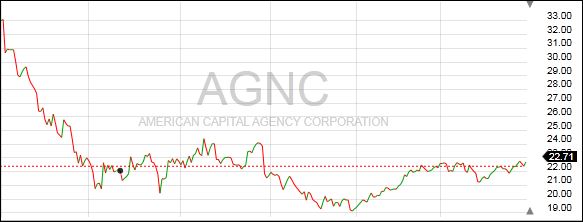
AGNC reported OK earnings — enough to cover its nearly 14% dividend yield. Its stock is holding up. (This is Fidelity’s new layout.) I may buy some. I’m holding NLY. I suspect the mortgage REITs — like NLY and AGNC — have done falling.
Millionaires Unite to Defeat Minimum Wage
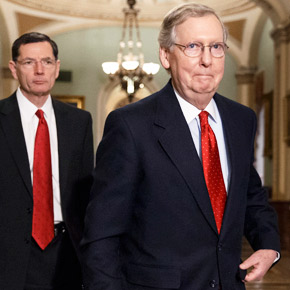
Photograph by J. Scott Applewhite/AP.
WASHINGTON (The Borowitz Report) – A broad-based coalition of millionaires converged on Washington today to defeat a bill that would have increased the minimum wage for American workers to $10.10 an hour. Leaving behind their mansions and yachts, the millionaires were motivated by what they saw as an existential threat to the country, Mitch McConnell, a spokesman for the millionaires, said.
“This was an extremely diverse coalition,” McConnell said, noting that everyone from the rich to the very rich to the super-rich united to vote down the bill. McConnell hoped that today’s vote would burnish the millionaires’ reputation as “people who get things done.”
“Folks who have tried to pin a `do nothing’ label on us are dead wrong,” he said. “When it comes to stopping workers from being paid more, we spring into action.”

Harry Newton who’s in Boston visiting favorite daughter Claire and favorite son-in-law Ted. There are three ways of getting to Boston from New York –a plane for $250 or so, an Acela fast Amtrak for $120 or so, or a slow “regional” Amtrak for $62.05, alta kaka price. Guess which one I chose? It was a nice trip, only 25 minutes late. This wasn’t it:
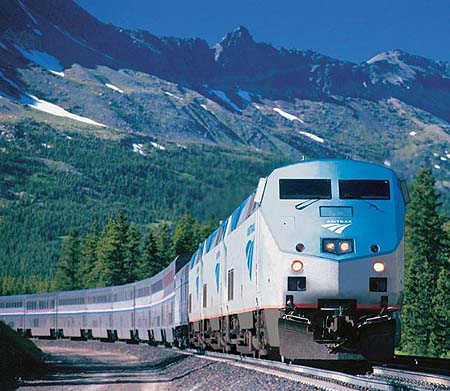
What I got to see were zillions of 100-year old, closed factories, some huge distribution centers, far too many retail stores and oodles of small apartment buildings — someone’s dream real estate investment, usually in fairly good condition. You don’t ride Amtrak in the north-east for the view, unless you’re morbid.
Today is May 1. We had April Showers and they will bring may flowers.
I asked Claire, “And what do may flowers bring?”
And she answered, “Pilgrims.”
Daddy’s girl.

Harry I enjoy reading your blog and also read your magazine back in the internet bubble days. It was a strange column today first with complaining about the fed keeping the rates too low and then the shot at the end about the minimum wage. I agree with you the fed has failed with the interest rates and it hasn’t helped the economy that much but raising the minimum wage isn’t the answer. If it was why not go big and give everybody a raise to $50 /hour. That might buy a lot of votes but it wouldn’t create jobs. The facts are everyone would get a raise if there were labor shortages but right now there is no shortage so wages are low. The real Ronald Reagan wouldn’t be calling you names but he did do some good with deregulation. If there wasn’t so much government crap small businesses could be creating lots of jobs.
Well said.
I believe we’d all like less government. Less interference. But what do you do about seat belts. helmets, air and water pollution, asbestos, thalidomide, vaccines, new drugs, cigarettes and now e-cigarettes? As we get more people we build more highways and get more potholes…. It’s not easy. The piece on raising the minimum wage was satire. Comedy. Borowitz is a comedian writing for the New Yorker. I’ll explain more tomorrow. I thought everyone knew.
Nice take on low interest rates. VEry true. The fed forcing senior citizens into the stock market for the first time in their 70s, 80 and 90s is absurd. If I were fed chief, I would have lowered rates for 3-4 years to maybe two percent, but this zero interest rate policy is elder abuse. I do look for rates to increase. Barclay’s, for example, is currently offering a 2.25 percent interest rate CD.
@Ronald_Reagan…on behalf of humanity, please seek counseling for your anger management issues. Regarding your slanderous outburst below, Harry has the right to offer his thoughts on this site and, as an open minded adult, I am thankful for the time he invests to publish them(regardless of my agreement). Please feel free to discontinue your visits to the site if it provides such rancor and belligerent outbursts. Good day!
RReagan should be banned- not for having uncouth opinions but for not being fit to be in the company of civil and civilized people.
Harry Newton still and forever a liberal piece of fucking shit.
Please, what did I write that you didn’t agree with?
Ha! I think he was set off by the satirical Borowitz column, thinking it was real. IT sounds like more than one of your readers didn’t get it. You had better explain tomorrow that Borowitz is SATIRE.
I had planned on doing exactly that.
I guess satire, when it’s too close to the truth, is not funny to some people.
I thought it was funny.
RR-get a life and go hang out somewhere else-we all may not agree with everything Harry opines but he make us all think about many varied subjects. Harry, can you ban him from the site so we don’t have to endure his ‘uncouthness’?
Separate Harry’s evil, inarticulate politics from the name calling. It just makes you
look stupid.