Musings on the market from Jeremy Grantham and Ben Inker. From Grantham:
Nevertheless, despite my nervousness I am still a believer that the Fed will engineer a fully-fledged bubble (S&P 500 over 2250) before a very serious decline.”
The S&P 500 closed last night at 2051.80.
Grantham predicts up another 9.7%.
He concludes:
My personal fond hope and expectation is still for a market that runs deep into bubble territory (which starts, as mentioned earlier, at 2250 on the S&P 500 on our data) before crashing as it always does. Hopefully by then, but depending on what the rest of the world’s equities do, our holdings of global equities will be down to 20% or less. Usually the bubble excitement – which seems inevitably to be led by U.S. markets – starts about now, entering the sweet spot of the Presidential Cycle’s year three, but occasionally, as you have probably discovered the hard way already, history can be a snare and not a help.
I don’t know what he’s saying, but he is much respected. For his full piece, click here: GMO_QtlyLetter_3Q14_full
Good short. Thanks Harry. Thanks Jim Chanos.
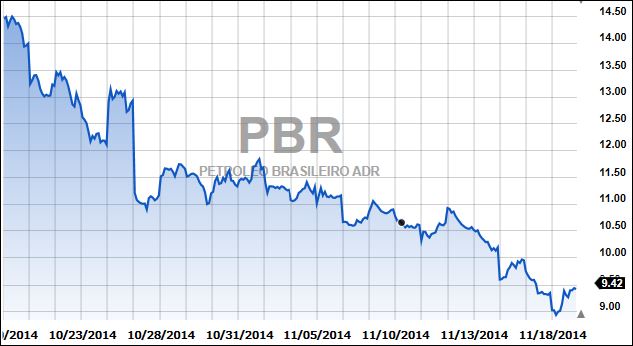
Worth buying now? My take: NO. I don’t like catching a falling knife, especially while Brazil is boiling over with corruption scandals. Put in a low bid.
Buy while blood flows in the streets. Think Europe will recover soon? Somebody is having this thought:
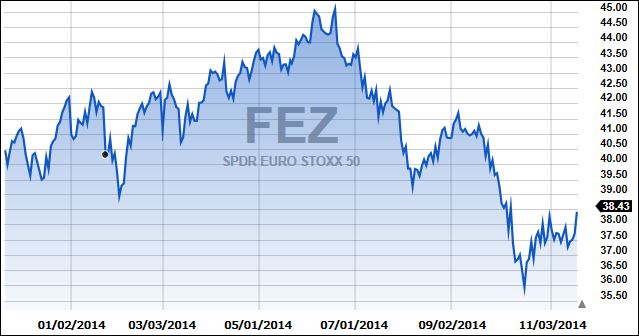
FEZ yields 3.22%. Not bad for an interesting gamble.
Which Sennheiser wireless headphones should I choose? I have a pair of wireless headphones attached to every TV I own. There are three reasons:
1. I can adjust my own volume. I like it much louder than Susan does.
2. Most decent TV is stereo. Headphones make watching more fun.
3. Headphones mean you can understand actors you can’t normally understand — like English detectives and fast speakers.
Sennheiser headphones range from $90 to $500. The pricier ones are more comfortable, don’t require two AAA batteries (they charge themselves) and deliver better audio — great for audiophiles.
For the plebians of us who just want to listen to TV, while Susan sleeps, the cheaper ones work just fine. Here’s my recommendation. it’s called a Sennheiser RS120 On Ear Wireless RF Headphones with Charging Cradle and costs the grand sum of $87.74 from Amazon. Click here.You need the headphones and the charging cradle. If your Susan wants her own set, she only needs the headphones, not the cradle. Buy yourself extra AAA batteries. You’ll need them. It’s not a ‘charging’ cradle. It’s a wireless transmitter.
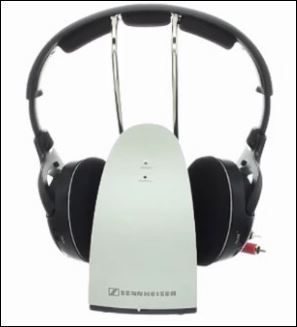
Good Christmas present.
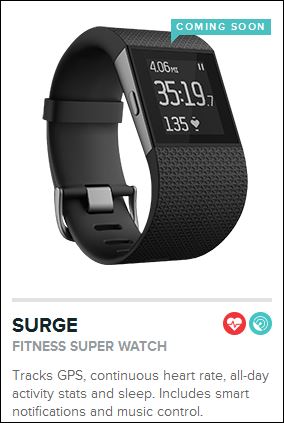
That health tracker on your wrist. Harry’s take: Don’t waste your money. You’ll be quickly bored tracking how many steps you walked today. The family tried them, found them “fascinating” for three days, forgot to charge them (necessary every day). They now live in a drawer somewhere. Background: Time Magazine, whose editorial focus I personally find incomprehensible, did a four-page piece on “The next revolution in personal health may be the little step-tracking band on your wrist.” They highlighted seven wrist thingees, from the Fitbit Charge to the Microsoft Band, but forgot to tell us which they liked. (How can you be so stooopid!) The Fitbit Charge has one BIG feature (which apparently most of the others don’t have) — it tells the time.
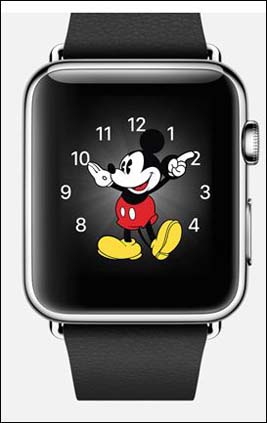
Harry’s take: Save your money. Don’t buy one for anyone for Christmas. Wait for the second generation next year. Maybe Apple’s Watch will be persuasive? $349 next Spring. Maybe the Fitbit Surge? Price not clear, but cheaper than the Apple Watch.
How to find a safe haven for your billions.

Giacometti’s “Chariot,” a bronze from 1950, sold for nearly $101 million in early November at Sotheby’s. Other contemporary art prices have recently bee stratospheric.
Which reminded me of an old story:
The first grade art teacher asks a little girl; “What are you painting?”
The child answers “GOD.”
The teacher says “but no one knows what he looks like.”
The child answers, “They will in a minute.”

Harry Newton.
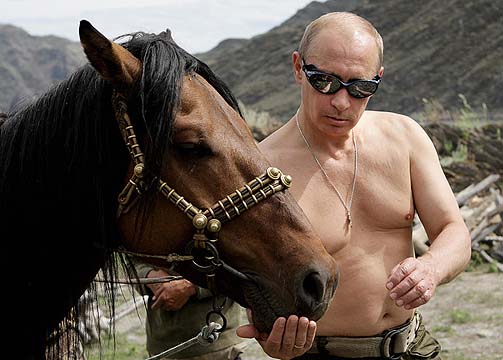
Putin needs a fitness tracker. He’s packing on the weight. It’s quite disgusting. Must be all that good life in Russia.
Thomas Friedman was an early proponent of our Middle East invasions and involvements. He’s lately matured. Yesterday’s piece makes sense:
Did Dubai Do It?
DUBAI, United Arab Emirates – Ever since the Arab awakening in late 2010, America has lurched from one policy response to another. We tried decapitation without invasion in Libya; it failed. We tried abdication in Syria; it failed. We tried democratization in Egypt, endorsing the election of the Muslim Brotherhood; it failed. We tried invasion, occupation, abdication and now re-intervention in Iraq and, although the jury is still out, only a fool would be optimistic.
Maybe the beginning of wisdom is admitting that we don’t know what we’re doing out here and, more important, we don’t have the will to invest overwhelming force for the time it would take to reshape any of these places – and, even if we did, it is not clear it would work.
So if the Middle East is a region we can neither fix nor ignore, what’s left? I’m for “containment” and “amplification.”
How so? Where there is disorder – Iraq, Syria, Yemen, Libya – collaborate with regional forces to contain it, which is basically what we’re doing today. I just hope we don’t get in more deeply. Where there is imposed order – Egypt, Algeria – work quietly with the government to try to make that order more decent, just, inclusive and legitimate. Where there is already order and decency – Morocco, Jordan, Lebanon, Kurdistan and the United Arab Emirates – do everything to amplify it, so it becomes more consensual and sustainable. And where there is order, decency and democracy – Tunisia – give it as much money as they ask for, (which we haven’t done).
But never forget: We can only amplify what they do. When change starts or depends on our staying power, it is not self-sustaining – the most important value in international relations. When it starts with them, it can be self-sustaining. The best example of that is the U.A.E. and its crown jewel, Dubai. I had several conversations here on this question: Did Dubai cause the Arab awakening?
Wait. How could it have? The U.A.E. and Dubai are absolute monarchies that tolerate no opposition or real freedom of the press. It’s because Dubai, beyond the glitz, glass and real estate booms and busts, has become the Manhattan of the Arab world – a place where young Arabs from across the region can come to realize their full potential in arts, business, media, education and technology start-ups – with world-class companies – and in their own culture, their own language, their own religious milieu, their own food preferences, music and clothing.
As more young Arabs came to Dubai, or viewed it on TV from afar, more and more asked: “Why don’t we have that in my Arab country?” The former Palestinian Prime Minister Salam Fayyad said to me: “People know what it means to be a citizen everywhere now.” It was one thing for young Egyptians to observe the success of Singapore or Brazil and compare it with their own flagging country, but when Dubai showed that Arabs could build a Singapore, where young Arabs could realize their potential, Dubai became politically subversive. Across the region, you heard the question: “Even if we can’t have democracy, why can’t we at least have Dubai?”
“Dubai is the capital of the Arab Spring – the real revolution started here,” argued Mazen Nahawi, 39, a Palestinian who founded News Group International, a media-monitoring company here in Dubai. The Arab awakening “did not start because they wanted freedom and democracy. It started in the mind of the average [Arab] who the saw the evidence in Dubai that we could do things that are hard, and we could do them world class [like Dubai Ports and Emirates Airlines], with a high level of performance in the corporate and governmental sectors … and with a lot of tolerance. … And they compared that with the reality and rhetoric of the Arab military regimes” they were living under.
There is a U.A.E. government-funded incubator, called “twofour/54,” aimed at sparking an Arabic media and entertainment industry. I always try to visit. In 2008, it was incubating 15 companies. Today, it’s got 311, with filmmakers, artists and starter-uppers coming from every Arab country and South Asia.
“Al Jazeera gave Arabs a window on the world, and Dubai proved it could be done here,” added Nahawi. When you see someone just like you succeeding next door while your society is not, it becomes political. In April, ASDA’A Burson-Marsteller released its third Arab youth survey, finding: “For the third year running, the U.A.E. remains the most popular country to live in and the country Arab youth would most like their country to emulate.” The U.A.E. got 39 percent. The United States got 21 percent.
The point: It has to start with them. The best we can do is amplify. The best we can do is amplify. David Kilcullen, the Australian counterinsurgency expert who served with the U.S. in Iraq and Afghanistan, told me: “Just like there is a spark of life in a physical body, there has to be a spark of legitimacy and coherence in a body politic. And, if it is not there, trying to substitute for it is like putting a cadaver on a slab and harnessing a lightning bolt to it to bring it back to life. You end up with Dr. Frankenstein. You can animate a corpse and make it walk and talk, but sooner or later it’s going to go rogue. … When you don’t have the local leadership, invading does not make things better. It makes them worse.”

Dubai has the money to buy all the outside help that is needed where all of these other countries don’t. Money makes a lot of things possible (oil).
Harry, here is an article about mistakes made by ultra high net worth people. You need to read it. Ultra high net worth is defined as $30 million or more.
http://finance.yahoo.com/news/rich-hoard-cash-wealth-reaches-101858300.html
I really like my earphones. They’ll save a marriage. Like Harry, I heartily recommend.
Tom Friedman doesn’t know much. The U.S., like it or not, is the world’s policeman. We are the adult in the room and it’s up to us to control all other countries. Our rules. You play our game. If not, we invade, and everybody knows that the Geneva Convention means nothin’ to the U.s. Our military will do what it takes, under cloak of imperialism, to destroy an opponent. The U.S. is not the good guy abroad, we are the bad guys.