I bought BHP at $66.09 and sold January 2011 covered calls at $7.01. Last night BHP closed at $62.42. I’m still ahead, despite BHP’s tumble. I can now buy my covered calls back now for less than I sold them for, and then sell some more covered calls. The money I make is better than a slap in the belly with a cold fish, and certainly better than pray and hold.
My covered calls guru, Pete Rawlings, emailed me this morning:
Market volatility can be your friend with covered calls. Example:
6/25- Bought M @ 19.08 & STO jul 19 strike @ $.94 – estimated 4.9% return if uncalled or 4.5% return if called in 22 days
6/29- BTC jul 19 srtike @ $.36 – actually made 2.68% in 4 days
7/1 – STO aug 19 strike @ $1.09 estimated 5.5% return if uncalled or 5% if called in 50 days.
Pete and I use Fidelity. It’s better and easier to use than other online brokers I’ve tried — which is not that many. Today I hope to learn about “married puts” from one of my readers.
Another reader, Steve Littlejohn emails this morning:
Doc Eifrig is up 90% on Annaly (NLY) – through options…
“Our ‘safe-money option’ play on Annaly has done well…” Dr. David Eifrig wrote in the latest issue of Retirement Trader. (Retirement Trader is a service that’s still in “beta-testing” mode. It’s only available to a lifetime Stansberry subscribers right now.)
Here’s how Dave explains his big gains:
We received about 62 cents by selling puts with a $15 strike price that expire in July. If we bought back the puts today, we’d pay about 13 cents and pocket a nearly 75% gain in less than a month.
However, I expect the value of the option to decline to zero [for a 100% profit] as we approach the July expiration date. I want us to hold on to our position and keep the entire premium.
As I write, Dave is up even more than 75%. The options now trade for six cents… so his readers are up OVER 90%!
He continues:
I think owning NLY stock would be great in the outside chance the options are exercised and we have to buy shares. It currently trades at book value and offers a high yield.
Dave wrote this story in the June 17 issue, and he still likes the trade today… In our Off the Record conference call a few days ago, Dave said:
Annaly (NLY) and Hatteras (HTS)… You can find these companies trading at book value. And by selling puts against those companies, you can essentially find yourself owning a company that is very liquid and owning it at below book value.
The worst case – if you were exercised into that put position – you would own a company that’s yielding 15%, 16%, 17%.
Since stock market volatility is high, Dave’s strategy still makes a lot sense, though now you probably want to look to next month’s puts.
The worst is yet to come. A newsletter writer called John Markman emailed me a promotion piece. It struck a cord. Excerpts:
The facts tell me that the bear market is picking up steam:
+ European banks are on life support, at risk of major write-downs totaling as much as $239 billion.
+ We’re experiencing currency fluctuations not seen since Lehman’s demise.
+Consumer confidence in Germany, France and the U.K. is already falling off a cliff.
+ Reduced spending by consumers will match reduced spending by governments. Case in point: just this week, the G20 vowed to cut fiscal deficits dramatically.
+ The euro zone unemployment rate was stable at 10 percent in May, a sign that a deterioration in the labor market may have stopped. But the outlook remains pessimistic. Europe is dragging the world down. It’s the perfect recipe for another recession.
+ The market opens high and closes low. Every rally is met with heavy selling. Stocks are deeply oversold but have remained that way for days and weeks. And many of the largest and most widely owned stocks have moved below their 200-day moving averages. All key traits of a bear cycle.
Yes, bulls are trying to latch onto seasonality. “The market never crashes in June.” And the S&P is currently in the process of creating the well-known “head and shoulders pattern.” BUT here’s the reality:
The S&P 500 shed nearly 4% in June. Typically, 90% downside days — like what we saw last week — are followed by two-to-seven days of rebound. But it didn’t happen. Buyers are nowhere to be found.
The important head and shoulders pattern is at risk of not being completed, which is very bad news.
Australia’s new prime minister has worked a tax deal with Australian miners. When the proposed RSPT tax on miners was announced, the world’s investors fled Australia. They intoned “sovereign risk” and the Australian stockmarket plunged. But Australia has a parliamentary system of government (like England, but not like the U.S.). The P.M.’s own party revolted (a first in Australian history) chucked out the prime minister who thought up the onerous RSPT 40% mining tax (that was Kevin Rudd) and appointed a brilliant woman called Julia Gillard . She worked a deal with the miners. Adn everything is now honkey dorey (Aussie expression for “no worries, mate.”)
Hence, EWA, BHP and Rio Tinto suddenly look very interesting. You can sell covered calls against them.
Teach your kids about finance, please.The July 5 New Yorker has a disturbing piece about Americans’ financial ignorance. It’s called “Greater Fools.” James Surowiecki, a favorite author of mine, wrote it. Excerpt:
What can be done? One solution is regulation: the financial-reform bill now before Congress will create a consumer financial-protection agency that should help curb the finance industry’s most predatory excesses. Another solution is to tinker with “choice architecture”—doing things like enrolling people in 401(k)s automatically—in order to “nudge” them toward better decisions. Both of these strategies are necessary, but they’re not enough on their own, because financially illiterate consumers are always going to be easy victims. We also urgently need proper financial education.
This seems obvious, but it’s surprisingly controversial. Some suggest that financial illiteracy is an example of what economists call “rational ignorance”—inattention that is justified because the costs of paying attention outweigh the benefits. But few decisions affect us more directly than the ones we make about our money. Critics also argue that financial education may make people overconfident, and therefore more likely to make bad decisions. In fact, the reverse is true: the less people know, the more overconfident in their abilities they tend to be. In a German study, eighty per cent of those surveyed described themselves as confident in their answers on a questionnaire, yet only forty-two per cent got even half the questions right. This is known as the Dunning-Kruger effect: people who don’t know much tend not to recognize their ignorance, and so fail to seek better information. No wonder, then, that the least knowledgeable people in the Atlanta Fed study were also the least likely to do research before getting a mortgage. By contrast, well-informed people are more likely to ask others for help. If financial education taught people only how little they actually know, it would accomplish quite a lot.
The government’s new consumer-protection agency has the authority to “review and streamline” financial literacy programs, but that’s not enough. We really need something more like a financial equivalent of drivers’ ed. There’s evidence that just improving basic calculation skills and inculcating a few key concepts could make a significant difference. One study of the few states that have mandated financial education in schools found that it had a surprisingly large impact on savings rates. And the Center for American Progress has found that, across the country, education and counselling by nonprofit organizations, like the Massachusetts Affordable Housing Alliance, have helped low-income families buy and hold onto homes, even during the housing bubble. The point isn’t to turn the average American into Warren Buffett but to help people avoid disasters and day-to-day choices that eat away at their bank accounts. The difference between knowing a little about your finances and knowing nothing can amount to hundreds of thousands of dollars over a lifetime. And, as the past ten years have shown us, the cost to society can be far greater than that.
For the entire New Yorker article, click here.
How to Make an American Job Before It’s Too Late. Interesting “opinion” piece by the ex-CEO of Intel in BusinessWeek. From Andy:
Today, manufacturing employment in the U.S. computer industry is about 166,000 — lower than it was before the first personal computer, the MITS Altair 2800, was assembled in 1975. Meanwhile, a very effective computer-manufacturing industry has emerged in Asia, employing about 1.5 million workers — factory employees, engineers and managers.
The largest of these companies is Hon Hai Precision Industry Co., also known as Foxconn. The company has grown at an astounding rate, first in Taiwan and later in China. Its revenue last year was $62 billion, larger than Apple Inc., Microsoft Corp., Dell Inc. or Intel. Foxconn employs more than 800,000 people, more than the combined worldwide head count of Apple, Dell, Microsoft, Hewlett-Packard Co., Intel and Sony Corp.
Latest dental technology my dentist and I recommend:
+ Butler floss threaders — for getting dental floss under your bridges.
+ Johnson & Johnson Reach Total Care dental floss. A major breakthrough in cleaning power.
+ The Doctor’s Brushpicks. For getting between teeth.
+ Oral-B Superflooss. My hygenist’s favorite.
+ WaterPik in any one of its many forms. See here. Make sure you don’t push the food particles deeper into your gums. Get them out.
I’ve just spent over $10,000 (after bargaining) on my teeth. I look like a million dollars. I wish. I’m into protecting my investment.
Watch Tesla Motors crash. It’s never made a profit. It never will. Meantime, you can’t short it. And you can’t buy puts on it. At least I haven’t found a way. Another way Wall Street conspires against us.
A little more on the iPad. Reader Frank Derfler writes:
Harry — The iPad does recharge from USB, but very slowly. The simple reason is that the USB standard limits the current flow through the USB connection, so re-charging the iPad from USB might take 18 hours or more. That’s why Apple gave you the bigger charger.
I just carried my iPad as my only computer through Russia, France, and England. The major drawback is that you can’t read in the photos from your cameras’ chips. Otherwise, it kept me on social networking sites as often as I liked, was dandy for email, let me read your columns, and it kept our two grand children busy for hours no matter where we were. (Charles DeGaulle Airport charged me $19.95 to use its WiFi.. Poof! The airport in St. Petersburg Russia has it for free!)
I replied,
Frank: When I plug my iPad into my PC, it says it’s not charging. Maybe it lies. The video of Bill Gross which I embedded in yesterday’s column didn’t show up on my iPad, but did on my PC. Again I don’t know why. If you missed it, go here.
Michael, my son, the genius. He calls and says my piece on the evils of cell phone convinced him to only use a corded headset when using his cell phone. He said “I do’t want to wake u in 20 years with cancer of the brain.”
Yes, they listen. Miracles happen.
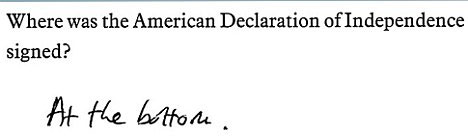
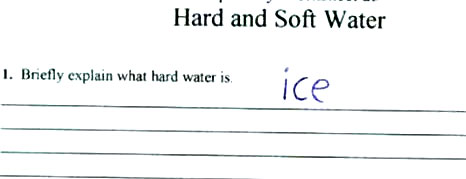
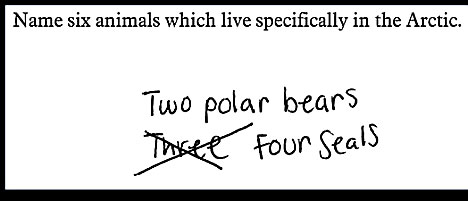
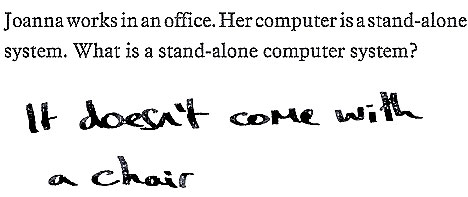
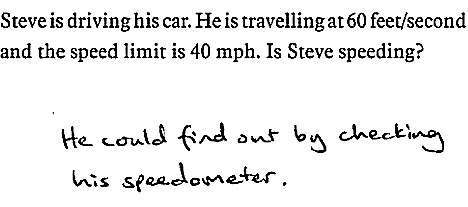
School kids tests and their brilliant answers.

Harry Newton,who is addicted to daily exercise — a great antidote for every ailment, except tooth decay.
Wimbledon tennis is on today and this weekend on ESPN2HD, ESPN2, NBC and The Tennis Channel. Try all four. The women’s final is tomorrow. The men’s final is Sunday. They will be on NBC. Brazil plays Netherlands at 10:00 AM EST this morning on ESPN. Brazil is effectively closed for business today. The country is soccer mad. I play tennis with a Brazilian. He teaches me Portugese curse words. They’re far more colorful than English ones. We are clearly deprived.

Be prepared to console your Brazilian coach…