Falling knives are dangerous.
I bought FIT at $30.25. Last night it closed at $29.68.
I expect it to follow GoPro’s pattern.
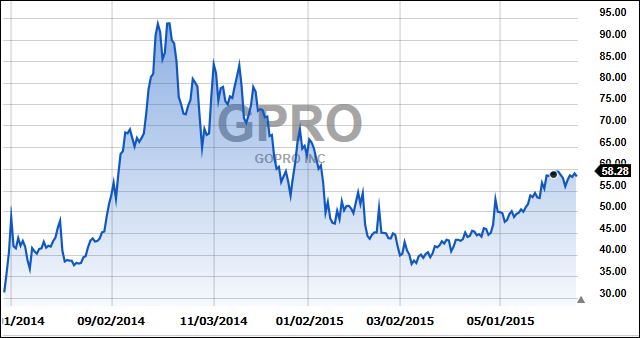
If it doesn’t, I’ll chalk it up to a failed bet, sell it and move on.
Cyber-security is hot: I like CYBR, FEYE and RTNB (as a spec).
Greece is posturing. It faces an end-of-month deadline. I read it’s too late for European parliaments to meet and agree on a “Greek solution.”
Hence my prediction from yesterday:
Greece will leave the EU and bring back the Drachma. The government will print oodles of them to pay pensions and government salaries. Bingo, hyperinflation.
They’ll eventually get the hyperinflation under control — but not for many years.
Three things about real estate:
1. The price you pay.
2. The terms and price of the money you’re borrowing.
3. The place’s location, and its economic future.
Today everyone can do equity crowdfunding.
Everyone can now buy shares in private companies offering their shares on web sites. The SEC has just made it kosher.
What they haven’t done is make it safe or make it a good investment for you or I.
What they have done do is to layer with it with bureaucracy and onerous reporting requirements. They basically killed the golden goose which Congress hoped for when it passed, in 2012, the Jumpstart Our Business Startups Act, known as the JOBS Act.
Let’s step back for a moment. There are two types of crowdfunding:
1. Product crowdfunding. You pay a little money and you get the product or help fund the project. You don’t get any equity in the company. Product crowdfunding has been immensely successful.
2. Equity crowdfunding. You get some shares in the company. This has been legal for accredited investors and legal for smaller investors in some states that got sick or waiting for the SEC and came out with their own rules. Now it’s legal for everyone.
BUT… this is the BIG but. Investing in small private companies is about the biggest crapshoot that any of us, as an investor, can possibly make.
Frankly, I wouldn’t waste my money (or my time) with equity crowdfunding. From my own expensive adventures, Some reasons :
+ Managements are more interested in retaining their jobs than in returning any money to investors.
+ Management always raises too little money and runs out of it way before they gain any sort of decent traction in the market. Which means they always underestimate what it costs to market and sell their products/services.
+ They’re run by pig-headed, ego-maniac entrepreneurs who don’t listen.
+ Once they have your money, you won’t hear from them every again, despite the SEC’s rules. Trust me on this one.
Of course, there are companies like Facebook, Uber, Fitbit, Amazon, GoPro. They’re run by amazing people and often funded and assisted by venture capital companies that baby these companies through from startup to IPO. But the chance of you and I getting early into these amazing companies is slim to none.
The beauty of public stock exchanges is that you can sell your shares when things go good or bad.
I’m sitting in the shares of private companies that are going good — earning money, growing, etc. Yet I’m stuck with share script that I can’t sell — and hence valueless. It won’t buy me a cup of coffee.
The worst part of all this is the time, the aggravation, the worrying, the annoyance. With public markets, you mess up. You sell the stock. You move on. You can’t move on with these private companies. You can write them down to zero in your monthly allocation Excel spreadsheet. But you still have to convince Uncle Sam that you can take the capital loss. Good luck.
Last night, Cramer waxed enthusiastically on today’s new equity crowdfunding. The New York Times and The Wall Street Journal took a more nuanced approach. The Journal’s piece included:
In part to protect investors, the SEC’s new rules require companies to disclose financial results, produce audit reports and meet additional state or federal requirements, depending on how much they want to raise. Some argue the cost of compliance, which could reach $100,000 to initially register, will discourage young companies from raising money this way.
“It takes too long and costs too much,” said Kevin Laws, chief operations officer at AngelList, a crowdfunding website.
Crowdfunding lawyers and advisers said registering under Regulation A+ rules would only make sense for more established companies seeking at least several million dollars in capital. They say smaller ventures are better served fundraising through other offerings.
Frank Amato, a 44-year old accredited investor from Bath, Ohio, and a former derivatives trader, said he considers only ventures related to cryptocurrencies, a sector he feels more comfortable with given his financial background. “I stay away from other industries that I have no knowledge of,” he said. Even then, “it’s a bit of a lottery ticket.”
Since making his first investment last September, Mr. Amato has participated in 11 online crowdfunding deals. Even though he hopes to hit a winner, he said, “my attitude is that I won’t be seeing this money again.”
In short, stay away from equity crowdfunding.
Favorite sign. The boarded-up restaurant on New York’s upper west side sports a delicious hint at future customer-pleasing attractions:

I don’t make this stuff up. Photo taken with my trusty iPhone 6.
Favorite New Yorker cartoons this week:

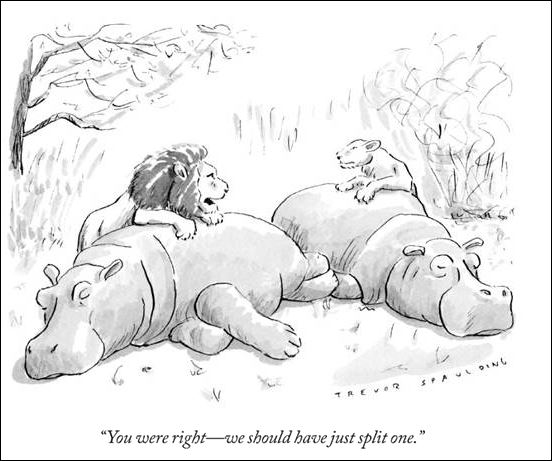
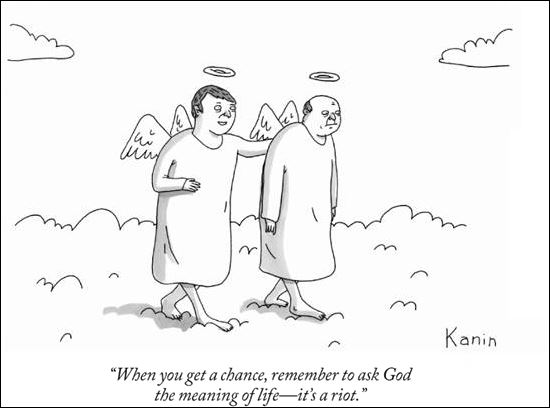
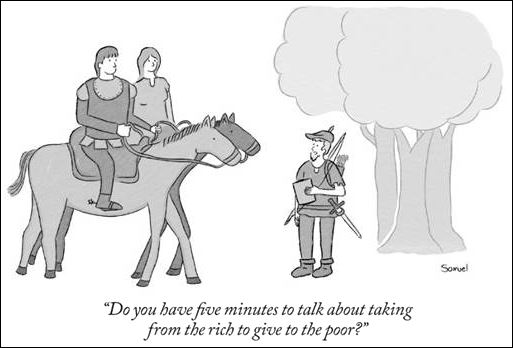

Harry Newton, who notes that the Apple Watch goes on sale today at Apple stores. Maybe that will boost Apple’s stock? I still love my Apple Watch. But my Apple stock …

What, no tennis today?