I read everything I could on Greece. But I never understood what was really happening until a brilliant Greek, now Australian, investment banker explained it all. This is really good. The best you’ll ever read on Greece. Enjoy:
Lefkada, 12 July, 2015 from David Krasnostein
Well folks, it has been quite a holiday here in Greece! In our line of work we all spend a lot of our time and energy worrying about theoretical risks, that mostly (and thankfully) never materialize, but when you actually witness a real national meltdown it is a very different experience. The post Lehman period was a shared experience for all of us, and now I am in Greece for a national crisis. What’s that Chinese curse? May you live in interesting times!
The Greek banks have been closed now for almost two weeks. It doesn’t affect us as tourists because we can withdraw whatever cash we like, assuming the ATMs have cash, which so far about 30% seem to have. But walking past closed banks and seeing people line up at ATMs to withdraw their daily $100 limit is quite sobering. But remember, the Greeks withdrew $60 billion of deposits in the last six months alone so there is lots of cash somewhere!
Stores and supermarkets are operating fine here on the islands, for the moment. Department stores and supermarkets have a problem what to do with their cash at the end of the day with no bank deposits. Some are now paying their staff directly in cash to help them, and run down some of their cash piles. We hear rumors that some supplies are running short in Athens. Our cousin called from Athens today to say her husband went to the store and found they were out of beer! Beer! Now THAT’S a REAL crisis!
We read an interesting article today in the Greek press that, perversely, white goods stores, jewellry stores and other high end stores are having the best trading week of their life! Spooked by the Cyprus experience where depositors got hit with a 40% haircut on their deposits when their banks were recapitalized, Greeks figure they better use debit transfers (still permitted) and buy what they can while they can. Apparently Chanel bags have completely sold out in Athens! My wife commented at breakfast this was totally rational behavior as apparently they are “investments”. I’m still to be convinced.
Greek Prime Minister Tsipras is now fully appreciating the damage his recently sacked Finance Minister has wreaked. So far he has successfully managed to alienate every country in the European Union, rich and poor alike, big and small. No one in Europe trusts him anymore and his irrational behavior has destroyed his credibility. His clever gaming theories might have made him a hero on University campuses but in the real world he has failed miserably and has done serious damage to the Greek nation and any hope its people have of getting back on their feet. Try negotiating for another €50 billion + when no one trusts you are good for your promises. So, will rational behavior ultimately prevail? Irrational national madness across Europe lead to World War I, so caution is required.
Deeply embedded in the Greek psyche is the glorious notion of defying overwhelming odds with a David and Goliath type defiance. The Greeks said no to the Persian Empire and then fought glorious battles at Thermopalae, Marathon and Salamis, and again to Mussolini when he demanded their surrender in World War II with a very famous single word “όχι!” (No!). Churchill later said “Greeks don’t fight like heroes. Heroes fight like Greeks!” Both became the stuff of legend. But as the saying goes, success can be a very bad teacher.
The English writer Lawrence Durrell in his novel “The Greek Islands” said it best: “The reason is that a word had been uttered, a single small word for which the whole of Europe had waited and waited in vain. It was the word “No” (Όχι’) and Greece had uttered it on behalf of all of us at a time when the so called great powers were all cringing, fawning and trying to temporize in the face of the Hitlerian menace. With that small word Greece found her soul, and Europe found its example. A small, almost unarmed nation, internally self-divided, once more decided to defy the Persian hordes as it had done in the past.”
Is this the moment for Greece to say “όχι!” again, this time to Brussels? Όχι. This time Europe hasn’t produced an enemy, but friends. But tough friends, and with rules. Leaving aside the Germans’ particular penchant for rules, the European Community is a club. And every club has its rules. There may be peculiar rules like wearing a tie and jacket, and members may not like them all. But that choice is made at the point of entry. After that, it is a matter of mutual give and take. Enjoy the benefits of membership and tolerate the burdens.
Greece chose to join the Union. The benefits were manifest. Land values skyrocketed when converted from Drachmas to Euros and land ownership was opened up to non-Greek buyers for the first time. When it spent more than it earned, Europe bridged the gap with loans. The favorite Greek indoor sport of tax evasion was indulged. In fairness, the Greek love for tax evasion was perfected as a legitimate response to hundreds of years of Ottoman occupation, a European imposed Danish King, Nazi occupation, military dictatorship, and decades of corrupt politicians and bureaucrats in Athens. When the Greek taxi driver says he won’t pay tax because “the bloody government will steal it” he was drawing from hundreds of years of experience.
But… The post Euro years also created a false reality. Hospitals, an excessively large public service, police, healthcare, roads, generous pensions, education, and other public services normally paid for from citizens’ tax revenues, could not be funded by insufficient tax revenues, so were by borrowings. And European banks were happy to lend large sums at rates that failed to differentiate Greek credit from German credit.
The markets assumed all European counties were jointly and severally liable for each other’s debts. And the governments of Europe were happy to sit by and allow that assumption to prevail. As the saying goes, for evil to prosper all it takes is for good men to do nothing. The blame game in this tragedy has many players. Poor lenders and a poor borrower. There is plenty of blame to share around, but none of which helps solve the current problem.
So this unsustainable period of financial fantasy is over. For everyone. But the Greek problem is not its debt. Neither Greece nor its creditors believe that it will ever be repaid in full. The real problem is its current account. Shut out of the credit markets for the foreseeable future, Greece simply can’t spend more than than it earns. Fewer tax revenues means fewer public services. Lower pensions. Lower healthcare. Less of anything that can’t be paid for out of government revenues. And that is just about everything in an old world, closed economy that doesn’t export much to pay for its imports. The Greeks call it “austerity” which offers the false comfort of a victim mentality. It is really nothing more than just balancing the budget.
Regardless of debts accumulated over the past decade or more, Greece has no choice but to cut its spending to match its declining revenues. This painful readjustment is not a German or Brussels imposed austerity, or punishment, it is a simple reality. And it is a purely Greek problem. European taxpayers can’t, and won’t, fund the spending gap as in years past. If the Greeks want to retire at age 50 on full pensions, knock yourself out. But Italians and other Europeans who have to work until 65 or 67 don’t want to pay for it.
And lending new money to try and stimulate the economy is pointless unless the economy is reformed. Europe sees it like pouring water into a bucket riddled with holes. So as expenses have to be cut, the only option is to grow revenues. And that requires economic reform. Serious reform.
The only hope for the future is to become competitive. To sell goods and services that the world wants to buy. No reform equals no growth. No jobs for its youth, no hope of earning income sufficient to pay for a reasonable quality of life. That’s what Europe wants for Greece. Not for itself. Germany will be fine without Greece, so will Italy, Spain and France, and the rest of the European Community. The Greek debt has been quietly socialized off French and German bank balance sheets and onto public balance sheets in a very quiet European way, so the pain of default or future write-offs will be spread around and broadly shouldered by European taxpayers.
The Greek economy is old, broken, corrupt, and inefficient. But a major crisis brings license to make major reform, an opportunity that doesn’t normally exist in a democracy with elected governments who survive by spending more and making ever more unrealistic promises of a better future to get elected.
Prime Minister Tsipras will at best negotiate a bad deal. But it will be the best deal he can do. And it will be manifestly better than exiting the Euro with an old world, closed economy, dead banks, no plan and no money. Returning to the Drachma wouldn’t be an act of nostalgia. No one will want a worthless Drachma. Not the oil producers, the pharmaceutical makers, the computer and iPhone makers, the Internet, aircraft makers, nor the auto makers, the spare part makers, nor any of the other producers of the myriad of other products that will need to be imported. One doesn’t want to even contemplate running a country with no access to drugs, petrol, spare parts, technology, phones and all the other things that support modern life. They will all want hard currencies and Greece won’t have them.
And then of course, there is the fact that the Greek banks will collapse. Banks borrow about 10 times the amount of their shareholders’ capital, sometimes more depending on how that is calculated. If they can’t borrow they can’t survive. The government will nationalize them but it is doubtful what solution that will be when a bankrupt government owns bankrupt banks. With no credit available to fund businesses, and home mortgages, there can be no growth in the economy.
Europe is not the enemy. Germany, with its shameful history and love of rules, is not today’s enemy either. Fail to reform the economy is the enemy.
This is not an “Όχι” moment unless it’s Όχι to staying the way things are. This is a time for compromise and courageous economic reform so a dreadful situation can at least produce hope for the future of Greece. This country is where we discovered our Western genius and civilization. Time to reform. Time to be great again.
I’m off to get more beer.
David Krasnostein
Lefkada, Greece
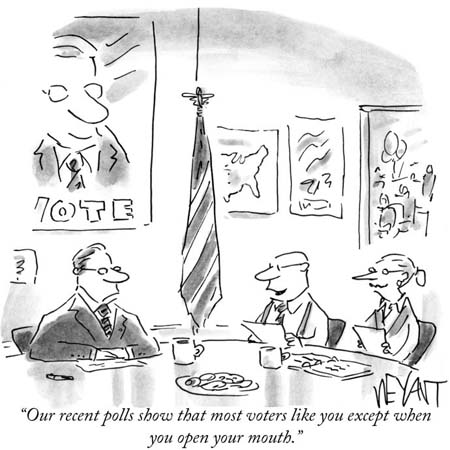
David sent this wonderful cartoon along:

Harry Newton. The sound you’re hearing is the sound of Harry throwing out his previous stupid ideas about Greece returning to the Drachma. I bet Apple will hit $130 today and I’ll feel like a real idiot.

Lefkada beer is one thing share with David.. windsurfing is great too.
His analysis of the Greek crisis sounds like more of the same thinking that brought on the crisis. How quickly the Germans forget 1953, when after bludgeoning the world, here’s what they got:
50% of their debts erased. Poof, just like That.
The other 50% payable over 30 years.
Result? The German “economic miracle”.
http://oldwww.kpfa.org/archives/20150713-Mon1000.m3u
http://thewire.in/2015/07/08/thomas-piketty-germany-has-never-repaid-its-debts-it-has-no-right-to-lecture-greece/
Stock market success is not a measure of IQ and is more a measure of streets smarts.
An example of streets smarts is, “To obtain wealth one must produce more than they spend.” This applies to the individual as well as the state and the society as a whole. It is also a basic law of economics.
Apple up another 1.3% today. In Spanish Harry is called “El-Stupid-o.”
Cliff is a troll.