What is working in our awful market:
+ Day trading.
+ Selling cockroach stocks short, e.g.
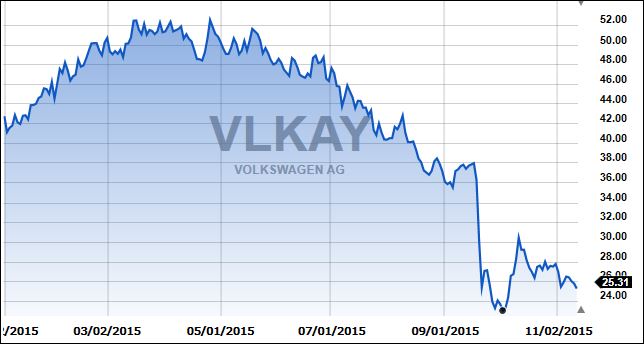
+ Stop losses. Cut your losses before they cut you.
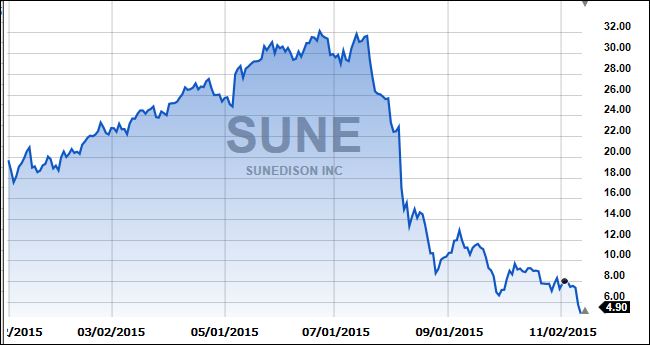
What doesn’t work? Pretty well everything else, including and especially gold and Blackstone BX (for reasons I don’t understand).
It’s probably not a good idea to be long overnight in too many stocks these days.
Which HP will make it? The PC/laptop/printer one (HPQ) or the other cloud/services company (HPE).
Barrons is betting HPQ:
With value investing out of style, and growth-oriented tech investors willing to pay lofty multiples for dominant companies like Alphabet (GOOGL) and Facebook (FB), HP is languishing, despite its strong positions in two markets, low P/E, and impressive cash flow, which it plans to share generously with shareholders. Buying its stock now could be akin to printing money.
Here’s HPQ this year:
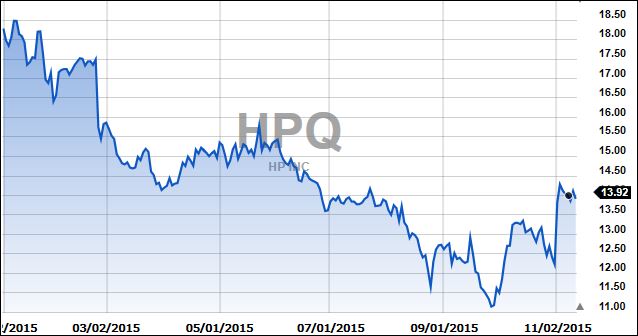
HPQ’s P/E is 5.70 and its dividend yield is 5.06% — both attractive.
Yo have to weigh that against your own use for printers. Personally I print very little. I have two 15-year old HP laserjets that still work fine. My last printer buy was a Selphy CP910 from Canon. It makes 4 x 6 color photos and that’s it. But it’s only $83.
I print very little any longer. Occasionally documents (for signing) and very very occasionally color pictures of the grandkids. Everything of import – namely the grandchildren — seems to be on Apple’s PhotoStream. (See below.)
The PC and laptop business is declining – for many reasons, not the least of which is that Intel hasn’t introduced any faster chips in two years, thus depriving me (and others) of the joy of buying a new laptop.
Which HP will make it. Make your own mind up. Fortunately HPQ is getting cheaper. Read Barrons here.
Good stuff:
1. Uniqlo has a great sale today. I love their socks and their ultra-light weight down vests and jackets. They’re celebrating Singles Day. Click here.
2. Your eye doctor will give you your eyeglasses prescription, including your PD value. In many states it’s actually the law. They have to. Using that prescription and buying a pair of glasses from my favorites Zenni Optical or Eye Buy Direct is much much cheaper than buying from your eye doctor or your local retail store.
3. Get your flu shot today. It take fives minutes at your local pharmacy and is usually free.
4. You can now buy an iPad Pro. It has a huge 12.9 inch screen, comes in lovely colors and can cost over $1000 (depending on memory). I’m sure there’s a reason someone somewhere will want one. Just not me.
Fact-checking has fallen from fashion. When I worked at Business Week in the summer of 1968, they had people called “fact-checkers.” They called everybody for his quotes. They checked statistics. They checked correctness with a blue pencil. It was good training. I do a lot of checking for this column.And don’t get into trouble for inaccuracies.
Sadly politicians open their mouths and say the first nonsense that comes into their tiny brains. To wit, from The Week magazine.

By Becca Stanek.
Marco Rubio probably should have picked on someone other than philosophers. At the fourth GOP debate on Tuesday night, the Florida senator argued in favor of vocational education by underscoring its paycheck perks. “For the life of me I don’t know why we stigmatize vocational education,” Rubio said. “Welders make more money than philosophers. We need more welders than philosophers.”
Nothing against welders – or vocational education – but that isn’t true at all. Matt Yglesias, a Vox writer and former philosophy major, did the research and it turns out Rubio was about $30,000 off. The average annual wage for philosophy majors is $71,350. Welders, on the other hand, only make an average annual wage of $40,040.
Sorry, Marco.
For verification, click here.
Doctors enabling addiction, and death. I’ve read this piece three times. It’s by a professor of clinical psychiatry at Cornell. It has a strong message on doctors prescribing addictive pain killers. Read . See what I mean. I love the illustration.
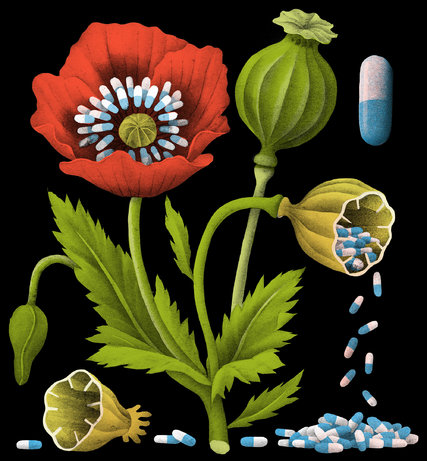
Credit Bjorn Rune Lie
THERE has been an alarming and steady increase in the mortality rate of middle-aged white Americans since 1999, according to a study published last week. This increase – half a percent annually – contrasts starkly with decreasing death rates in all other age and ethnic groups and with middle-aged people in other developed countries.
So what is killing middle-aged white Americans? Much of the excess death is attributable to suicide and drug and alcohol poisonings. Opioid painkillers like OxyContin prescribed by physicians contribute significantly to these drug overdoses.
Thus, it seems that an opioid overdose epidemic is at the heart of this rise in white middle-age mortality. The rate of death from prescription opioids in the United States increased more than fourfold between 1999 and 2010, dwarfing the combined mortality from heroin and cocaine. In 2013 alone, opioids were involved in 37 percent of all fatal drug overdoses.
Driving this opioid epidemic, in large part, is a disturbing change in the attitude within the medical profession about the use of these drugs to treat pain. Traditionally, opioid analgesics were largely used to treat pain stemming from terminal diseases like cancer, or for short-term uses, such as recovering from surgery.
But starting in the 1990s, there has been a vast expansion in the long-term use of opioid painkillers to treat chronic nonmalignant medical conditions, like low-back pain, sciatica and various musculoskeletal problems. To no small degree, this change in clinical practice was encouraged through aggressive marketing by drug companies that made new and powerful opioids, like OxyContin, an extended-release form of oxycodone that was approved for use in 1995.
The pitch to doctors seemed sensible and seductive: Be proactive with pain and treat it aggressively. After all, doctors have frequently been accused of being insensitive to pain or undertreating it. Here was the corrective, and who in their right mind would argue that physicians shouldn’t try to relieve pain whenever possible?
Well, doctors clearly got the message: The medical use of these drugs grew tenfold in just 20 years. Nearly half of all prescriptions by pain specialists are for opioids. But strikingly, primary care physicians, who generally do not have any particular expertise or training in pain management, prescribed far more opioids overall than pain specialists. For example, in 2012, 18 percent of all prescriptions for opioid analgesics were written by family practitioners, and 15 percent by internists, compared to 5 percent for pain specialists. (This partly reflects the fact that there are fewer pain specialists than primary care doctors.)
The consequences of this epidemic have been staggering. Opioids are reported in 39 percent of all emergency room visits for nonmedical drug use. They are highly addictive and can produce significant depressive and anxiety states. And the annual direct health care costs of opioid users has been estimated to be more than eight times that of nonusers.
But most surprising – and disturbing – of all is that there is actually very weak evidence that opioids are safe or effective for the long-term treatment of nonmalignant pain. So how did they become so popular for these uses? A large review article conducted between 1983 and 2012 found that only 25 of these were randomized controlled trials and only one study lasted three months or longer. The review concluded that there was little good evidence to support the safety or efficacy of long-term opioid therapy for nonmalignant pain. (In contrast, there is little question that opioid analgesics are highly effective for the relief of short-term pain.)
Furthermore, a large 2006 Danish study of a nationally representative sample of 10,066 people that compared opioid and nonopioid users found that opioid use was significantly associated with the reporting of severe pain, poor health, unemployment, and greater use of the health care system. It appears that long-term opioid use did not significantly relieve pain or improve quality of life in this well-designed study.
Worse, there is a well-known syndrome of opioid-induced hyperalgesia in which opioids, paradoxically, can actually increase a person’s sensitivity to painful stimuli.
What the public — and physicians — should know is that there is strong evidence that nonsteroidal anti-inflammatory drugs (Nsaids), like Motrin, and other analgesics like Tylenol are actually safer and more effective for many painful conditions than opioid painkillers.
For example, one study found that a combination of Motrin and Tylenol had a much lower so-called number needed to treat than opioids. (The number needed to treat represents the number of people who must be treated for one person to benefit.) A lower number indicates a more effective treatment.
So how should we deal with the national crisis of opioid misuse, addiction and overdose? The Food and Drug Administration has already taken some tiny, though inadequate, steps forward in recent years by issuing a Risk Evaluation and Mitigation Strategy in 2012 that requires the makers of opioids to provide doctors with training and education about using them safely, and adding warnings to drug labels.
WHAT is really needed is a sea change within the medical profession itself. We should be educating and training our medical students and residents about the risks and limited benefits of opioids in treating pain. All medical professional organizations should back mandated education about safe opioid treatment as a prerequisite for licensure and prescribing. At present, the American Academy of Family Physicians opposes such a measure because it could limit patient access to pain treatment with opioids, which I think is misguided. Don’t we want family doctors, who are significant prescribers of opioids, to learn about their limitations and dangers?
It is physicians who, in large part, unleashed the current opioid epidemic with their promiscuous use of these drugs; we have a large responsibility to end it.
Richard A. Friedman is a professor of clinical psychiatry and the director of the psychopharmacology clinic at the Weill Cornell Medical College, and a contributing opinion writer to the New York Times where this piece was first published.

Harry Newton, who asks rhetorically, “Where would we be without Apple’s PhotoStream?
This is Eleanor learning technology:

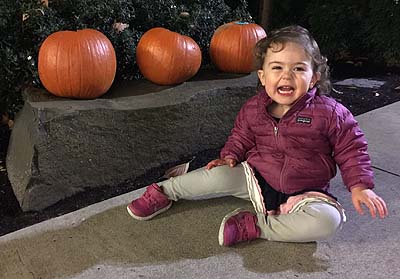
Enjoying pagan festivals.
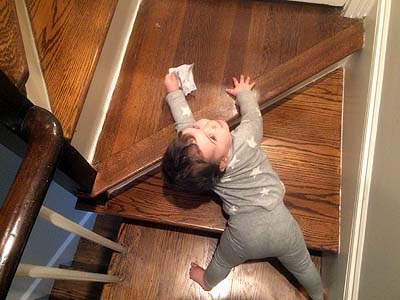
This is Sophie learning to climb steps.and to make a mess (which she’s really good at):
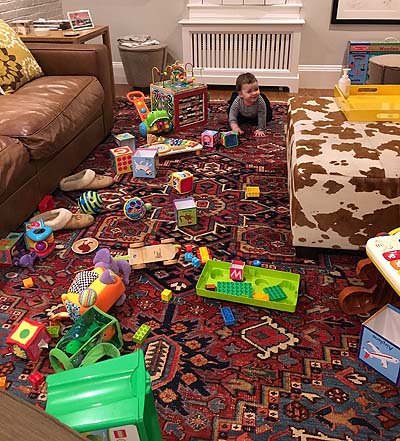
This is Sophie learning how to make a mess. She has this skill down pat. Not good at walking or climbing stairs.

Agree – there are at least 10 times as many welders as paid philosophers. If you just want your kid to contemplate what it would be like to have a job, have him be a philosopher.
And as to day trading as a recommendation, there is a sure-fire way to make a small fortune in day trading – start with a large fortune
Couldnt disagree more with philosophy major vs welder. The issue-what actual jobs do they do, and what is their ability to actually find work versus a journeyman welder? This ‘proof’ link you included was about as useless as the Democrat debate.