Housing makes financial crises. Some think we’re overdue for another 2008 housing crisis. I’m not so pessimistic — though there are a lot of web sites out there preaching doom and gloom. For now:
1. A little cash is good — enough to take care of two years of expenses.
2. If you’re borrowing to buy rental property, keep your LTV low. LTV is loan to value.
3. Make sure your rents will cover your monthly mortgage bills by at least 1.6 times.
The Economist’s weekend’s cover story is semi-bleak:
Housing in America — Nightmare on Main Street
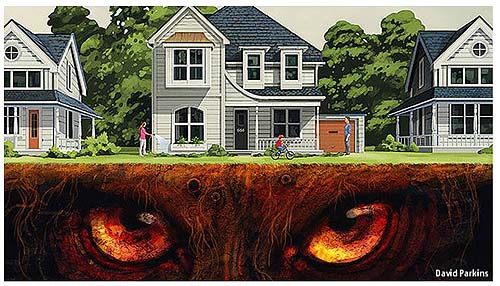
America’s housing system was at the centre of the last crisis. It has still not been properly reformed
WHAT are the most dysfunctional parts of the global financial system? China’s banking industry, you might say, with its great wall of bad debts and state-sponsored cronyism. Or the euro zone’s taped-together single currency, which stretches across 19 different countries, each with its own debts and frail financial firms. Both are worrying. But if sheer size is your yardstick, nothing beats America’s housing market.
It is the world’s largest asset class, worth $26 trillion, more than America’s stockmarket. The slab of mortgage debt lurking beneath it is the planet’s biggest concentration of financial risk. When house prices started tumbling in the summer of 2006, a chain reaction led to a global crisis in 2008-09. A decade on, the presumption is that the mortgage-debt monster has been tamed. In fact, vast, nationalised, unprofitable and undercapitalised, it remains a menace to the world’s biggest economy.
The reason the danger passes almost unnoticed is that, at first sight, the housing market has been improving. Prices in America have crept back up towards their all-time high. As a result, the proportion of households with mortgage debts greater than the value of their property has dropped from a quarter to under a tenth. In addition, while Europe has dithered, America has cleaned up its banks. They have $1.2 trillion of core capital, more than double the amount in 2007, which acts as a buffer against losses. The banks have cut risk and costs and raised fees in order to grind out decent profits. Bosses and regulators point to chastened lenders and boast that the problem of banks “too big to fail” has been solved. Taxpayers, they say, are safe.
Only in their dreams. That trillion-dollar capital buffer exists to protect banks, but much risk lies elsewhere. That is because, since the 1980s, mortgage lending in America has been mainly the job of the bond market, not the banks as in many other countries. Loans are bundled into bonds, guaranteed and sold around the world. Investors on Wall Street, in Beijing and elsewhere own $7 trillion-worth.
When those investors panicked in 2008, the government stepped in and took over the bits of the mortgage-guarantee apparatus it did not already control. It was a temporary solution, but political gridlock has made it permanent. Now 65-80% of new mortgages are stamped with a guarantee from Uncle Sam that protects investors from the risk that homeowners default. In the heartland of free enterprise the mortgage system is worthy of Gosplan.
The guarantees mean there is unlikely to be a repeat of the global panic that took place in 2008-09, when investors feared that housing bonds were about to default. Only a madman in the White House would think that America gained from reneging on its promises. And parts of the system are indeed safer. The baroque derivatives that caused huge damage, such as mortgage-based CDOs, have shrivelled away. At least 10,000 pages of new rules exist to police reckless conduct.
The dangers of a nationalised system are more insidious (see article). The size, design and availability of mortgages is now decided by official fiat. Partly because the state charges too little for the guarantees it offers, taxpayers are subsidising housing borrowers to the tune of up to $150 billion a year, or 1% of GDP. Since the government mortgage machine need not make a profit or have safety buffers, well-run private firms cannot compete, so many banks have withdrawn from making mortgages. If there is another crisis the taxpayer will still have to foot the bill, which could be 2-4% of GDP, not far off the cost of the 2008-09 bank bail-out.
Faced with this gigantic muddle, many politicians and regulators just shrug. The system is mad, but the thicket of rules and vigilant regulators will prevent crazy lending from taking place, they argue. Households have deleveraged, leaving them able to service their debts more efficiently.
That seems wildly optimistic. Because housing is seen as one of the few ways in which less-well-off Americans can accumulate wealth, there is an inbuilt political pressure to loosen lending standards. As a result, housing crises are a recurring feature of American life. Before the subprime debacle in 2008-10, there was the savings-and-loans fiasco in the 1980s. Since the crisis the share of households that own their property has fallen from 69% to 63%. Rather than welcoming this as a sensible shift towards renting, Donald Trump and others have portrayed it as a disgrace. Because global investors are hungry for safe assets, any bonds with an American guarantee are snapped up, adding to the incentive to borrow.
Rather than allow the cycle of remorse and repetition to repeat, better to complete the job of reform and make sure that the mortgage system cannot be used as a political tool to stimulate the economy. The simplest approach would be to give it the same medicine as the regulators administered to the banks. The nationalised mortgage firms that guarantee the bonds-and are thus in hock if the market collapses-should be forced to raise their capital buffers and increase their fees until they make an adequate profit.
The public would have to foot the bill, of around $400 billion, making explicit the contingent liability for future losses that it already bears. The cost of mortgages, at a record low today, would also rise. But that would eliminate the ongoing hidden subsidy and create a level playing field so that private firms were able to do more mortgage lending. If that bill was too big to swallow, a second-best would be to impose the new rules on new mortgages, leaving the stock of subsidised existing loans to run down over the coming decades.
It is a massive job, made harder by the fact that so many groups have a stake in a rotten mortgage machine. Homeowners like cheap debt. Litigious hedge funds have their own agenda. The government uses an accounting quirk to book profits from the mortgage system, but does not recognise the potential cost to taxpayers. It is no surprise that Congress has shirked its duty. But until America’s mortgage monster is brought to heel, the task of making finance safer will remain only half-done.
Three ways to boost your miserable home cell phone service
1. Wi-Fi calling. Verizon, AT&T and T-Mobile all have it. Not all cellphones support it. The iPhone does. You’ll find it under Settings/Phone. This is a no-brainer.
2. Enable LTE for Voice & Data.You’ll find the setting under Settings/Cellular. This is a no-brainer.
3. A mini cellphone “tower” from your provider. They cost anywhere from zip to $300 — depending on your ability to kwetch — Yiddish for complain.
Cell phones cause cancer?
In rats, yes. In humans, maybe.
Best: Keep your cellphone away from your head. Use headphones.
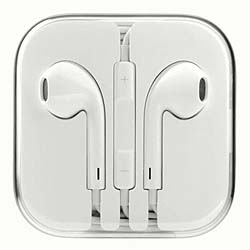
Only 25 years to figure this. Now for Harry’s GREATEST Discovery!
You know that irksome slide bar on the right?
You grab it. You pull it down. Then your cursor slips. And the slide bounces back to the top.
Then you start again. Irksome.
Try this: Hold your Shift or Control Key down. Then move the slide bar. It holds. Miracles happen. Works in Windows.
Google Translate is a joy.
Point your iPhone at a sign in Sweden and Google Translate will tell you the switch turns on the heated towel rack.
Google Translate works for all the languages I need to translate, though not Australian. You’re left on your own with that strange one.


Favorite Will Rogers statements
“Things will get better, despite our efforts to improve them.”
“The short memories of the American voters is what keeps our politicians in office.”
“There are three kinds of men. The ones that learn by readin’. The few who learn by observation. The rest of them have to pee on the electric fence for themselves.”
“A fool and his money are soon elected.”
“An economist’s guess is liable to be as good as anybody else’s.”
“Try to live your life so that you wouldn’t be afraid to sell the family parrot to the town gossip.”
Trump: Obama Vacationing Instead of Running ISIS
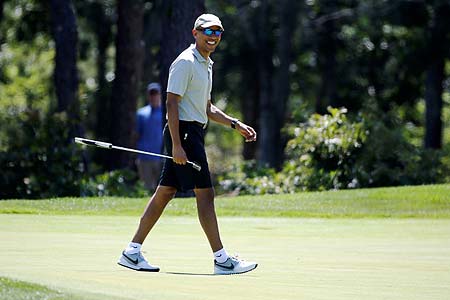
NEW YORK (The Borowitz Report)—President Obama is vacationing on Martha’s Vineyard when he should be hard at work running isis, Donald Trump charged on Thursday.
In an interview with Fox News, the Republican Presidential nominee said that the President’s preference for golfing in favor of the demanding day-to-day work of running a terrorist organization shows “what a disaster he has been” at the helm of the Islamic State.
“Frankly, he doesn’t deserve to call himself the founder of isis,” Trump told Fox’s Sean Hannity. “He is a disgrace.”
Trump also drew a sharp contrast between himself and Hillary Clinton, whom he said lacked the mental and physical stamina to run isis.
“I’ve built a great business,” he said. “I’ve employed thousands of people. I will do a much better job running ISIS.”

Harry Newton who had a glorious weekend playing too much tennis and not worrying about the coming end of the world, which is scheduled for Election Day November 8.
I used to write this blog every day.That was increasingly hard. Now I write when I actually have something to say. You can make sure you get this blog by signing up for the free newsletter on the top of the left column. I don’t sell the list to anyone, basically because no one has ever asked.
Grandchildren are getting bigger, stronger, smarter. Peter,who is seven months, is onto solid food and clearly enjoys it. He makes more mess eating than I do. But I’ll catch up to him in mess and diapers. I figure he’ll be out of diapers just as I’m ready for them.


Re right hand slider…I have always just held down my left clicker…
The unbelievable house mess, pure garbage, is just one more example of why we need far less government in our lives and finances. Government today is a collection of self serving special interests catering to “got to get reelected” politicians that have nothing to do with practical solutions, tax paying people and the true costs down the road, i.e., our grandkids. Like the kids, it’s “kick the can down the road”. And it’s more “feel good, do bad” politics. We’re helping the poor own homes, yea (!), like we’re helping college kids with school debt sure (!). Those making the gov’t guaranteed loans love it as do the colleges. And the numbers are hidden and hard to understand, trillions, what’s that?
Want to get real discouraged? Try doing a bank mortgage these days…more FED rules than you can imagine…plus unbelievably incompetent bank loan staff. I just did a bank re-fi on a mortgage my bank had held for 10 years without even a minutes default…took reams of documentation and over 3 months to close the deal.
You parody Trump while excusing your Messiah for his most recent sin. Can you say Harry-hypocrite?.
English to Australian translators:
http://www.babelbloodyfish.com/
http://www.whoohoo.co.uk/main.asp?pageid=aussie&uid=&session=&topic=translator