Donald Trump has a good shot at becoming President. Hence:
1. The stockmarket will tank, especially stocks that rely on imported products, like Walmart, Nike, New Balance, Under Armour, Gap, etc.
2. Treasuries will tank, as countries like China dump their holdings. Donald has said interest is negotiable.
3. The dollar will tank.
4. Gold and silver will NOT increase in value, as they always do in a disaster.
This was the four-part theory I floated past many of my most intelligent friends in recent days.
Their conclusion:
Yes, he will become President. But my doom-and-gloom conclusion is too negative.
His presidency won’t be inconsequential. Many are thinking hedging strategy.
My favorite recommendation from a favorite friend is:
“I think the only option is to buy real estate! He’s (Donald) nothing if not a dishonest self interested pri*k. He’ll do his best to protect his personal assets?”
To reinforce that view, Donald has said on several occasions that he’s presently doing two things: Running a campaign for President of the U.S. and running his real estate empire. He co-mingles them beautifully — renting office space from himself paid by his donors, holding press conferences and rallies in his own hotels.And using donor money to buy copies of his own “Art of the Deal” book, thus earning royalties for himself.
Other friends are eyeing stocks that are likely to boom — especially defense stocks like Lockheed Martin, Boeing, Raytheon, General Dynamics and Northrop Grumman and also cement companies. Donald says our military is weak and needs help. His wall will need lots of cement.
Chris Radici, an excellent money manager at UBS, is especially fond of a fund called Catalyst Hedged Futures Strategy Fund, which tends to do well when the S&P 500 doesn’t. Here’s a chart from the fund’s spec sheet:

Some investor friends eye the market as being well-priced and are selling covered calls on many of their positions. They also eye that on the campaign trail, Trump exhibited a doomsday view of the market. “Be careful of a bubble because what you’ve seen in the past might be small potatoes compared to what happens,” he said in his campaign announcement speech in June last year.
Many friends are hoarding cash. They sense that “it’s all too hard, way too scary.”
Personally, I’m worried about a Trump presidency. I’m still mulling a plan and would welcome ideas from my readers.
I have done an enormous amount of reading in recent days. The New Yorker has a long piece — which (for my conservative friends) is not a left-wing, ultra-liberal piece. It’s extensively researched, involving many many interviews. It details what he can and can’t do. Summary: he can do a lot.
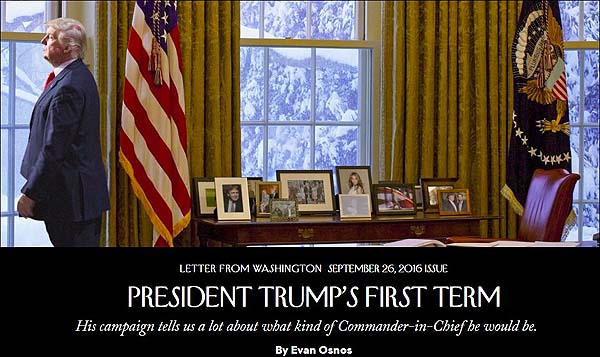
The piece is worth reading for it details basically what he can do — absent cooperation from Congress. I clipped a few paragraphs from the New Yorker piece:
However, Trump could achieve many objectives on his own. A President has the unilateral authority to renegotiate a nuclear deal with Iran, to order a ban on Muslims, and to direct the Justice Department to give priority to certain offenses, with an eye to specific targets. During the campaign, he has accused Amazon of “getting away with murder tax-wise,” and vowed, if he wins, “Oh, do they have problems.”?
Any of those actions could be contested in court. The American Civil Liberties Union has analyzed Trump’s promises and concluded, in the words of the executive director, Anthony Romero, that they would “violate the First, Fourth, Fifth, and Eighth Amendments to the Constitution.” Romero has said that the A.C.L.U. would “challenge and impede implementation of his proposals,” but that strategy highlights the essential advantage of the President: the first move.
The Economist Intelligence Unit, an economic-and-geopolitical-analysis firm, has ranked the prospect of a Trump victory on its top-ten risks to the global economy. Larry Summers, the Harvard professor and former Treasury Secretary, predicts that, taken together, Trump’s economic and trade policies would help trigger a protracted recession within eighteen months. Even if Trump stops short of applying tariffs, Summers told me, “the perception that we might well be pursuing hyper-nationalist policies would be very damaging to confidence globally and would substantially increase the risk of financial crises in emerging markets.”
If Trump followed through on tariffs, the effects could be larger still. Mark Zandi, a centrist economist who has advised Republicans and Democrats and is now the chief economist at Moody’s Analytics, a research firm, forecasts that Trump’s trade plan could trigger a trade war that would put roughly four million Americans out of work, and cost the economy three million jobs that would have been created in Trump’s absence.
Anthony Karydakis, the chief economic strategist at Miller Tabak, an asset manager, told me that a Trump victory is now generally regarded as “a major destabilizing development for financial markets.” He went on, “If he ever even alludes to renegotiating the debt, we will have a downgrade of U.S. debt, and that event will cause a massive exodus of foreign investors from the U.S. Treasury market.” In 2011, when feuding in Congress delayed raising the debt limit, the stock market fell seventeen per cent. This would be a far larger event. “The rating agencies could not ignore the comment,” he said. “The cornerstone of the right to raise sovereign debt is the willingness and ability of the government to service it normally and fully.” He added, “The markets have no patience for stupidity or ignorance. They get scared.”
For more than a year, Trump has encouraged supporters to regard him as a work in progress-“Everything is negotiable”-and the ambiguity has ushered him to the threshold of power. But envisaging a Trump Presidency has never required an act of imagination; he has proudly exhibited his priorities, his historical inspirations, his instincts under pressure, and his judgment about those who would put his ideas into practice. In “Trump: Think Like a Billionaire,” he included a quote from Richard Conniff, the author of “The Natural History of the Rich”: “Successful alpha personalities display a single-minded determination to impose their vision on the world, an irrational belief in unreasonable goals, bordering at times on lunacy.”?
Trump’s vision, even his “irrational belief in unreasonable goals,” was never a charade. In the early decades of this century, Americans have sometimes traced our greatest errors to a failure of imagination: the inability to picture a terrorist, in a cave, who is able to strike; the hubris to ignore extensive State Department predictions of what would come of the invasion of Iraq.
Trump presents us with the opposite risk: his victory would be not a failure of imagination but, rather, a retreat to it-the magical thought that his Presidency would be something other than the campaign that created it.
You can read the full New Yorker piece here.
There are a zillion pieces that are not favorable to Trump. Here’s one from a magazine called The Week.
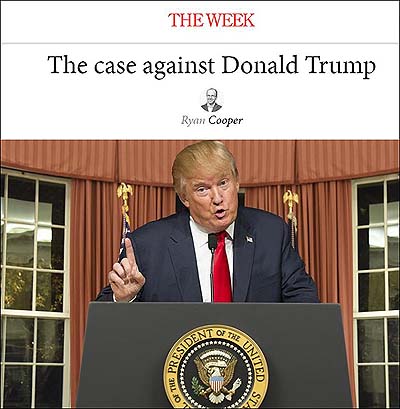
You can read the full piece here.
Two elements of Trump’s policies bother me the most:
+ Deporting millions of people. A conservative estimate of the cost to the federal government to find them, round them up, house them, and send them on their un-merry way is $800 billion. And then there’s the cost of work not done and the lost tax revenues. I have a house in California. All the local contractors seem to be Mexican. They all work very hard and are more reliable than the local contractors.
+ Starting a trade war with China, Mexico, etc. Put high tariffs on imported goods will hurt their economies. They’ll retaliate with high tariffs on goods they import from us. It’s called Beggar Thy Neighbor policy. Wikipedia explains:
In economics, a beggar-thy-neighbour policy is an economic policy through which one country attempts to remedy its economic problems by means that tend to worsen the economic problems of other countries.
Adam Smith made reference to the term in claiming that mercantilist economic doctrine taught nations ‘that their interest lies in beggaring all their neighbours’.
The term was originally devised to characterise policies of trying to cure domestic depression and unemployment by shifting effective demand away from imports onto domestically produced goods, either through tariffs and quotas on imports, or by competitive devaluation…
According to economist Joan Robinson beggar-thy-neighbour policies were widely adopted by major economies during the Great Depression of the 1930s. And (Harry’s comment) made things much worse.
So, above is my “first go” at looking into what might happen and what we might consider for our upcoming investment strategy.
We’re 49 days away from Election Day. We have a little time. Your thoughts,please.
The Obituary is my favorite section of the Economist. Here’s the latest. It’s wonderful:
Obituary: Phyllis Schlafly
“Ms” for “misery”
Phyllis Schlafly, a firebrand critic of American feminism, died on September 5th, aged 92
SINCE the Pilgrim Fathers wisely abandoned their “naive and nonsensical” socialist experiment, America had thrived on hard work, motivated by family, in a climate of freedom, lately defended by the atom bomb: “a marvellous gift that was given to our country by a wise God”. Such was Phyllis Schlafly’s creed and as every liberal-minded American agreed it was outdated, extreme and repellent: obsessively anti-communist, anti-immigration, anti-abortion, anti-gay. Yet those who patronised or ignored her regretted it.
She cut her political teeth chewing up the internationalist Republican establishment, personified by the 1964 presidential contender, Nelson Rockefeller. Her first book, “A Choice not an Echo”, a 121-page, 75 cent self-published polemic, sold 3m copies and helped the populist Barry Goldwater (“in your heart you know he’s right”) snatch the nomination. He plunged to defeat against Lyndon Johnson, who countered: “in your guts you know he’s nuts.”
Her next target was the treacherous, weak-willed foreign-policy elite: people like Robert McNamara who blundered into Vietnam but were scared to fight properly, or that deluded appeaser Henry Kissinger, whom she lambasted in a densely argued 800-page tome. Rather than wasting money on the “moondoggle” America should scare the Soviet Union by maintaining an overwhelming superiority in those God-given nuclear weapons. Arms-control talks were a dangerous distraction too: the Communists would cheat as they always did-the only deal they honoured was the one with Hitler in 1939.
Her consuming interest in the Soviet menace meant she came late-almost too late-to what proved to be her most notable fight: stopping the Equal Rights Amendment. By 1972 the ERA had passed both houses of Congress overwhelmingly. It was quickly adopted by 30 of the 38 states required. Her decade-long crusade to block “lesbians, radicals and federal employees” from seeking a “constitutional cure for their laziness and personal problems” was one of the most striking feats of grassroots organisation in American political history.
She united socially conservative Catholics, Protestants, Mormons and Orthodox Jews, previously mistrustful and distant camps, with tens of thousands of women enraged by their supposed champions. In halting a juggernaut backed by almost the entire political establishment she also brought the ultraconservative right from the fringe to the mainstream, paving the way for the Moral Majority of the 1980s, the Tea Party and ultimately Donald Trump-the first Republican nominee since Reagan, she said, “who actually represents the average American worker”.
The “men’s liberation amendment”, she argued, destroyed women’s rights to be mothers and homemakers, and to be gently treated in hard manual jobs. Mandatory equality would mean conscription for women-even into combat units; she mockingly sent quiches to legislators who failed to see how cowardly that was.
Her wider battle was against what she claimed was the feminist aim to make women and men interchangeable. Her arguments ranged from history (the Christian age of chivalry) to theology (the honour and respect due to Mary). The claim that American women were downtrodden was the “fraud of the century”, she wrote in “The Power of the Positive Woman”, a book published in 1977. If women were underrepresented in Congress, that was because they mostly wanted to do more important things, like having babies. Free enterprise helped far more than feminism-household appliances ended drudgery. Above all: marriage was the best deal ever devised for women.
She delighted in the ire she aroused. In a debate in 1973 Betty Friedan, a leading American feminist, called her an “Aunt Tom”, adding “I would like to burn you at the stake.” She was doused in pig’s blood, hit in the face by an apple pie and lampooned in the “Doonesbury” comic strip (delightedly, she framed it). Her opponents saw her as an arch-hypocrite: married to a wealthy lawyer, a fortunate lady of leisure who sought to deny equality to her sisters. She thought the abuse proved her point: her opponents were smug, intolerant and out of arguments.
In fact Mrs Schlafly (not “Ms”, which stood for “misery”) was no more the child of privilege than she was a powder-puff. Born into a family hard-hit by the Great Depression, she worked her way through college doing night shifts in an ammunition factory, testing machineguns. Under her carefully coiffed locks-like a treble clef, the New York Times wrote unkindly-was a formidably effective brain. It was honed by a master’s degree from Radcliffe gained at 20; at 51 (having gained her husband’s permission) she whizzed through law school.
A deeper paradox, which she fiercely denied, was that sexism in her own ranks held her back. A male politician with her brains, charm, drive, grit and following-and 20-plus books, a syndicated column and a radio show-would have surely landed a job in Ronald Reagan’s Pentagon. But she never held or won public office. Not that she cared. Her biggest achievement, she insisted, was raising her six children: all breast-fed, against (like so much) the fashion of the times.
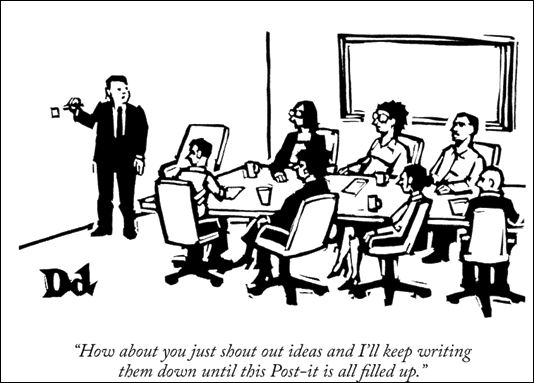
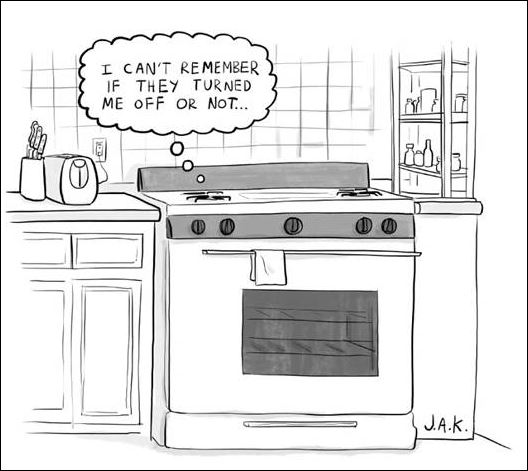
Favorite cartoons from this week’s New Yorker

Harry Newton who marvels at the neighbors’ renovation that is driving me nuts. One penthouse owner has erected his own elevator on the side of our building to schlepp demolition stuff down and new stuff up. That’ll be 18 months and zillions of dollars. Our upstairs neighbor is redoing their kitchen and their floors. Our immediate neighbor in the country is building a $1,600,000 spec house they’re confident they’ll sell in a nanosecond. New York streets are choked with cement trucks battling their 90 minute deadline — from factory to construction site — to build 100-floor skyscrapers. I haven’t seen this much construction activity since 2006.

Harry, I’m concerned by the pro-Trump rhetoric in the comments section on your blog. I thought intelligent people read this blog? Fact: 1). Only stupid people support Trump. THere are no exceptions. What thinking person would support a madman whose only interest is promoting himself? A hothead who was INEVITABLY begin at least one WAR during his four years, maybe even a WORLD WAR. He’s a whack-job, a psycho, a bully and a prick. Most of tRump’s support comes from unemployed, frustrated, failed white men. Is that who reads your blog? Failures? Because that’s who supports Trump. Take a look at those Trump rallies. Not a lot of executives types if you know what I mean. It’s a blue collar, high school (at best) educated crowd. Yes, Hillary Clinton is tainted, but she’s a former cabinet official who understands how government works and she’s not bat shit crazy. She has my vote and I’m a Republican.
the only stupid one is you, a fake Repub voting for a known criminal. Just paint an L on your forehead. the sad vote is Harry…hard to believe that you cant see what a criminal Clinton is. Willful blindness.
By the way, Harry, I can not believe that YOU … of all people… wrote: “And using donor money to buy copies of his own “Art of the Deal” book, thus earning royalties for himself.” YOU know how book contracts are written better than anyone! He would spend big money to get a tiny % back that is fully taxable?? What?? Think on it, Sir! YOU can think 20 ways to benefit from that money if you were unscrupulous. THAT book-buy ploy would be as silly as the charge. Yeah, it’s something Clinton would do… and I guess that’s why certain folks believe it.
no, it’s trump using his campaign as a tool for converting donor money into income for himself, something, it turns out, he has a habit of doing with his own foundation. a practice that, incidentally, is illegal.
incidentally, trump’s campaign is in full grift mode. the most obvious is how the campaign is leasing out thousands of square feet in various trump properties.
The doom and gloom prophecies of a Trump administration remind me of the same predictions by the same experts prior to the Brexit vote. I don’t know if Trump is the correct answer but I do know that HRC with her 25 year record of self-enrichment, prevarication, insider cronyism, and self-dealing is the wrong answer.
Nothing… NOTHING about Trump responds to the old metrix. He is a truly disruptive force. Negative ads don’t work… Hillary & Friends have spent hundreds of millions with no impact. (Do ANY TV ads work anymore?) “Polling” gives ridiculous results. Polls show “close” when tens of thousands turn out for Trump rallys (witness Ft. Myers FL yesterday) while Hillary has trouble filling a high school gym even WITH paid “fans”.
Predictions from the folks quoted in the New Yorker are ridiculous. They are based on what they knew before, not what is true now!
metrics… yeah.. I know ..
Harry, obviously no one is going to change your mind on Trump, and I’m not gong to try. But let me ask one question: In the description of beggar-thy-neighbour you quoted above, is this not
exactly what China has been doing for years, with the USA being the chief neighbor whose been begged?
My Dear Harry… and I love and respect you a lot… Thank you for asking for “ideas” at least. But, Sir, you DO keep your head in an echo chamber. You hear the same thing over and over and think it must be true. I would call it the modern “Facebook” effect. (Facebook’s algorithm only shows users the kind of posts that keep them glued to the screen. Same as you.)
Does ANYONE know what will happen during the Trump Presidency? Hell no! BUT, it will be better than the available alternatives. (Me, personally I favor a benevolent dictatorship headed by a [beautiful] princess.)
….enter screed here about the disaster of liberalism… ending with a country poisoned from within and staggering toward disaster…. I could write it, but you wouldn’t read it.
Should you take a defensive financial position? Hell yes! Real Estate? Heck yeah. We have exchanged email on that issue. Real Estate in Washington DC or Northern Virginia? Uh… no.
I was in Washington DC during the change of two administrations. I met with “Transition Teams”. I wrote white papers and prepared research. It made no difference. Once in office, every decision was driven by politics and “The Art of the Deal”.
In fact, we often laughed about the difference between not JUST what the candidates said, but also the difference between what the TRANSITION TEAM said and the real policies and regulations as they played out.
These campaign statements are nothing but vague statements of intent that have to meet several more layers of reality. I just wrote that and I like it… vague statements of intent… yup.
ALL of the “Experts” quoted by the New Yorker (they quoted a guy from the Economist for gosh sakes!) 1. Have an axe to grind and 2. Have no idea what is going to happen.
Frankly, I am a hell of a lot more worried about the Chinese HUGE ratio of debt to GDP than I am a Trump Presidency. China’s debt is 255% of its GDP. I suggest you spend more time reading the statistics about China and less the bullshitting about Trump that is based on … nothing. (If you reply, “It’s based on what he said!” I will say again: vague statements of intent… )
IF you want to be defensive about something, be defensive about China! It’s a lot more definitive.
http://www.telegraph.co.uk/business/2016/09/18/bis-flashes-red-alert-for-a-banking-crisis-in-china/
“The Bank for International Settlements warned in its quarterly report that China’s “credit to GDP gap” has reached 30.1, the highest to date and in a different league altogether from any other major country tracked by the institution. It is also significantly higher than the scores in East Asia’s speculative boom on 1997 or in the US subprime bubble before the Lehman crisis. ”
“China’s total credit reached 255pc of GDP at the end of last year, a jump of 107 percentage points over eight years. This is an extremely high level for a developing economy and is still rising fast .”
“Outstanding loans have reached $28 trillion, as much as the commercial banking systems of the US and Japan combined. The scale is enough to threaten a worldwide shock if China ever loses control. Corporate debt alone has reached 171pc of GDP, and it is this that is keeping global regulators awake at night.”
The banking risk in China truly is staggering, and how reliable are their GDP numbers even?
China has far more to lose in any kind of further slowdown of exports. Seems like a US administration with any kind of balls should be able to “persuade” China to do a few things for us, such as neuter N. Korea, in exchange for not collapsing their economy with even a small tariff.
Some people say to me that since the Chinese have such a “Command” economy and own the banks, they can print money “forever”. I say it ain’t so. Your point about the GDP is spot on. AND, the GDP is VERY uneven around the country. The city hot spots are indeed hot. The rural folks have no jobs. BBC stories about both parents in the city working while very very young kids stay in the country to raise food on a plot of land. THAT can be destabilizing, for sure!
I would enjoy reading Harry’s response to this… This feels like the makings of the Twitter battle between Mark Cuban and Carl Icahn. (For those of you not on Twitter – Harry would be Mark)
In regards to your Facebook effect: I’m in start-up (or jobless) land in Portland Or. Being that I’m a conservative with a socially liberal slant, in a city where there are none – I’m a bit of a fucking Unicorn… The Facebook effect (as you so perfectly coined) is in full-throttle here. They (the left) only see (or post to Facebook/Twitter) what they want to see – the racist, homophobe and deplorable trifecta is the predictable response.
My Facebook feed is filled to the brim with latest daily rant and bias against Trump or the Conservative de jour. There may be one or two of my friends (usually Canadians that are now in the US and my Midwest friends) with the balls to post pro-trump/1st through 10th amendment content. But even then – they get destroyed and publicly flogged. Which may happen when I press send on this baby…
Not exactly sure how the left got the “tolerant” badge… Since ironically they only tolerate their own views. But I figured this a financial post and my odds are bit better.
I am way over my ski’s to contribute this great discussion on the China debt crisis – but I’m encouraged that guys like you and Harry can have sincere open dialogue, and keep us neophytes in the know. I have to get back to my start-up – just have to figure out which coffee shop I want to work at today…
Hello and thank you for your nice response. If you wish to send me a friend req on FB, maybe it will help your unicorn status. Frank Derfler
Nice to meet you Frank! Will do.