Today, stockmarkets will go up for the first time in ten days.
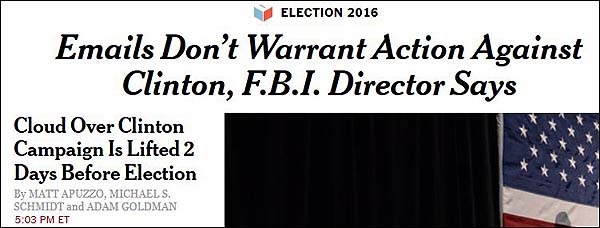
They will go up because FBI Director told Congress on Sunday to say he had found nothing. Here’s the headline from the New York Times web site:
Stockmarkets around the world are up, including France, Japan and, thank you, Australia!
Trump ran a campaign that stressed “disasters” he made up and only he could fix. I found this on the National Enquirer website. He actually wrote the words:
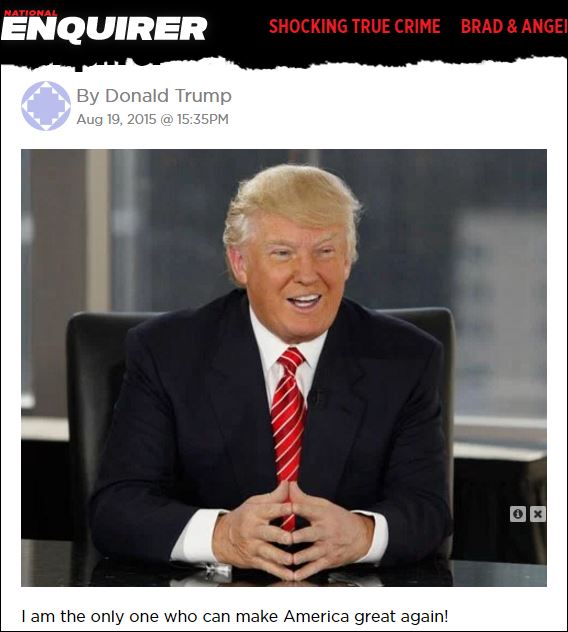
His words are frightening.
But there’s worse. Among Trump’s worst traits are his business ethics (or actually, lack of business ethics). He tends not to pay his bills, but files for bankruptcy or sues. As a result, thousands of small businesses and thousands of workers have been stiffed.
USA Today did a piece:

That 3,500 might be much higher. One site, AmericanNewsX writes:
There is no doubt in my mind that for every one of the 1,450 lawsuits filed against Trump, there are at least ten people he ripped off who didn’t or couldn’t sue him. Forgetting punitive damages, court costs, and all that, just how much money does Trump owe Americans who did work for him and his companies?
That site figures that “$2.1 billion (was) ripped off from Americans like you and me” by Donald Trump.
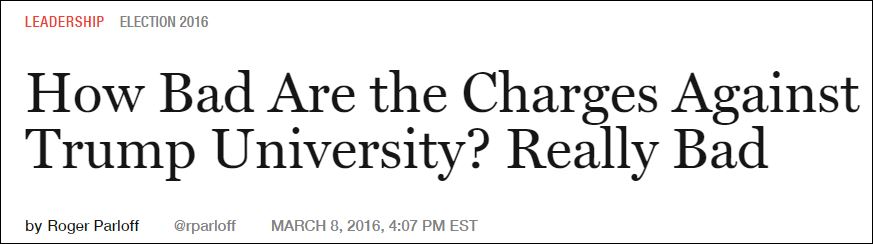
Also, there are the two class action suits filed against him as a result of the failure of Trump University. I don’t know how many people are in those suits. But it’s a lot.
Fortune magazine did a piece in March. Their headline read:
Hillary is no inspiring angel. That I admit. But she will not put us into a trade war with China. She won’t disrupt our economy by deporting two million people. She won’t destroy the recovery under Obama which has created 15.2 million jobs, dropped the unemployment rate down to a low 4.9%, gotten 10 million people health insurance and caused the market to go up hugely since it bottomed in March 2009. Best, she won’t say crazy things — like those that pop into Trump’s head.
Back in 2011, Seth Meyers (of Saturday Night Live) spoke at the White House Correspondents’ dinner about Trump and Obama. He’s very funny.
To watch the video, click here. You’ll die laughing.
Yale’s Endowment Guru
People who manage large college endowments do good for the their colleges in two ways: They bring money in to meet the college’s expenses and they encourage alumni to give money to the college. The alumni know their contributions will be taken care of. Harvard has so thoroughly mismanaged their endowment that I have not given them any money in eons. But I have given to Bowdoin, which graduated my daughter and son-in-law. Yale (which I didn’t graduate from) has a genius of a money manager called David Swensen. He runs Yale’s $25.4 billion — having built it from maybe $1 billion when he first arrived back in the 1980s. The man’s smart. We can learn a lot from him about managing our own money.
Sunday’s Business section of the New York Times features a cover piece on The Endowment Guru. I’ve bolded parts of the article which I think are most instructive for us, as private investors. Swensen has written these three ultra-useful books on investing.
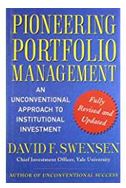
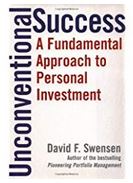
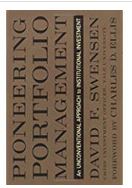
Here’s the entire article with my bolding:
The Endowment Guru
As he has done for decades, once a week David F. Swensen convenes his staff – including his cadre of apprentices – for a morning-long meeting among the Gothic revival flourishes and crenelations of the Yale University campus to debate investment ideas.
Mr. Swensen, 62, runs the school’s $25.4 billion endowment, one of the largest in the country. Usually he is joined by his intellectual sparring partner, Dean Takahashi, his senior director. It amounts to an internship in the world of managing a university’s billions – and the young analysts have a front-row seat.
“It was like watching a 70-year-old married couple go at it in full force,” recalled Andrew Golden, who was one of those Swensen acolytes in the 1980s.
But forget what you think about internships and fetching doughnuts for the bosses. The meetings are supposed to be a crucible of ideas, and the analysts – some of whom stay in the positions for years – recalled bringing their own proposals in the early days, and having to defend them or face the music. “It could be jarring to have your own view shredded by them,” Mr. Golden said.
As for Mr. Swensen, it’s an environment that brings together two things he loves: thinking about investments and teaching other people how to think about them. “They are twin passions of mine,” he said during a recent interview in his sun-filled corner office at the endowment’s headquarters on Yale’s New Haven campus. Certainly no school has incubated as many endowment managers as Yale.
Mr. Swensen is legendary in the rarefied world of endowment management. He has pioneered an investment strategy that expanded Yale’s portfolio from a plain-vanilla mix of stocks and bonds to substantial holdings in real estate, private equity and venture capital, along with other alternatives. Until then, the typical endowment was far more conservative.
And through his graduates, his investment style has spread to the nation’s prominent schools and foundations. Today, Mr. Swensen and former protégés oversee nearly $100 billion in endowment money for schools including M.I.T., Stanford, the University of Pennsylvania, Bowdoin, Wesleyan and Princeton (which Mr. Golden manages). Other alumni are running the Rockefeller Foundation and the Ewing Marion Kauffman Foundation and working at the YMCA Retirement Fund and the Metropolitan Museum of Art.
In an era when it is routine for money managers to elbow their way into the public consciousness – populating the news channels, burnishing their images – Mr. Swensen has largely stayed away from the spotlight, aside from writing a book, “Pioneering Portfolio Management.” Yet he is one of the most influential people in a generation that has seen endowments grow tremendously in importance at premier institutions. Yale’s endowment now provides 33 percent of the school’s budget, compared with 10 percent in 1985.
In a series of extended interviews, he and more than a half-dozen of his investment-office veterans discussed his management style – where they agree and disagree. Along the way Mr. Swanson gave his views on things as diverse as the pharmaceutical company Valeant – which “didn’t even have the fig leaf of R.&D. expenditures,” he said, to justify increasing its drug prices dramatically – to his toughest year, fiscal 2009, when his fund plummeted 24.6 percent during the economic meltdown.
In the aftermath, he got hurt in a particularly bad real estate investment. “This is one of my biggest mistakes in the past 30 years,” Mr. Swensen said.
Over the decades, though, the Yale endowment has built one of the strongest records among the nation’s largest endowments. Most recently, in the fiscal year ended June 30 – a dismal one for most schools, with the average endowment declining 2.7 percent, according to Cambridge Associates, which tracks performance – Yale’s rose 3.4 percent.
Play the Cards and the People
Mr. Swensen, a lanky, soft-spoken native of River Falls, Wis., initially planned to become a teacher before going into the world of finance, where he understood it wasn’t just about the numbers. “In poker, you can play the cards or you can play the people,” said Randy Kim, who worked in the endowment office for a decade and went on to run the Conrad N. Hilton Foundation. “Dave could do both.”
Mr. Swensen’s route to the endowment world was circuitous, though. “My father and my grandfather were both chemistry professors,” he said. After earning a doctorate in economics from Yale in 1980, he considered teaching that subject. But while he was researching bond prices at Salomon Brothers for his Ph.D. dissertation, “they offered me a job,” he said.
Salomon was, of course, a Wall Street bond titan at the time and would eventually help define the go-go 1980s “Barbarians at the Gate” era of leveraged buyouts. All of that was still a few years in the future, though, and anyway, Mr. Swensen said, “I missed Yale so much that I went back to teach one class every semester.”
In 1985, the Yale provost, William C. Brainard, plucked him from Wall Street and asked him to take over the school’s $1 billion endowment.
His acceptance meant an 80 percent pay cut. But Mr. Swensen says he never regretted returning to work for an academic mission. “I am in the fortunate position of making very good money,” he said, for something he loves doing. He made $5.1 million in 2014, the latest numbers available.
From the beginning, he brought in analysts and interns to work on the portfolio. Part of that process soon included the weekly meeting to debate investment ideas. “Seeing that there was a debate, even at the most senior level, taught everyone to have their own view,” Mr. Golden said.
He recalled proposing at the time that Yale place some of its money with several money managers he had identified as promising. “They had good track records,” he said. However, the debate centered on something different: “How good they would be going forward.”
In some cases, Yale selected a manager with little or no track record. That was the case with the Hillhouse Capital Group, an investment fund focused on Chinese stocks that was begun in 2005 by Lei Zhang – himself a former underling of Mr. Swensen.
That Hillhouse investment ended up taking Yale on a wild ride during the 2008 financial crisis. The value of the school’s investment in Hillhouse fell nearly 44 percent, peak to trough. But instead of taking money out, Yale actually invested more in Hillhouse, convinced that Mr. Zhang’s investment approach remained solid.
For Mr. Swensen, the decision to stay in was logical. “Who cares about the trailing numbers if the fundamentals of the portfolio are good?” he said. That long-term mind-set paid off. Hillhouse has generated more than a 20 percent average annual return since the endowment first invested in 2005.
Explaining his investment strategies and other issues is onerous work. Mr. Swensen said his team worked on long quarterly reports that go to the endowment’s investment committee. “I edit every single memo,” he said. “I think that if you write your argument down, you might recognize flaws in it.”
Returns are central, of course, but a manager’s track record – even if good on the bottom line – must be balanced against whether that money manager’s goals work in Yale’s interest. The university has “close to 100 active relationships” with money-management firms, Mr. Swensen said. “The average length of a relationship is 13 years. That is a long time. It is all about being partners and who you choose.”
Against the `Asset Gatherers’
There are some categories of manager that turn Mr. Swensen off, like the “asset gatherers,” as he calls them, often famed for building mammoth investment funds by attracting scores of individual investors. “The Bill Grosses and Peter Lynches are about asset gathering” he said, referring to one of the founders of Pimco and to the former manager of Fidelity Investments’ Magellan Fund. “More assets produce more fees, but they force managers to add more positions, not just Grade A ideas,” he said.
A Fidelity spokesman said Mr. Lynch’s record spoke for itself. A representative for Mr. Gross declined to comment.
Nor does leverage – the use of borrowed money to try to amplify returns – appeal to the Yale team. “We want managers who are interested in improving operations as a way to create value, as opposed to financial engineering,” he said. The team applies a simple test when considering putting money with an investor who specializes in corporate buyouts: Add up the leverage in the investor’s portfolio, and compare it with the leverage in the stock market (meaning the borrowing conducted by publicly traded companies).
Leverage, after all, can become a millstone if things start to go wrong. “Debt restricts your ability to do things,” Mr. Takahashi said.
Mr. Swensen also has little patience for some activist investors like William A. Ackman of Pershing Square Capital Management, who has mounted public battles aimed at spurring target companies to revamp. “The drill is that they want return of capital, whether it comes from cash distributions or stock buybacks. That is an extraordinarily short-term orientation,” Mr. Swensen said. “By and large, American companies are underinvesting for the future, and a lot of that has to do with either implicit or explicit pressure from activists.”
Mr. Swensen has been particularly critical of Mr. Ackman’s highly publicized investment in Valeant, which in recent years stirred national controversy after it dramatically raised the prices on drugs that it had bought the right to sell. “The excessive price increases abuse market power and create great profits, while burdening our health care system,” he said. “The business model is at odds with sensible public policy. When Congress and the regulatory authorities catch on, the companies suffer,” he said.
A spokesman for Pershing Square, Francis McGill, said: “Pershing Square is a long-term investor which has improved the operations and performance of more than 30 corporations. It has never advocated short-term financial engineering techniques.”
Former analysts describe how they learned to be careful observers of personality and engagement when vetting prospective money managers. “We learned to look for managers who know their portfolios well,” said Paula J. Volent, senior vice president for investments at Bowdoin College. “If they have to look at a piece of paper in a meeting, then they don’t really know.”
Anne Martin, a former Swensen intern who manages Wesleyan’s endowment, described vetting one private equity fund. “We were near the end of the process. I worried that some of the terms were not fair, so I called the manager,” she said, who adopted a dismissive tone. “I am not adjusting the terms this time, and I am not going to talk to you about it,” she recalled him saying.
“So I thought: This is a partnership, and there will be tough times, so how will it be then?” she said. Wesleyan didn’t give him the money.
Mr. Swensen’s analysts have seen his standards prove costly to Yale. For instance, the endowment long had money with Michael Steinhardt, a well-known Wall Street trader, and it had been one of the school’s most profitable investments. But in 1991, Mr. Steinhardt’s firm was swept up in accusations of cornering the two-year Treasury market.
The Steinhardt firm later settled, agreeing to pay $40 million without admitting wrongdoing. But Mr. Swensen had already taken Yale’s money out that firm.
That decision impressed D. Ellen Shuman, who worked at Yale from 1986 to 1998 and now runs Edgehill Endowment Partners, which manages $650 million for smaller endowments. “David put the reputation of the institution ahead of profits,” she said. “It really affected me in my career.”
`Not a Steppingstone’
Newcomers often arrive at the investment office from the Yale School of Management, as did Peter H. Ammon, now manager of the University of Pennsylvania’s endowment. But they take many routes. Seth Alexander, now head of M.I.T.’s endowment, taught at the business school, but did not attend. Robert F. Wallace, who runs the Stanford endowment, was a ballet dancer before going to Yale to study economics. Ms. Volent, who oversees the Bowdoin endowment, planned to be a museum director.
And Mr. Golden, head of Princeton’s endowment, had an “unsatisfying job at a small money management firm,” he recalled. When he met Mr. Takahashi, Mr. Swensen’s associate, Mr. Takahashi told him, “If you want to do good, we are looking for an intern.” So Mr. Golden joined.
Mr. Swensen says he is pleased when his analysts go to the nonprofit world. He never considered leaving Yale and was disappointed when, in 2007, Mohamed El-Erian quit as head of the Harvard endowment, after less than two years, to return to Pimco. “Managing an endowment is a position of trust, not a steppingstone,” Mr. Swensen said.
Mr. El-Erian did not respond to a request for comment.
Many Yale office graduates remain close, and they share investment ideas. Mr. Golden of Princeton said that when he finds good money managers, he prefers that they have other investors like Yale and Bowdoin, because they have similarly long time horizons.
And when they do invest together, “Yale negotiates for everyone,” said Ms. Volent. “We sit back and we let Yale do the hard work if the funds are too expensive.”
Ms. Shuman said in real estate investments, Mr. Swensen required a fee structure “where managers did not get any of the profits until there was a 6 percent hard return, or whatever number an investor could get from a passive investment at that time.” The money managers objected – they wanted 20 percent on the entire profit – but lost. “David’s way is fairer,” she said.
Mr. Swensen likes teaming up to invest with his former analysts. For one thing, it can reduce the risk of panicky withdrawals. “We were talking to a manager who just had capital taken away because the fund had a bad year,” Mr. Swensen recalled. “The investor said, `Your five-year numbers are not so good, so we are firing you.’ That sounds like the stupidest thing I ever heard,” Mr. Swensen said.
“When managers have to deal with stupid limited partners, they are not spending their time picking stocks,” he said.
There have been mistakes. Yale and schools that embraced its model stumbled when the market plummeted in 2008 because they had so much of their portfolios tied up in hard-to-sell assets.
Mr. Swensen acknowledges that, going into 2008, “We were too illiquid, and now we are not as illiquid. We want 50 percent of our assets in liquid investments,” he said.
The real estate meltdown took a toll. Yale, along with a host of universities, put money into real estate funds run by Lubert-Adler – the judgment call Mr. Swensen referred to as his “biggest mistake.” When one of the funds suffered steep losses as a result of investments in troubled golf resort projects, many schools were hurt, including Yale.
Not every Yale-trained manager agrees with Mr. Swensen’s investment parameters. Bowdoin has nearly twice as much in absolute return funds (which focus on asset appreciation, as opposed to performance against an index or benchmark) because the hedge fund manager Stanley Druckenmiller is on the Bowdoin investment committee and plays a role in picking managers.
Ms. Volent of Bowdoin, whose returns have well outpaced the averages, pointed out that she has “a lot of money in global macroeconomic funds.” She added, “They have been great for us, but David hates that area. He thinks no one can anticipate changes in currencies and interest rates.”
One might wonder about the value of Yale’s investment philosophy when looking at the last year’s performance. For the year ended June 30, a plain-vanilla portfolio of 60 percent stocks and 40 percent bonds outperformed more diversified portfolios (like those of endowments). However, over a 20-year run, Yale’s average annual return has been 12.6 percent compared with 7.4 percent for the 60-40 portfolio.
Mr. Swensen has no plans to alter his investment strategy, or to slow down. (He has been fighting cancer for four years, he said, and his condition is stable.) He remains convinced that diversification over the long term is crucial. “This is not a sprint,” he said. “I am pretty happy with the numbers.”

Harry Newton, who cautions you on two important rules: If it ain’t broke, don’t fix it. Item: And, If it’s new, it ain’t always better. My friend is replacing the computer on his new Audi car. Cost: $2,100. My old 2002 Subaru Outback doesn’t have a computer and is running just fine.

A reply to the “Guest” who put down the Republican agenda… let’s look at Mr. Hope and Change!
So this is how Hope & Change ends. With the FBI in turmoil, with surging anti-police violence, with fears of voter fraud and foreign hacking, with a sluggish economy, with a terror warning and with two unpopular presidential candidates tearing at each other like wolves.
Heckuva job, Barack Obama!
The 44th president made history by being elected, but leaves behind a nation on the verge of a crack-up. He flatters himself by insisting his tenure has been a roaring success, but the public mood tells a different story.
Obama promised to unite America, but exits amidst far greater divisions. It is telling that he has stopped portraying himself as a uniter and, like Jimmy Carter, blames the public.
Carter saw malaise, Obama sees bitter clingers, racists and xenophobes. While Obama’s lectures convey disappointment in his fellow Americans, it never occurs to him that he is a disappointment to them.
His failure to come to grips with the polarization, combined with an aggressively liberal agenda spearheaded by executive orders and a politicized bureaucracy, means his successor will inherit a country broken along every fault line imaginable. Voices of discontent and even estrangement are rising among Americans of all stripes and persuasions.
It would have been hard for him to have done more damage if that had been his goal all along. –Michael Goodwin
I agree. Too bad the ultra liberals from the Huffington Post and CBS control the majors. If Trump had any shot he needed the media’s backing. Without the brainwashing he had no chance of winning.
We’ll see how Hillary does. I don’t think she’ll amount to anything and wars across the world will continue on. I don’t see how she would be able to resolve the Yemen conflict since she’s already a puppet for the Saudi’s. She’s the wrong woman to elect but if the majority expect change again they will end up as idiots once again.
Well said!
Hmm. As I recall, it was a Republican Senate leader who quickly vowed and then did all he possibly could from the outset to assure that Obama would be a one term president, and block Obama’s agenda. This, in response to the will of the electorate when the electorate’s choice did not match his own choice. Logic dictates that Republican senator’s intention and actions were intended to impede Obama’s agenda. I for one believe that senator and his like minded colleagues achieved some (obviously not by any means total) “success” in their obstruction. How are you so prescient as to know what even more successful outcome there might have been with a less obstructive, less gerry-mandered, or otherwise less strident opposition in congress?
There are many refutations to all those claims. Primarily among them the people I know personally who worked for Donald Trump at Mar-a-Lago. From them, Never is heard a negative word.
I am positive that pundits predicted all the same gloom and doom over Brexit. However, it doesn’t matter. There are so many illegals and fraudulent votes in NYC that you could vote for Trump 24 times and it wouldn’t matter.
Our ONLY and SINCERE hope is that all those people who SAID they would leave the country if Trump is elected WILL do so when he is. Having them go back on their promises and remain would be a severe blow to the country.
And remember my other prediction. It won’t be over on Tuesday. Between members of the Electoral College being coerced and looming indictments, the fun will go on well into 2017.
I would vote for whomever that would audit the Federal Reserve.
Although, Clinton may have escaped damages the Clinton Foundation is still under investigation. The media and Wall Street has too much vested in the Clintons. The peak might be when she gets in office. After that bills will stall between the two major parties.
So true, Republicans have a myriad of ways to bring down the country when they do not get their way. They just barely got in some practice at it taking on the Obama administration. Voters, demographics be damned they would say.