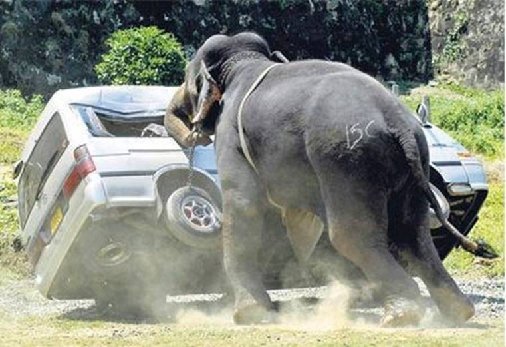
I repeat:
Someone bad is reading all your and all your company’s emails. They’re searching for bank wiring instructions.
The best virus protection software will not protect you. One day you or your people will do something stupid — like open an email attachment, or visit a bogus web site — and bingo, Welcome Hackers.
A friend just spent $100,000 cleaning his company’s computers. Plus heavy aggravation. And a near loss of $1.6 million. I mean really near.
I’ve been researching this for days. There’s only one solution — the telephone. If you’re sending wires (as we all are), you need to speak to your bank and confirm the wire.
I’ve been extolling the ease of sending wires by logging onto my bank’s web site and clicking several buttons and I’ve sent a wire.
I now fear that a thief can log on my bank account and send a wire to themselves. With Chase, I have two protections:
+ If Chase’s system doesn’t recognize the computer that is trying to log into your account, the system will initiate the two-factor authentication process. It will send your cell phone a text message with a series of numbers to confirm your identity and that it’s you who is trying to access your account. You will not receive another two-factor authentication code on devices you have previously used to log on with, as you have already gone through the two-factor authentication process, which Chase knows by putting a cookie on your machine. If you clear the cookies on your browser, Chase will send you another two-factor authentication code to verify your identity.
+ If I receive a two-factor authentication code out of the blue on my cell phone — and I had NOT been trying to log in from a new device (e.g. a shiny new laptop) — then I should be aware that someone bad is trying to get into my bank account and I should immediately call Chase.
+ If I send a fax or email attachment of paper wiring instructions, Chase will call me and confirm the wire by asking the usual questions about my great-grandmother’s email address and her DNA.
So I feel protected.
Chase’s fraud people made some intelligent recommendations for all of us:
+ Your user-ID on gmail or any email client like Outlook should NOT be your first and last name.
+ You need different passwords for each online account.
+ Your passwords should be long and complex. Think of the Polish bride who’s asked what is long and hard you she gets on her wedding night. And the answer is: a new last name.
+ If you email wiring instructions via attachments to your bank, ask that they ALWAYS call you by phone to confirm. Put that instruction at the bottom of your attachment or fax.
Above all, do not do stupid. Here’s a new one from a friend:
Hi All,
I heard about a new scam earlier today. This scam appears to come from AMAZON.
The email says one of your orders can’t be processed until you verify your information including your credit card information. Once you “confirm” your information, it sends you to the actual amazon site.
It is not from Amazon. The scammers are trying to get your credit card information.
If you get any correspondence from Amazon (or any site) asking for any confidential information never click on the links unless you are 1000% sure that it is from that vendor. If you are not 1000% sure go to the website itself (by going to a browser and typing in the site name).
How phishing works
Hacking is not only for stealing. It’s also for dirt. Someone hacked the Democrats and got embarrassing emails, especially John Podesta, whose email password was reputedly “password.” (This could be fake news.)
Here’s how phishing works
1. I send you an email saying your email account (e.g. gmail) is compromised and you need to visit this (fake) site to change it.
2. If you visit the site, I ask for your old password and the new one you’ve chosen.
3. Once I have this information, I quickly log into your email account and change your password to the new one you selected.
4. But now I have access to your account. I can copy all your emails (except for the ones you deleted) to my computer. You’re no wiser.
5. Then I search your emails for the emails of all the other people you’ve been communicating with. And I target them with phishing emails. Go back to item 1 and circle down and around. If you do this fast enough, you can suck in thousands and thousands of emails.
I’m betting that people like Podesta never deleted any of his thousands of emails. It’s not that easy to delete on gmail. It’s much easier on Outlook.
You can read more here:
Inside story: How Russians hacked the Democrats’ emails. The Honolulu Star Advertiser. Click here.
One idea I heard this morning: Hire a cyber-security firm who will target everyone in your firm with phishing emails. This way, they can identify who in your firm is most likely to respond to phishing emails.
My conclusions are::
+ You’ll never stop the bad guys.
+ Get your bank to verbally confirm wires the phone.
+ Don’t put confidential stuff in emails.
+ Delete all your old emails.
How to find your son a nice wife
A good Hassidic family is most concerned that their 30-year-old son is unmarried. So, they contact a marriage broker to ask him to find him a good wife.
The broker comes over to their house and spends a long time asking questions of the son and his parents as to what they want in a wife/daughter-in-law. They give him a long list of requirements.
The marriage broker takes a long time searching. Finally, he returns to visit the family and tells them about a wonderful woman he has found.
He says she’s just the right age for the son. She keeps a Glatt Kosher home, regularly attends synagogue and knows all the prayers by heart. She’s a wonderful cook. She loves children and wants a large family.
And, she’s gorgeous.
After listening, the family is very impressed and begins to get excited about the prospects of a wedding in the near future.
But the son interrupts and asks, `Is she also good in bed?’
The marriage broker, hesitates and finally responds, ‘Some say yes, some say no….’

Harry Newton, who is happy. Bobby Meehan was re-relected as highway superintendant for Austerlitz township in mid New York State. Bobby does a great job on our local roads and is totally immune from phishing. He doesn’t have an email address.
Time for a nice trip to Africa? I bet these are real photos.