My smartest investor has 30% of his family’s investible assets in cash — in banks, earning nothing. It bothers him. But he knows his family will OK when the world ends.
Upon return from California I found one bank paying me 0.90%. I emailed he bank’s president for a better idea. He didn’t respond, probably because he didn’t have any.
The Fed says it’s keeping interest rates low because it’s trying to stimulate the economy. Businesses will borrow more, expand and hire people if money is cheap. That’s theory. To me, that theory is total rubbish. Businesses expand when their bosses see opportunities. Cheap money only encourages people to speculate. Every time the Fed keeps interest rates low, it makes another boom/bust cycle. It’s done that three times in the past 15 years. We’re building for another one now — perhaps in equities. Which is why so many investors and decent money managers are so scared of today’s stockmarket.
The Fed runs its “business” like a middle-eastern potentate — no transparency, no public accounting, just writes checks to its friends. Large checks. This piece from Matt Taibbi’s blog shocked me:
Why is the Fed Bailing Out Qaddafi?
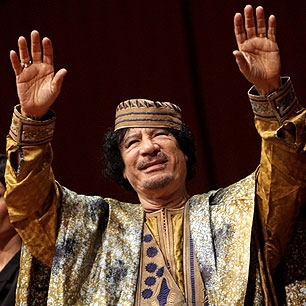
Barack Obama recently issued an executive order imposing a wave of sanctions against Libya, not only freezing Libyan assets, but barring Americans from having business dealings with Libyan banks.
So raise your hand if you knew that the United States has been extending billions of dollars in aid to Qaddafi and to the Central Bank of Libya, through a Libyan-owned subsidiary bank operating out of Bahrain. And raise your hand if you knew that, just a week or so after Obama’s executive order, the U.S. Treasury Department quietly issued an order exempting this and other Libyan-owned banks to continue operating without sanction.
I came across the curious case of the Arab Banking Corporation, better known as ABC, while researching a story about the results of the audit of the Federal Reserve. That story, which will be coming out in Rolling Stone in two weeks, will examine in detail some of the many lunacies uncovered by Senate investigators amid the recently-released list of bailout and emergency aid recipients – a list that includes many extremely shocking names, from foreign industrial competitors to hedge funds in tax-haven nations to various Wall Street figures of note (and some of their relatives). You will want to see this amazing list when it comes out, so please make sure to check the newsstands in two weeks’ time.
This list became public as a result of an amendment added to the Dodd-Frank financial reform bill that was sponsored by Senator Bernie Sanders of Vermont. The amendment forced the Federal Reserve to open its books for the first time and make public the names of those individuals and corporations who received emergency loans and bailout monies during the roughly two year period between the crash of 2008 and the passage of the Dodd-Frank bill.
As Bernie’s staff was going through this list, it found, among other things, some $26 billion in extremely cheap loans (as low as one quarter of one percent!) extended to this ABC bank over a period of years, beginning in December of 2007 and continuing through as recently as February of 2010. The senator sent a letter to Ben Bernanke over the winter demanding more information about this loan (among others) but the response he got was completely unhelpful.
When I first started working on this story, one of Sanders’s aides was careful to point out the ABC loans. Later, I took a closer look at the company and found that it was 59% owned by the Central Bank of Libya, which I found very odd, even by the generally insane standards of the bailout era. Why, I wondered, would the Federal Reserve be giving Muammar Qaddafi $26 billion in near-zero interest loans? Exactly how does that address America’s financial problems? What bailout plan could that possibly be part of?
It gets weirder from there. Sanders’s office subsequently found out that ABC is not only exempt from Obama’s sanctions, it has two functioning branches here in New York City. In a letter he sent yesterday evening to Ben Bernanke, Treasury Secretary Timothy Geithner, and Office of the Comptroller of the Currency chief John Walsh (the banking regulator with purview over the New York branches), Sanders put it this way:
Why would the U.S. government allow a bank that is predominantly owned by the Central Bank of Libya – an institution on which the U.S. has imposed strict economic sanctions – to operate two banking branches within our own borders?
Neither the Fed nor Treasury so far has offered explanations for these loans; the Treasury has so far only explained why ABC was not subject to sanctions and pointed to the March 4th order when I contacted them.
The ABC loans are just one example of the Fed’s bailout madness. Again, there are 21,000 transactions on the Fed’s list of released names, and “every one of these… is outrageous,” as one Sanders aide put it. You will be shocked, for sure, to find out who else is on that list. We’ll have a lot more on those other loans in the next issue of Rolling Stone.
Want to be even madder? Read this piece from Monday’s Wall Street Journal:
Fed’s Low Interest Rates Crack Retirees’ Nest Eggs
PORT CHARLOTTE, Fla.—Forrest Yeager, a 91-year-old resident of this seaside community, had been counting on his retirement savings to last until he died. The odds are moving against him.
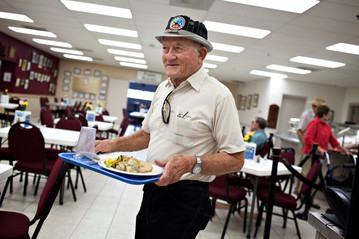
Forrest Yeager. 91.
Jim and Eileen Keller have $200,000 remaining and fear they will eventually have to rely solely on Social Security.
With short-term bank CDs paying less than 1%, the World War II veteran expects his remaining $45,000 stash to yield just a few hundred dollars this year. So, he’s digging deeper into his principal to supplement his $1,500 monthly income from Social Security and a small pension.
“It hurts,” says Mr. Yeager, who estimates his bank savings will be depleted in about six years at his current rate of withdrawal. “I don’t even want to think about it.”
Mr. Yeager is among the legion of retirees who find themselves on the wrong end of the Federal Reserve’s epic attempt to rescue the economy with cheap money.
A long spell of low interest rates has created a windfall worth billions to banks, mortgage borrowers and others it was designed to benefit. But for many people who were counting on their nest eggs, those same low rates can spell trouble.
Forrest Yeager estimates his bank savings will be depleted in about six years.
Mr. Yeager’s struggle highlights a nagging dilemma facing Fed Chairman Ben Bernanke. The longer the central bank keeps interest rates low to stimulate the economy, the more money it pulls out of the pockets of millions of savers. Among the most vulnerable are retirees, who have few options to restore lost income on investments built up over entire lifetimes.
In 2009, according to the most recent data available from the Labor Department, average annual investment income for the 24.6 million American households headed by people 65 and older amounted to $2,564. That figure is down 34% from 2007, and is the lowest since 2003.
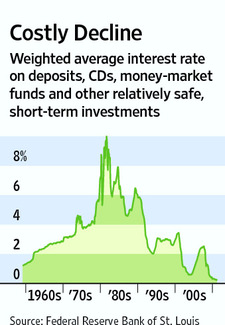
WSJ’s Mark Whitehouse explains how low interest rates have meant big profits for banks, they are hurting small investors, including seniors who are seeing their cash earn minimal interest.
A recent survey by the Employee Benefit Research Institute indicated that one in three retirees had dipped deeper than planned into their savings to pay for basic expenses in 2010.
Most economists agree that the Fed’s interest-rate policies, together with other measures, have helped avert a much deeper economic slump. Still, the situation for savers has become progressively worse since the Fed first lowered its interest-rate target close to zero in late 2008.
As of January, the average interest rate paid on relatively safe vehicles such as short-term savings accounts, time deposits and money-market funds stood at only 0.24%. That’s one-tenth the level of late 2007 and the lowest on records dating back to 1959. Such depressed rates don’t come close to compensating for inflation, which was running at an annualized rate of 5.6% in the three months ended February.
“Americans who have done everything right, have worked hard, saved their money and stayed out of debt are the ones being punished by low interest rates,” says Richard Fisher, president of the Federal Reserve Bank of Dallas and a voting member of the Fed’s policy-making open market committee. “That state of affairs is not sustainable for a long period of time.”
The pain inflicted on savers could have political repercussions. Retirees are among the country’s most active voters, with the power to influence a wide range of issues, such as who will bear the burden of fixing the federal government’s finances and whether politicians should rein in the Fed.
Over the past few years, seniors have taken a conservative turn: In the 2010 elections, Republican congressional candidates attracted 59% of the over-65 vote, compared to 48% in 2008, according to exit polls—a larger shift than that seen among the general populace.
To be sure, many retirees have no savings at all or don’t recognize the extent to which interest rates affect them. The subject isn’t at the top of their list of concerns, which include health-care costs and Social Security benefits, says David Certner, legislative policy director at the AARP. Still, he says, “we hear a lot of complaints from people who were counting on a certain return from their fixed-income investments.”
Low rates don’t just hurt retirees. They also penalize people of any age hoping to build up funds for the future, and discourage rainy-day savings that could make U.S. consumers more resilient to job losses and other financial jolts. Americans’ net contributions to their financial assets, such as bank and 401(k) accounts, amounted to 4% of disposable income in 2010, according to the Fed. That’s the lowest level since it began maintaining records in 1946—except for 2009, when people actually pulled money out.
By contrast, the Commerce Department’s broader measure of personal saving has risen, to 5.8% of disposable income in 2010 from a low point of 1.4% in 2005. That’s in large part because it counts reductions in personal debt, such as mortgages and credit-card balances, as savings. For example, paying down a credit card with a 20% interest rate is a better way to save money than taking out a bank CD yielding 1%. But defaults, rather than saving, have driven much of the decrease in debt.
The financial strain is acute here in Port Charlotte and neighboring Punta Gorda. Located on Florida’s southern Gulf Coast, the area has the nation’s highest concentration of residents aged over 65. They live in disparate circumstances, from trailer parks and low-income housing to high-end homes in Punta Gorda Isles, a waterfront community on a point south of Charlotte Harbor.
Among the Isles’ relatively affluent residents, low interest rates present more of an annoyance than a hardship. But many fret about their nest eggs, and some are frustrated with what they see as policy makers’ failure to appreciate the costs of stimulus efforts, even if they agree that those efforts are necessary.
“It makes you kind of feel like the forgotten generation,” says Roger Cohen, a 66-year-old who retired to the Isles from Boston, where he headed a national coffee-service company. He says he supports the Fed’s efforts to stimulate the economy by lowering interest rates, but “you have a lot of folks who feel there’s a lack of fairness.”
John Lehman, a 70-year-old former hardware entrepreneur who lives on the other side of the golf course from Mr. Cohen, has less sympathy for what he calls “those idiots in Washington, D.C.” He says he’s keeping about 80% of his considerable investments in stocks, despite the shock he suffered during the financial crisis. He hopes his returns in equities will allow him to live without dipping into his capital.
“That’s why most of us are in the stock market, because there’s no place else to go,” he says, noting that he would happily move into safer CDs if he could get a better rate. “I hope my assets don’t run out before I die.”
Mr. Lehman’s taste for stocks goes against the traditional advice of financial planners, who urge older Americans to keep a majority of their assets in relatively safe, fixed-income investments. But more retirees are getting into riskier positions as they try to avoid running out of money, says Neil Kasanofksy, a financial adviser in Port Charlotte who has a largely elderly clientele.
“The fear is palpable at this point in their lives,” he says. “Given the low level of interest rates, you’re hard-pressed to tell someone to get into bonds or 10-year CDs.”
To stay on track, even the wealthy are cutting back on some luxuries, such as golf-club memberships. John Benande, a board member at the St. Andrews South Golf Club in the Isles, said the club has scrambled to attract new members as the number of people quitting each year has increased sharply. The club charges an annual membership fee of about $4,000 for families.
“You do spend money differently, even if you have it,” he says.
Some people in the Isles are in deeper trouble, says Marianne Principato, manager of the Port Charlotte office of Consumer Debt Counseling Inc. In some cases, she says, retirees took out mortgages and ran up credit-card debt on the assumption that their interest income would help cover the payments. But then the payments on the debts went up, and their interest income fell.
“They’re losing their investment income precisely at the time when they need it most,” she says, noting that the area’s older people tend to hide their troubles as long as they can. “People are very prideful. It’s small-town stuff.”
The Cultural Center of Charlotte County, a sprawling, collection of buildings nestled among the hospitals and housing complexes of central Port Charlotte, offers a picture of how the less fortunate are faring.
The nonprofit center, which includes a cafeteria, gym, theater, thrift shop and space for everything from income-tax preparation to crazy-hat bingo, gave refuge to hundreds when the area suffered a direct hit from Hurricane Charlie in 2004. Now, its 50-cent coffees and $2 breakfasts are a lifeline for local seniors trying to get by.
Donna Barrett, the center’s marketing manager, says traffic keeps increasing as more people find themselves short of money. In January and February, revenue at the cafeteria was up about 15% from the same period last year.
Following a recent investment seminar at the center, Jim and Eileen Keller, a couple in their mid-60s, reviewed their finances. They had moved to the Port Charlotte area in search of a better lifestyle after both took early retirement from a Michigan phone company. Lately, their financial prospects have dimmed.
“I’m scared to death,” says Ms. Keller. “At one point we thought we’d have a little money to leave our kids. That ain’t gonna happen.”
The couple’s savings took a hit in the stock-market crash. And unless they can improve the return on their remaining $200,000, they’re afraid they’ll have to rely solely on Social Security.
Ms. Keller says they’ve been cutting their expenses as much as they can. She shops at the cultural center’s thrift shop instead of department stores. She tries not to spend more than $20 on any single quilting project, as opposed to the hundreds of dollars many of her fellow quilters can spare. The couple avoids going to the movies.
“It bothers me, because we did all the right things,” she says, noting that their $7,500 bank account paid $4.84 in interest last year. “We weren’t frivolous. We saved our money. And still we get hit like this.”
Later that day, Mr. Yeager was tucking into lunch at the cafeteria, where he eats about three times a week. Born and raised in Indiana, he says he served in the signal corps under General George S. Patton in World War II, and then spent 25 years working at Eastern Airlines in Miami, mostly as an airplane cleaner.
He says he retired in 1982 with ample savings, but he and his wife, Vivian, “lost our butt” in the stock-market crash of 1987. After that, they stashed their savings mainly in bank CDs, which yielded as much as 7% prior to the financial crisis. His wife died of a heart attack shortly after the 2004 hurricane.
Mr. Yeager says he’s still betting on dying before his money runs out. He and a neighbor are planning a trip to Las Vegas in May.
“I’m too old to work,” he says. “I don’t think I’m going to make it that far anyhow.”
Is it all over for Apple? I felt it. I “saw” them. The march of the cockroaches. The iPhone5 delay. The parts shortages. the stories onf Android ascendancy. Now Apple is being humbled by a huge drop in its weighting in the Nasdaq 100 index. Apple’s representation will be reduced to 12.33 percent of the index on May 2, from 20.49 percent.Apple’s stock hasn’t acted well this year. Appparently a lot of institutional selling.
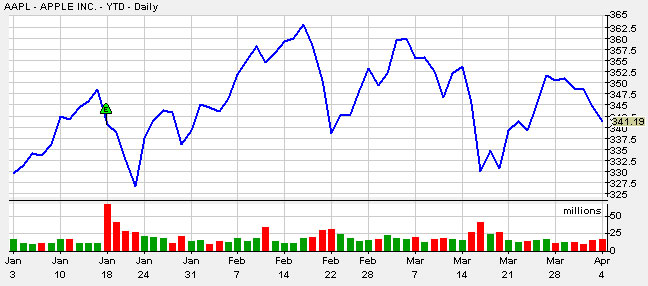
Today it will be down hard. It’s due to report earnings on April 20. They should be good. My temptation is to buy the stock on the dip today. But that requires a strong stomach.
The family bought me an iPad for my birthday in June. But Susan stole it. She loves reading books on it. It’s great for travel. In fact, she’s so addicted to it, I’m tempted to buy her this wonderful jacket:
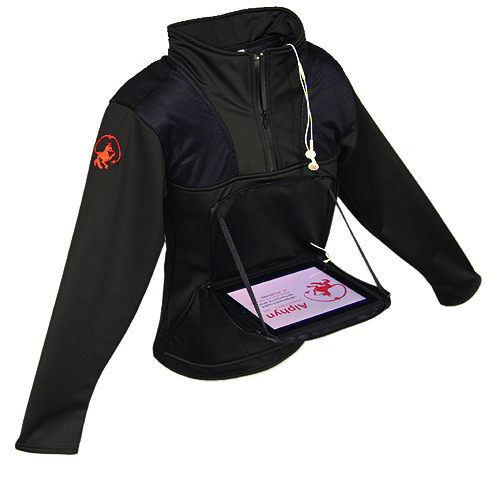
Only $185.25 from www.alphynind.com, a California startup.
Lenovo’s “cheap” laptops. The most reiable laptops are made by Apple. The second best are made by Lenovo. For cheap ThinkPads, go to Lenovo’s Outlet store.
Check. Check. Check. Check you have a backups. Check that your backups work. Check. Check. Check. You don’t want to know why I wrote this.
Miracles do happen. I have a wonderful accountant. He’s 5′ 8″. He used to weigh 243 lbs. Then he had a Roux-eY gastric bypass operation. Several months later he now weighs 171 lbs. He is thrilled. I have never seen him happier.
Lessons from one month in La Quinta.
1. I can, and should live a simpler life.
2. I don’t need most of the junk I own.
3. I certainly don’t need any new junk.
4.. Exercising and relaxing actually work, and probably prolong my (and your) life.
5. One should smell the roses regularly. Also eye the mountains.
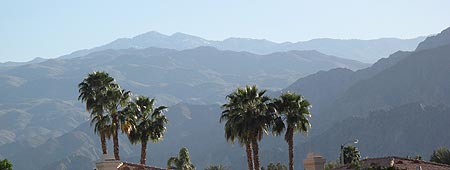
6. New York is stressful.
Favorite recent New Yorker cartoons.
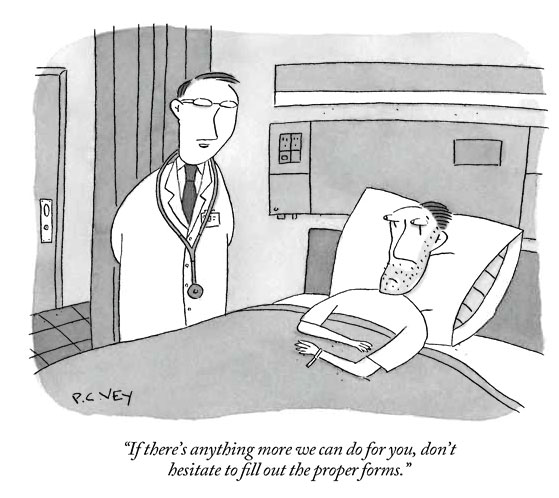


Harry Newton who wonders whatever happened all those Obama promises about transparency. Who wonders why they appoint University professors who’ve never met a payroll to run the economy. Who wonders why we’ve already spent over $1 billion on our latest war — the one in Libya. Who wonders…. According to my friend, ex-of the CIA and the Defense Department: “We (i.e. the United States) are congenitally stupid when it comes to the middle east.”

Thoughts on Bitcoin?
http://www.theatlantic.com/bus…
http://www.youtube.com/watch?v…
It's being held and “earned” by many — evidenced by this map. Each marker is an IP address where the bitcoin software is being run. Many of those are running the software while “mining” new currency.
http://maps.google.com/maps?q=…
http://www.bitcoin.it
This is goog info for me. Author – respect!
Harry,
Would you posit that the root cause of most of the “stress” in NYC is are the high living expenses. I can only imagine that this one variable impacts every other variable in one's life.