Maybe it was the great weekend. My daughter and son-in-law visited. Maybe it was Francis’s great party and super-great fireworks? Maybe it was the nice, warming book I read? (See below.) Maybe it was the set I got off Skip? Maybe it’s this nice piece from the Wall Street Journal.
But I feel more confident about the stockmarket — especially as we move into second quarter earnings season, now coming up.
Companies aren’t stupid. They see a tough U.S. economy. They’ve cut expenses, increased productivity. They see burgeoning overseas markets and they move more sales there. Hence today’s Wall Street Journal piece:
Profits Thrive in Weak Recovery
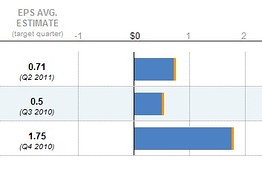
While the U.S. economy staggers through one of its slowest recoveries since the Great Depression, American companies are poised to report strong earnings for the second quarter-exposing a dichotomy between corporate performance and the overall health of the economy.
Two years after the official end of the recession, a range of indicators show that the economic recovery has been the worst, or one of the worst, since the government began tracking such data after World War II: Unemployment is too high, bank lending necessary to spur spending is too low, home prices are depressed while household expectations for financial well-being are near record low levels. Many economists predict the sluggish rebound may continue for years.
| Now reporting: Track the performances of 150 companies as they report and compare their results with analysts’ estimates. Sort by date and industry.
|
Profits Thrive in Weak Recovery
While the U.S. economy staggers through one of its slowest recoveries since the Great Depression, American companies are poised to report strong earnings for the second quarter-exposing a dichotomy between corporate performance and the overall health of the economy.
Two years after the official end of the recession, a range of indicators show that the economic recovery has been the worst, or one of the worst, since the government began tracking such data after World War II: Unemployment is too high, bank lending necessary to spur spending is too low, home prices are depressed while household expectations for financial well-being are near record low levels. Many economists predict the sluggish rebound may continue for years.
How Have the 10 Largest U.S.-Stock Funds Done So Far? Because one of my managers did so miserably in the first half, I was fascinated with this piece from Morningstar on how the big funds had done. Pretty well is the simple answer.
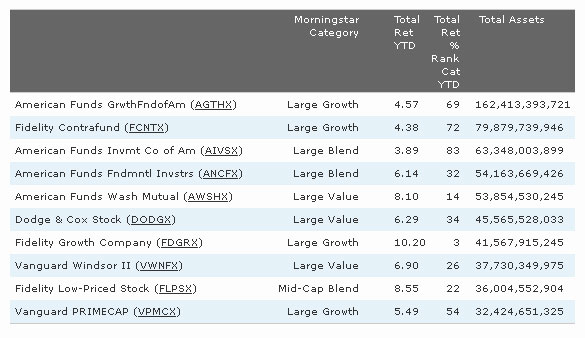
Morninstar commented on all the funds. Here’s what they ssaid about the best performer:
7.  Fidelity Growth Company (FDGRX) 10.2% return, 3% percentile rank.
Steve Wymer’s fund is the star performer of our group of 10 for breaking into double digits. He got there by taking on more risk than any of the other funds on the list, and it paid off. The closed fund sports names, such as Lululemon (LULU), Salesforce.com (CRM), Red Hat (RHT), and Alexion (ALXN), that you won’t see in the other portfolios. Not surprisingly, the fund also led this group of giants in the snapback year of 2009. Wymer buys [more] smaller, faster-growing companies than you’ll see in the other funds here.
Wondering about Greece. The Europeans are still futzing about Greece. Without huge new money, Greece could hurt the European Union and the Euro. This piece from the New Yorker’s James Surowiecki explains much.
The Financial Page
Dodger Mania
by James Surowiecki July 11, 2011
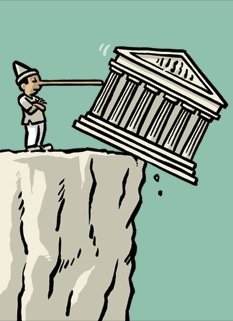
Greece is a fairly small country, but for the past year it has been causing an awfully big uproar. Burdened by a pile of government debt that could force it into default (and the European banking system into a meltdown), Greece has had to adopt ever more stringent austerity plans in order to secure a bailout from the European Union. Explanations of how Greece got in this mess typically focus on profligate public spending. But its fiscal woes are also due to a simple fact: tax evasion is the national pastime.
According to a remarkable presentation that a member of Greece’s central bank gave last fall, the gap between what Greek taxpayers owed last year and what they paid was about a third of total tax revenue, roughly the size of the country’s budget deficit. The “shadow economy”—business that’s legal but off the books—is larger in Greece than in almost any other European country, accounting for an estimated 27.5 per cent of its G.D.P. (In the United States, by contrast, that number is closer to nine per cent.) And the culture of evasion has negative consequences beyond the current crisis. It means that the revenue burden falls too heavily on honest taxpayers. It makes the system unduly regressive, since the rich cheat more. And it’s wasteful: it forces the government to spend extra money on collection (relative to G.D.P., Greece spends four times as much collecting income taxes as the U.S. does), even as evaders are devoting plenty of time and energy to hiding their income.
Greece, it seems, has struggled with the first rule of a healthy tax system: enforce the law. People are more likely to be honest if they feel there’s a reasonable chance that dishonesty will be detected and punished. But Greek tax officials were notoriously easy to bribe with a fakelaki (small envelope) of cash. There was little political pressure for tougher enforcement. On the contrary: a recent study showed that enforcement of the tax laws loosened in the months leading up to elections, because incumbents didn’t want to annoy voters and contributors. Even when the system did track down evaders, it was next to impossible to get them to pay up, because the tax courts typically took seven to ten years to resolve a case. As of last February, they had a backlog of three hundred thousand cases.
It isn’t just a matter of lax enforcement, though. Greek citizens also have what social scientists call very low “tax morale.” In most developed countries, tax-compliance rates are much higher than a calculation of risks would imply. We don’t pay our taxes just because we’re afraid of getting caught; we also feel a responsibility to contribute to the common good. But that sense of responsibility comes with conditions. We’re generally what the Swiss behavioral economist Benno Torgler calls “social taxpayers”: we’ll chip in as long as we have faith that our fellow-citizens are doing the same, and that our government is basically legitimate. Countries where people feel that they have some say in how the state acts, and where there are high levels of trust, tend to have high rates of tax compliance. That may be why Americans, despite being virulently anti-tax in their rhetoric, are notably compliant taxpayers.
Greeks, by contrast, see fraud and corruption as ubiquitous in business, in the tax system, and even in sports. And they’re right to: Transparency International recently put Greece in a three-way tie, with Bulgaria and Romania, as the most corrupt country in Europe. Greece’s parliamentary democracy was established fairly recently, and is of shaky legitimacy: it’s seen as a vehicle for special interests, and dedicated mainly to its own preservation. The tax system had long confirmed this view, since it was riddled with loopholes and exemptions: not only doctors but also singers and athletes were given favorable rates, while shipping tycoons paid no income tax at all, and members of other professions were legally allowed to underreport their income. Inevitably, if a hefty chunk of the population is cheating on its taxes, people who don’t (or can’t, because of the way their income is reported) feel that they’re being abused.
The result has been a vicious circle: because tax evasion is so common, people trust the system less, which makes them less willing to pay taxes. And, because so many don’t chip in, the government has had to raise taxes on those who do. That only increases the incentive to cheat, since there tends to be a correlation between higher tax rates and higher rates of tax evasion.
Even while dealing with protests and open riots, the new Greek government is trying to change things. It is rationalizing its tax-collection system. It has simplified taxes and done away with some of the loopholes. And it has stepped up its enforcement efforts in ways large and small—tax officials have, for instance, been sending helicopters over affluent neighborhoods looking for swimming pools, as evidence of underreported wealth. These efforts have made some difference: the self-employed seem to be reporting more of their income, and the evaders have had to step up their game. (There’s now a burgeoning market in camouflage swimming-pool covers.)
But a social inclination toward tax evasion, once established, is hard to eradicate. One fascinating study, by the economist Martin Halla, showed that tax morale among second-generation American immigrants reflected their country of origin. And getting tough can backfire. Research suggests that overemphasizing enforcement can actually weaken tax morale, by making taxpaying seem less like a freely chosen part of the social contract.
The reason tax reform will be such a tall order for Greece, in sum, is that it requires more than a policy shift; it requires a cultural shift. Pulling that off would be quite a feat. But the future of the European Union may depend on it. ♦
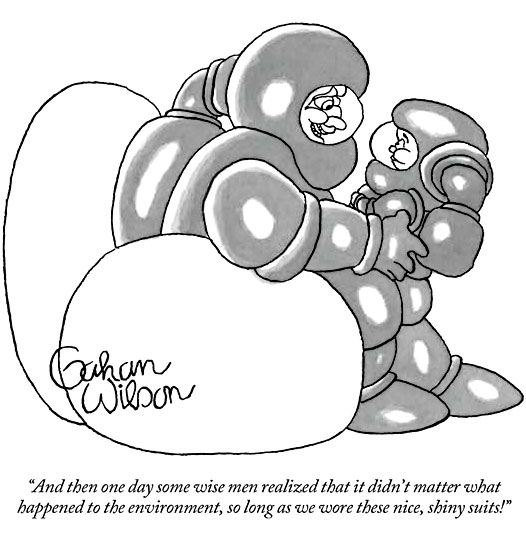
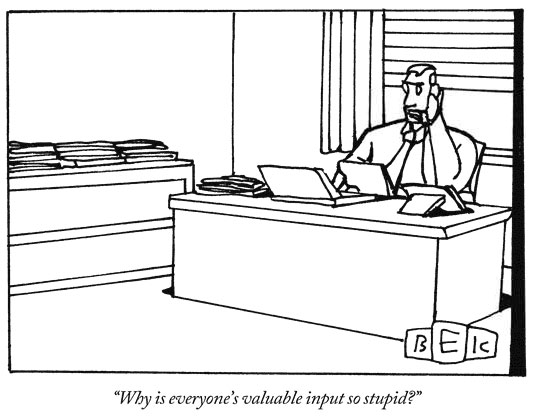
Favorite recent New Yorker cartoons.


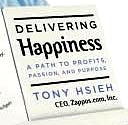
Harry Newton who loved this book. It’s a big plug for Zappos and its philosophy of success. But heh, it worked. He sold Zappos to Amazon for $1.26 billion. The book is worth reading.

Wondering about Greece
Harry, Jim Rogers thinks we should let Greece Fail. and I agree. It might be a lesson for Ireland, Portugal others (including the US), who are treading down the same path. President Obama, despite what he says is trying his best to take us down the same path.
Quote:
“Through out history, when countries get on situations like this, the longer you
delay reality, the longer you delay the inevitable, the worse it is in the
end. Look at Argentina 20 years ago. We could go on and on. Let Greece go
bankrupt. – in Bloomberg”
Jim Rogers
How is President Obama trying to do that?
Seriously?
Where to start?
Telling us national health care won't raise the deficit, a stimulus bill that was poorly managed to help those who needed it to encourage businesses to spend, failing to have a budget for over two years, allowing the banks to borrow money at less than 1/2% and then having them loan it back to us getting US treasury rates. Creating an economic environment where business are afraid to expand due to the fear of national health care, rising inflation, EPA regulations, carbon tax, state and federal taxes. Rising agriculture prices where we are putting food in our gas tanks. Not allowing access to our natural resources and then telling us there are no more places in the USA to drill for oil.
If sound economic policies were implimented, we wouldn't need to have people on the unemployment roles for up to two years.
Scooter in the house! But you have to admit Obama has so rather interesting ideas regarding foreign policy. Look at how foolish both Bush's were. Wasting time going to Congress and then wasting even more time in front of the UN Security Council. Hard to believe we had the get the UN ok for throwing Saddam out of Kuwait and then those pussies wouldn't give Bush 1 the ok to keep going into Iraq. Then Bush 2 got everybody in line for Afghanistan quickly enough, but then wasted 14 months at the UN even when he had an overwhelming majority in Congress, including Hilary Clinton and John Kerry along with a majority of all the other liberal douchebags in Congress to go into Iraq and oust Saddam. I think both Presidents Clinton and Obama have shown to have a much more efficient strategy when dealing with military action. As proven by Clinton with Operation Desert Fox when he bombed the hell out of Iraq (even if it was to supposably get Monica off the front pages) and now with Obama and Libya (which is nothing more than a confused president trying to show a little strength). So why waste time going to Congress and the UN when you can just say “screw them, that's for Republicans, I'll just do what ever the hell I want to.” You have to admit Scooter it is a considerably more efficient method. Don't you think?
Ronald,
With due respect, what does that rant have to do with economic policy?
Scooter in the dog house.
Obama isn't nearly as tough as RonaldReagan, who in macho fashion refers to “liberal douchebags” and the “pussies” who presumably gave Bush 1 a hard time, about something. RonaldReagan can't stand it because it was a “confused” and enfeebled Barack Obama who made the gutsy call to “off” Osama Bin Laden. Of course, had the Seal team for any reason failed in its mission or otherwise come up short – why, Obama would probably be facing impeachment right now. It's all bitter medicine because it wasn't RR's boy George W. Bush, on whose watch 9-11 occurred, and who had 8 years to get the job done and couldn't do it. It's all evocative of Dubya holding hands with and planting a big kiss on the mustachioed face and nose of Saudi King Abdullah. Now THERE'S the acts of a manly man – not some liberal douchebag pussy who'd probably run at the first snot.
No I was not kidding – sometimes I toss out simple questions like chum, to see what bizarre fishy answers might rise to the surface. Now that you've jumped into the net, here's some information for you:
OBAMACARE AND DEFICITS. Factcheck.org recently took Obama to task for certain claims he made in his April budget speech. Nevertheless, even in a critical vein they said, “He repeated a deceptive talking point that the new health care law will reduce the deficit by $1 trillion. That’s the Democrats’ own estimate over a 20-year period. The Congressional Budget Office pegged the deficit SAVINGS at $210 billion over 10 years and warned that estimates beyond a decade are “more and more uncertain.” Get it – SAVINGS. Moreover, because of Obamacare, millions of heretofore-uninsured Americans now have or will have health insurance. Does the HUMAN benefit of this achievement ever into the equation – or is it always, now and forever, all about your money and some tax you imagine you may have to pay?
BUDGETS. In 2010, as a result of Republican filibuster threats, no budget was passed or even voted on by a Democratic Congress that never had a clear 60-vote majority to pass a cloture vote – a vote necessary because Republicans act in perfect lockstep when it comes to opposing anything the President or Democrats attempt to achieve. Republicans claimed at the time that no vote should be taken on a budget by people not elected to perform the will of the people.
Democrats did not pass a budget for 2011 because of these same filibuster threats of Republicans, who have decided that democracy in the form of a simple majority vote no longer suits the United States of America – that is, so long as there is a Democrat in the White House – especially one who, in your carefully-thought-out terminology, is “trying his best to take us down” the path to economic ruin. If a Republican were in the White House, I might add, there would of course be yammering for “let us have an up-or-down vote!”
The last budget voted on by Congress was that for 2008-2009. It was voted on and approved by George W. Bush, prior to election day 2008. A budget that led to the $1.2 trillion deficit inherited by Barack Obama. A budget that included TARP …
TARP. (To quote …) The Troubled Asset Relief Program (TARP) is a program of the United States government to purchase assets and equity from financial institutions to strengthen its financial sector that was signed into law by U.S. President George W. Bush on October 3, 2008. It was a component of the government's measures in 2008 to address the subprime mortgage crisis.
Originally expected to cost the U.S. taxpayers as much as $300 billion,[1] by December 16, 2010, the Congressional Budget Office (CBO) estimated the total cost would be $25 billion,[2] although Treasury Secretary Timothy Geithner argued that the final cost would be still lower.[3] This is significantly less than the taxpayers' cost of the savings and loan crisis of the late 1980s. The cost of that crisis amounted to 3.2 percent of GDP during the Reagan/Bush era, while the GDP percentage of the current crisis' cost is estimated at less than 1 percent.[4] While it was once feared the government would be holding companies like GM, AIG and Citigroup for several years, those companies are preparing to buy back the Treasury's stake and emerge from TARP within a year.[4] Of the $245 billion invested in U.S. banks, over $169 billion has been paid back, including $13.7 billion in dividends, interest and other income, along with $4 billion in warrant proceeds as of April 2010[update]. AIG is considered “on track” to pay back $51 billion from divestitures of two units and another $32 billion in securities.[4] In March 2010, GM repaid more than $2 billion to the U.S. and Canadian governments and on April 21, GM announced the entire loan portion of the U.S. and Canadian governments' investments had been paid back in full, with interest, for a total of $8.1 billion.
ETHANOL. To quote: “The Energy Policy Act of 2005 (Pub.L. 109-58) is a bill passed by the United States Congress on July 29, 2005, and signed into law by President George W. Bush on August 8, 2005 … The act, described by proponents as an attempt to combat growing energy problems, changed US energy policy by providing tax incentives and loan guarantees for energy production of various types.” Etc. Of course, this and the associated rise in agriculture prices, was and is the fault not of agribusiness and legislators from corn-growing agri-states (largely Republican), but of Barack Obama.
WHY THE ECONOMY SUCKS. “ … Creating an economic environment where business are afraid to expand due to the fear of national health care, rising inflation, EPA regulations, carbon tax, state and federal taxes.” And, “Not allowing access to our natural resources and then telling us there are no more places in the USA to drill for oil. If sound economic policies were implimented [sic], we wouldn't need to have people on the unemployment roles for up to two years.”
Try spellcheck, and an unemployment “role” is not a part in script on hard times, authored by some “community organizer.” But I digress – can't you come up with something more original and substantive than sophomoric, baseless and Palinesque nonsense such as this? Never mind – I can answer my own question.
DMI,
You make a lot of assumptions in your response. You assume I am a Bush fan, You assume I don't know what I am talking about, and worst of all you are doing your best to defend the undefendable and leave out the rest of the story.
I noticed your spelling isn't quite up to your own standards either.
Scooter
And just where did you find a problem with my spending … (Possible oversight on your part, not mine: If you're not familiar with “menton”, get a map. Or better yet – make plans to visit there; it's a neat place.)
In any case, with regard to spelling – I was just engaging in a bit of ball busting … anyone including “DMI” can make a typo from time to time.
It's easy to say I'm defending the indefendable if (1) on your own terms, you determine what's indefendable and then hold others to that determination, and (2) your assertion is utterly devoid of specifics – as it is.
I really don't know if you're a Dubya fan or not. George W. Bush was a failure and our worst President (at least in modern times); he put us as a nation on the road to ruin. He then waved goodbye and turned the keys to two wars and a sputtering, failed economic engine over to Barack Obama. The Obama haters and political opponents have from Day 1 excoriated him for the monumental rut we've found ourselves in. In a display of classic and unrivaled hypocrisy, the Obama detractors turned a blind eye to the fact that for eight long years – while we squandered a trillion here and a trillion there on unfunded wars, plunged our nation into heretofore unimaginable debt, and at the same time granted and preserved tax breaks for the wealthiest among us – they didn't utter a peep about budget deficits, fiscal responsibility, the problematical legacy to our children, and the like.
Perhaps I'm mistaken but I must say that you seem to fall into this latter group.
AAHH Harry – yoo too??? After telling everyone to get out of stocks and move to the sidelines 3 weeks ago you now reversed yourself and are “edging back in” and feeling more comfortable about stocks. I guess all it takes is a 600 point rally and the most significant move up in years to have you change your mind. In the meantime , anyone who had listened to you got whipp sawed and missed a huge market move.
It wasn't a “huge” market move. It is not the most significant move up in years. That's nonsense. It has also yet to recoup the drop from early May.
Making BIG calls is not actually that useful, anyway. It makes for a headline and some focus. But this business is still picking stocks. And our collection — see table on the right — is doing OK.
6% in a week is huge by any measure. It is also a most significant 1 week move in years. I think it was you who made the BIG call 3 weeks ago when you told your readers to get out of stocks and go to the sidelines. At the same time you dramatically cut your “stocks we like” board. You are correct that we have not recouped from the drop in May but anybody taking your advice 3 weeks ago would have sold and not particpated in the 6% rally , almost getting them even with May levels. Now they are on the sidelines and you are “edging back in and feeling more comfortable. If making the BIG calls is not useful then practice what you preach and dont make them! In your words…”This is my call” – It no longer feels right. Bad news is avalanching. It's time to get out of most equties”. Big call Harry!
I'm happy with the list on the right and its timing. The key is to figure what works for your pocketbook and your psyche. Mine are different to yours. Out of curiosity, what are you doing? You've criticized me, but not told us what you're doing.