But the jobs report really was miserable. From one commentary:
Total employment fell by 445,000. Full-time employment is down by 0.5% in the last year, while part-time is up 3%. David Rosenberg calls this the just-in-time labor market. The total number of unemployed rose to over 14 million. If you count the discouraged workers not in the official unemployed, the total number rises to 20.6 million.
High-yielder dividend stocks and gold are holding up best. Stay right away from non-dividend paying industrials and financials — too many cockroaches.
Waiting for Gravity to hit LinkedIn. Hugely bearish article on LinkedIn in the New York Times. Click here.
My dumbest investment decisions: Biotech and California real estate. In both cases I did not ask, “What’s the worst that can happen? Can I lose all my money?”
I was reminded of biotech perils on the weekend with an email from the president of a small biotech company I had (stupidly) help fund:
We are writing to update you on XYZ Corp’s progress and status. You will recall that late last year we attempted an IPO that failed, unfortunately, given the capital market conditions. Subsequently, the company’s Board of Directors and its Management Team began to pursue aggressively several strategic options to advance the company. These options have included another public financing scenario as well as several private, strategic combinations and licensing transactions. Currently, a private, strategic option remains active and is progressing rapidly. This potential collaboration would provide XYZ Corp’the necessary resources to advance development of each of its programs with a goal of creating a viable outcome for our investors. While we are optimistic with our progress, we cannot be assured of a success. Discussions which began in the 1st quarter of this year are expected to take several more months to complete.
Concurrently, the Board is working together with management to drastically reduce expenses to enable the Company to preserve resources necessary to see us through this difficult but focused time. We have reduced headcount, fixed overhead, and salaries to the bare minimum. The Board has implemented a management incentive plan that will enable me as your CEO, to remain in place for an indefinite period in order to lead and close this initiative with the goal of providing a positive outcome for our shareholders.
Encouraged by the sustained interest and recent progress with this potential strategic partner, XYZ Corp is assessing interest level among its investors and a few 3rd parties familiar with the company, in undertaking a small debt bridge financing not to exceed $450,000, under very attractive terms. As of this correspondence we have received commitments for a third of this amount. The objective is to provide a cash runway through to the consummation of this collaboration with a private pharmaceutical partner. Should you have an interest in participating in this offering, please contact me this week as we hope to finalize interest and seek shareholder approval to implement before month’s end. This investment does come with significant risk ifXYZ Corp is unable to close the strategic collaboration.
If XYZ Corp does not receive adequate financing in the near future, it will be forced to cease operations altogether. Nevertheless, Management and the Board are currently optimistic that a positive outcome can be realized. Your past and ongoing support has been most appreciated.
Yours Sincerely,
XXXX, President and CEO;
My Summer at an Indian Call Center. You must read this very funny, very sad piece from Mother Jones.
Google+ social networking could help GOOG stock. I begged to get on. But Google’s PR people said it wasn’t ready for me yet. I could look at their press site and learn more. Click here.
Please buy yourself a solid state drive (SSD). A SSD is the fastest way to speed up your laptop. This is the easiest package. It’s got the cloning software, the cable and even a metal container if you want to use the SSD as an external drive.

The Kingston kit comes in three sizes — 64 gig for $120, 128 gig for $220 and 256 gig for $460 — at Amazon. Click here.
This stuff is genuinely amazing. Invent something in a can or bottle and riches byeyond your wildest imagination are yours.
I used Turtle’s Rubbing Compound to remove a bunch of scratches on my 9-year old Subaru Outback. Looks as good as new. Huge weekend accomplishment.
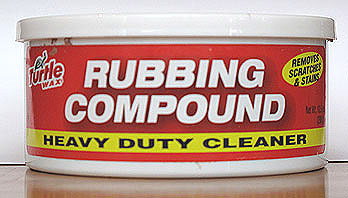
Six bucks a can. At Amazon. Click here.
Picking the Lock of Google’s Search. How do you get Google to recognize your business? It’s a black art. And other people play it better than you do. Some call it “gaming” Google. Click here.
Investigating the Dreaded `Check Engine’ Light. Really interesting and actually quite useful for figuring out what the Check Engine light on you car means. First clue: clean and tighten your gas cap. Read the comments. Click here.
Your taxpayer money gone mad. From a Wall Street Journal article by Professor Paul Light on how to save Federal expenses:
Cut federal jobs. Flatten the number of federal management layers to no more than six. In a 2005 study, I found an average of 18 layers between, say, the secretary of agriculture and the forest ranger, or the secretary of the interior and the oil-rig inspector—up from seven layers in 1960.
For the Prof. Light’s full WSJ piece, click here.
3D Printing comes of age. You must watch this new technology. Click here.
There are always a great entrepreneurial opportunities. Parked outside our bulding on Friday.

It’s a tiny Mercedes Smart Car. Perfect for parking in tight spots.
Mnagement books to read this summer. From the Economist. The beginning is funny.
Aiming high
We launch a quarterly review of business books by considering six of the best
THERE are few divisions of the book industry with a worse reputation than business publishing. Hundreds if not thousands of business books come out every year, all with glowing press releases and effervescent puffs. Literary editors tend to consign them straight to the bin.
This is understandable. An astonishing number are worthless. Celebrity CEOs blow their trumpets, consultants market miracle cures, self-help gurus promise that you can grow rich by working four hours a week. Wait a few months: the CEOs have been caught with their hands in the till, the miracle cures are poisons, the self-help gurus bankrupt. What remains is a tangle of jargon-ridden prose.
Understandable but wrong. It is silly to dismiss a whole genre just because so many business books are bad. There are some excellent titles in among the dross: CEO biographies that capture something essential about business, useful prescriptions for restoring companies to health, even self-help books that help make sense of the contradictory pressures of modern corporate life. The average employed person in the West spends more waking time in the office than at home, so it makes no sense to be so dismissive of writers who focus on such an important activity.
The best books provide an insight into how business revolutionises the world. Why is the centre of growth shifting from the developed to the developing countries? Why do some companies succeed and others fail? Why are we swapping the white collar for the no-collar workplace? Why do managers say the astonishing things that they say? The answers to these questions lie in the business books that many literary editors so casually toss out.
Some business writers pass Karl Marx’s test of changing the world as well as interpreting it. Peter Drucker’s 1946 classic, “Concept of the Corporation”, made people think of companies as communities rather than just productive units. “The Machine That Changed the World” (1990) by James Womack et al popularised Toyota’s manufacturing system with its emphasis on just-in-time parts and proactive workers. Michael Hammer and James Champy’s “Reengineering the Corporation” (1993) encouraged companies to sack large numbers of workers even as their profits soared.
This week The Economist launches a quarterly review which will highlight a selection of new business books. To introduce this feature we re-examine six classics published over the past half-century or so that illustrate the wide variety of books that march under the banner of business. They also show how the best books help both to shape the business world and to make sense of it.
Henry Ford is rightly credited with inventing the assembly line—and with it mass production. But it was his great rival at General Motors (GM), Alfred Sloan, who really invented modern professional management. Sloan organised his company into divisions that specialised in cars “for every purse and purpose” and he fashioned a managerial class that turned GM into the world’s biggest company. His 1964 book, My Years with General Motors, is a cool explanation of how he did it (“management has been my specialisation,” he wrote flatly). It is a book that puts subsequent business autobiographies to shame.
William Whyte’s The Organisation Man (1956) is business journalism at its best, taking us inside the daily life of the giant corporations that dominated American capitalism during its heyday. Organisation men were conformists to their fingertips. They eschewed creativity in pursuit of pleasing their bosses, hitting the numbers and creating what Sloan called “objective organisations” as distinct from those that “get lost in the subjectivity of personalities”. Later authors, such as Richard Florida, have tried to examine the demise of “organisation man” and the rise of the creative class, but nobody matches Whyte’s ability to mix detailed anecdotes with broad generalisations.
Drucker was the doyen of management gurus—a man who kept up a stream of insightful commentary on business from the 1940s until his death in 2005. Picking his best book is not easy; the inelegantly titled Management: Tasks, Responsibilities, Practices (1973) is as good an example as you can get. Drucker explains why “management may be the most important innovation of the 20th century”. He traces broad revolutions such as the rise of knowledge workers and the development of voluntary organisations, boosting his argument with stories about the growth of the East India Company and the development of Japanese art.
In Search of Excellence by two McKinsey alumni, Tom Peters and Robert Waterman, was the first business blockbuster, selling millions of copies and demonstrating that consultants could talk to a general as well as a business audience. Many of the companies they profiled performed badly in subsequent years and the book has been heavily criticised since it came out in 1982. But it was a powerful attack on the rationalist school of management which saw workers as mere numbers, and it provided a compelling portrait of how companies work.
Clayton Christensen’s The Innovator’s Dilemma (1997) introduced one of the most influential modern business ideas—disruptive innovation—and proved that high academic theory need not be a disadvantage in a book aimed at the general reader. Mr Christensen showed that great companies can fail despite doing everything right: even as they listen to their customers and invest heavily in their most productive technologies, their markets can be destroyed by radical new technologies.
C.K. Prahalad’s The Fortune at the Bottom of the Pyramid (2004) unleashed a business revolution that has done far more good than any number of “Live Aid” concerts. Using a wealth of vivid examples, from Indian eye clinics to Mexican cement companies, Prahalad made three powerful points: that consumers who live on less than $2 a day collectively represent billions of dollars-worth of demand, that together they will account for much of the growth in global demand in the future, and that companies that want to reach these markets need to start early and rethink their assumptions about design and distribution. Prahalad, who died last year, is one of the writers who is most admired by developing-world entrepreneurs, from Muhammad Yunus, who founded Grameen Bank in Bangladesh, to James Mwangi, CEO of Kenya’s Equity Bank.
Companies and consultancies will buy thousands of books to flatter their CEOs or market their latest “breakthrough” ideas. The temptation for publishers to churn out rubbish should be resisted. Business is going through a particularly fascinating phase, as new technologies disrupt long-established business models, new economic giants shift the balance of economic power and new gurus, many of them from emerging markets, reinterpret the landscape. The need to separate the wheat from the chaff has never been greater.
A Letter from Rupert Murdoch. This is funny. You must read it.
Where I Stand on the News Corporation Scandal

by Rupert Murdoch
Dear Friends,
As details of the scandal surrounding my company, News Corporation, have emerged in recent days –- including employees hacking into mobile phones and bribing the police –- my defense has been consistent: I had no idea what was going on.
Now, I’m sure many of you are wondering, how could I, Rupert Murdoch, one of the most powerful men in the world, have no idea what is going on? The answer, my friends, is simple: I get all of my information from my own newspapers. If you relied on News of the World, The Sun, and The New York Postfor your information, I can assure you that you wouldn’t have a clue what was going on, either.
Some of you aren’t buying this argument. You maintain that a media titan like me would get his information from sources beyond newspapers – like TV, for example. Well, that’s true. But in my case, the only TV I watch is the Fox News Channel. So not only do I not know what is going on around me, I know nothing about the theory of evolution, global warming, or President Obama’s birthplace.
If you still don’t believe that I know nothing, here’s a final piece of evidence: I paid $580 million to acquire MySpace. Case closed.
Now that we’ve established that I know nothing, let me address some of the allegations about News Corp. that have come up in recent days: first and foremost, that our reporters have regularly bribed the police to obtain information. I am shocked and appalled by this charge. News Corporation has a longstanding zero tolerance policy regarding information, both the getting of it and the publishing of it. Going forward, we will be subjecting our employees to a series of random information tests. Any employees found to be possessing even trace amounts of facts will be immediately terminated.
Finally, it has come to my attention that several of my company’s tabloids have featured pictures of women with their shirts off. I am as shocked by this news as you are and I intend to launch a full investigation.
In closing, I want to assure you that I intend to make amends for any and all of the wrongdoing perpetrated by employees of News Corp. in recent years. And to that end, I have plan: I implore the British government to let me own 100% of the satellite broadcasting giant B-Sky-B. I have made some grievous mistakes with the media properties I already control, and the only way I can think of to make things right is by controlling even more.
Your friend,
Rupert
This letter is a spoof by comedian Andy Borowitz, whose web site is here.
Acceptable use of the “F” word. Here are the times in history when the “F” word is considered acceptable.
+ “What the @#$% do you mean, we are sinking?” — Capt. E.J Smith of RMS Titanic, 1912.
+ “What the @#$% was that?” – Mayor Of Hiroshima, 1945.
+ “Where did all those @#$%ing Indians come from?” — Custer, 1877.
+ “You want WHAT on the @#$%ing ceiling?” – Michelangelo, 1566.
+ “Scattered @#$%ing showers, my ass!” – Noah, 4314 BC.
+ “I didn’t think they’d get this @%#*^ing mad.” – Saddam Hussein, 2002.
And the winner is
+ “I need a Navy SEAL in my house like I need a @%#*^ing hole in my head.” – Osama Bin Laden, 2011.

Harry Newton who wishes he were here — the second most beautiful place in the world (after Yosemite):

The Grand Tetons in Wyoming with the Snake River in the foreground. Ansel Adams did a wonderful job with this gorgeous place.


I used that rubbing compound on my black Explorer and it took the paint off. I have try to put wax on to help regain the color but no luck. I was terribly dissappointed and now I have grey patches all over….much worse than the original scratches.
On great business books, I was disappointed not to see the forthcoming best seller “TrendSetters: The World's Leading Experts Reveal Top
Trends to Help You Achieve Health, Wealth & Success”, which I co-authored! It's now available for pre-order at Barnes & Noble. After that, I definitely liked
and used almost all of Peter Drucker's superb books. He was always so far
ahead of the crowd, almost clairvoyant. He foresaw the huge outsourcing
movement long before it was obvious, and even the economic troubles of Japan,
back when all (Paul Krugman?) were predicting its coming world supremacy, a lot like China
talk today.
Interesting times, no? We seem to see Pres. Obama and the NYTimes' Paul Krugman's economic policies not only not working (duh), but being counter-productive and equally bad, costing a few trillion dollars, a number we never saw before this crowd took over. That's a thousand billions, right? Working a different agenda or idiots?
NLY just announced it will offer to sell 100,000,000 shares.
Stock fell .36 in after-market trading.
I invited you to Google+. I put you into a circle of friends (2) who already know you. I”m a little leery about introducing you into some of my other circles.
I wouldn't either.
It's been long known that the World of Murdoch lies. Now we know that it also cheats and steals.
Murdoch immediately flew to London and shut the profitable “News of the World”……if only Dan Rather and CBS News had as much integrity. CBS had to make Mr. Courage quit in order to save face.
On the one hand we have Dan Rather's being taken in by one controversial document of dubious authenticity (the Killian document) – which, of course, some will always parlay into an indictment of the entire CBS corporation. On the other, we have the family-run Murdoch empire and an exploding revelation of wiretapping of prominent politicians, 911 victims' families, and others; the hacking of voicemails of a kidnapped girl – while she was still alive; the intentional withholding of information from authorities; a cover-up extending for years; intimidation; possible blackmail; and who-knows what else.
The quick action by Murdoch's son, James, in closing TNOW … was it because of rectitude and pangs of conscience (there's an oxymoron for you: a Murdoch publication and “conscience”) … or because the Murdoch empire is in the process of trying to close the biggest deal in its history, a $12 billion takeover of British Sky Broadcasting?
Rebekah Brooks, chief executive of News International, is already gone. What did she know, when did she know it, and how long will it be before the path leads to James Murdoch, and … ? Under intesnse scrutiny is Les Hinton, “the longtime Murdoch confidant who was executive chairman of Murdoch's newspapers in Britain at the time when the alleged rampant hacking attacks took place. Hinton oversaw the initial News Corp. investigation into the allegations and found no evidence of widespread wrongdoing within the company. It's an investigation that, in light of recent developments, now looks to have been incompetent at best, and a fraud at worst.” (MediaMatters for America)
HINTON NOW RUNS DOW JONES AND THE WALL STREET JOURNAL.
There's a difference between the singular figure of Dan Rather, an equally singular event that marred an otherwise exmplary reputation, and a price paid in terms of career and journalistic standing – and the Murdoch empire, already of scurrilous repute, and now finding itself knee-deep into law breaking and journalistic grave robbing. That's a distinction that you can't understand – I get that.
MediaMatters for America…….a “non-profit” organization founded by the ultra liberal David Brock whose only existence is to continue its “War on Fox”…….you actually quote MediaMatters and expect to have a scintilla of credibility. Why don't you write to MediaMatters and tell them to get ready to pay their taxes. I'm sure Soros will come with a check. Take a hike you liberal moron.
MediaMatters has no credibility because … you say so. Well we all are impressed. It does my liberal heart good to see you dive right into the stench of this scandal and rise to the defense of Murdoch. Of course, I'm sure that Reuters, the Financial Times (today's headline: “Murdoch fights to keep Sky bid alive; Allegations Gordon Brown's family records hacked”), the major news media of the world covering this scandal, and the British Parliament have all been taken in by the “liberal media” and the likes of David Brock and George Soros. Oh you forgot – why not throw Ted Kennedy into the mix?
Keep trying to deflect reality with smartass attacks on me, dick, it makes my day.
Reuters? Financial Times? Next you'll be quoting Mother Jones. I'm deflecting reality? You wouldn't be able to recognize reality if it slapped you in the face. Here's a quote and it's not from one of you liberal rags….
“When you see that in order to produce, you need to obtain permission from men who produce nothing; when you see that money is flowing to those who deal not in goods, but in favors; when you see that men get rich more easily by graft than by work, and your laws no longer protect you against them, but them against you…..you may know that your society is doomed.”
This is the current state of Europe and the United States, make no mistake about it. I look forward to the day when it all comes crashing down then we can rid ourselves of the communist, socialist, liberal mindset that has delivered the western wold to this unfortunate but deserving outcome. The “night of fire” is coming my friend and what is it that you liberals have to fight for, abortion, gay rights, more taxes, social programs, unions and their right to collective bargaining, Keynesian economics, anything to weaken the US military, government healthcare, open boarders and any multitude of other liberal crank causes. But what is it that's most important to you liberals? What is it that you believe in to you core? The answer is “nothing” because you are part of the mindset that believes in nothing therefore you'll believe in anything. And what is it that we conservatives will be fighting for, what is it that we believe to our core? You wouldn't understand……but when it's morning in America ounce again……you will.
By the way, I couldn't have said it any better than Ayn Rand.
One characteristic you certainly share with Ayn Rand: supreme arrogance. As you sit there at your keyboard, however many miles or light years distant from me, having never met me, you presume to say, “What is it that you believe in to you core? The answer is “nothing” because you are part of the mindset that believes in nothing therefore you'll believe in anything.” WTF do you know about me, anyway? The answer, as you put it, is “nothing.”
Here are a few hints for you, coming as it does from “the mindset that believes in nothing”: I believe in the middle class…the pillars, the load bearing support system of our economy, the buyers, the spenders, the circulators of prosperity, the engine that keeps America moving. I believe that the essence of the spirit and aspirations of the American people is encapsulated in the phrase, “We the People of the United States …” I believe in the Founders’ dream of what they fought a liberating revolution for – to create a liberal democracy and system of government to “promote the general welfare.” I believe in We, not Me, not ego, not greed, not amorality, not the glorification of selfishness as some inherent good. I believe that a society in which 400 people own more wealth that 150 million other Americans, one in which 50% of all the children in America will depend on food stamps at some point in their life before they are 18, is indicative of a profound breakdown of fundamental American goals and values.
I believe that Reaganomics is a fraud and proven failure. The end-result and hidden agenda of Reaganomics (for all intents and purposes already achieved) is the aggrandizement of a handful – the super-wealthy – at the expense of all others. It glorifies a philosophy that is turning us into a nation of serfs run by corporatists treating people like commodities no different than any other kind of production input used to grow profits and then discarded and/or replaced by overseas labor when no longer of use. In short, it is Reaganhood: take from the poor; give to the rich, and feel good about it – or not give a damn.
Your own orientation seems rather clear. In support of same, you quote Ayn Rand. Here are a few snippets regarding her, lending as they do a bit of insight that you've failed to include:
[Rand] experienced the Russian Revolution first-hand. The experience marked her for life, for both good and ill. She became a persuasive critic of the evils of Communism. Unfortunately she went well beyond that, becoming also a misanthrope and a God-hater. Oddly enough, this militant atheist is a founding figure of modern right-wing political thought. Though she made it her life's project to combat religion: “In early 1934 she began a philosophical journal … by the end of her first entry she had decided, 'I want to be known as the greatest champion of reason and the greatest enemy of religion' ” …
[Rand's] book, The Virtue of Selfishness (1964), explains in depth the concept of rational egoism. According to Rand's ethical egoism, every rational individual's own life should be his or her own highest value; … one's own happiness is the highest purpose of one's life. Consequently, Rand was sharply critical of the ethical doctrine of altruism …
Ayn Rand based her ethics strictly upon self-interest. [I]ntentionally hostile to Christianity, … she joined Nietzsche in repudiating Christian ethics as empty and outworn. Her ground-breaking novel, 'The Fountainhead,' sought to establish egoism instead as the basis for a new morality. She wrote in her notes, “The first purpose of the book is a defense of egoism in its real meaning, egoism as a new faith …
Ayn Rand was a drug addicted, amoral, emotional automaton at whose altar you choose to worship. For those (not you, of course) caring to learn just how sick Ayn Rand was, try Googling “ William Edward Hickman.”
Harry, Getabstract is a great site that provides 5 page summaries of business books. They have different subscription packages. https://www.getabstract.com/in…