What’s working: the Australian dollar, the Swiss franc, gold, triple tax-free muni bonds, treasuries and mortgage REITs, like NLY and AGNC.
What isn’t working — practically everything else, especially the big banks and the big technology stocks, like CSCO, JNPR, NFLX and ORCL.
Annaly’s earnings (NLY) were sound. Its leverage is down. Read more here.
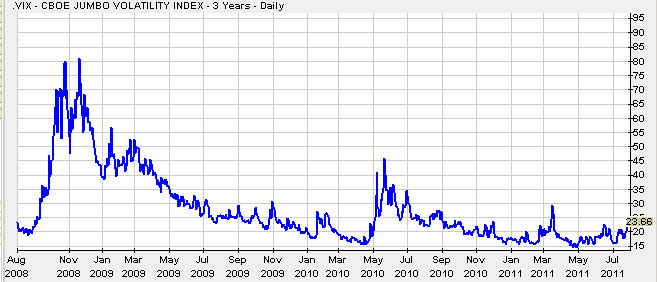
Does the VIX help in predicting the market? Here’s the VIX over the past three years.
Here’s the Dow over the same three years:
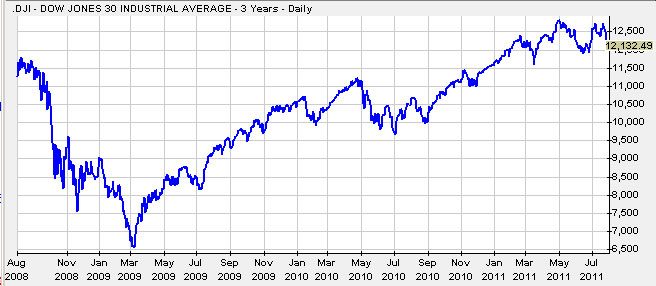
The VIX didn’t predict the March 2009 turnaround. It did help in with the May sell-off and it’s been useful since then. Right now, it’s moved up a little — but only a little. Time to be careful.
If you had invested $1,000,000 in the Dow on December 31, 2000, as of July 29, 20111, you’d have $1,125,926.
If you had nvested one million in the S&P 500 ove r the same time frame, you’d now have $978,638.
I’ve done much better with my muni-bonds. At least over $1,500,000.
When do you fire a manager? When he worships at the idol of capital preservation, yet loses you money.
Please be careful. It must be the season. I now have several friends who’ve recently broken bones by falling down stairs. One broke in Africa and had to rush back to back to the U.S. in pain. Not pleasant.
Please be careful. We ain’t no spring chickens any longer.
The ultimate in virtual living. This one tops them all. I had lunch with a Russian “investment banker” who had no business cards, no web site, no brochure and no office address. I love Russian accents. i wish I could do them better.
Muni bonds continue to do well for me. I like bonds that are tied a specific revenue source — like payments for water use by cit residents. Sadly, all the towns, cities, states and (of course) the Federal Government hasve committed themselves to extragances they can not afford. And now the chickens are coming home to roost.
I’m sorry to burden you with another long article. This one, from the New York Times, gives a real flavor for the financial mess in government.
Small City, Big Debt Problems
Even as officials in Washington pledged to cut domestic spending, the city of Central Falls, R.I., landed in bankruptcy court on Monday, a stark reminder that some American cities have debts so overwhelming that no amount of belt tightening can set things right.
“This is not simply a Central Falls issue — this is a statewide issue and even a national issue,” said Rhode Island’s governor, Lincoln D. Chafee, an independent, who as a senator was the only Republican to vote against the invasion of Iraq. “We have to match our revenue to our expenditures.”
Central Falls got into trouble, above all, by promising its police and firefighters generous retirement benefits without setting aside enough money to pay for them. The benefits were often determined by outside arbitrators, who were intent on resolving disputes rather than assessing whether towns could afford their promises. Weak accounting rules helped mask the scale of the problem for years.
Now Rhode Island’s smallest city has the same problem as Washington — the biggest overruns are in the programs hardest to cut, pensions and retiree health care.
After asking its retired police officers and firefighters for weeks to accept reduced benefits, Central Falls intends to impose its will in bankruptcy court. The retirees will get smaller pension checks, so small in some cases that the city is creating “circuit breakers” to make sure no one falls below $10,000 a year. Retirees will also have to pay a portion of their health care premiums.
Meanwhile, Central Falls’s bondholders appear to be unscathed, because a state law adopted last month asserts that general obligation bonds will pay even in bankruptcy.
The conundrum of Central Falls in dealing with its debt is much like the one in Washington and Europe: how far to extend the principle of shared sacrifice, and how much pain, if any, to inflict on various stakeholders, including workers, retirees, taxpayers and investors.
Rhode Island’s decision to protect its bondholders, intended to allay market fears and make sure the state’s cities can sell their bonds readily to finance their operations, will most likely be repeated by some other states and cities across the country.
Already, the mayors of three other cities in Rhode Island have said they expect to have to reduce the checks they now send retirees to bring their finances back into balance. And the state treasurer, Gina M. Raimondo, is calling for a restructuring of the state pension system that would affect both retirees and current workers.
Municipal bankruptcy filings have been rare, mostly involving small single-purpose districts, rather than cities or counties. But a number of cities continue to struggle with reduced property tax receipts, state cuts in aid, and dwindling federal expenditures for programs at the local level. Jefferson County, Ala., has said it will decide this week whether to declare bankruptcy, and Vallejo, Calif., has been in Chapter 9 for a grueling three years.
Elsewhere, cities like Harrisburg, Pa., have sought relief in special state programs that offer some of the same tools as the federal bankruptcy law. Rhode Island created such a program last year, and several mayors say they are considering it, because even after raising taxes, laying off workers and selling public assets, they cannot get ahead.
“Services have been cut to the bone,” said Robert G. Flanders, the state-appointed receiver for Central Falls who spoke Monday beside Governor Chafee. “Taxes have been raised to the maximum level allowable.”
Across the country, municipal dollars are increasingly being dedicated to retirement benefits at the expense of retaining current workers and providing services, he added. A handful of men in firefighters’ union T-shirts attended the Monday meeting, held in the sweltering City Council chambers, but declined to discuss their situation. Some said they were too angry to talk. The president of the firefighters’ union, Michael Andrews, said the union needed to review the details with its lawyers before commenting.
Sharp cuts in the pensions of people who have already retired are rare. Even in the private sector, a federal pension law prohibits pension cuts unless a company goes bankrupt. The federal government then takes over and covers many retirees’ benefits in full.
Those laws do not cover state or local workers, who generally consider their pensions protected under state law. They point to statutes and court decisions that indicate once a worker has a government job, his pension plan cannot be changed for the duration of his employment.
Elected officials have been reluctant to challenge this line of thinking, because state and local pensions have become a third-rail issue, much the way Social Security has for federal politicians.
Mr. Flanders said Central Falls had no choice. The pension fund for police and firefighters is expected to run out of money in October, and the city cannot afford to pay the current benefits out of its general fund.
Central Falls had “reached a critical fork in the road,” he said.
“In one direction lay the ruins of Prichard, Ala., a city you may have read about in the news, which defaulted on its obligations and simply stopped making pension payments to its retirees,” he said. “In the other direction, Chapter 9 loomed, and with it the realistic hope of restructuring the city’s finances in a relatively short period of time.”
A third group of workers, the general employees of the city, participate in a state-run pension plan that is reasonably well funded. Any changes to that plan will be made separately, by the state legislature.
The annual check to retired police officers and firefighters hardly seems lavish; the biggest is about $50,000, with more than half collecting $20,000 to $40,000. The problem, Mr. Flanders said, is that for years, the police and firefighters have been able to retire very young, even in their 40s, without any reduction in their retirement benefit. When a modest pension is paid over many years, it becomes very costly, and the pension fund itself must perform better, to kick off outsize investment gains in fewer working years. Central Falls did not come close.
Another big problem is that the city has given pension increases to retirees whenever uniform personnel have received a pay raise, an unusual policy. Working police and firefighters put 7 percent of their paychecks in the pension fund, but as more and more have retired, the active workers’ contributions have not kept up with the cost of the benefits. The city, meanwhile, has contributed little or no money for years.
Rose Marie Canavan, a 75-year-old retired teacher who attended the meeting, said the city had suffered for years because of poor management. She served on the council in the early 1990s, she said.
“There were a lot of red flags raised,” said Ms. Canavan, a lifelong resident. Her pension is provided by the state, which is also contemplating changes to get its costs under control. “The whole issue is mismanagement of funds and spending beyond your means. In the private sector, smart people see it coming and make adjustments. If they don’t, they go under.”
This is my next bike. It’s called the Orbea Diem Metro bike. It’s made of carbon fibre. It’s light. It has upright handlebars — perfect for city riding and tootling. down country roads. It has great components. Serious biker friends who have one say it’s the best bike they’ve ever owned.

Only problem: it costs $2,300.
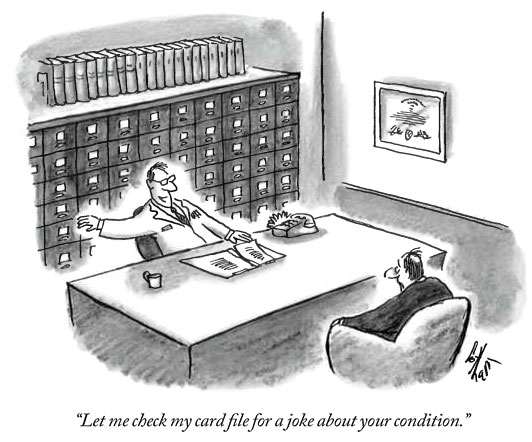
Favorite recent New Yorker cartoons.

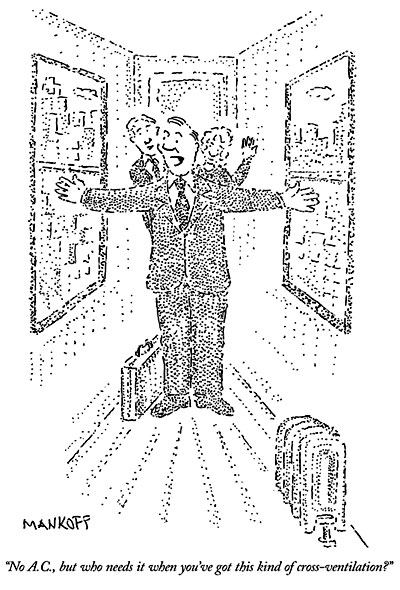
And my favorite New Yorker cartoon:
Which is almost as good as this photo which I shot in Salem, Oregon several weekends ago. Read the sign on the top of the building.
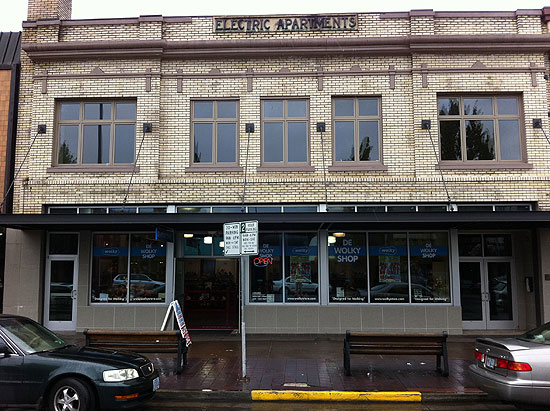
Salem is Oregon’s capital. It’s a pretty depressing place.

Harry Newton who is so happy he’s living here, not there. You see what Syria’s dictator is doing to his country: sending tanks in and firing indiscriminately on his own people. From a New York Times report:
“What did they achieve from the raids?” asked a doctor from Hama who gave his name as Abu Abdo and who was recently released from detention for participating in the protests. “Nothing. The army is still at the city’s outskirts. It was an operation to kill as many people as possible to prevent the planned demonstrations.”

oops !! Invested in gold !
And had you invested that million dollars in December 31, 2000 – you would have over 6 million dollars today.
John, but my Wall St / Keynesian economic friends (MBA brother-in-law included) tell me gold is in a bubble. I guess it's time to sell my gold………
Yeah, isn't it amazing – gold was the best stealth investment over the past decade that the public never heard about – and you are correct… Wall St, the Keynesian crowd, CNBC, etc… are all screaming bubble – need I remind you that this is same group that failed to see the tech bubble in the 90's and the recent housing bubble – the average Joe on the street knows nothing about this investment (precious metals) and dollar debasement in general – until we hear the local taxi driver or shopper at the local supermarket talking about their investments in Newmont or Barrick gold, we'll still have a ways to go – and until the finacial mess is cleaned up here in America, and abroad, this stealth market still has legs, solid legs……
John, I hope your right on the pm mining stocks. If I made one mistake up to this point it was not buying more bullion and having big time holdings of pm mining stocks. The ETF's have really hurt the mining stocks, but I do believe at some point the miners are going to gain attention.
Did you not see this about article about ANLY/AGNC Harry?
http://online.wsj.com/article/…
Harry
You were going to list some trends from Dalio
Sonny