Readers question my love for the mortgage REITs, like NLY.They say that Annaly’s 14.85% dividend yield is “too good to be true.”
This is hard to answer this. All stocks you own are a matter of faith. Mortgage REITs earn a living by playing the spread between what they borrow money at and what they earn on it with their mortgage holdings. Everyone who follows this field agrees that today’s spread, with its ultra-low borrowing rates, is about the best it’s ever been for these guys.
Last week the SEC said it was asking for comments on whether the mortgage REITs should be subject to the Investment Company Act of 1940. The SEC announcement knocked the stocks. And yesterday Annaly’s management released a statement saying they would submit comments to the SEC. Click here.
I read the provisions of the Act last night and concluded (I’m no lawyer) that for Annaly to conform to the Act would involve no significant burden on it whatsoever. The Act insists on open disclosure. Annaly (and its mortgage REITs comjpetitors) are already very open in their reporting. I’m sticking with my Annaly stock.
The banking crisis explodes in Europe. Our financial system and our banks are in pretty good condition. But Europe’s are not. They own a lot of drek (called sovereign debt bonds) that are carried on their balance sheets at what they paid, not what they’re worth today. The European banks’ financial conditions is much much weaker than it appears. This is the essence of the accelerating disaster in Europe. For more, read this lead sstory in today’s New York Times:
In Euro Zone, Banking Fear Feeds on Itself
By LANDON THOMAS Jr. and NELSON D. SCHWARTZ
Remember the collapse of Lehman Brothers? Europeans certainly do.
As Europe struggles to contain its government debt crisis, the greatest fear is that one of the Continent’s major banks may fail, setting off a financial panic like the one sparked by Lehman’s bankruptcy in September 2008.
European policy makers, determined to avoid such a catastrophe, are prepared to use hundreds of billions of euros of bailout money to prevent any major bank from failing.
But questions continue to mount about the ability of Europe’s banks to ride out the crisis, as some are having a harder time securing loans needed for daily operations.
American financial institutions, seeking to inoculate themselves from the growing risks, are increasingly wary of making new short-term loans in some cases and are pulling back from doing business with their European counterparts — moves that could exacerbate the funding problems of European banks.
Similar withdrawals, on a much larger scale, forced Lehman into bankruptcy, as banks, hedge funds and others took steps to shield their own interests even though it helped set in motion the broader market crisis.
Turmoil in Europe could quickly spread across the Atlantic because of the intertwined nature of the global financial system. In addition, it could further damage the already struggling economies elsewhere.
“This crisis has the potential to be a lot worse than Lehman Brothers,” said George Soros, the hedge fund investor, citing the lack of an authoritative pan-European body to handle a banking crisis of this severity. “That is why the problem is so serious. You need a crisis to create the political will for Europe to create such an authority, but there is still no understanding as to what the authority will do.”
The growing nervousness was reflected in financial markets Tuesday, with stocks in the United States and Europe falling 1 percent and European bank stocks falling 5 percent or more after steep drops in recent weeks.
European bank shares are now at their lowest point since March 2009, when the global banking system was still shaky following Lehman’s collapse.
Investors also continued to seek the safety of United States Treasury bonds, as yields on 10-year bonds briefly touched 1.90 percent, the lowest ever, before closing at 1.98 percent.
Adding to the anxiety, several immediate challenges face European officials as they try to calm markets worried about the debt crisis spreading.
In the coming weeks, the 17 countries of the euro currency zone each could agree to a July deal brokered to bail out Greece again and possibly the region’s ailing banks. Along with getting unanimity, more immediate obstacles could trip up the agreement.
On Wednesday, Germany’s top court upheld the legality of Berlin’s rescue packages, but said any future bailouts for debt-stricken euro zone countries must be approved by a parliamentary panel. On Thursday, officials in Finland are to express their conditions for approving the deal, and other countries may follow with their own demands to ensure their loans will be paid back.
Though they have not succeeded in calming the markets, European leaders have taken a series of steps to avert a Lehman-like failure. New credit lines have been opened by the European Central Bank for institutions that need funds, while the proposed Greek bailout would provide loans to countries that need to recapitalize their banks. In addition, the central bank has been buying up bonds from Italy and Spain, among other countries, to keep interest rates from spiking. Many of these have been bought from European banks, effectively allowing them to shed troubled assets for cash.
While the problems in smaller countries like Greece and Ireland are not new, in recent weeks the concerns have spread to banking giants in countries like Germany and France that are crucial to the functioning of the global financial system and are closely linked with their American counterparts. What is more, worries have surfaced about the outlook for Italy, whose debt dwarfs that of other smaller troubled borrowers like Greece.
“It seems like the banking sector globally is being hurt on multiple fronts,” said Philip Finch, a bank strategist with UBS in London. “It’s definitely getting worse.”
In Europe, the worry is that government bonds owned by European banks could fall sharply in value if economically distressed countries cannot pay back their loans. That would saddle the most exposed banks with huge losses.
As a result, banks are reluctant to lend money to one another and are hoarding cash. “If sentiment continues to deteriorate, ultimately we’ll see a deposit run,” Mr. Finch said. “I’m extremely worried about that.”
Mr. Finch said European banks needed to raise at least 150 billion euros in new capital, even if they do not experience large losses on sovereign debt. With stock prices so low, though, that is difficult to do, and any new offerings of company stock would dilute the value of existing shares.
American money market funds, long a reliable financing source for capital starved European banks, have sharply cut back on their exposure — starting in Spain and Italy but now also France — making it harder for European banks to loan dollars.
The 10 biggest money market funds in the United States cut their exposure to European banks by a further 9 percent in July, or $30 billion, after a reduction of 20 percent in June, the Institute of International Finance said in a report issued Monday.
“U.S. investors remain very sensitive to the headlines out of Europe,” said Alex Roever, who tracks short-term credit markets for JPMorgan Chase. “The sell-off that we’ve seen in European bank stocks is going to reinforce that and investors are likely to stay hyper-cautious. European banks are not borrowing as much, and they’re not borrowing for as long as they could three months ago.”
Nevertheless, American institutions remain vulnerable to problems their French counterparts might encounter. At the end of the second quarter, JPMorgan Chase reported total cross-border exposure of $49 billion to France, while Citigroup had $44 billion and Bank of America had $20 billion.
French banks, which have huge holdings of sovereign debt from countries across Europe, have been among the hardest hit, despite the French government’s efforts to protect them. The authorities imposed a temporary ban on short-selling last month after shares in Société Générale, a bank considered too big to fail, tumbled on rumors it may be insolvent.
But shares of Société Générale are still sliding amid concern that it, like BNP Paribas and other major French banks, is having trouble raising dollars to finance its American and other dollar-based operations.
Société Générale officials say that the market’s fears are unfounded. The bank’s chief executive, Frédéric Oudéa, has described rumors that Société Générale was having trouble raising money as “fantasy.” The shares closed down 6 percent Tuesday at 18.93 euros. Three months ago the shares were at 40.
What is more, French banks, like other European banks, are able to obtain financing from the European Central Bank if necessary.
Meanwhile, problems in Spain were highlighted on Tuesday when one of Spain’s largest savings banks, Caja de Ahorros del Mediterráneo, reported a startling increase in bad loans to 19 percent of overall lending from 9 percent at the end of last year.
Still, the huge stockpile of euros that banks have stashed away at the European Central Bank at rock-bottom interest rates — last night it hit a recent high of 166 billion euros — suggests that no bank is close to a Lehman-like failure.
The risk now is that Europe’s resistance to recapitalizing its banks could turn into a broader crisis.
Daniel Gros, director of the Center for European Policy Studies in Brussels, had a blunt explanation of why European governments have so far refused to recapitalize their banks.
“They don’t have the money and they are in the pockets of their bankers,” Mr. Gros said.
Policy makers in the United States and Britain, where compulsory infusions of new capital played a crucial role in calming the markets in 2008, have long urged Europe to do the same.
As I wrote yesterday, stay away from ALL banks. You can’t buy stocks when you don’t know what irrational governments and crazy politicians are involved. If you were a German citizen, would you want your hard-earned money to go to pay off the Greeks’ crazy spendthrift lifestyle?
Bank fees are going through the roof. Like $40 for wires now. The good news is that your bank will refund the fees if you ask. But you got to keep asking. Big waste of time.
Do not buy clearing packing tape from Staples. It’s crap. The ONLY packing tape worth buying is from 3M.
The Tennis Channel is still not available on Verizon FiOS. It’s raining in New York and hence no live tennis. What’s annoying is that the Tennis Channel is running matches from the last few days that many of us Verizon FiOS subscribers missed. But we can’t see those matches because executives from both Verizon and The Tennis Channel are acting like spoiled children. Each blames the other. Each has abolutely no regard for their customers, i.e. people like me.
I was offered stock in The Tennis Channel and thankfully declined. The Tennis Channel is losing money and has never made any money. Probably never will. And I would never buy stock in Verizon. The insanity of this situation speaks loads about their collective management incompetence.
I’m so mad at Verizon (which is making money) I shall be speaking to my lawyer this morning about suing Verizon. After all, I paid Verizon for me to watch The Tennis Channel. They are now not carrying it. Does that mean I have grounds for a fraud suit. Maybe even a class action suit on behalf of all the Verizon FiOS customers who have been deprived of the Tennis Channel, which many paid for.
Look at this chart. Verizon’s stock is lower today than it was 10 years ago. And you wonder why. The stock will fall further. Read yesterday’s reader comments. Click here.

Amazing statistics. I have zero idea how these guys make money, since their sites are free and you can watch all manner of porn 24/7 for free. What amazes me about this chart are the number of visits. If you believe the stats, 25.7 million visitors a month are visiting pornhub. If you add them all up, they’re getting 72.5 million visitors a month. Boy, that’s a lot very bored people:
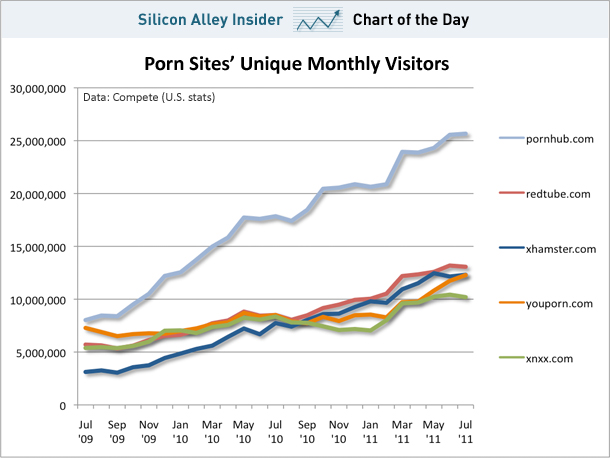
In releasing the chart, Silicon Alley Insider writes:
YouPorn has been dethroned as the king of porn online.
When we first looked at the performance of user-uploaded adult video sites back in 2008, YouPorn was emerging as a leader with very little competition, and it continued to reign through the following year.
Now, at 25.7 million unique monthly visitors, PornHub is the new, unrivaled YouTube of porn.
The site was surging by triple digit percentage rates (year-over-year) in the months of 2010. While its growth has ‘stalled’ at 44% year-over-year for this July, PornHub is still smoking the competition as shown in the chart above.
A side note: PornHub just made a $5 million offer to obtain the right of Kim Kardashian’s sextape from Vivid Entertainment, which was shopping the rights to the tape for $30 million.
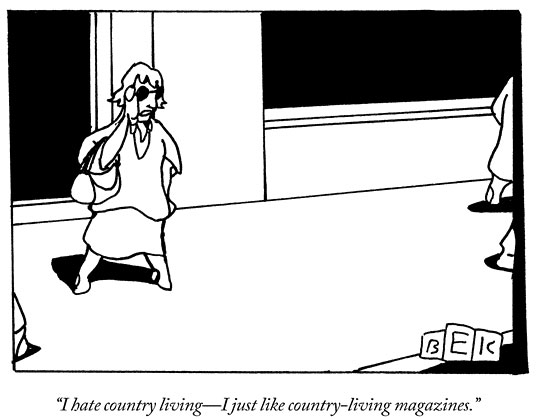
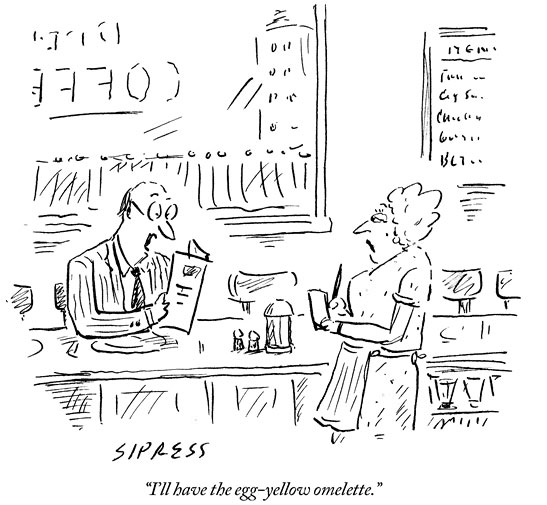
Favorite recent New Yorker cartoons:


Harry Newton who wonders why how the Bank of America can run a “Wealth Management Business” when it clearly can’t manage its own business.

Harry-I was a client of the BofA Wealth Mgmt Group via one of their acquisitions……IMHO what a horribly run bank and inept group of people(I could explain but there isnt enough space to give the boring details)…..I couldn't get my money out of there fast enough..the bank is too big for itself as the right hand doesnt know what the left hand is doing….I know some brokers at ML and they aren't happy with the parent co…..the question is will they spin off Countrywide (and let them fail) and then spin off ML (and debt) and go back to basics…..Are they TBTF (to big to fail)??!!
A bank doesn't know how to manage money. Isn't life amazing?