It’s over for now. The AI irrational exuberance.
It all seemed so simple. Invest in the AI “picks and shovels” and ride the stocks into the infinite ionosphere, since demand for AI was infinite, and building AI data centers had no limits.
Then suddenly it wasn’t. Maybe demand — better call it paying demand for AI — wasn’t infinite?
Was this boom in AI stocks infinite, pumped byy the heady emotion and the gambling spirit we see today in predictions (think Kalshi, Polymarket, and PredictIt), day-trading, crypto (think the Trump family), margin buying (I hear 400%) and other hyper-popular activities of the young and fancy-free — the classic case being the 25-year old Leopold Aschenbrenner, see below.
Lots of smart people have been drawing analogies between this AI Boom, the Tulip Boom of 1637, the British railroad boom of 1845, or the American one of 1873, our infamous 1929 stock crash, the Dot-Com bust of 2001, and Great Financial mortgage crisis 2008 (think liar loans).
To my brain, this AI boom is already “busting,” as picks and shovels (also called semi-conductor) stock prices crumble under the weight of:
+ Too little AI demand to justify the heady data center spending. Nobody actually has reported they’re making a ton of money on AI.
+ Too many articles,”research” reports and talking TV talking heads (think Jim Cramer) questioning the “froth” in picks and shovels share prices (some with P/Es over 100.)
+ Too many circular financial deals. You buy from me. I finance your buys by investing in you. NVDA, which has not done well this year, is big in financing buyers of its chips.
+ Too many fantasy projections e.g. “the best-capitalized actors with the least exposure buy stranded data centers for pennies.” (Think recent high profile office buildings (in places like Portland and LA) that sold recently for less than half what they did a few years earlier. I have friends who are ready to pounce on busted, cheap, data centers.
+ All the horrible bad press that data centers are getting. Think predictions that rampant, uncontrolled AI will weaponize itself, build something nasty (think A-bomb), not to forget that the data centers will suck up all our water and electricity, leaving us all gasping for breath in hot weather, etc.
+ Rotation. That’s a fancy word for things are a-changing. But theyre not quite sure what. Travel is hot? Health care is good. (I love JNJ).
So, here’s where I stand now:
+ I did not invest in “AI” stocks I never liked. Those included Microsoft and Meta. Microsoft has messed horribly with products of its I have used happily for years — especially Windows and Office. Meta’s Mark Zuckerberg is not a favorite person (read the book “Careless People: A Cautionary Tale of Power, Greed, and Lost Idealism”) and has not made anything of appeal (e.g. glasses).
+ I have also sold my stock in companies which have gone straight down in recent months — for a bunch of reasons. They include Coreweave, Netflix, Corning, and Generac,. I tend to look at pulling the trigger at 15% down.
+ I also sold some of my holdings in picks and shovels stocks that had fallen from lofty heights, e.g. Micron, ASML, and AMD. I remain very afraid of picks and shovels stocks wih ultra-high P/Es, like PANW, PLTR, OKTA and AVGO (Broadcom) — though I still own these.
+ I do like Google and Amazon. They have under 20 P/Es. And (to my brain) improve their services every single day. I just bought a series 11 Apple Watch from Amazon. It came in two days to my remote country “estate,” miles from anywhere. I was staggered at Amazon’s delivery speed. I now get deliveries from Amazon on Sundays. Yes, Sundays.
+ I have some small “experimental” positions — like EWZ (Brazil), HWM, and COPX (copper miners ETF), which has, surprisingly grown handsomely.
+ I’m now 28% in cash in my equities portfolio.
Here’s The Economist’s lead words from its article this week:
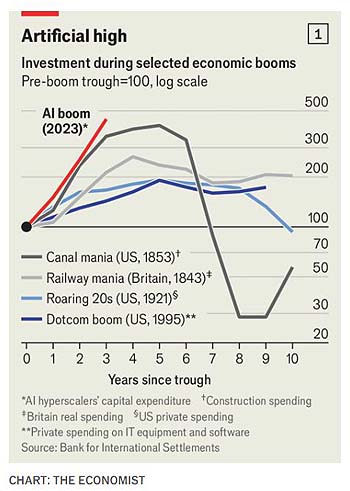
YOU AIN’T seen nothing yet. Last year America’s biggest technology companies, including Amazon, Google and Microsoft, spent $450bn on infrastructure, much of it to power artificial intelligence. This was just an amuse-bouche. For the main course they will this year spend $900bn on chips, data centres, power and so forth, with a $1.4trn pudding to follow in 2027. To fund this feast they have borrowed more than $400bn this year. The AI capex boom is fast becoming the largest investment surge in history (see chart 1).
If superintelligence is in reach, building football fields’ worth of compute could also be history’s most valuable capital-allocation exercise. And yet capital spending can still generate disappointing returns for investors. Since peaking in June, the share prices of the biggest AI firms have fallen by 20%, as worries have mounted that flows of capital from one tech firm to another, rather than genuine demand from end-users, have been propping up the industry, while South Korea’s benchmark index, dominated by Samsung Electronics and SK Hynix, two big chipmakers, has dropped by almost 40%.
References — some of the really neat pieces I’ve read recently
Larry Ellison Bet It All on the A.I. Boom. Will He Be the Face of the A.I. Bubble?
Inside the 81-year-old billionaire’s risky, debt-fueled scramble to transform his data empire into an A.I. juggernaut.
From the New York Times. Click here.
AI revenues are growing fast, but not fast enough
The returns on trillions of dollars of spending are deeply uncertain
from the Ecnomist. Click here.
The AI-focused hedge fund Situational Awareness, founded by former OpenAI researcher Leopold Aschenbrenner, has imploded after a devastating momentum reversal in tech stocks. The fund’s assets plummeted from $45 billion to roughly $10 billion in mere days.
From CNBC. Click here.
Big Tech’s A.I. Spending Keeps Rising. So Do the Jitters.
Amazon joined a procession of tech giants that ramped up their spending on artificial intelligence, as its capital expenditures soared 69 percent. Concerns over the industry’s spending are mounting.
From the New York Times. Click here.
The Second Derivative: Why No One Understands the AI Boom
The market misremembers 2008. That same blind spot sits at the center of the AI boom.
From Groundbreaker (that’s how they spell it). Click here.
Two things I’ve learned about quantum computing stocks
+ They’re not always faster. In fact, they can be slower at many tasks.
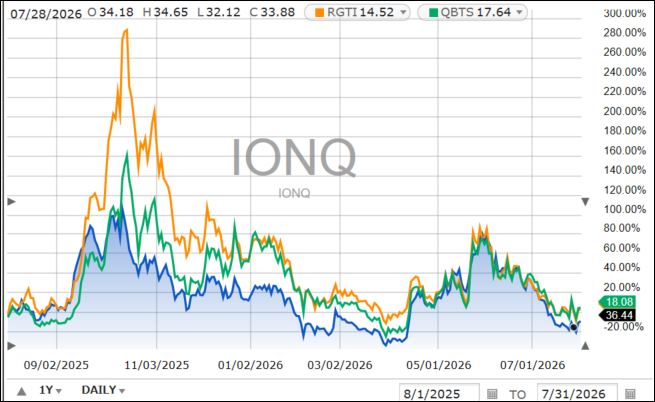
+ There are three main quantum computing companies — IONQ, RGTI, and QBTS. They had a nice run in the fall of 2025, but since then no. Here’s one year of three of them.
Dumb things I continue to learn
+ We eat too much.
+ We sit too much.
+ We sleep too little.
+ We worry about things we can’t control.
+ We don’t hold the banister.
+ We fall on the last step going down. From Axel, “A friend of mine just succumbed to the infamous “last step” syndrome that you always warn about and broke her shoulder.”
I keep repeating this boring stuff, because my readers keep sending me stories about their friends hurting themselves in dumb ways, usually falling forwards. But, I’ve recently had a few falling backwards.
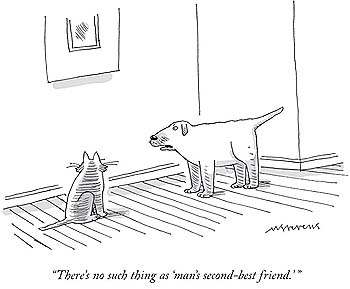
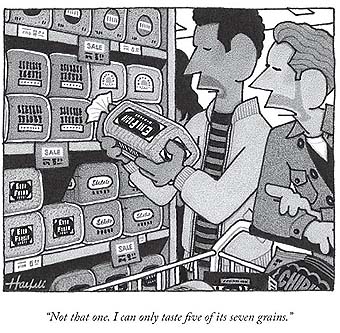
Favorite recent New Yorker cartoons


Harry’s lousy excuse for being away for so long
It’s been difficult to figure what makes sense and what doesn’t. I’m about 2.5% poorer this summer. Back to my level of end-April. Would I have done better putting everything into my favorite ETF, namely VGT — Vanguard’s technology fund? We’ll know at the end of this year.
I personally love AI. It tells me how to fix things. It does research for me. Like why did this stock rise (or fall) today. Which are the major quantum computing companies, etc.
Don’t do stupid. Watch out for that last step going down. Don’t lift anything heavy. Stay away from ladders. Keep moving.
Stay safe. I’ll be back very soon. Promise.– Harry Newton
