July 4 is Susan’s birthday. I shuck corn. Take the garbage out. Crazy glue Zoe’ busted skateboard. Write idiocies to the three grandkids in camp. On the envelope, I tried this, “Deliva Dis Letta Da Soona Da Betta.” That went over like a lead balloon. One granddaughter wrote back that I was losing it. (She wasn’t that polite.)
Her camp won’t allow inmates to receive packages. I was tempted to send one that had “Contains The Koran” on the front. But I thought that would go down like a real lead balloon. So I sent a small empty box by USPS. That “joke” cost a little over $8.
And now, our third one in three days. This just in:
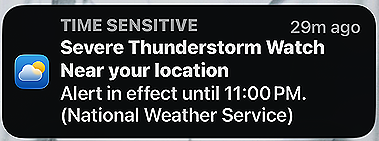
Thursday night we lost power and our emergency generator. The generator had gone on the fritz earlier so I had stocked up on a dozen 600 Volt for the two fuses in the Generac “that never blow.” But did yesterday twice. Since Amazon and Grainger made multiple deliveries, not one Generac fuse has blown. And probably won’t for the next 18 years. That was how long the last ones lasted. Meantime, our real power is back on. And about to go off (again) with tonight’s thunderstorm.
One of my greatest skills is to learn incompetencies, like how not to drive or how not to load the dishwasher. Sadly, I have not mastered how not to barbecue chicken. And, so, tonight we’re eating Harry’s master barbecued chicken. I try this chicken cooking insanity once a year. The problem is that chickens are not the same. Some are bigger. Some are smaller. And worse, some parts of them are thicker than other parts. Some are thinner. Tennis courts are better. They’re the same size on both sides. That makes my losing at tennis inexcusable.
For this morning’s game, I carried a little note, “Prepare earlier. Follow in on your briliant dropshots. He’s fast. Sometimes he kills them.“
I’ve felt like this about my stocks this year:
Until the last few days (and especially Thursday) when my favorite AI picks and shovels — MU, VICR, SNDK, KLAC, GLW, STX , LRCX, WDC and MRV — did a major swoon and friends who own dividend and Dow stocks laughed at me. They claim it’s the dot.com bust all over again.
My biased feeling is it’s not. The AI boom is for real. For example, look at Micron. They Micron just knocked their financials out of the field. And the stock MU rose the next day 17.84% . But since then… Look at this ten day chart.
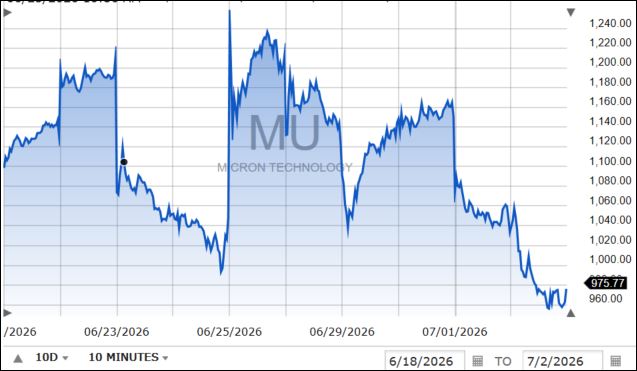
I had this “insight” that investors are “confused.” Their emotions go up and down daily like a whore’s drawers (Australian expression). And, most importantly there ‘s a huge amount of day trading. also called “Go with the flow.”
On Thursday, the market was cratering. I did something I have never done. I went with the flow and sold short. I covered before the close. Here are my “brilliant” results:
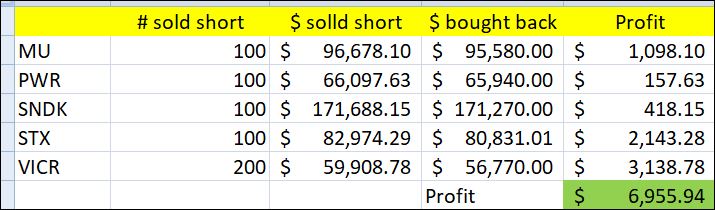
I suspect this is exactly what the quant houses do every day — Wake up, check the flow and go with it.
I’m not suggested this as a way to pay the rent. Long-term buy and hold still work best. Which is why I want everybody to listen to Acquired’s podcast on Vanguard.
This is how Acquired describes it:
And this where you can listen (for free). Click here.
If you don’t want to listen to all 3 hours and 48 minutes of the Vanguard podcast here’s Harry’s two sentence sumary:
No actively managed hedge or mutual funds consistently beat an S&P 500 ETF — like the one that Vanguard runs and is called VOO.
Personally I prefer Vanguard’s technology ETF, called VGT.
Here’s a chart of VGT compared the S&P 500, which is the bottom line.
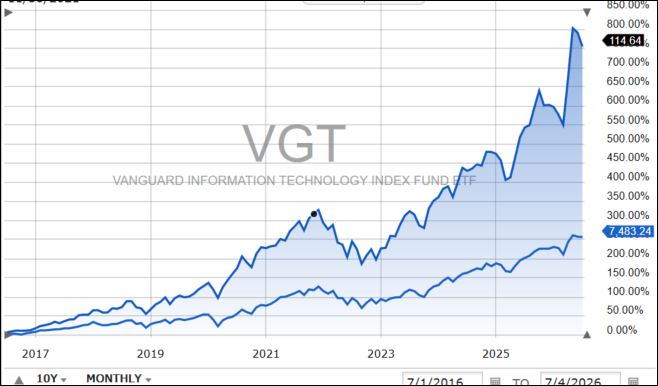
My VGT is up by 48.6%. That’s not one year. That’s several.
I have, as Susan says, drunk the AI Kool-Aid.
There’s no lack of AI demand. Everybody and their uncle (including me) are hooked on AI.
am paying for it. It’s so useful, I’m willing to say I can’t live without it and I will happily pay more.. Today I like Perplexity. Google’s Gemini and ChatGPT.
I have no idea what we’re all paying (and about to pay) will make those trillions of data center buildouts sufficiently profitable to make them a good investment.
I suspect it might. And therefore I’m willing to continue my strategy of investing in the picks and shovels – so long as they have managements who impress. Not that there’s a correlation between managements that impress me and escalating stock prices. But, I can say, there is a correlation between managements that don’t impress me and declining stock prices. Stocks in that miserable category include Adobe, Nike, Meta, Salesforce, Netflix and Microsoft.
Things do change. Intel was in my “Don’t Impress” backet until they got a new CEO and found favor with the Administration. I got into Intel fast.
Managing a portfolio (namely mine) in this AI world means throwing out some old canards. The biggest is that I don’t dump parabolics. I relish them, even loading up on stocks that fly and dumping stocks that drop. I am not buying on the dip or taking my profits (and playing with the house’s money) when they rise into the stratosphere.
I am also not balancing. I don’t like defined percentages. I go with the winners. The winners tend to be a too-big part of my portfolio. I don’t like imbalancing caused by success.
I manage the imbalancing by owning far too many stocks. No one in their right mind would own as many stocks. I do that because I can’t predict which ones will fly –like Micron did recently. I believe that every one of the stocks I own will fly at some point but I don’t know when. For example, Nvidia, my largest holding, has done perfectly awful so far this year 2026. My friend Vahe, points out his brilliance by owning O, a large REIT with the ultra-boring name of Realty Income Corp, which this year actually rose more than Nvidia (but not last year, or the year before) or the one before that. In fact it’s lower than what it was five years ago. A magical feat, given the fantastic stock performances of the last several years.
There are momentary declines — like last week.
Let’s take that chart above and now add Micron and SanDisk.
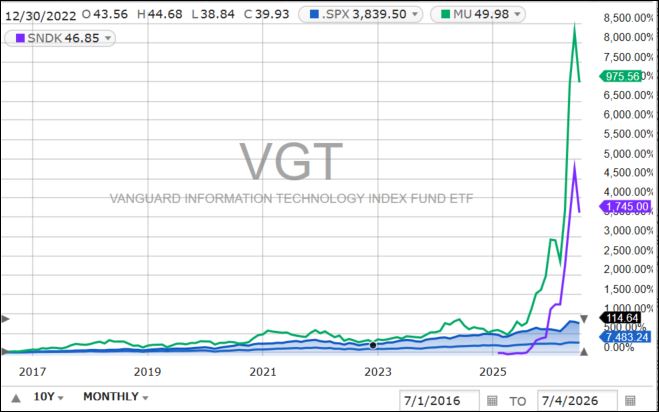
Suddenly the downdrafts of last week look like blips.
Wish it were all that simple. What characterizes our time on earth is how fast everything changes. I made a list of industries I hated (for various reasons). That list included energy, software, fashion, shoe makers, banks and companies that made boring things, and construction equipment – unless it’s a picks and shovel company like Caterpillar that has gone – wait for it – parabolic this year.
I do have a strong feeling about losers. I tend to dump them fast. 15% loss is a magic number. I believe, though I can’t prove it, that my selling losers have saved me more losses than if they had bounced and I lost all the new gains. Netflix has been an unmitigated disaster. Fortuntely I got rid of it early. I now ask Perplexity why XYZ stock is falling. I occasionally get logical, factual answers.
Which brings me to AI
+ I get what I put into it. What I ask. And how I ask. I’m careful about how I phrase my questions.
+ AI is superb for giving me quick research that saves me time. Like helping me learn about markets or how to fix my Generac or how 1099 forms work.
+ It can be wrong. It’s not the best doctor in the world. It’s helped me define ailments I don’t have and don’t want. But it has been wrong. And I kave to keep asking, often in different ways.
If there are millions of Harrys on the planet paying more for AI than for gas (as I do), then the world of data centers will be a good investment.
I relish the day I get my first humanoid robot. The new ones are gorgeous. If you approach them, they will lean forward to kiss you.
I don’t make this stuff up. I’ve seen it.
Don’t do stupid
Nooelle’s mother fell, broke her hip, ended up in the hospital. They fixed it. Then the new hip got infected.
Now she’s back in the hospital.
You get older you fall.
Do you exercise your calves by doing toe raises — even at your desk?
Do you hold the railings on stairs.
Are you careful with the last step going down?
Are you always moving?
Be thankful you didn’t invest in $TRUMP
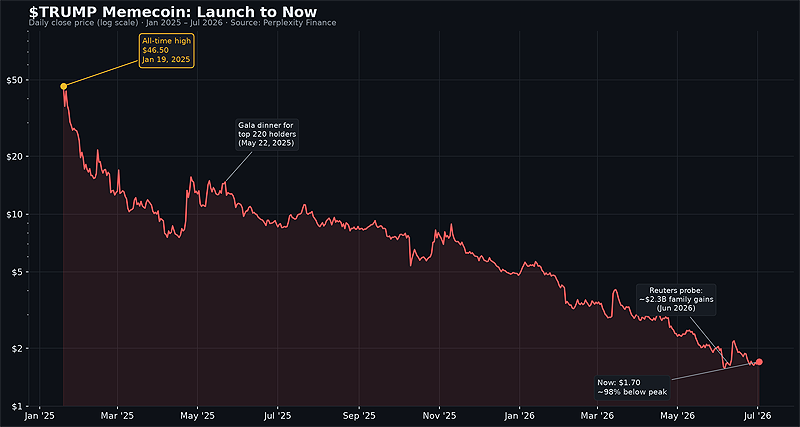
It’s down 98%.
See you very soon. Promise — Harry Newton.
