Everyone knows the mess in Europe. Everyone knows the mess here. But none of my investor friends knows what to do except stay heavily in cash and buy gold, which itself is performing poorly.
Some people (like me) have bought some tax-free bond funds — like VWALX. A California friend loves VWITX and NXC. But everyone is afraid of the upcoming rise in interest rates — something they admit they’ve been talking about for at least five years. But they feel inflation and higher interest rates are coming…
If you missed yesterday’s scenario for Europe, click here.
American Airlines parent (AMR) declared Chapter 11 bankruptcy today. That will wipe some of its massive debts and allow it to restructure itself. Greece should be next.
There is a solution for Europe. If only… from the latest New Yorker.
An Avoidable Crisis
by James Surowiecki December 5, 2011
The financial crisis in Europe, seemingly never-ending, has now entered a potentially disastrous phase. With interest rates on Italian and Spanish debt soaring, France looking shaky, and even Germany having trouble in the debt market, there’s a real possibility that the euro zone might just break apart-with dire consequences not just for Europe but also for the rest of us. Yet what’s easy to miss, amid the market tremors and the political brinksmanship, is that this is that rarest of problems-one that you really can solve just by throwing money at it.
To be sure, Italy and Spain have genuine troubles: their economies are weak and their debt loads are high. But these problems are manageable as long as the interest rate on their debt stays reasonably low. (This is in contrast to Greece, which had no hope of ever paying off all its debts.) Italy’s fiscal situation is not good, but it’s not much worse than it was a decade ago. Indeed, it’s one of only a small handful of countries in the developed world that are running a so-called primary surplus: that is, if you exclude interest payments on its debt, it actually takes in more in tax revenue than it spends. The problem, then, isn’t the debt itself but, rather, the soaring interest rates, and these are driven more by fear than by economic fundamentals. Investors have become far more skittish than they once were, and worries about the possibility that Italy will default create a vicious cycle: fear of default raises interest rates, and higher interest rates make default more likely.
The frustrating thing about all this is that there is a ready-made solution. If the European Central Bank were to commit publicly to backstopping Italian and Spanish debt, by buying as many of their bonds as needed, the worries about default would recede and interest rates would fall. This wouldn’t cure the weakness of the Italian economy or eliminate the hangover from the housing bubble in Spain, but it would avert a Lehman-style meltdown, buy time for economic reforms to work, and let these countries avoid the kind of over-the-top austerity measures that will worsen the debt crisis by killing any prospect of economic growth.
This would be a dramatic move for the E.C.B. to make, but the classic role of a central bank is precisely to serve as a lender of last resort during financial crises. According to the foundational text of central banking, Walter Bagehot’s 1873 study “Lombard Street,” a director of the Bank of England during the 1825 financial crisis spoke of lending “by every possible means,” and added, “Seeing the dreadful state in which the public were, we rendered every assistance in our power.” And this is what the Federal Reserve did in the wake of the financial crisis of 2008: it poured money into the U.S. economy by buying up assets and lending money in a wide variety of ways. But the E.C.B. has shied away from this role. Its new head, Mario Draghi, rejects the idea that it should be a lender of last resort, and Germany-without whose support the bank can do nothing — has opposed a more active monetary policy at every turn. Some people have pointed out that the E.C.B. is legally prohibited from buying bonds directly from governments, but it can buy all the bonds it wants on the secondary market, and, indeed, it has already bought the debt of European countries in small amounts.
So the problem is not that the E.C.B. can’t act but that it won’t. The obstacles are ideological and, you might say, psychological. To begin with, there’s the concern that printing money to buy up bonds risks inflation. This seems like an odd thing to worry about, given how weak the European economy is. But even the hint of inflation is politically toxic in Germany and ideologically offensive to the E.C.B. The Germans are also obsessed with the idea that, if the E.C.B. does end up helping Italy and Spain, they’ll never learn their lesson. Moral hazard is a reasonable concern, but the Germans have reaped enormous benefits from the euro-most notably, it made their exports cheaper for the rest of the continent-and they should be willing to bear some of the costs. And it’s not as if the miscreants were still carrying on as usual. Italy and Spain have both tossed out their ruling parties, and all the weak economies in Europe have adopted austerity budgets. The push for more short-term spending cuts is both heartless and self-defeating: these countries desperately need anything that can promote economic growth.
At root, the E.C.B.’s opposition to helping out Italy and Spain reflects a deep sense that it’s morally offensive to let countries off the hook by inflating one’s way out of trouble. The head of the Bundesbank calls inflation “sweet poison,” making it sound like heroin, while the E.C.B. is praised for its toughness and rectitude. The attitude recalls Herbert Hoover’s account of Andrew Mellon’s advice on how to deal with the Depression: “Liquidate labor, liquidate stocks, liquidate the farmers, liquidate real estate.” For Mellon, liquidation wasn’t just economically sensible. It was a necessary process of purification. Austerity would “purge the rottenness out of the system. High costs of living and high living will come down. People will work harder, live a more moral life.”
Plenty of people in Italy and Spain and Greece were irresponsible, and reform is necessary. But destroying the euro in order to teach a lesson is too blunt an instrument: when economies fall apart, it isn’t just the guilty and the feckless who get punished. The E.C.B. is concerned that becoming a lender of last resort could threaten its much prized price stability, but there’s no point in price stability if the euro vanishes as a result. If the E.C.B. isn’t careful, some day we’ll talk about how great a job it did of protecting the euro right out of existence.
Solid state drives (SSDs)take a nice price dive. SSDs are the absolute fastest way to speed up your laptop. You don’t need to buy the largest, most expensive SSD. Simply move your less-used files (like old movies and old photos) onto a cheap, external spinning platter drive. For Amazon’s remarkably low SSD prices, click here.
Latest great New Yorker cartoons:
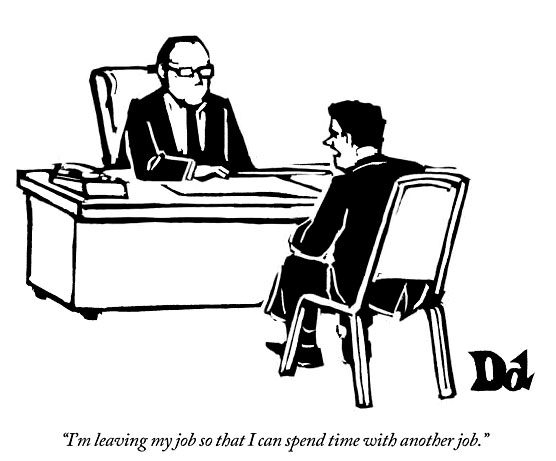
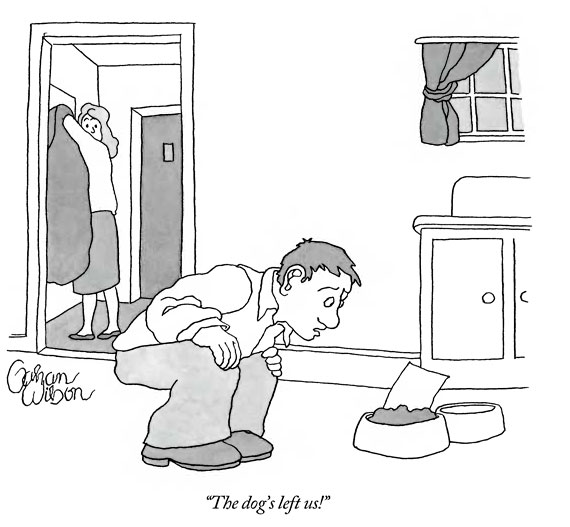
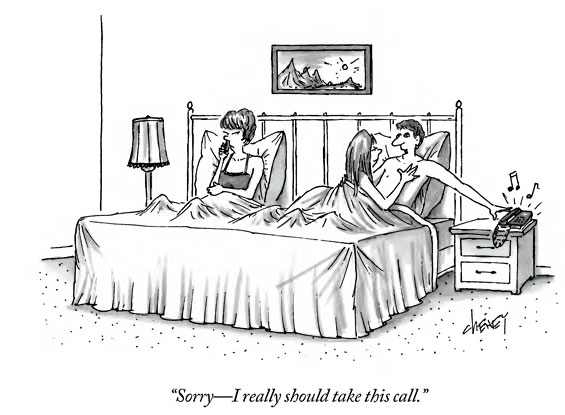

Harry Newton who played tennis for 2 1/2 hours yesterday and feels great this morning. Checking around, I find a remarkable number of people who say if they go without vigorous exercise for only one day, they start feeling sluggish and unhealthy. My children are vegans. That means they eat nothing but beans. They come in all varieties of beige, from light beige to dark beige. They all give you gas — unless you take Beano, which Susan recommends. I haven’t eaten meat for nearly two weeks. Last night I had dreams of large, juicy cheeseburgers. I’m told if I eat beans I’ll be healthy, but have regular nightmares about killer cheeseburgers.

Harry —
Is the reason that James Suroweiki's full column doesn't open “Here” because the date is December 5, 2011?
Bill
The entire article is actually in the column. I removed the link. But it's on the New Yorker site. That's where I got it from.
Harry,
knowing how much you have to research in order to make a decision, if you don't read “The Paleo Solution” by Robb Wolff, then I may just stop reading the column! You will end up buying the book for your kids, as veganism is not a path to a healthy body. It has been shown time and time again through research and evidence. You have read about the tennis players and atheletes that live a Paleo lifestyle, and you owe it to yourself to read the book. I bet you will have a long and lengthy post after it.
Boy, are you persuasive. I promise you I will buy the book and read the instant it arrives from Amazon. The book is called The Paleo Solution: The original diet. Correct?
Here is the link – http://www.amazon.com/Paleo-So…
Make sure and get Robb Wolffs book (this link is correct). The earlier book by Cordain is good too, but Wolff boils it down into a much better format. Everyone in my family has converted, along with numerous friends. All of us now have perfect, and I mean perfect, blood pressure, cholesterol, etc. My father has lost 30 lbs doing nothing but changing his diet. Oh yeah – and he eats way more than before.
You will be surprised what you are about to find out!