I like Apple, Amazon, BHP, VWALX and NLY.
Going out of business: Best Buy, Radio Shack and Barnes and Noble. Sad. But the Internet and Amazon are cheaper. Far cheaper.
Raising money for your new company. I’ve been looking at a lot of proposals to fund semi-startups. These are companies that have developed a product and now need money for marketing and to build out management. First, the good news. There’s plenty of money around to fund these companies. Investors are hungry since interest rates at the savings banks are horrible and the stockmarket remains squirrely.
Now the bad news: Most entrepreneurs have little idea how to raise money and even less on how to present their company. Most expect their shiny new thing will excite investors. They expect a simple PowerPoint deck and a 45 minute luncheon will unleash a flood a endless dollars.
They’re wrong.
Three areas are key:
1. The product and its benefits. If it’s hardware, it usually obvious. Software is different. Often seriously difficult to understand. The term is “Proof of Concept.”
A software engineer has a great idea. You have the opportunity to put money into his company, help finance the marketing and benefit from your investment. But — and this is a big BUT — you don’t know if the software actually works. You’ve heard the story… You’ve studied the business opportunity. It’s huge. But… That’s when you need a proof of concept. Some demonstration of the software that will make you convinced the software is for real, will solve a real-world problem and will make everyone (including you and the entrepreneur) rich beyond everyone’s wildest dreams. That’s where you need a “proof of concept.” A working demonstration would be best. An opinion by someone who knows the field would help. You’re putting your money into the company. You need to be convinced the product is for real.
2. The management team. It’s hard, if not impossible, to determine the entrepreneur’s skill from a few short meetings. It took me two years of working consulting jobs with my partner to figure if I wanted to partner with him completely. No one has two years any longer. How do you figure if you want to invest in him? Perhaps some tests? does he do what he says he will? Does he do the little things digiligently and quickly. Does he say “Thank you?” Is his enthusiasm contagious? Do you genuinely like the guy? Does he have charisma? The best ones do.
3. The deal. Some entrepreneurs have strange ideas what their company is worth.
Suffice, you can raise money for your shiny new thing. But you’d better do some research into what investors, like angels, boutique investment companies and private equity funds want.
Will gold skyrocket? I don’t think so. It will continue to rise, slowly and inexorably. But not skyrocket. Richard Russell is one of America’s oldest and most respected ninvestment newsletter writers. He recently wrote:
January 27, 2012 — In a deal concluded in the 1970s, it was agreed that all transactions of oil would be done in US dollars. Thus the US dollar became the world’s reserve currency, used for trading in most materials and commodities. This created a huge desire and need for dollars. As a result the US dollar became wanted and thus strong, heading higher and higher.
The “expensive ” dollar led to high US unemployment and a strained economy. Inflation enveloped the US, particularly in housing.
But recent shocker, India and China have started to buy Iranian oil, not with dollars, but with gold. If this continues, it will be bearish for the dollar and bullish for gold. The strong dollar will also be bearish for the US economy. So let’s keep our eyes on the dollar and gold.
Vaporized — MF Global’s customer money. That’s what happened to it. It varpozied. You got to read this piece from yesterday’s Wall Street Journal.
Money From MF Global Feared Gone
By SCOTT PATTERSON and AARON LUCCHETTI
Nearly three months after MF Global Holdings Ltd. collapsed, officials hunting for an estimated $1.2 billion in missing customer money increasingly believe that much of it might never be recovered, according to people familiar with the investigation.
As the sprawling probe that includes regulators, criminal and congressional investigators, and court-appointed trustees grinds on, the findings so far suggest that a “significant amount” of the money could have “vaporized” as a result of chaotic trading at MF Global during the week before the company’s Oct. 31 bankruptcy filing, said a person close to the investigation.
Many officials now believe certain employees at MF Global dipped into the “customer segregated account” that the New York company was supposed to keep separate from its own assets-and then used the money to meet demands for more collateral or to unfreeze assets at banks and other counterparties as they grew more concerned about their financial exposure to MF Global.
Investigators also are examining other scenarios that have gained traction in recent weeks, such as the possibility that MF Global suffered steep losses on investments made using customer money. Officials investigating the case have looked into whether such investments were appropriate under rules at the time.
As money poured out of MF Global, much of it likely passed through J.P. Morgan Chase & Co. and other banks where the securities firm had accounts, as well as trade-clearing partners such as Depository Trust & Clearing Corp. and LCH.Clearnet Group Ltd., people familiar with the matter said.
Jon S. Corzine, former chairman and chief executive officer of MF Global Holdings Ltd., left to right, Bradley Abelow, president and chief operating officer of MF Global, and Henri Steenkamp, the company’s chief financial officer, testify during a Senate Agriculture Committee hearing in Washington, D.C., in December.
Those companies have denied being knowingly in possession of any missing MF Global money, and any efforts to make them fill the hole would face daunting hurdles. And because the firms usually were middlemen between MF Global and other counterparties, the funds they touched were then scattered widely, complicating the search.
Of the $6 billion kept at MF Global by farmers, hedge funds, floor traders and other customers when panic erupted over its exposure to European sovereign debt and shaky financial outlook, about $5.3 billion has been located, according to James Giddens, the bankruptcy trustee for the securities firm’s U.S.-based brokerage operation.
But hundreds of millions of customer dollars are potentially snarled in litigation with other parts of MF Global, including its U.K. arm, and U.S. officials might never be able to recover those funds. As a result, Mr. Giddens believes the shortfall is at least $1.2 billion, though regulators at the Commodity Futures Trading Commission and CME Group Inc., parent of the Chicago Mercantile Exchange and New York Mercantile Exchange, have estimated the total is smaller than that.
Since MF Global filed for Chapter 11 bankruptcy-court protection, hundreds of regulators and law-enforcement officials in the U.S. and U.K. have scoured emails, wire transfers and other documents from the company’s final days. Mr. Giddens’s investigations include about 14 lawyers and 60 forensic accountants.
Lawmakers have pushed for answers from Jon S. Corzine, the former New Jersey governor and Goldman Sachs Group Inc. chairman who led MF Global into its big European bet and was CEO when the company failed.
On Thursday, a House Financial Services subcommittee will zero in on the securities firm’s risk-management practices and the role of credit-rating firms in the collapse. Among the people scheduled to testify at the hearing is Michael Roseman, a former chief risk officer at MF Global who raised serious concerns several times in 2010 about the growing bet on European bonds by Mr. Corzine.
So far, Mr. Giddens’s office has returned about 72% of the money in customers’ U.S. accounts when MF Global filed for bankruptcy at the end of October. Money in accounts outside the U.S. remains frozen, and officials have gotten few big breaks in the case.
“I’m trying to be optimistic, but as it drags on longer, you become leery,” said Peter Suarez, who trades futures contracts from his home in Marlboro, N.J. Since some of his money is still tied up with MF Global, he has been forced to reduce his trading activity in wheat, stock indexes and the British pound.
Four days before the bankruptcy filing, MF Global appeared to have excess money of $200 million in its customer accounts, according to a statement sent to CME Group. CME, the CFTC and Securities and Exchange Commission, among others, regulated MF Global.
By Oct. 31, MF Global acknowledged there was a shortfall in its customer segregated account. That account normally held money required to be set aside by customers, excess amounts from customers and some of MF Global’s own funds. While the firm could invest customer money and move around its own funds, federal rules require customer funds to be set aside and kept safe.
The person familiar with the probe said perhaps hundreds of millions of dollars in customer money likely went to J.P. Morgan. According to an Oct. 29 letter from the New York bank to MF Global, the securities firm moved $200 million out of its “commodity customer segregated account” to cover overdrafts in accounts at J.P. Morgan. The money wound up in “the MF Global U.K. Ltd. account,” according to a copy of the letter reviewed by The Wall Street Journal.
In Congressional testimony in December, Mr. Corzine said he was trying to eliminate the overdraft by getting money moved from elsewhere in MF Global. Regulators now suspect the money might have belonged to customers, people familiar with the matter said.
Mr. Corzine testified that he was assured by people who worked for him that the money was moved properly, adding that he never directed anyone to misuse customer funds.
J.P. Morgan, a big creditor of MF Global, has said it is cooperating with authorities. A spokeswoman declined to comment Sunday.
Mr. Giddens also is looking at whether transfers of “tens of millions” from MF Global’s margin account to Depository Trust & Clearing Corp., known as DTCC, during the last week of October might have involved customer funds, according to people familiar with the matter.
In a statement, a DTCC spokeswoman said the company “has no knowledge that any of the funds deposited by MF Global include any missing customer funds.” DTCC said it is cooperating with Mr. Giddens. LCH.Clearnet declined to comment.
The shortfall is widely blamed on the pell-mell panic inside MF Global to keep the securities firm alive long enough to arrange a sale. A rescue deal fell through.
In recent weeks, though, some investigators have begun to explore whether MF Global was investing customer money in ways aimed at boosting returns for the firm, according to people close to the probe. Mr. Corzine, using options available under the rules at the time, was keen on the company earning more than it had in the past, people familiar with his thinking say.
Those investments, which don’t include the company’s European bond bet, might have suffered losses during the firm’s prebankruptcy fire sale-especially if MF Global used so-called repurchase agreements to boost returns on customer money, according to the people close to the investigation.
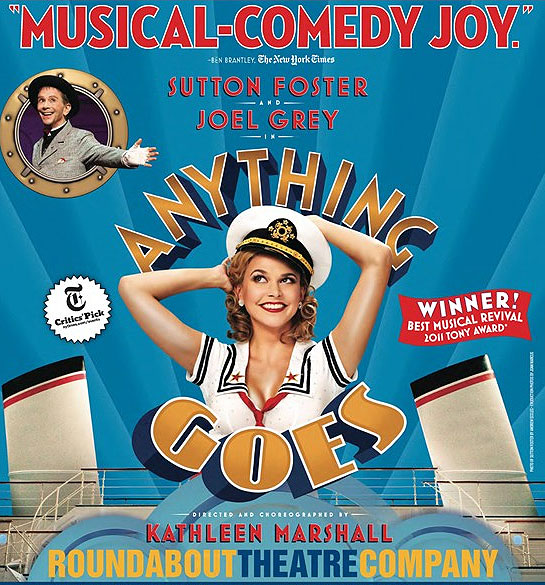
Best fun show on Broadway. See it if you’re visiting.
How I feel about Facebook (going public today): I don’t have any shares. The institutions and hedge funds get them all for being such good customers. It’s a Wall Street racket. Frankly, it’s disgusting. Wall Street screws the company they underwrote by selling their shares for too little. Then they turn around and sell the cheap shares to the biggest clients who promptly sell them at a whopping profit on the open market.

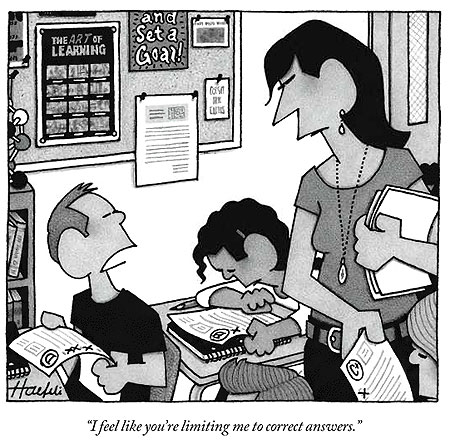
Favorite New Yorker cartoon:

Harry Newton who loves this: When ESPN re-ran the Australian Open moments after it had just finished, ESPN called it an “Instant Classic.“

Good advice on entrepreneurs and fund raising, Harry, consistent with my extensive Silicon Valley experience out here. Investors “always” want to see a working model, then a satisfied customer(s), tough for a start-up to do since both take time and funds. But, you also pointed out something one of the most famous and successful super angels pointed out recently to one of my clients (and something he needed to hear, but unfortunately didn't!): namely, the potential investor has to like you! Yep, best idea in the world with lots of proof won't fly if you're a complete jerk!!
Financial Advisor…starter position in ACI…something about China thurst for coal….
I couldn't help but to notice the interesting “style” of advertisement for a 2012 NYC Broadway play. A WW2 musical being presented on “The Great White Way”?…….hmmm. I honestly never thought I'd see that.