The U.S. dollar is booming. Europe could be a cheap this summer. From Bloomberg this morning:
A year after correctly predicting the currency’s decline and likening it to the fall of Rome, Royal Bank of Scotland Group Plc’s Alan Ruskin said it may soar 22 percent to $1.10 per euro if Greece defaults.
“We’ve moved away from the worst fears,” said Ruskin, the head of currency strategy for RBS Capital Markets in Stamford, Connecticut. “In the U.S., the economy picked itself up off the ground,” he said in an interview. “Compared to what it might have looked like from the view of March 2009, March 2010 looks very good.”
The full Bloomberg article is here. Meantime Pimco’s Bill Gross like stocks, not bonds. See below.
This is all over the Internet. I cannot find who wrote it. It’s very good explanation of what happened. Show it to your kids:
Easily Understandable Explanation of Derivative Markets
Heidi is the proprietor of a bar in Detroit . She realizes that virtually all of her customers are unemployed alcoholics and, as such, can no longer afford to patronize her bar. To solve this problem, she comes up with new marketing plan that allows her customers to drink now, but pay later. She keeps track of the drinks consumed on a ledger (thereby granting the customers loans).
Word gets around about Heidi’s “drink now, pay later” marketing strategy and, as a result, increasing numbers of customers flood into Heidi’s bar. Soon she has the largest sales volume for any bar in Detroit .
By providing her customers’ freedom from immediate payment demands, Heidi gets no resistance when, at regular intervals, she substantially increases her prices for wine and beer, the most consumed beverages. Consequently, Heidi’s gross sales volume increases massively. A young and dynamic vice-president at the local bank recognizes that these customer debts constitute valuable future assets and increases Heidi’s borrowing limit. He sees no reason for any undue concern, since he has the debts of the unemployed alcoholics as collateral.
At the bank’s corporate headquarters, expert traders figure a way to make huge commissions, and transform these customer loans into DRINKBONDS, ALKIBONDS and PUKEBONDS. These securities are then bundled and traded on international security markets. Naive investors don’t really understand that the securities being sold to them as AAA secured bonds are really the debts of unemployed alcoholics. Nevertheless, the bond prices continuously climb, and the securities soon become the hottest-selling items for some of the nation’s leading brokerage houses.
One day, even though the bond prices are still climbing, a risk manager at the original local bank decides that the time has come to demand payment on the debts incurred by the drinkers at Heidi’s bar. He so informs Heidi.
Heidi then demands payment from her alcoholic patrons, but being unemployed alcoholics they cannot pay back their drinking debts. Since, Heidi cannot fulfill her loan obligations she is forced into bankruptcy. The bar closes and the eleven employees lose their jobs.
Overnight, DRINKBONDS, ALKIBONDS and PUKEBONDS drop in price by 90%. The collapsed bond asset value destroys the banks liquidity and prevents it from issuing new loans, thus freezing credit and economic activity in the community.
The suppliers of Heidi’s bar had granted her generous payment extensions and had invested their firms’ pension funds in the various BOND securities. They find they are now faced with having to write off her bad debt and with losing over 90% of the presumed value of the bonds. Her wine supplier also claims bankruptcy, closing the doors on a family business that had endured for three generations, her beer supplier is taken over by a competitor, who immediately closes the local plant and lays off 150 workers.
S
Fortunately though, the bank, the brokerage houses and their respective executives are saved and bailed out by a multi-billion dollar no-strings attached cash infusion from their cronies in Government. The funds required for this bailout are obtained by new taxes levied on employed, middle-class, non-drinkers who have never been in Heidi’s bar.
Now, do you understand?
You must have iodine in your diet. Without it, you’ll be a mess. Your thyroid won’t work, you can get cancer, etc. Most countries add iodine to salt. That solved the problem. However, many new diets lack salt, and hence iodine. Children on weird diets are at risk.
Stocks will do better than bonds. Bill Gross, founder and co-CIO of Pimco, said in an interview with CNBC that, all things considered, he prefers stocks over bonds in the current investing climate.
“Let’s suggest the economy looks good, that risk assets -– whether it’s high-yield bonds or whether it’s stocks -– have a decent return relative to the potential of declining bond prices. I’ll go with the stock market,” said Gross. For the full interview (which is not very interesting), click here
What Gross didn’t comment on. The long boom in bonds is coming to an end as bond yields have fallen to nothing. The next move for interest rates has to be up. this chart shows the nearly 30-year bull market in 10-year notes (expressed here by falling yields):
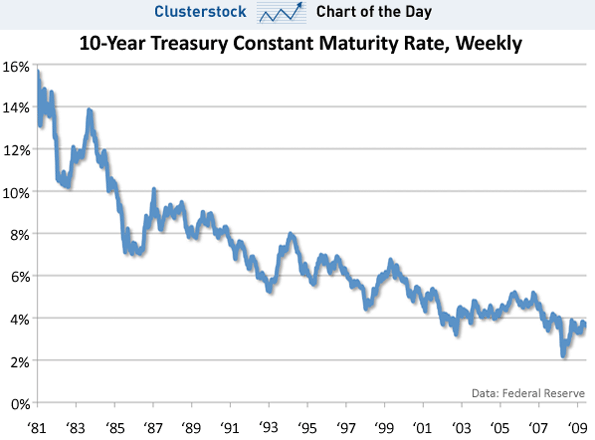
This doesn’t mean bonds are entirely washed up. Points:
1. Bonds pay interest. The tax-free ones will pay an even effectively even higher pre-tax rate, as taxes rise.
2. The bond market is much less transparent than the stockmarket, where you can see the prices on every screen and in every newspaper. In contrast, bonds trade at weird prices from one moment to another. If you keep watching and you’re plugged into Todd, you can pick up a bargain.
3. Bonds produce money (called dividends) until maturity. You’ll get your money back and a a decent yield. Hence the return is more predictable. You’re less likely to experience a 2008 (the year). That was the year equities plummeted.
The weekend’s fair. Susan took me to
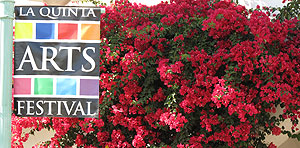
People peddled the strangest stuff
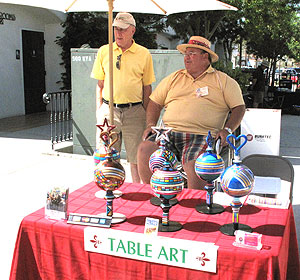
These “Table Art” things were $150.
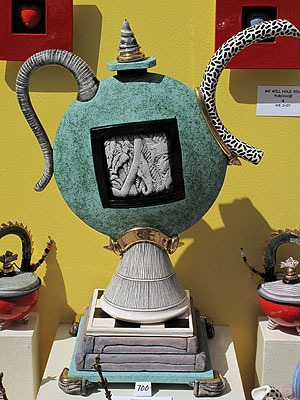
This thing cost $700. It looks like a tea pot, but isn’t. It’s “art.”
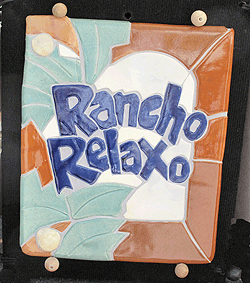
This is my favorite piece. The 14″ x 16″ ceramic tile cost $125. The artist has a master’s degree in fine which he used “to go as far I could.” Now he makes tiles, lives on an one-acre plot in Idyllwild, a tiny mountain community of 2,200 people, visits fairs and thoroughly enjoys what appears to be a totally stress-free life.
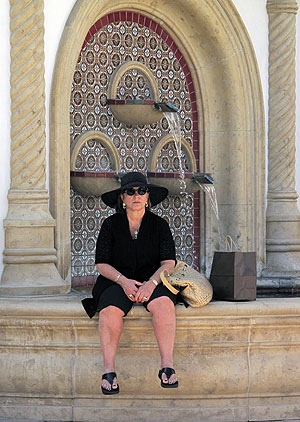
Not all the visitors to the show were as interested in the economics of folk art as I was. I love the all-black outfit. It was 85 degrees. the sun beat down. Hence the hat.
Visiting the shrink.
Doc, My wife thinks she’s a piano.
So bring her in.
Are you crazy, doc? You know what it costs to move a piano?
++++++++++++++++++++++++++++
Doc, I have this problem. I can’t remember anything.
How long have you had this problem?
What problem?
+++++++++++++++++++++++++++
Doc. Doc. we have a problem.
My brother thinks he’s a chicken.
How long has this been going on?
Ten years.
Why didn’t you come to see me earlier?
We needed the eggs.
Harry Newton, who doesn’t get out enough (according to his family). But when he does, he notices weird and wonderful things. Like all the people who are happy for the downturn in their businesses. “Gives us time to travel,” said one car filter distributor owner. “Gives us more time to play tennis,” said one trade magazine publisher.

http://tennishasasteroidproblem.blogspot.com/
Do you have a comment on Odesnik, Harry?
In all my years of playing tennis, I've never heard of anyone taking steroids. But I'm not on the circuit — not even close to it. The pictures on the blog sure look damning, however.
Hi again Harry,
Odesnik was arrested sneaking HGH through customs and he STILL PLAYED in Houston!