What can discipline your kids?
Take away their iPhones or their Nike sneaks. Don’t take them to Chipotle, Burger King or McDonalds.
What else? That’s today’s search for the next exciting stock. Leave your idea in a Comment below. We’ll play more tomorrow.
Why did Facebook pay $1 billion for Instagram? Because it could is about the best explanation I can figure, says he in utter amazement. This is its web site:
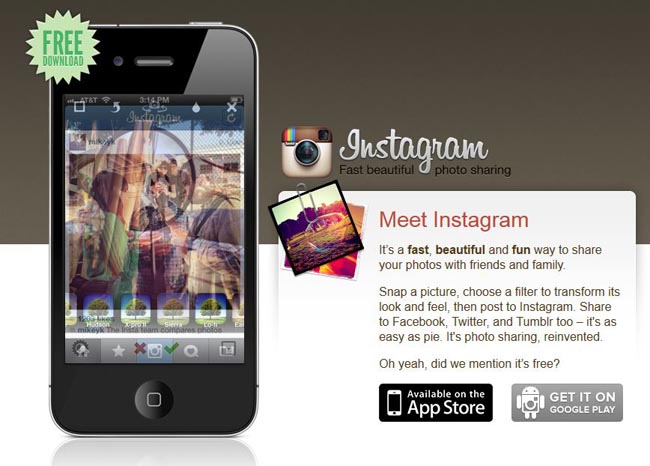
You post your favorite pictures for all your favorite friends to see — if they’re interested and if you have the time. They call it social networking for photographs. Last night, I signed up for Instagram. (Beware, it’s not quick.) I “shared” some of my boring photographs with my boring friends on Facebook. (Not fair to them, but it’s a nice turn of phrase.) . To me, an old fuddy-duddy, Instagram, which is sort of tied into Facebook, is another gigantic waste of time.
But all that’s irrelevant. What’s relevant is the $1 billion that a handful of kids made in a couple of years. And the fact that your kids could also IF they learned computer programming, were observant and were a little lucky. This is the story of the Instagram from the New York Times:
Facebook to Buy Photo-Sharing Service Instagram for $1 Billion
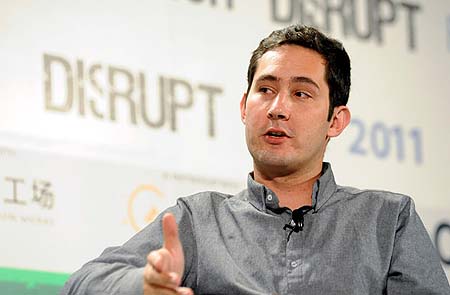
Keith Bedford/Bloomberg NewsInstagram’s chief executive, Kevin Systrom. (Looks young? He is.)
Instagram, an Internet start-up in San Francisco, has no revenue and about a dozen employees. It has not yet celebrated its second birthday. But to Facebook, it is already worth a billion dollars.
Facebook announced on Monday that it would pay that much in cash and stock for Instagram, the latest big winner in an industry that seems to be more awash in money by the day.
Instagram joins other out-of-nowhere Internet hits like Groupon and YouTube. The acquisition, which is Facebook’s largest to date, could give it a stronger position on mobile devices.
Instagram is essentially a social network built around photography, offering mobile apps that let people add quirky effects to their smartphone snapshots and share them with friends.
It has dozens of competitors, but Instagram stands out for its fast ascension and almost cultlike following. It has 30 million users who upload more than five million photos a day, even though it was available for only Apple devices until last week, when the company released an Android app.
For Instagram’s founders, two Stanford graduates in their 20s who are now worth in the tens, if not hundreds, of millions of dollars, it has been a productive couple of years. The other big winners will be their early investors at venture capital firms.
“It’s the Web fairy tale that all start-ups dream of,” said Melissa Parrish, an analyst with Forrester Research, who added: “They took a simple behavior – sharing pictures with friends – and made it a utility that people want.”
Facebook is getting ready for its own big payday. It is aiming for a public offering as soon as next month that could value the company around $100 billion. That means it can easily afford Instagram’s price, if only to keep a rising star out of the hands of competitors like Google.
Facebook may also need Instagram to help it keep up with the constantly changing whims of the online audience. Facebook was born in the computer-and-browser era and is trying to adapt to a world that is increasingly mobile-centric. Instagram is a purely mobile creation.
Rebecca Lieb, an analyst at the Altimeter Group, said buying Instagram would help Facebook with one of its most urgent needs: making its service more appealing on smartphones.
“It’s easier to update Facebook when you’re on the go with a snapshot rather than with text,” Ms. Lieb said.
Kevin Systrom, who founded Instagram with Mike Krieger and is now its chief executive, has been on the radar of Mark Zuckerberg, Facebook’s founder, for some time. Mr. Systrom was a sophomore at Stanford in 2004 when he developed a service called Photobox that let people send large photo files to each other. The service caught the eye of Mr. Zuckerberg, who offered him a job. But Mr. Systrom decided to finish his studies and went on to found Burbn, which let people post photos and other updates.
Burbn never attracted more than a few hundred users, but they uploaded a lot of photos. So Mr. Systrom and his team stripped it down and released a sleeker version for the iPhone, calling it Instagram. It gained early momentum because it allowed users to also post their pictures to Twitter, piquing the interest of those who saw links to the photos in their feeds.
For most of Instagram’s early days, the company consisted of just four employees, including its two co-founders. They worked in what had been the early offices of Twitter in the South Park neighborhood of San Francisco, crammed in with other start-ups.
The walls were painted dark gray and Ikea lamps sat on the ground, lighting an otherwise gloomy ground-floor space that looked almost the same any time of day or night. The team sat in the middle of the room at four desks pushed together to make one large table – though none of the tables lined up quite right. This year, as staff members were added, Instagram moved to a larger office across the street.
In early 2011, Mr. Zuckerberg reached out to Instagram to discuss buying the company, but Mr. Systrom chose to keep it independent and focus on expanding it, two Facebook employees who asked not to be named said last year.
At the time, Instagram had less than seven million users. Now celebrities like Justin Bieber and brands like Gucci post regular updates.
Not everyone was applauding the acquisition. Soon after the news broke, many Instagram fans began voicing their displeasure on the service and on Twitter and Facebook. Some, like Paul Ahlberg, seemed upset that Facebook would have access to their personal information. “I liked Instagram when it was stupid pictures and filters, not a Facebook data collector,” he wrote on Twitter.
Others lamented the loss of what they saw as an alternative to Facebook and threatened to delete their accounts. “So Facebook just bought Instagram,” a Twitter user named Robert Wagner wrote. “In other news, I just quit using Instagram.”
Some fans were concerned about the fate of Instagram, since Facebook has bought several small start-ups to grab their talent and then shut down their original offerings.
But both Mr. Systrom and Mr. Zuckerberg stressed repeatedly in separate blog posts that Facebook planned to keep Instagram up and running as a separate service, at least for the time being.
“It’s important to be clear that Instagram is not going away. We’ll be working with Facebook to evolve Instagram and build the network,” wrote Mr. Systrom in a company blog post. Instagram and Facebook executives declined to comment further on Monday.
Though Facebook has tended to write much smaller checks in the past, Instagram’s momentum probably compelled Facebook to make a billion-dollar deal. Last week, Instagram closed a roughly $50 million financing round with several investors, including Sequoia Capital, an early backer of Google; Thrive Capital, the firm run by the real estate heir Joshua Kushner; and Greylock Partners, an early investor of LinkedIn.
The financing round valued the photo service at about $500 million, according to one person with knowledge of the matter, who requested anonymity because the discussions were private. With Facebook’s purchase, one week later, that investment doubled in value. The short time frame may indicate that the deal came together in a matter of days.
Instagram has talked about bringing in revenue by allowing brands to drop sponsored photos into the stream on user’s screens, or being paid by brands when users tap to buy something from them, but it has not yet announced any such plans.
Facebook has also been trying to figure out how to make money as people spend more time on smaller screens.
“We really don’t know how Facebook will monetize mobile platforms,” Ms. Lieb said. “The first step is to make Facebook friendlier on mobile devices, and this will certainly do that.”
Oh yes, please sign up for Instagram, so I can share of some of my boring photos with you. (Just in case you don’t get enough of them on this web site.)
Today’s word is kleptocracy. It’s a word that explains many countries. Take Syria. The classic kleptocracy. The new president, the young son of the previous dictator, wanted to pry the economy open. Encourage entrepreneurs. Do what China did. The military and a handful of families which own and control all the major businesses objected. They said no. They told President Assad to crush the opposition. They miscalculated. Hence today’s civil war. Now they cannot stop the military action. Under a new regime, they would lose everything, including (for many of them) their lives. Hence the military continues to shell and shoot.
This is tasteless, but funny. Usually (like almost never) I never run something obvious like this.
|
DANGEROUS
|
SAFER
|
SAFEST
|
ULTRA SAFE
|
|
What’s for dinner?
|
Can I help you with dinner?
|
Where would you like to go for dinner?
|
Here, have my paycheck
|
|
Are you really gonna wear that?
|
You sure look good in brown!
|
WOW! Look at you!
|
Here, have my paycheck
|
|
What are you so worked up about?
|
Could we be overreacting?
|
I love you when you’re spunky.
|
Here, have my paycheck.
|
|
Should
you be eating that? |
You know, there are a lot of apples left.
|
Can I get you a piece of chocolate with that?
|
Here, have my
paycheck. |
|
Did you watch soap
operas all day again ? |
I hope you didn’ t overdo it today.
|
I’ve always loved you
when you get aroused by soap operas |
Here, have my paycheck.
|
“Pop, what are you talking about?” the son screams.
“We can’t stand the sight of each other any longer,” the old man says. “We’re sick of each other, and I’m sick of talking about this, so you call your sister in Chicago and tell her.” and he hangs up.
Frantic, the son calls his sister, who explodes on the phone, “Like heck they’re getting divorced,” she shouts, “I’ll take care of this.”
She calls her father immediately and screams at him, “You are Not getting divorced! Don’t do a single thing until I get there. I’m calling my brother back, and we’ll both be there tomorrow. Until then, don’t do a thing. Do You Hear Me?” And she hangs up.
The old man hangs up his phone and turns to his wife. “Okay,” he says,” They’re both coming for Passover and paying their own airfare.

Harry Newton who finally relented and visit the doctor yesterday. My ailment which has been ailing me bigtime is apparently nothing more than allergies, which have been really bad here in the NorthEast. Allergies caused me to cough and cough and cough up green shit and exhaust me. His solution: cough medicine called Hydromet Syrup. Since yesterday lunchtime, I’ve been slurping teaspoons of this stuff like there was no tomorrow. There’s only one problem: the stuff is super addictive — like all that stuff they make in Afghanistan. Sadly for me, the stuff doesn’t make me high and worse, tastes like shit. But now I know it’s pollen that’s killing me — March was the hottest month ever in the NorthEast — I can deal with it my way: Put new filters in the airconditioner. Turn it up full blast. Wash my face regularly in cold water to rid it of the alighting pollen. And try to limit my breathing to once every ten minutes, or so.

Hi harry-for your allergies be sure to take a couple of showers a day-our hair (gel) is a giant magnet for pollen stuff.
This reminds me of when AOL bought Mapquest for $1B and they were only generating about $30M in revenue. It struck home with me because I had just sold my medical food company to a Fortune 500 company with sales near that and I got nothin' close to $1B. I was left scratching my head wondering what the heck I missed working 20 hours a day. In any case I wonder if this will work out as poorly for FaceBook as Mapquest worked out for AOL. Or maybe it doesn't make any difference when you have billions to toss away.
Apple is worth more than the entire S&P Small Cap 600 ($560 billion versus $540 billion). Extreme? Yes, but Apple’s 2011 calendar net income of $32 billion exceeded the combined net income of the Small Cap 600 by about 60%. While the fun lasts, Large Cap managers should take every opportunity to remind their Small Cap colleagues, “I own a stock larger than your benchmark!”
Could all these new “social networks” and their billion dollar price tags be heading for the next big DotCom bubble? They are also being used by serious crooks to scam unsuspecting seniors and others out of millions of dollars. Granny-scams often begin with information gleaned from social networks to convince senior citizens that their grandchildren are being held in jail, in some foreign land, and must have thousands of dollars wired by Western Union to free them. They collect pictures, personal information and even voices to convince the grandparents it is “really their grandchild” that is in dire straights.Such happenings are reported frequently here in Sun City. Instagram is a natural for crooks to feed upon.
Harry, if you dig into Instagram you will also see its funed by some big name venture capitalists, some of whom just bought in at a $500 million valuation. Could it be that they have asked a favor of Facebook, a quid pro quo, by making the purchase. V
Zactly… there is more to this than what is seen on the surface. Wheels within wheels.
nothing is ever simple or straightforward anymore is it?