First an apology. I wanted to highlight specific stocks today. But I spent four hours in a dentist chair yesterday. My mouth is not the disaster I thought. In fact, my dentist said it wasn’t a disaster. It was “an annuity” — for him and his children.
It’s less of an annuity, since I was able to bargain a few bucks off the price. Moral of that story: You can bargain with “brain surgeons” (i.e. professionals). they will still do a good job for you because they’re professionals.
I’ve been reading this new book.
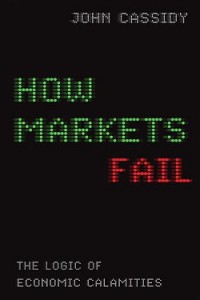
It’s really good. These two sentences grabbed me:
During the 1980s, many Latin American countries experienced one. In the late 1980s and 1990s, it was the turn of a number of developed countries, including Japan, Norway, Sweden, and the United States. The collapse of the savings-and-loan industry led Congress to establish the Resolution Trust Corporation, which took over hundreds of failed thrifts. Later in the 1990s, many fast-growing Asian countries, including Thailand, Indonesia, and South Korea, endured serious fi nancial blowups. In 2007-2008, it was our turn again, and this time the crisis involved the big banks at the center of the financial system.
Cassidy continues:
For years, Greenspan and other economists argued that the development of complicated, little-understood financial products, such as subprime mortgage-backed securities (MBSs), collateralized debt obligations (CDOs), and credit default swaps (CDSs), made the system safer and more efficient. The basic idea was that by putting a market price on risk and distributing it to investors willing and able to bear it, these complex securities greatly reduced the chances of a systemic crisis. But the risk-spreading proved to be illusory, and the prices that these products traded at turned out to be based on the premise that movements in financial markets followed regular patterns, that their overall distribution, if not their daily gyrations, could be foreseen-a fallacy I call the illusion of predictability, the third illusion at the heart of utopian economics. When the crisis began, the markets reacted in ways that practically none of the participants had anticipated.
He explains:
Greenspan isn’t the only one to whom the collapse of the subprime mortgage market and ensuing global slump came as a rude shock. In the summer of 2007, the vast majority of analysts, including the Fed chairman, Bernanke, thought worries of a recession were greatly overblown. In many parts of the country, home prices had started falling, and the number of families defaulting on their mortgages was rising sharply. But among economists there was still a deep and pervasive faith in the vitality of American capitalism, and the ideals it represented.
For decades now, economists have been insisting that the best way to ensure prosperity is to scale back government involvement in the economy and let the private sector take over. In the late 1970s, when Margaret Thatcher and Ronald Reagan launched the conservative counterrevolution, the intellectuals who initially pushed this line of reasoning-Friedrich Hayek, Milton Friedman, Arthur Laffer, Sir Keith Joseph-were widely seen as right-wing cranks. By the 1990s, Bill Clinton, Tony Blair, and many other progressive politicians had adopted the language of the right. They didn’t have much choice. With the collapse of communism and the ascendancy of conservative parties on both sides of the Atlantic, a positive attitude to markets became a badge of political respectability. Governments around the world dismantled welfare programs, privatized state-run firms, and deregulated industries that previously had been subjected to government supervision.
How did it all start?
In the United States, deregulation started out modestly, with the Carter administration’s abolition of restrictions on airline routes. The policy was then expanded to many other parts of the economy, including telecommunications, media, and fi nancial services. In 1999, Clinton signed into law the Gramm-Leach-Bliley Act (aka the Financial Services Modernization Act), which allowed commercial banks and investment banks to combine and form vast fi nancial supermarkets. Lawrence Summers, a leading Harvard economist who was then serving as Treasury secretary, helped shepherd the bill through Congress. (Today, Summers is Barack Obama’s top economic adviser.)
He continues:
The period of conservative dominance culminated in the Greenspan Bubble Era, which lasted from about 1997 to 2007. During that decade, there were three separate speculative bubbles-in technology stocks, real estate, and physical commodities, such as oil. In each case, investors rushed in to make quick profi ts, and prices rose vertiginously before crashing. A decade ago, bubbles were widely regarded as aberrations. Some free market economists expressed skepticism about the very possibility of them occurring. Today, such arguments are rarely heard; even Greenspan, after much prevarication, has accepted the existence of the housing bubble.
This week Bernanke told the American Economic Association, “The best response to the housing bubble would have been regulatory, rather than monetary,” Nice idea Mr. Bernanke, except you were in charge. You screwed up. You’re still in charge. And you’re still keeping interest rates ultra-low, encouraging yet another credit-driven boom and bust cycle.
From this week’s New Yorker. Somewhat prophetic?
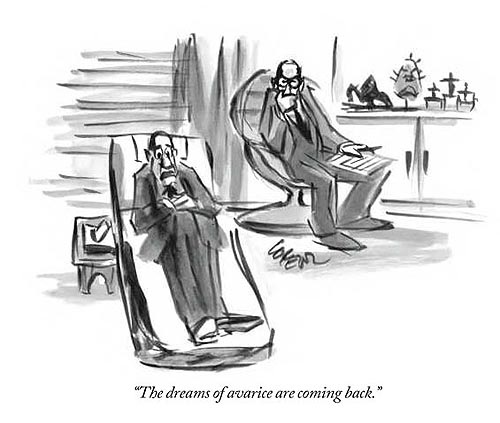
Moral of this story: We will never learn. Play the next boom. It’s coming. I can smell it. Take your profits early. Play with the bank’s money. Keep your finger on the 15% stops ready.
HOW MARKETS FAIL, by John Cassidy, published in November 2009 by Farrar, Straus and Giroux, LLC. Copyright © 2009 by John Cassidy. All rights reserved.
The tennis club is abuzz with K Tape. This stuff is magic (and not cheap). Stretch some across your aching (or about to ache) muscle and bingo, you’re protected.

From the web site http://www.ktapeonline.com/ How does Kinesiology Tape work?
Muscles constantly extend and contract within a normal range; however, when muscles over-extend and over contract, such as when lifting an excessive amount of weight, muscles cannot recover and become inflamed. When a muscle is inflamed, swollen or stiff due to fatigue, the space between the skin and muscle is compressed, resulting in constriction to the flow of lymphatic fluid. This compression also applies pressure to the pain receptors beneath the skin, which in turn communicates, “discomfort signals” to the brain emdash the person experiences PAIN. This type of pain is known as myalgia, or muscular pain. That’s where Kinesiology Tape comes to the rescue! Kinesiology Taping alleviates pain and facilitates lymphatic drainage by microscopically lifting the skin. The taped portion forms convolutions in the skin, thus increasing interstitial space. The result is that pressure and irritation are taken off the neural and sensory receptors, alleviating pain. Pressure is gradually taken off the lymphatic system, allowing it to channel more freely.
Good news. The Daily Show returns tonight. And in HD, no less.

It is my favorite TV show — a late-night treat.
Begging. IRS style. Yesterday’s letter.
Dear Taxpayer, (that’s me)
Due to a heavy workload, we have not yet completed our research to resolve your inquiry (which asserted I owe them absolutely nothing).
While waiting to hear from you, you can still make payments to reduce your tax liability (which is zero) and interest charges. To help us apply a payment properly, please write the taxpayer idenitification number and tax period listed at the top of this letter on your check or money order.
Charming people. They remind me of the overweight, handsomely-dressed beggars on the subway who “need some money to eat.” And actually get it — though begging is illegal on the subway.
Adriano Goldschmied jeans are on50% sale. The doesn’t make them affordable. It makes them less ridiculous. But her jeans have three benefits: She uses lightweight denim. Super for the summer and for traveling. Second, they ride lower. They feel more comfortable. Third, your family suddenly thinks you’re “hip.” You acquire new respect.

You can’t buy sale jeans online. She has AG jeans stores in most major cities.
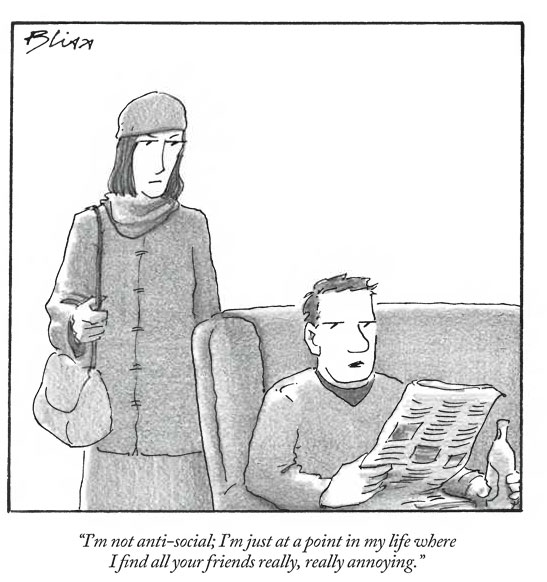
Favorite New Yorker cartoon this week.

Harry Newton, with old, cheap teeth.

Harry – The Google Ad with the stock-picking-guru woman in the witches hat scares me.
perhaps these comments should be moderated (i.e. you have to approve them before they show up.) That will keep the spammers from putting html links on your site, like the fellow above did
Robert, thank you. I have deleted the spam comment and will look into moderating the comments.
The new format looks great and is long-overdue. You needed more width.
9qbX67 fszgxudzpssg, [url=http://jdpseylwrvar.com/]jdpseylwrvar[/url], [link=http://ijjvsfbnbkly.com/]ijjvsfbnbkly[/link], http://fifiadgqjgmr.com/