I love the stocks and EFTs on the right. I’ve spent a lot of time rejecting ideas in recent days. I bought some triple tax-free muni bonds yielding 4.5%. I’m guessing they will be worth well over 8% pre-tax by the time all the taxing authorities have figured more ways of raping me. For starters, New York’s sales tax just rose from 8.25% to 8.75%. My NY real estate taxes went up 6%. And on it goes in 2010. Tax-free bonds look increasingly interesting, especially if you figure that 2010 looks a little squirrelly in the market. Skyrocketing taxes are the only certainty.
From Paul Krugman, Nobel prize economist:
Which brings us to the still grim fundamentals of the economic situation.
During the good years of the last decade, such as they were, growth was driven by a housing boom and a consumer spending surge. Neither is coming back. There can’t be a new housing boom while the nation is still strewn with vacant houses and apartments left behind by the previous boom, and consumers — who are $11 trillion poorer than they were before the housing bust — are in no position to return to the buy-now-save-never habits of yore.
What’s left? A boom in business investment would be really helpful right now. But it’s hard to see where such a boom would come from: industry is awash in excess capacity, and commercial rents are plunging in the face of a huge oversupply of office space.
Can exports come to the rescue? For a while, a falling U.S. trade deficit helped cushion the economic slump. But the deficit is widening again, in part because China and other surplus countries are refusing to let their currencies adjust.
So the odds are that any good economic news you hear in the near future will be a blip, not an indication that we’re on our way to sustained recovery. But will policy makers misinterpret the news and repeat the mistakes of 1937? Actually, they already are.
The Obama fiscal stimulus plan is expected to have its peak effect on G.D.P. and jobs around the middle of this year, then start fading out. That’s far too early: why withdraw support in the face of continuing mass unemployment? Congress should have enacted a second round of stimulus months ago, when it became clear that the slump was going to be deeper and longer than originally expected. But nothing was done — and the illusory good numbers we’re about to see will probably head off any further possibility of action.
Meanwhile, all the talk at the Fed is about the need for an “exit strategy” from its efforts to support the economy. One of those efforts, purchases of long-term U.S. government debt, has already come to an end. It’s widely expected that another, purchases of mortgage-backed securities, will end in a few months. This amounts to a monetary tightening, even if the Fed doesn’t raise interest rates directly — and there’s a lot of pressure on Mr. Bernanke to do that too.
Will the Fed realize, before it’s too late, that the job of fighting the slump isn’t finished? Will Congress do the same? If they don’t, 2010 will be a year that began in false economic hope and ended in grief.
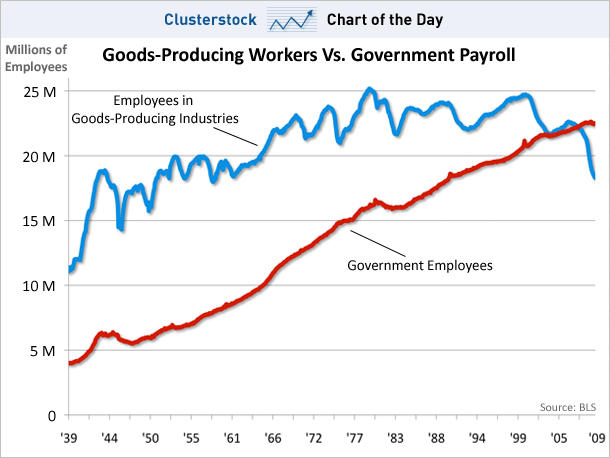
In the just-so story of the evolution of our economy, our old manufacturing based economy has been replaced by an innovative knowledge economy. That’s not quite true.
In fact, the decline of the jobs in goods producing sectors of the economy–construction, manufacturing, mining and agriculture–has largely been met with an increase in jobs on the government payroll. We’ve gone from providing jobs in profit-making private industry to providing jobs in profit-eating government work. Toward the end of 2007, the total number of government jobs exceeded the total number of goods producing jobs. Welcome to the government payroll economy.
Bryon Wien’s predictions for 2010. Dead on target at the beginning of the new year, 76-year-old Byron Wien again published his annual list of surprises to expect in 2010. Wien, Vice Chairman of Blackstone Advisory Services and one of Wall Street’s best known veterans, has been publishing his list of economic, market and political surprises since 1986. Reviewing Wien’s 2009 list, he was very accurate with the direction of most of his predictions. He foresaw a second-half recovery in the US economy, and the S&P 500 Index rising to 1,200 (up from 903 at the end of 2008 to 1,115 by December 31, 2009). He also predicted: “The ten-year US Treasury yield climbs to 4% [up from 2.24% to 3.84%]. Later in the year, as the economy shows signs of recovery, economists and investors shift their mood from concern about deflation to worries about inflation. A weak dollar, rapid growth in money supply and record-setting deficits (over $1 trillion) are behind the change.” Spot on.
Wien also expected the gold and oil prices to climb to $1,200 and $80 respectively – a feat accomplished in December.
He believes his ten surprises have at least a 50% chance of occurring at some point during the year. Although this is not a very high probability, his predictions nevertheless make for stimulating reading. His list for 2010 follows below.
1. The United States economy grows at a stronger than expected 5% real rate during the year and the unemployment level drops below 9%. Exports, inventory building and technology spending lead the way. Standard and Poor’s 500 operating earnings come in above $80.
2. The Federal Reserve decides the economy is strong enough for them to move away from zero interest rate policy. In a series of successive hikes beginning in the second quarter the Federal funds rate reaches 2% by year-end.
3. Heavy borrowing by the US Treasury and some reluctance by foreign central banks to keep buying notes and bonds drives the yield on the 10-year Treasury above 5.5%. Banks loan more to corporations and individuals and pull away from the carry trade, thereby reducing demand for Treasuries. Obama says, “The suits are finally listening”.
4. In a roller coaster year the Standard and Poor’s 500 rallies to 1,300 in the first half and then runs out of steam and declines to 1,000, ending where it started at 1115.10. Even though the economy is strong and earnings exceed expectations, rising interest rates and full valuations present a problem. Concern about longer term growth and obligations to reduce leverage at both the public and private level unsettle investors.
5. Because it is significantly undervalued on a purchasing power parity basis, the dollar rallies against the yen and the euro. It exceeds 100 on the yen and the euro drops below $1.30 as the long slide of the greenback is interrupted. Longer term prospects remain uncertain.
6. Japan stands out as the best performing major industrialized market in the world as its currency weakens and its exports improve. Investors focus on the attractive valuations of dozens of medium sized companies in a market selling at one quarter of its 1989 high. The Nikkei 225 rises above 12,000.
7. Believing he must be a leader in climate control initiatives, President Obama endorses legislation favorable for nuclear power development. Arguing that going nuclear is essential for the environment, will create jobs and reduce costs, Congress passes bills providing loans and subsidies for new plants, the first since 1979. Coal accounts for about 50% of electrical power generation, and Obama wants to reduce that to 25% by 2020.
8. The improvement in the US economy energizes the Obama administration. The White House undergoes some reorganization and regains its momentum. In the November Congressional election the Democrats only lose 20 seats, much fewer than expected.
9. When it finally passes, financial service legislation, like the health care bill, proves to be softer on the industry than originally feared. There is greater consumer protection, more transparency, tighter restriction of leverage and increased scrutiny of derivatives, but the regulatory changes for investment bankers and hedge funds are not onerous. Trading volume and merger activity increases; financial service stocks become exceptional performers in the US market.
10. Civil unrest in Iran reaches a crescendo. Ayatollah Khameini pushes out Mahmoud Ahmadinejad in favor of a more public relations adept leader. Economic improvement becomes the key issue and anti-Israel rhetoric subsides. Talks with the US and Europe begin but the country remains a nuclear threat. Pakistan becomes the hotspot in the region because of the weak government there, anti-American sentiment, active terrorist groups and concerns about the security of the country’s nuclear arsenal.
Matt Taibbi on Fannie, Freddie, and the New Red and Blue. Matt Taibbi is Rolling Stone’s financial editor. In July 2009 he attracted attention for his piece on investment bank Goldman Sachs, whom he accuses of helping engineer “every major market manipulation since the Great Depression.” His latest piece begins:
Over the Christmas holiday a nasty thing happened: Tim Geithner’s Treasury Department decided to lift the cap on aid to the Government-Sponsored Entities, Fannie Mae and Freddie Mac, apparently in response to Obama administration fears that the two agencies would become insolvent. The cap was raised from $200 billion on each and government backstopping of the mortgage market will apparently now extend into infinity for at least three years, through 2012.
The move has already inspired a mini-firestorm, with several outlets delving deeply into the recent history of the GSEs and uncovering some disturbing new facts. Chief among those were an analysis of the GSEs by a former chief credit officer of Fannie named Edward Pinto, who found that Fannie and Freddie routinely mismarked subprime or Alt-A (a sort of purgatory class of nonprime risky mortgage, resting between subprime and prime) mortgages as prime. The Wall Street Journal explains:
In general, a subprime mortgage refers to the credit of the borrower. A FICO score of less than 660 is the dividing line between prime and subprime, but Fannie and Freddie were reporting these mortgages as prime, according to Mr. Pinto. Fannie has admitted this in a third-quarter 10-Q report in 2008.
…For what we’ve learned in the last few years as one scandal after another spilled onto the front pages is that the bubble economies of the last two decades were not merely monstrous Ponzi schemes that destroyed trillions in wealth while making a small handful of people rich. They were also a profound expression of the fundamentally criminal nature of our political system, in which state power/largess and the private pursuit of (mostly short-term) profit were brilliantly fused in a kind of ongoing theft scheme that sought to instant-cannibalize all the wealth America had stored up during its postwar glory, in the process keeping politicians in office and bankers in beach homes while continually moving the increasingly inevitable disaster to the future.
For the entire piece, go to his blog. Click here.
New Airport Check-in Procedures. This could be fun. I wouldn’t put it past the nuttiness (and incompetence) of the TSA.
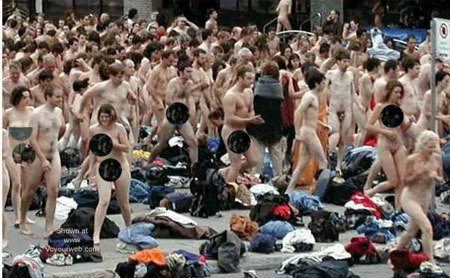
Enterprising entrepreneur.

That’s it for today. Real stocks for tomorrow. (I’m still having trouble with WordPress. Images can be quirky.)

Harry Newton

Harry, What ever you Buy or Sell, follow your 15% rule and you should be OK. Concentrate on a few investments you know something about and don't chase around trying to own a little of everything.
Exactly what I'm doing. And why I'm taking so long.
I see you are taking in advertisers…? In once was your altruistic blog now turned rag burdened with advertisements you have squeezed the text and cut off the charts,graphs, and humorous picture. Are you turning into one of those market gurus that make more selling advice than actually through the investments they recommend.
Yes, I noticed that too with considerable disappointment. It erodes Harry's credibility as an “independent thinker”. Be careful, Harry is saying, be suspicious of anything “too good to be true”, and meanwhile won't you please buy some of what I'm hawking with guaranteed returns of 60% a year. I recommend it, Harry says, otherwise I wouldn't be selling it. Got some for the wife and kids too! Act now, before its too late!
But wait…. that's not all……
I'm not hawking anything with a 60% return. I've been “hawked” anything with a prospective return that high. And I never would.
I've been taking Google AdSense advertisers for 10 years. No change. Facts are twofold:
First, I don't know which advertisers Google posts. So I can't prefer them. In fact, most of the time I don't even look at the ads. Second, the amount of money I get from Google each month is not enough to take my wife out to a nice dinner.
Actually, the ads haven't squeezed the editorial. There's actually more space for editorial. We have the third column…. Which will expand as I get more time. In short, I'm not influenced by the ads.
Come on, people! Just because you see an ad on this site (or any site, for that matter) does not mean it belongs to, is endorsed by, or is being sold by the owner of the site. Do you ever stop to think that the Wall Street Journal is “pushing”, “selling”, or “hawking” any/all of the products and/or services advertised on its pages? When you see political ads on a TV channel back to back featuring candidates from opposite sides slamming each other, do you ever assume that the TV channel is “backing” both candidates? If you answered “yes”…..I have a couple of screaming deals on a couple of bridges with gorgeous views. Hurry! First come, first served!
Harry,
Aren't you uncomfortable going out as far as you had to go to get a 4.5% tax free NY yield?
It was a Puerto Rican bond. It was 12 years. I feel comfortable with it.