First an apology. Today’s site is horribly late because Time Warner’s RoadRunner service has been acting up, again. I’m back on Verizon’s ultra-reliable MiFi service. Wireless is more reliable than landline. Go figure. You always need a backup to the cloud.
We get caught up in day-to-day BS.
It’s time to take the time to visit the dentist, the eye doctor, the dermatologist, get a chest x-ray, etc. None of these visits have cured my back. It will get better by itself. But they sure turned up a bunch of minor problems that needed fixing — like why I was having difficulty reading. (I needed a new prescription in one eye.) And the skin stuff that needed removing. I visited two different dermatologists. You know my theory on “experts.” Get multiple opinions. Do your own research.
Inside America’s Last Growth Industry. The annual revenue of California’s marijuana industry is $14 billion. The annual revenue of California’s citrus industry is $1.2 billion. I’m not recommending you get into this totally awful industry. For an absolutely fascinating story on California’s new growth industry, read the latest Rolling Stone.
New York Appliance Rebates. The State of New York launched a new rebate program to help residents replace older, inefficient appliances with ENERGY STAR® qualified models. The program began February 12, 2010, and will continue until funds are depleted. Eligible products include
Refrigerators
Freezers
Clothes washers
High-efficiency appliance package
Consumers can obtain higher rebate amounts by purchasing a package including a refrigerator, clothes washer, and dishwasher that are more efficient than ENERGY STAR. Consumers are also eligible for a higher rebate with proof of recycling.
The program continues until the money runs out. Total Funding: $18,700,000. For more, click here. I believe other states have similar programs.
A wonderful, wonderful presentation. David Eagleman talks on the Six Easy Steps to Avert the Collapse of Civilization. David Eagleman is a neuroscientist and a fiction writer. During the day, he directs the Laboratory for Perception and Action and the Initiative on Neuroscience and Law at Baylor College of Medicine. He is best known for his work on time perception, synesthesia, and neurolaw. At night, he is a fiction writer. His debut work of fiction, Sum: Forty Tales from the Afterlives, became an international bestseller and is published in 22 languages.

David Eagleman, brilliant. Click here.
Here’s Eagleman on deadlines from last December’s New York Times:
EVERYONE knows the power of deadlines — and we all hate them. But their effectiveness is undeniable. People procrastinate. Deadlines help. They speed up performance and, paradoxically, reduce the anxiety of uncertainty. So when President Obama announced on Tuesday night a strict timetable of 18 months before the drawdown of troops from Afghanistan — how did that affect the psychology of the nation?
The emotional effect of the pronouncement depends on the party involved. For the military brass, 18 months is a blink of an eye, so the deadline could motivate them to perform at their peak, or it might paralyze them with fear; for the troops and their loved ones, 18 months is an eternity. But for all those with an immediate stake in the war, a clear timetable reduces uncertainty — at least along the “when” dimension, if not the “what” dimension.
After all, no one likes to wait. And the only thing worse than waiting is waiting with uncertainty. A team at Emory University examined what happened when people waited for an impending electrical shock. Some people dreaded the shock so deeply that they chose to receive a more powerful shock earlier rather than wait for a lesser shock to arrive at a later, random time.
One of the key jobs of the human brain is to simulate the future, and the less information it has to work with, the more anxious it becomes. Pinning things down in time makes waiting less troubling. With a clear idea about the order and timescale of events, people are more patient and less anxious. And that is the hope implicit in President Obama’s declaration of a timeline.
But what about those people with a less immediate stake in the war? Here the president’s task becomes more complicated. Some years ago, psychologists posed a deceptively simple question: if I were to offer you $100 right now, or $110 a week from now, which would you choose? Most subjects chose to take $100 right then. It didn’t seem worthwhile to wait an entire week for only $10 more.
And the further an event lies in the future, the less people care about it. So if offered $100 now or $500 18 months from now, many people still take the $100. The consequence is that there’s little difference between President Obama promising 18 months from now versus 18 years from now. In the human ken, both are obscured in the mists of the distant future.
So for his timetable to have emotional power, President Obama would do well to define and adhere to intermediate goals. A year and a half offers little in the way of reassurance, but everyone can value action month-by-month.
I don’t want to imply that people care only about the short term — after all, people do build college saving funds and retirement plans. It’s simply that the present holds more sway than the future. Recently, researchers used brain imaging to monitor people making money-now-or-more-later decisions, and they discovered that the neural networks involved in short- and long-term decision-making are fundamentally separate. In situations of choice, the two systems are often locked in battle against one another.
Subprime mortgage offers are perfectly optimized to take advantage of the “I want it now” system, as are chocolate cookies, temptations for marital infidelity and all manner of things that people choose now and regret later.
People manage the influence of the short-term systems by proactively binding their future options. We see this when a person in good health signs an advance medical directive to pull the plug in the event of a coma, when an alcoholic rids the house of drink to avoid future temptation, or when a person socks money into a Christmas account to keep himself from spending it before December.
Such deals with oneself are what philosophers call Ulysses contracts, after the hero who decided in advance to lash himself to a mast to resist the sirens’ song. The present, calm Ulysses was negotiating with his future, more emotional self.
In the same way, by drawing a line on the calendar, President Obama hopes to favor his administration’s long-term strategy over the unknown siren songs that will be heard over the next year and a half. Nations, like people, are continually buffeted in the winds of short-term events. In deference to a long-term strategy, the president hopes to bind the nation to the mast to ensure we stick to the plan.
The three best laptop makers are, in order, Apple, Lenovo and Sony. Laptop Magazine measured them on eight measures — from performance to customer satisfaction. The three worst are Gateway, MCI and Fujitsu.
Check. Check. Check. I placed an order for a new Lenovo ThinkPad laptop — the new X201. Lenovo’s online computer literally screwed up and changed my order… Check. Check. Check.
More wonderful charts from Cheezburger Network.
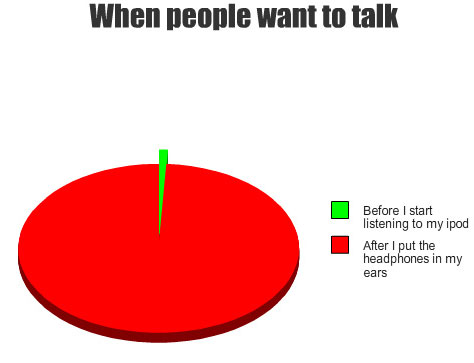
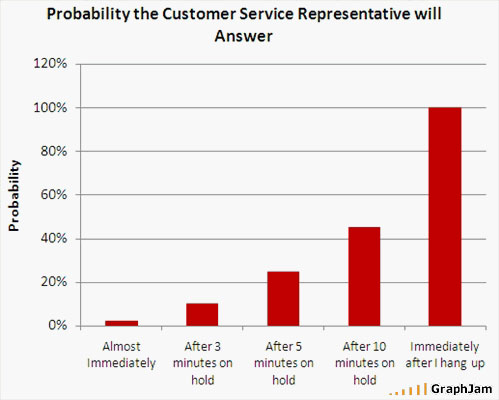
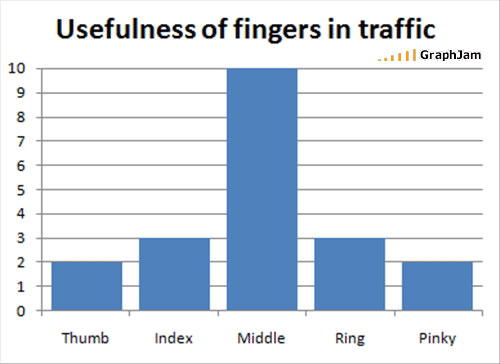
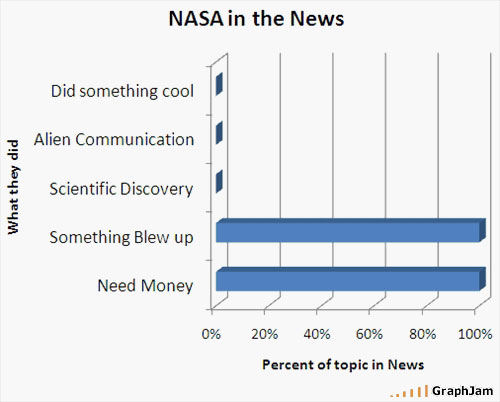
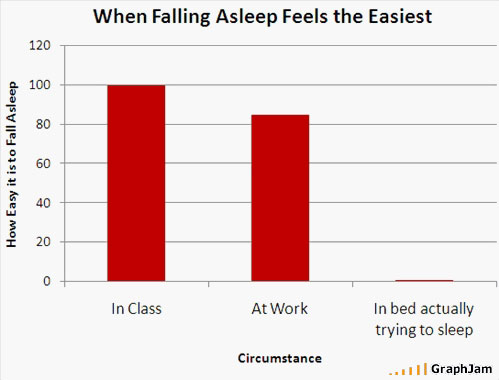
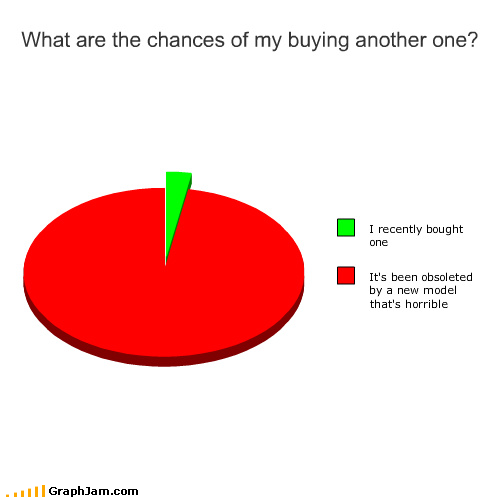
You can make your own charts. Click here. I made the last one.
Totally sick.
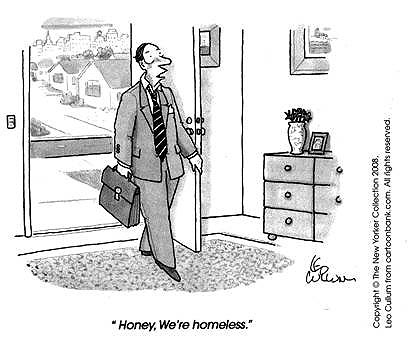

Harry Newton, who’s seriously annoyed at Time Warner.

Guessing Rolling Stone took their site down for maintenance…, here's a cached copy, courtesy of Google: http://bit.ly/weedbusiness
Oops, that was just page one. Here's the entire article cached: http://bit.ly/MarijuanAmerica
Harry,
Convert to a MacBook Pro. I am 63. Thought I'd never switch from PCs. Was afraid of my IT-challenged status. I have died and gone to heaven. I wish I had done this long ago. It is worth the very trivial learning curve. The Apple stores make it absolutely painless to switch. I share your loathing of the dearth of “service”: but these guys REALLY get it! Do yourself a favor: switch!!!
It wasn't my PC that was the trouble this morning. It was Time Warner's RoadRunner service. It was acting badly. The company said “packet loss” and said they were sending a technician. I have a MacBookPro 15″. It's a super machine, but it doesn't run some of the editing programs I need. Frankly, I also find the Mac's trackpad very slow. I prefer the Trackpoint of the ThinkPad. Much faster. My ThinkPad X200 is much lighter than the MacBook Pro, which is a real hog. Not easy to schlepp around the world.
Want to tax the $14 billion California marijuana market as well as the whole $1 trillion underground markets of drugs, prostitutes, illegal aliens, etc?
Implement the FairTax, a 133 page tax code changing bill, HR25/S296 now stuck in the Ways and Means committee. Learn more at http://www.fairtax.org
Yes, I'd tax the California marijuana market. California could use the $1 billion or $2 billion it would get. I'm a very practical person. I don't believe in outlawing activities that don't cause to third parties. I'm very dubious about outlawing activities you can't outlaw. We had a brush with outlawing liquor. Now we're doing the same thing with marijuana, which actually is less dangerous than booze. I do believe in regulating activities to save society expenses (like mandating helmets to avoid the huge healthcare expenses). And I believe in taxing fairly. Booze is taxed. Cigarettes are taxed. Why not marijuana?
As regards illegal aliens, what can we now do about? We can't send them back. So why not create a path for them to become legitimate and tax them too? I am an immigrant from Australia. I've paid over $60 million in taxes to the Federal government. Isn't that better than me living in hiding?
We had an appliance rebate program here in Texas a week or 2 ago. It was a total joke and pissed most everyone off. I tried for 4 hours to get signed up online with no results. Their phone numbers were also useless. The rebate money was gone in around 6 hours. Over 50,000 people are on a back up list.
My father used to say that government couldn't organize a queue for an outhouse.He's right.