Obviously he hasn’t won. And anything can happen in the next 3 1/2 weeks — like President Obama could wake up for the next debate and keep me awake.
But the tea leaves favor Romney. Everyone and his uncle seem to be putting out anti-Obama ads, articles, letters to their employees and rumors. Obama’s response has been an ad criticizing Romney for threatening to do away with Big Bird! Jon Stewart ripped into the ad last night and he’s a huge Obama fan.
Occasional stuff gets to you. Like the businessmen who say their businesses can’t survive with another four years of Obama. Or these words that got me:
Years from now, historians may regard the 2008 election of Barack Obama as an inscrutable and disturbing phenomenon, a baffling breed of mass hysteria akin perhaps to the witch craze of the Middle Ages. How, they will wonder, did a man so devoid of professional accomplishment beguile so many into thinking he could manage the world’s largest economy, direct the world’s most powerful military, execute the world’s most consequential job?
Imagine a future historian examining Obama’s pre-presidential life: ushered into and through the Ivy League despite unremarkable grades and test scores along the way; a cushy non-job as a “community organizer”; a brief career as a state legislator devoid of legislative achievement (and in fact nearly devoid of his attention, so often did he vote “present”); and finally an unaccomplished single term in United States Senate, the entirety of which was devoted to his presidential ambitions. He left no academic legacy in academia, authored no signature legislation as legislator.
The “big” fear with Romney is he flip-flops (now he’s against abortion), favors the rich and will hurt the people who need a government hand. The reality is twofold:
1. He’ll say anything to get elected. On that he’s never flip-flopped. He’s been totally consistent.
2. He is successful businessman who clearly favors doing what works, including working with the opposition (as he did successfully as governor).
I’m not endorsing him at present. But my tea leaves have implications for the stockmarket. Perhaps for a significant boost when his victory is apparent.
Anyway you read it here first.
The Theory of Tea Leaves can be applied to the stockmarket. Watch the news stories. Subscribe to Google Alerts. Pick up on the tone. Apple is the classic Tea Leaf company. It get huge press. Sometimes positive and it goes up. Sometimes negative (like now) and it goes down.
They’ve ripped into many of the mortgage REITs. There are various theories: They’ve done well. The mutual funds which balance at the end of October are consolidating their gains. A Romney election would mean firing Bernanke (which isn’t possible until 2014) and raising interest rates. Several smart guys are putting out rumors of early mortgage prepayments, driving the prices down and earnings big money from their shorts.
In short, no one really knows. But it’s been painful for yours truly, who owns AGNC and has held on. As I said before, I didn’t expect the capital gains on the mortgage REITs. Now I’ve lost most of them, it’s painful. But I’m back to square one — their high dividend yields, which is why I bought them in the first place.
The Best Apps To Replace Apple Maps On Your iPhone. From Business Insider. There are many map app strategies, including don’t upgrade your IOS, to the Map alternatives suggested here. Personally, I like the Garmin, but it costs $60. There are also a bunch of free ones. Click here.
The fastest way to speed up your laptop is an SSD. Also called a solid state drive. I like the Samsung 830 series. I have a couple. They work flawlessly.
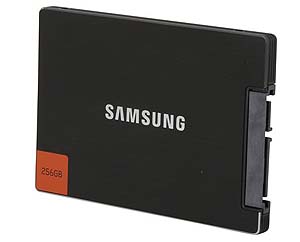
Good news. Amazon is now selling them for $198.83, a hugely low price. Click here
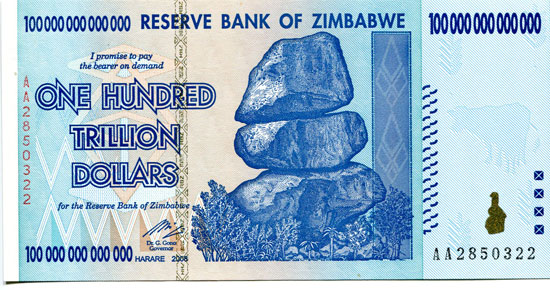
Does hyperinflation cause regime change? Probably not in Iran, however. But every politician and central banker is obsessed with preventing this — a recent bank note from Zimbabwe before they switched to the U.S. dollar:
This piece is from Casey Daily Dispatch. It’s worth reading:
Is Hyperinflation About to Light a Middle Eastern Powder Keg?
In the third century, greed got the best of Rome’s emperors. As they spent through the silver in the treasury, one emperor after another reduced the amount of precious metal in each denarius until the coins contained almost no silver whatsoever.
It was the world’s first experience with currency debasement and hyperinflation. As people saw the value of their savings evaporate, society grew angry and demanded a scapegoat. Christians became that scapegoat, and Romans turned on them with incredible violence.
This pattern – currency debasement leading to social upheaval and violence – would repeat many times over.
In medieval Europe, the number of women on trial for witchcraft climbed in sync with the debasement of currency. In revolutionary France, the Reign of Terror that slaughtered 17,000 wealthy counterrevolutionaries aligns perfectly with the deterioration of the purchasing power of the assignat note.
And in the most vile example: dramatic hyperinflation in Germany in the 1920s allowed Hitler to rise to power by blaming Jews for the country’s economic woes.
The connection between currency debasement and social upheaval makes sense – hyperinflation only occurs in times of domestic drama. For example, in 1946 Hungary experienced the greatest episode of hyperinflation on record – in the context of a small, economically limited nation wracked by the Great Depression and then Nazi occupation in World War II. Zimbabwe earned second place in hyperinflation’s record books when its dollar inflated 7.96 billion percent from early 2007 to late 2008. The cause? Robert Mugabe’s land-reform policy slashed agricultural output and destabilized a fragile society.
That brings me to today… and to Iran, where that volatile mix of domestic drama and hyperinflation is pushing a fragile society to the brink of revolution.
If history repeats itself and Iran descends into revolution, the outcome is both unclear and obvious. In the unclear category: the details of the resulting regime and how far an Iranian revolution might spread through the Middle East. What is obvious, though, are the generalities: a post-revolution Iran would remain Islamist and vehemently anti-US.
Another generality is also crystal-clear. An Iranian revolution – and the potential for that to spawn a new set of Shia-based alliances across the Middle East – would be very good for oil.
And if Iran’s currency continues its dramatic nosedive, that revolution – and oil-price spike – might be just around the corner.
Dark Days for Iran’s Rial
On October 3, riot police converged on Tehran’s Grand Bazaar. With water cannons and batons, they dispersed a large crowd of demonstrators who were calling President Mahmoud Ahmadinejad a traitor for his mismanagement of Iran’s economy.
The location was significant: The Grand Bazaar is often described as Tehran’s economic heartbeat, and its merchants kick-started the 1979 revolution that ended Iran’s monarchy and ushered in the Islamic Republic.
The spark that lit the protest flame this time? The Iranian rial had lost a third of its value against the dollar in the three previous days.
But that was simply the latest drop in a currency devaluation that has been both rapid and profound.
The rial had been slowly losing value against the US dollar since international sanctions against the country’s nuclear program took effect in mid-2011. The devaluation was gentle for the first year, but picked up speed in June. A few months later, the currency started to freefall.
On the weekend of September 8-10, the rial lost 9.7% of its value. On October 1 alone, the rial declined 17%. By the next day the black-market exchange rate reached 35,000 rial to the US dollar, marking an 80% decline in the past year.
The massive devaluation is fanning the flames of Iran’s burning fiscal situation. International sanctions over Iran’s nuclear program have accomplished one desired aim: major inflation. The Iranian government says inflation stands at 25%, but unofficial estimates put it much higher, between 50-70%.
It all translates into far higher prices on staples like food and fuel. Iranians now pay three times as many rial for meat as they did a year ago. Iran’s farmers rely on animal feed and vaccines that are imported and therefore priced in US dollars, and they have to pass on the increased costs to consumers.
In the meantime, unemployment is also rising unchecked. Overall unemployment is close to 15%, while youth unemployment is almost 30%.
Soaring food prices, deteriorating employment prospects, and heavy-handed police tactics kicked off a revolution in another Middle Eastern country not long ago. Tunisian vegetable vendor Mohammed Bouazizi set himself on fire in December 2010 to protest precisely those problems; the ensuing riots started his country down a rapid road to revolution. Tunisia’s transition turned heads across the Middle East, and the Arab Spring was born.
Iran’s ayatollahs are now facing a very similar situation. The rial is dying and hyperinflation is creating real potential for full-fledged economic panic. Continued protests like the one in Tehran’s Grand Bazaar would represent a real threat to the ruling regime.
The response from above is easy to predict. Iran’s ruling clerics did not hesitate to use force to repress the widespread discontent sparked by President Ahmadinejad’s re-election in mid-2009, and used the same riot police in the Bazaar last week to silence dissidence. Bigger protests will almost certainly draw an even more aggressive response.
The regime will also likely offer up a scapegoat. Ahmadinejad is the most likely candidate – he has been clashing with the conservative elite for several years now, and his second and final presidential term ends next summer anyway.
Will a combination of repression and Ahmadinejad’s head silence the masses? Maybe, maybe not. When people see their life’s savings evaporate – Poof! – in a pile of worthless paper, they get really mad. And really mad people with little to lose is precisely the fuel that feeds revolutionary fires.
However, don’t let Western ideals like democracy and the separation of church and state cloud your idea of a reformed Iran. A new regime in Iran would still be Islamist; indeed, the country would almost certainly remain guided first by religion and second by politics. Generations of Iranians have been taught to believe in Shia Islam above all else, with hatred of the United States coming in a close second. Those pillars of Iranian culture would remain.
As such a new Iran could closely resemble the old Iran – but in the meantime, instability could easily spill across the country’s borders. Shia populations in other parts of the Middle East could well gain confidence from Iran’s uprising and begin uprisings of their own, destabilizing the region’s delicate Shia-Sunni balance.
Suddenly, Shia populations in eastern Saudi Arabia, Syria, Lebanon, Iraq, and Bahrain could demand greater recognition, an end to discrimination, maybe even some form of autonomy. The significance of this cannot be understated. The Middle East is a balancing act on many levels, but maintaining peace between Shia and Sunni Muslims is perhaps the most important balance of them all.
Iran, unsteady after a regime change and constrained by international sanctions, would undoubtedly reach out to these Shia populations. Shia connections around the Middle East, long held back by Sunni rulers, would strengthen. A pan-Shia block of allegiances could emerge, replacing the Iran-Syria-Hezbollah partnership with a bigger, stronger group standing against Saudi Arabian – and American – interests in the Persian Gulf.
Truly, a riled-up Shia population connected through a new, Iran-based set of allegiances stretching across the Middle East is a recipe for regional disaster.
Disaster in the Middle East is a recipe for high oil prices – and a bull market for the ages.
Whether the drama remains confined to Iran – where a popular revolution puts a new leader in place who blockades the Strait of Hormuz as a show of strength – or spreads to Saudi Arabia, where a marginalized Shia population finally rises up against their Sunni rulers, Iran’s currency woes mean instability and infighting in the world’s most important oil region.
The lesson of our windows. Eventually everything breaks. That’s Newton’s Third Law. How easy (or pricey) it is to repair the busted thing is up to you. Item: the handle broke in our pricey (and only) bedroom window.
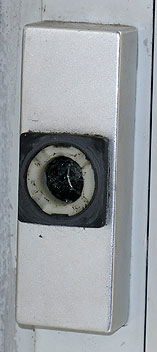
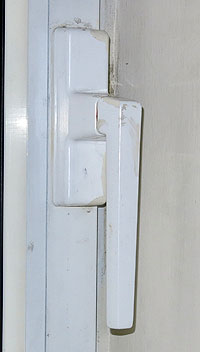
The left photo show the hole. The right shows the handle that should be there. I didn’t install the windows. They came with the apartment. Had I installed them, I would have insisted on the installer giving me a box full of spare parts, including handles. That’s Newton’s Fourth Rule: Get spare parts. Label the box and keep it in your basement. You’ll need it. Our service man says our windows are “30 years old.” He’s searching his basement. If he doesn’t find a handle, we’re looking perhaps at a new window — potentially thousands of dollars. These are “tilt and turn” windows. Never install them. Never. Their opening and closing mechanism is far too flimsy for their size and weight.
How do you get them to shut up?
After a very busy day, a commuter settled down in her seat and closed her eyes as the train departed Montreal for Hudson.
As the train rolled out of the station, the guy sitting next to her pulled out his cell phone and started talking in a loud voice: “Hi sweetheart it’s Eric, I’m on the train – yes, I know it’s the six thirty and not the four thirty but I had a long meeting – no, honey, not with that floozy from the accounts office, with the boss. No sweetheart, you’re the only one in my life – yes, I’m sure, cross my heart” etc., etc.
In spite of the glares and frowns from other passengers, fifteen minutes later, he was still talking loudly, when the young woman sitting next to him, who was obviously angered by his continuous diatribe, yelled at the top of her voice: “Hey, Eric, turn that stupid phone off and come back to bed!”
Eric doesn’t use his cell phone in public any longer.
I caught one guy blabbing loudly on his cell phone and told him that I was with the SEC and that he was “technically in breach of insider information rules.” That shut him up also.
Noisy cell phone users are a pain. What’s your way of shutting them up?

Harry Newton who hopes to stay awake for tonight’s vice presidential debate. On balance VPs don’t get listened to. What’s worse they don’t listen either. I once sat in a huge, ritzy Park Avenue boardroom with Biden and his few supporters. They talked about what he needed to do to get elected (as president). He neither listened, nor followed up on his promises to get back to people (his supporters) in the meeting. I was disgusted. Obama apparently doesn’t say “Thank you” either. He never said Thank You for the canvassing work Susan and I did for him last time. The Clintons are obsessive about written Thank Yous. And rightly so. They work.
Why didn’t I invest with Bain Capital, instead of Goldman Sachs? Idiot me.

The best thing that can happen is for this country to hit an enormous fiscal cliff. I think it will. Then I am looking for trillions of Americans’ financial wealth and retirement savings to be wiped out. Obilerated, within days. Then Americans will realize the folly in electing a black community organizer as their president. I have put all my money in canned goods and gold and cash inside a safe in my apartment. (I sold my house the week after Obama was elected, knowing it would go down in price.)
Harry, our political system is theatrical. The pretense is that the president makes a huge difference.
No, but the party does and that’s why I’m not so much voting for Obama, but against Romney… but really against Romney’s party. Volumes could be written on both candidates flaws, as if… they matter. What’s flawed is our political system of economic injustice, the pretense that we’re broke and the cost of maintaining an empire as if we’re on the edge of being destroyed by “enemies”.
Theater can be entertaining but not to be confused with reality.
Why vote for either Romney or Obama? Instead, let’s all focus on getting Ron Paul elected in 2016. We all know thats his year. Ron Paul,is better for this country than anyone and would go down in history as our greatest president.
I’m a registered Republican, but am speaking at churches throughout my state urging all Republicans to stay home in protest this year, or else write in Ron Paul’s name.
Fortunately, not all Americans are religious FANATICS like you seem to be. Romney will win despite your best efforts and he will be re-elected in 2016. Ron Paul will be dead by then. You can ask your Church to offer a few masses for his departed soul 🙂
The debate? why bother? http://www.youtube.com/watch?v=NrD30Gcu2Fw
Is hell freezing over??? Is Harry considering voting for a Republican?
Harry, I wonder how a guy of your intellect fell hook-line-and-sinker for a fraud like Obama. Surly you would have never hired anyone without first looking at their resume. This Clintons “work” really?……for who?
Re-read the comment dummy. He didn’t say the Clintons work.
Derek – you are asking too much of Ronald Reagan. “Ronald Reagan” is a comment troll who lacks the capacity to comprehend anything he reads. Referring to him as a dummy may actually be complimenting him.
Well said and so true, what brought Harry into supporting an obvious feather weight and anti-American four years ago? THe facts were clear back then, more so now. Harry, who escaped Australia to the more acceptable USA.
Harry,
I love the SSD recommendation, and have one myself, but they’re headed to ~.50/GB next month when the holiday shopping season kicks off with Black Friday (as opposed to the .80/GB you’re suggesting).
I know it’s always cheaper to wait, but when talking about an upcoming 40% price drop, well… I can wait.
@bea4d3a6f40ce29bcb86475ef35bf12f:disqus I think the wireless jammers exist in Israel, but I haven’t researched them, only heard about them anecdotally.
A positive anecdote about Apple Maps for IOS6: Gail and I were driving across 56th St from the West Side Highway to 2nd Ave and 51st Street last night. Miss Information (our name for the lovely voice in Apple Maps) directed us to take a left on 12th avenue (away from 51st Street), and then right on 57th. We thought that sounded idiotic, so we ignored her. She repeated the suggestion at 11th Ave, and 10th, and again at 8th, at which point traffic cross-town had slowed to a crawl. We skeptically and finally followed her advice, and when we got to 57th, it was wide open! At 5th Avenue, she told us to turn right, and then left again on 56th Street. The traffic had disappeared.
Is it possible that she actually plans her route based on existing traffic conditions?
Harry
I know that there is secret technology for a small device that creates a limited size adjacent dead zone for cell phones. I don’t think its available yet commercially, but keep an eye out. When it comes, I’d love to have the franchise to sell them. Maybe some entrepreneur will develop one for us?
I think it’s illegal, according to FCC rules.