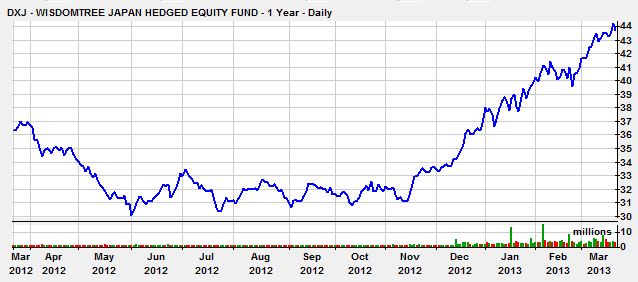
Japan is coming back. The easiest way to play Japan is through an ETF. And the best one is DXJ. It’s hedged against the Yen. The hedging is what gives it its “oomph.”
By the time they get around to selling it to you and me, it’s always too late. You can read that again: By the time they get around to selling it to you and me, it’s always too late. To wit, here’s one I got peddled yesterday:
We are a Fund acquiring foreclosed single-family homes in South Florida at steep discounts to fair market value and replacement cost (40% and 50% respectively) and leasing them at an average cap rate of 12% p.a. (unlevered and net of expenses). A small portion of our inventory is also traded at a net profits of 18.50% per flip (in some cases up to 160% annualized return).
The returns on their little efforts to date have been good. They’re now taking their returns, putting them in a fund and selling them to you and me — probably at a “standard” 2-20 fee basis. That’s 2% a year for managing it and 20% of the profits. Pricey fees.
Goldman Sachs did great with a string of Whitehall real estate trusts. The second last was phenomenal. The last Whitehall was horrible.
In short, when you and I get offered them, no one else wants them. And it’s too late anyway.
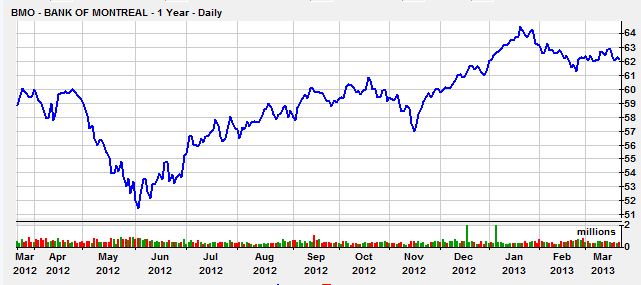
I’m really impressed by Canadian banks. I have a little stock in BMO (the Bank of Montreal). Last night I received its 2012 annual report. Most impressive. Net income up 25%. Return on equity 15.5%. BMO is yielding 4.65%, even though its stock has risen a little.
I get the impression that Canadian banks like being banks. They play at being banks. Unlike JPMorgan, for example, which plays at gambling and probably is the world’s biggest gambler. Our Senate investigated JPM and wrote a devastating report on it. The report shows JPMorgan employees playing fast and loose with their own rules for valuing securities and changing valuations to make their gambling more acceptable. What’s most concerning is their management said their trading was “hedging” when it really was out-and-out, high-risk gambling. Google “Senate Report on JPMorgan.” You’ll be horrified. I like big Canadian banks. I don’t like big American banks. They’re out of control. For a story on that, called “After the ‘London Whale,’ click here.
Once I was turned on by the transformation at JCPenney. I bought the stock. It fell. I kicked it quickly out. I lost a little money. God bless tight stops.
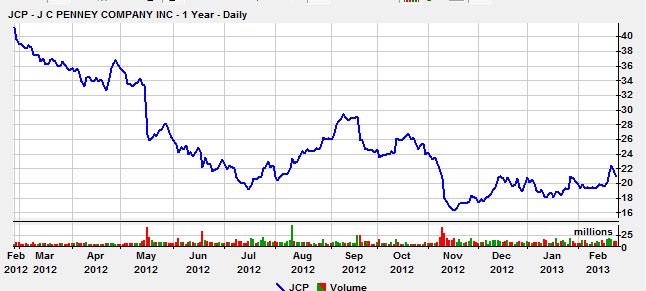
The New Yorker’s financial report, James Surowiecki has a piece this week called, “The Turnaround Trap” in which he talks of Ron Johnson’s taking over as CEO of Penney in January 2012 and what happened since — i.e. the subsequent disaster. He ends his story with these words, which I thought especially prophetic. My bolding on the brilliant Buffet quote.
Of course, this cuts both ways. Right now, Johnson looks like a complete fool. But turnarounds are hard to pull off, especially in retail. One study found that efforts at merely getting a money-losing retailer back to profitability succeed only thirty per cent of the time. Radically remaking a major company, as Johnson is trying to do, is even harder. So, if Johnson isn’t as good as he looked at Apple, he’s probably not as bad as he looks at Penney. Indeed, his biggest mistake may simply have been taking the job in the first place. He’s become a living example of one of Warren Buffett’s keenest observations: “When a manager with a reputation for brilliance tackles a business with a reputation for poor fundamental economics, it is the reputation of the business that remains intact.“
For the full New Yorker piece, click here.
On Sunday, Susan is going to Europe for week. How to get Euros? Choices:
+ Local bank. Sovereign (part of Santander) sold me 500 euros for $691. That’s $1.3820 for one Euro. If I had asked them to immediately buy back my euros, I wold have received $1.2012 or $600.60. Nice spread.
+ American Express’s “Express Cash,” with euros from an ATM in France. They charge $1.29230 (or did yesterday) for one euro plus a 3% “transaction fee,” or $1.33107 for one euro — a lot cheaper than my local friendly bank, Sovereign. For those 500 euros, American Express would charge $665.53 — or $25.47 less than Sovereign. Their minimum fee of 3% is $5. They have no maximum. Surprise. Surprise.
To get Express Cash, you have to sign up well in advance of your trip, and wait for your PIN in the mail. When you take the money out of an ATM, American Express takes it out of your bank account — i.e. Sovereign, in our case. If you beg them, they may give you a temporary PIN for one-time ATM withdrawal.
+ You can take American cash money to banks in Europe and have them change it. But that ain’t cheap. Try to avoid all those “change money” booths in airports. They’re the worst.
Read all about the euro crisis in Cyprus.
+ Bailing out Cyprus was always going to be tricky. But it didn’t have to be like this. From today’s Economist:
EVEN by the standards of European policymaking, the past week has been a disaster. In the early hours of March 16th, nine months after Cyprus first requested a bail-out, euro-zone finance ministers, led by the Germans, offered a ?10 billion ($13 billion) deal, well short of the ?17 billion needed. Who ordered whom to do precisely what is not clear, but the Cypriots then said they would raise a further ?5.8 billion by imposing a levy on depositors-of 9.9% on savings above the ?100,000 insurance-guarantee limit, and 6.75% for deposits below it. Chaos ensued, not least among the many Russians (reputable or not) who have parked their money in the lightly regulated island.
For the full story, click here.
+ Charlemagne. Small island, big finger. Cyprus’s rejection of a bail-out plan raises new doubts about the future of the euro
CALL it the cussedness of an island nation. Beneath the cheeriness of Aphrodite’s sun-kissed island lies the intransigence of the Balkans and the Middle East. On the eve of its accession to the European Union in 2004, the Greek-Cypriot republic rejected a UN plan to reunite with the Turkish-Cypriot north, where the plan was supported. Within the club the Greek-Cypriot government has used and abused EU institutions to wage its feud with Turkey and to lend support to Russia.
This week’s 36-0 vote in the Cypriot parliament to reject a euro-zone bail-out, in protest at a large proposed tax on bank deposits, may be the most momentous act of bloody-mindedness yet, raising new questions about the stability, and even the survival, of the euro. Outside parliament, a demonstrator’s poster summed up the mood: “Fuck Europe”. Such defiance from the island will be admired by some, yet it does not alter Cyprus’s predicament. It is bust, and cannot afford to salvage its oversized and insolvent banks (see article). Cyprus is also trying to play the euro zone against Russia, amid rumours that it might be prepared to offer Russia concessions in offshore gasfields or a naval base.
For the full story, click here.
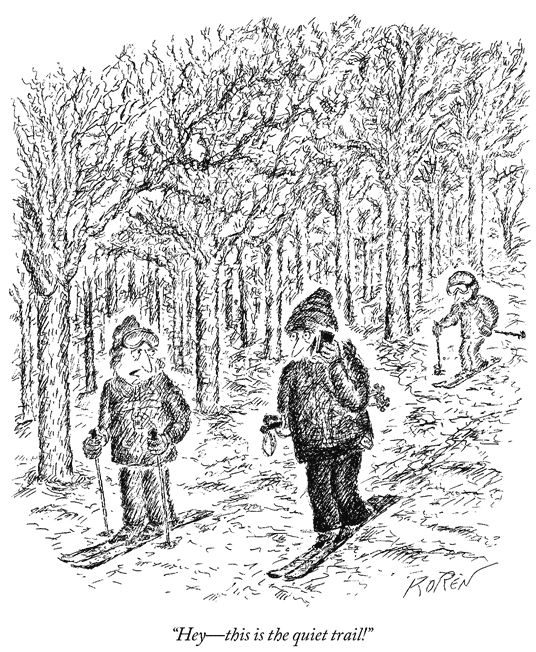
Latest favorite New Yorker cartoons.
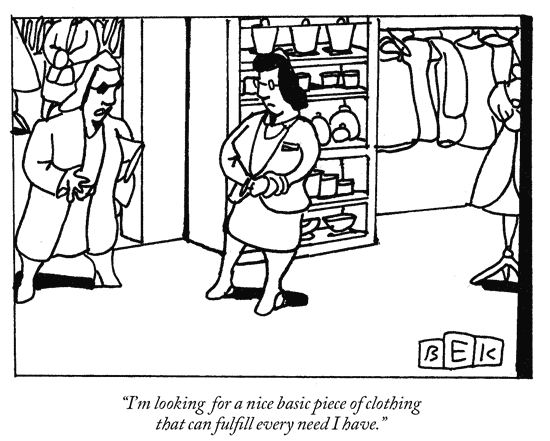
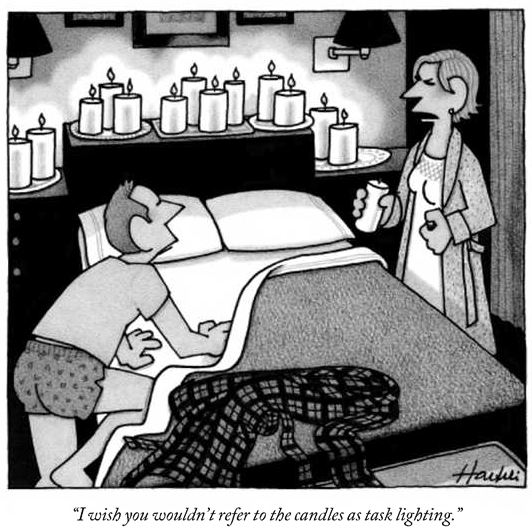

Harry Newton says cherish each day. Our class just lost one of its stars, Rob Held, 74, a brilliant man who had been CEO of Chipcom Corporation and had devoted huge passion and energy to various non-profits. At the time of his death, he was planning a ski trip to Jackson Hole, a full knee replacement, and a family trip to Switzerland where he could celebrate two of his favorite things: being high above tree-line in the Alps, and surrounded by family. He died of a massive brain hemorrhage, which came unexpected, totally out of the blue. He was a wonderful man.
This weekend, write your bucket list. While you’re at it, make an appointment to visit your dermatologist. I just visited one in California. He lasered 26 horrid-looking things off my chest.

Re: ATM withdrawals in Europe…why pay 3% AMEX fee? My online bank EVERBANK charges a flat 1% which is the VISA fee and does not charge any further fees for monies withdrawn from my checking account. EverBank does not charge ATM transaction fees, however, does pass on fees charged by foreign banks. Many foreign banks do not charge transaction fees even from “through the wall” sidewalk ATMs operated by banks. Always be sure to use bank owned ATMs and not private ones and you are right never use ATMs at the airport for more than say a hundred bucks to pay your initial expenses. I always bring home a couple hundred Euros to get me started the next time I go over. Some people confuse exchange rate losses with fees.
You can get VISA daily exchange rates at
http://usa.visa.com/personal/using_visa/consumer_ex_rates_us.jsp
Select your country and which foreign currency i.e. Euro
Simply add your bank’s fee rate…(in my case 1% VISA fee) or $1.3086 = 1 Euro
Share ›
There is also http://www.capitalone360.com formerly ING Direct. No fees on ATM’s or on purchases domestic or foreign. Likewise, Capital One credit cards do not charge foreign transaction fees.