Edward Snowden stole NSA secrets. There are the implications for us normal, law-abiding citizens:
1. Whatever’s in the cloud can be snooped. That includes your business records. Snoopers include government agencies, hackers from the U.S and from Russia, China, etc.
2. Don’t ever allow your bank, brokerage, insurance company etc. to ONLY send you electronic records of your balances and your transactions. It may save them paper and money. But it will hurt your ability to argue with them when they lose your records or mess up your account — as their computers will, one day.
3. Some online vendors ask to save your credit cards. Don’t let them. Millions have already been stolen. Yours could easily be next.
4. Don’t email threats. Don’t say anything in jest. Don’t talk about guns or bombs. Don’t talk about your annoyance with the nice people at the TSA. Assume that everything you email, everything you post on the Internet and everything you say on the phone will be seen or heard by someone who can make your life miserable — should they so choose.
5. You should understand that there is no such thing as secure records. Everything can be snooped or listened to.
Last night 60 Minutes had a long piece on the NSA. The NSA chiefs said they had metadata on all US phone calls. They defined metadata as information on phone calls made in the US to the US or to overseas — when the calls were made, to which number, how long they talk, etc. But they didn’t listen in to the phone conversations, only those who were terrorists (which they didn’t define). The NSA did say it it processes the metadata. It can figure out how many times you called Joe, or how many times he had called you.
We do know (though 60 Minutes did not talk about this) that NSA operatives have listened in on their girlfriends’ phone conversations from their desks at the NSA — even though doing so was clearly illegal.
Yesterday, the New York Times ran a front page story, “Officials say US may never know extent of leaks” (caused by Edward Snowden). The article began:
WASHINGTON – American intelligence and law enforcement investigators have concluded that they may never know the entirety of what the former National Security Agency contractor Edward J. Snowden extracted from classified government computers before leaving the United States, according to senior government officials.
Investigators remain in the dark about the extent of the data breach partly because the N.S.A. facility in Hawaii where Mr. Snowden worked – unlike other N.S.A. facilities – was not equipped with up-to-date software that allows the spy agency to monitor which corners of its vast computer landscape its employees are navigating at any given time.
Six months since the investigation began, officials said Mr. Snowden had further covered his tracks by logging into classified systems using the passwords of other security agency employees, as well as by hacking firewalls installed to limit access to certain parts of the system.
“They’ve spent hundreds and hundreds of man-hours trying to reconstruct everything he has gotten, and they still don’t know all of what he took,” a senior administration official said. “I know that seems crazy, but everything with this is crazy.”
That Mr. Snowden was so expertly able to exploit blind spots in the systems of America’s most secretive spy agency illustrates how far computer security still lagged years after President Obama ordered standards tightened after the WikiLeaks revelations of 2010.
You can read the entire article here.
I am not paranoid. I am careful. I value my nice, quiet, peaceful life. You should value yours, too.
Several times this column has been attacked over the Internet by bad guys. We don’t know by whom. And we have had to shut down the way I get in. I have also deleted comments which I found physically threatening (to me or to others, like government officials) — usually written by non-thinking “heat of the moment” readers.
We live in wonderful times. The Internet and the phone system (landline and cellular) has brought us all great convenience and improved the quality of our lives. But it has also brought us great risks. You should be aware of them. Read my five points above again.
The NYTimes article also writes,
But for all of Mr. Snowden’s technical expertise, some American officials also place blame on the security agency for being slow to install software that can detect unusual computer activity carried out by the agency’s work force – which, at approximately 35,000 employees, is the largest of any intelligence agency.
If the NSA has been “slow,” ask yourself about your bank, your credit card company and your sundry vendors — none of whom has the expertise, nor the unlimited budget which the NSA has.
You can see the 60 Minutes piece and read its transcript. Listen to the NSA’s language. It’s deliberately misleading. Click here.
Are stock prices too high? The Wall Street Journal doesn’t think we’re in a bubble. Neither did several of the speakers at the recent Robin Hood conference. But I do believe that some stocks (especially some Internet-based stocks) are way overpriced. Here’s the Journal’s piece:
Bursting the Stock-Market-Bubble Bubble
No, stocks are not in a bubble. But that doesn’t mean investors must like them.
With the S&P 500 up a blistering 25% this year, and with stocks like Tesla Motors sporting valuations that strain belief, the word “bubble” has been getting batted around a lot lately. Case in point: Over the past three months, a Factiva search returns 391 news articles with “bubble” in close proximity to “stock market”, up from 130 over the same period last year.
Stock-market volume remains muted, a sign that stocks are not in a bubble. Above, traders at the NYSE last week. Reuters
Given that the dot-com stock bubble occurred during the professional lives of many, if not most, people investing today, the idea that what’s happening now is similar is odd. The S&P traded at 28 times prior-year earnings at its peak in 2000 compared with a price/earnings ratio of 17 now. The Nasdaq Composite’s ratio was 142 at its peak compared with 22 now.
Nor should the fact that some companies’ shares seem bubbly be taken as a reason to be in a lather about the overall market. Think about the great enthusiasm investors showed for bowling-company stocks in the late 1950s and early 1960s.
When shares of Brunswick peaked in 1961, they were 1,590% higher than at the end of 1957, according to stock-price data from the Center for Research in Security Prices at the University of Chicago Booth School of Business. That was the end of the bowling bubble, but it wasn’t the end for stocks-the deep bear market of the 1970s was still more than a decade away.
Other hallmarks of bubbles also are missing. When a market is frothy, investors tend to trade very actively-a sign the greater-fool-theory (as in “I can find some greater fool to buy this at a higher price”) is in effect. But stock-market volume remains muted.
Nor have individual investors shown much of a penchant for stocks. When Gallup last conducted its stock-ownership poll in April, only 52% of people said they owned shares directly or indirectly, such as through a mutual fund. That compared with 62% in April 2000, and was the lowest reading in the 15 years Gallup has been asking.
But stocks don’t have to be in a bubble in order to be too expensive.
Although the S&P’s P/E multiple is only slightly higher than its average since the late 1950s, the profits that multiple is based upon may lack staying power if companies end up having to use more of their revenue to cover costs. Given how elevated profit margins have been, that seems likely.
After-tax corporate profits as a share of gross domestic product (a proxy for overall profit margins) were a record 11.1% in the third quarter, versus an average of 6.1% since 1929.
That is a reflection of how little hiring companies have done since the financial crisis, and how little they have spent on new equipment.
Given how leanly companies are running, and that the economy seems poised for better growth next year, they will now be faced with a tough choice. That is to spend more or lose market share.
Profit margins aren’t going to collapse next year, but they seem more likely to narrow than widen. If stocks continue going up next year, this will probably be on the back of more stretched valuations than stronger earnings.
And going beyond next year, one would expect there will come a time when the share of the GDP going directly to U.S. workers rather than corporate coffers will rise again, giving way to profit margins that look more like the historic norm. That will make its way into stock prices.
Consider this: Federal Reserve figures released last week show that in the third quarter, the value of U.S. equities was 234% of annualized, after-tax household income. That is a level that has only been surpassed during the dot-com boom and nearly twice the average since 1950.
Things don’t have to be in a bubble to seem out of kilter.
You can see the WSJ’s piece here.
Stockmarket stuff:
+ Trefis think Adobe is way overpriced at $60.89. Trefis says it’s worth $41.12. Click here.
+ Top 12 Ideas For Your Portfolio In 2014 by Shaun Currie on Seeking Alpha. I like his picks, but I have to research them a little more. They include:
Bally Technologies (BYI)
Cabela’s Inc. (CAB)
Google (GOOG)
KB Homes (KBH)
Interface, Inc. (TILE)
ON Semiconductor Corp (ONNN)
ATMI (ATMI)
Energy Recovery, Inc. (ERII)
LSB Industries (LXU)
UQM Technologies (UQM) and Quantum Fuel Systems (QTWW)
Hydrogenics Corp. (HYGS)
You can (and should) read his analysis. Click here.
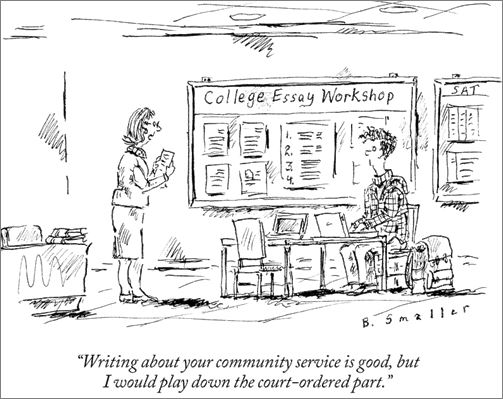
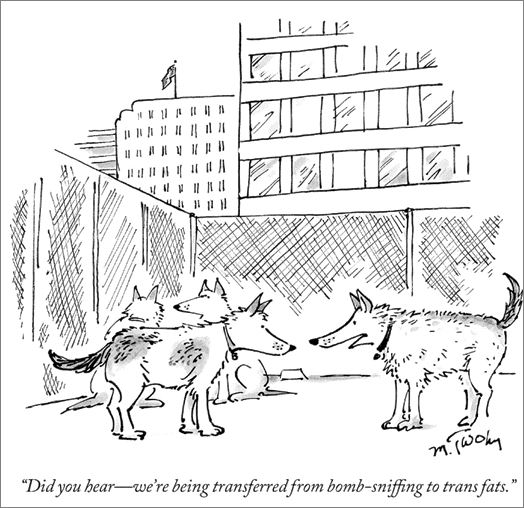
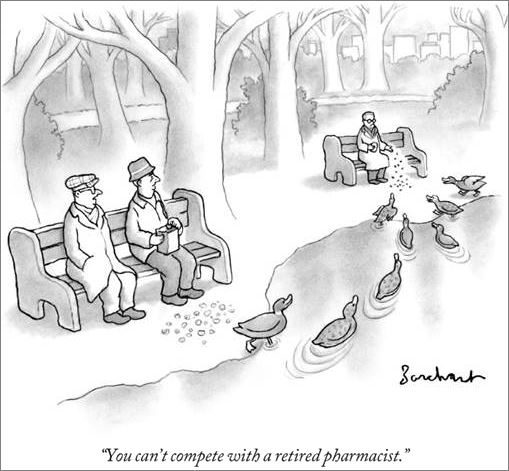
Favorite recent New Yorker cartoons.

Harry Newton who admits to being paranoid. “What’s the worst that can happen?” A good question to ask of any potential investment.

NSA spying is not only essential for national security but more importantly an abusive tool used by the Elites (Banksters, Mega Corp, Corrupt Government, Corrupt Politicians) to track the sheep. What a waste of our taxes benefiting the wrong people.. Citizen and natural resources exploitation, bribed dictators…No wonder we have wars! You’re right Harry be careful what you say because the US Constitution is now null and void since the Patriot Act sham.
Harry, the amazing thing about all these security disclosures as that this is probably an infinitesimal part of what is actually going on…..there are ALWAYS many more cockroaches than one can see…
And Harry would vote for Obama again just like he voted for Bill DeBlasio. Once a liberal always a liberal. Enjoy the next 3 years Harry it’s going to be one big progressive super party in NYC.
I didn’t vote for DeBlasio.I actually don’t vote in New York City. I vote in upstate New York.
“Only the paranoid survive” – Andy Grove