The market goes up 9 months before the economy does. Old adage. Has it worked this year? Certainly looks so.
Will it go up next year? Certainly looks like it may as the world’s economies recover more.
Two items that reinforce the news of recovery:
+ First, what BusinessInsider calls The Most Important Chart of 2013:
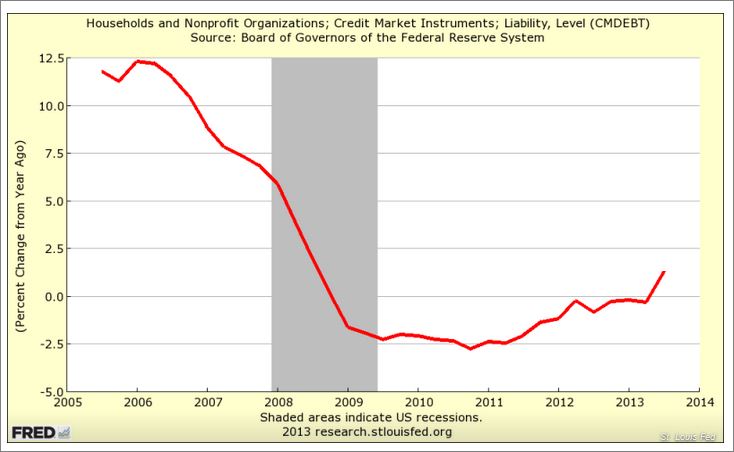
Says BusinessInsider:
The Federal Reserve’s latest quarterly Flow of Funds report revealed the first increase in U.S. household debt since before the financial crisis in the third quarter of 2013.
In short, Americans have stopped paying down debt, and releveraging has officially begun.
We asked 113 of our favorite portfolio managers, strategists, analysts, and economists across Wall Street for the charts that they deem the most important of the year, and this is the one we received the most.
“The, frankly, token attempts at cutting back over the last few years are over, and it’s back to business for U.S. households,” said James von Simson, a portfolio manager at Thurleigh Investment Managers.
There is a strong sense that this bodes well for the U.S. economy.
“After five years of persistent debt pay-down by households, the U.S. private sector deleveraging cycle appears to have come to an end, and with it is the increased prospect for a more sustained economic rebound,” said Millan Mulraine, a director of rates, FX, and commodities research at TD Securities. “The first quarterly increase in mortgage debt and sharp rise in credit-card borrowing in Q3 (shown in this chart) marks a crucial turning point for the U.S. recovery, and it suggests that consumer spending activity could again become an important driver for sustained growth going forward.”
Cullen Roche, founder of Orcam Financial Group, agrees.
“This is a clear sign that the household credit crisis is coming to its final chapters and that the U.S. economy is officially stepping out of a very nasty chapter in U.S. economic history,” said Roche.
Now, we won’t have to hear talk about deleveraging in the U.S. anymore, according to Matt Busigin, editor and principal author of Macrofugue Analytics.
“This is both healthy and sustainable as long as the pace (of debt expansion) is below the rate of national income growth,” said Busigin. “Deleveraging as an investment and economic theme is over.”
+ Second what this weekend’s Economist calls A Creeping Ascent:
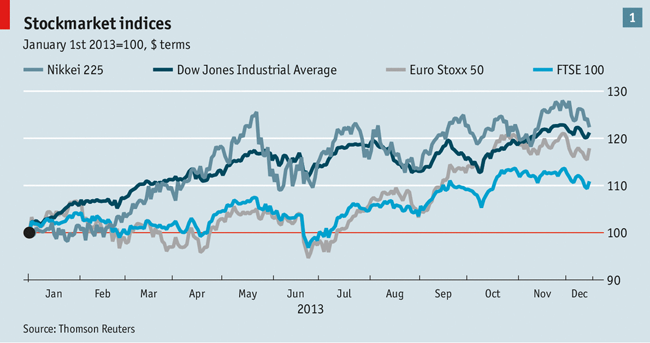
THE world economy continued to recover from the financial crisis in 2013, albeit wanly. Stockmarkets around the world rallied (chart 1).
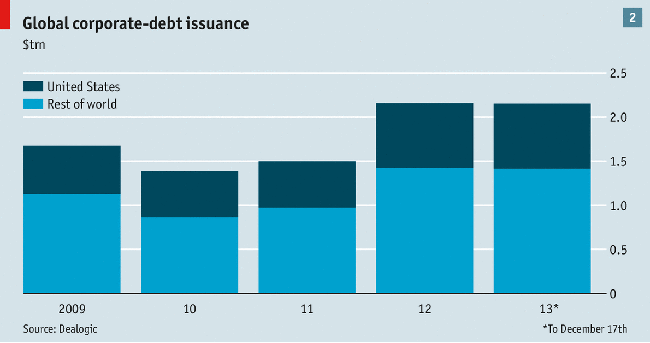
And companies are issuing what is likely to be a record amount of debt (chart 2), to take advantage of rock-bottom interest rates.
The fear of further debt crises in the rich world receded as growth picked up and budget deficits declined (chart 3).
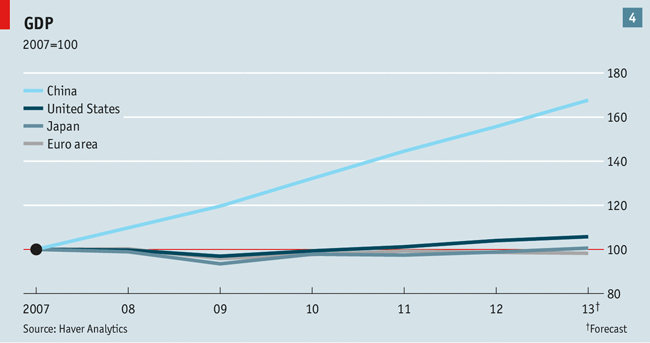
But most developed economies remain little bigger, if at all, than they were before the crisis struck; the contrast with many developing countries, notably China, is stark (chart 4).
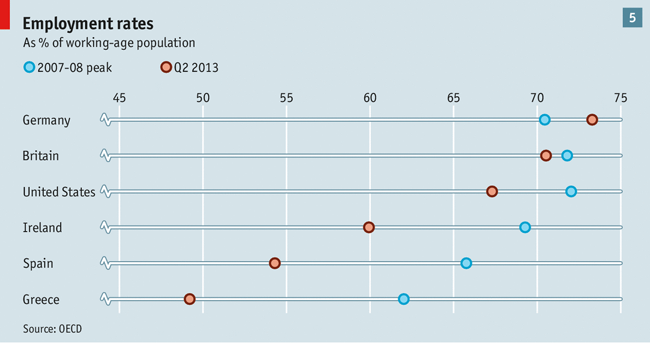
The share of working-age adults in employment remains below its peak in most of the rich world (chart 5).
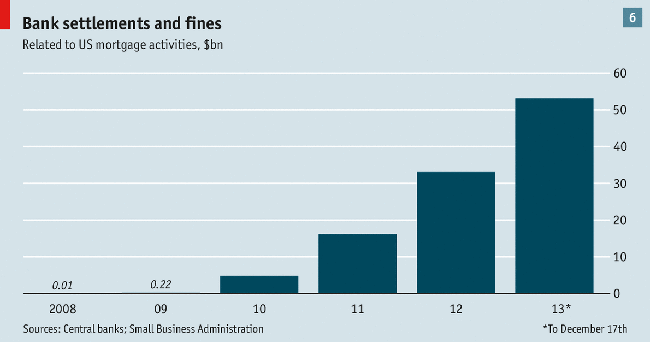
Banks face growing penalties for misconduct during the crisis from emboldened regulators (chart 6).
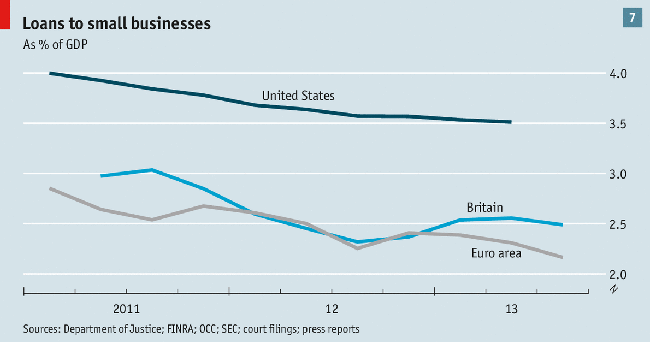
They are also hampered by more elaborate regulation and stricter capital requirements; in many cases, they are responding by curbing credit (chart 7).
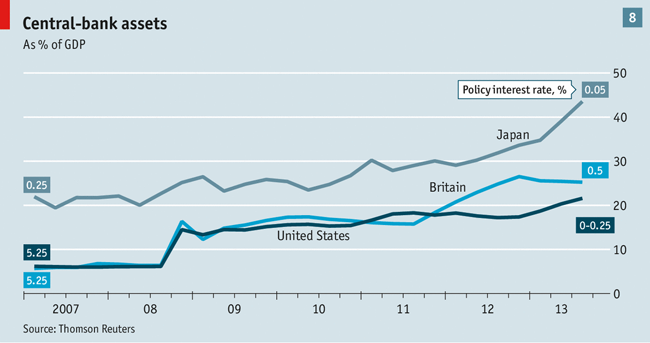
Moreover, even this lacklustre performance is underpinned by central banks’ extremely loose monetary policy. The Federal Reserve and the Bank of Japan have continued to print money on a huge scale to purchase bonds, in the hope of driving down long-term interest rates, while keeping short-term ones close to zero (chart 8).
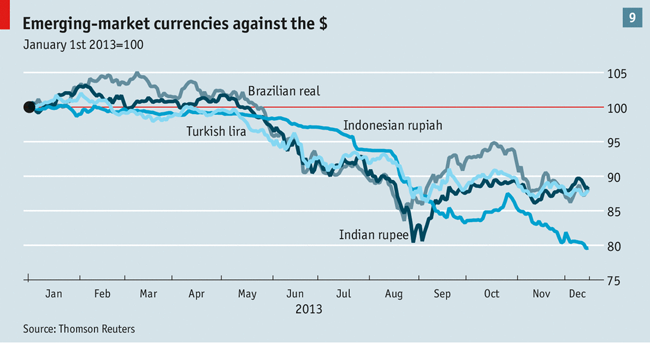
When the Fed suggested in May that it might soon start scaling back its asset purchases, the mere prospect caused a rout in emerging-market currencies (chart 9), as investors withdrew their money in search of higher yields in advanced economies.
Here are all the Economist’s charts:

You can also see all the charts on the Economist’s website: here.
20 Top Picks From 20 Top Investors. They’re from Fortune Magazine Investor’s Guide 2014. The picks are
+ Vitamin Shoppe
+ Hain Celestial.
+ PepsiCo.
+ Target. (Pity about that one.)
+ Expedia.
+ Technip.
+ Green REIT.
+ Volkswagen.
+ Ezio Holdings.
+ China Mobile.
+ Credit Suisse.
+ Agco.
+ Ultimate Software.
+ Kirby.
+ Jones Lang LaSalle
+ US Bancorp
+ Bank of New York
+ Morgan Stanley
+ Western Union
+ Market Axess
You can read the analysis in the latest issue of Fortune Magazine or here.
Weekend reading:
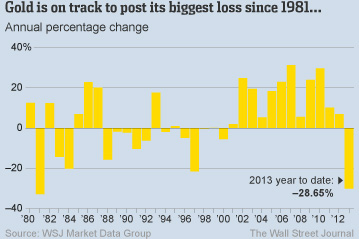
+ Gold set for its first annual loss in 13 years. From the Wall Street Journal.
Click here.
+ The real reason Apple is falling. From MarketWatch:
Wednesday was supposed to be the glory day for Apple. After seven years of negotiations, China Mobile was supposed to announce an agreement to carry Apple’s iPhone. So far, there is no announcement, but the announcement may come later. The real reason Apple is falling is not China Mobile, but an earnings report from Apple supplier Jabil Circuit. Jabil makes moldings for Apple iPhones.
Jabil’s JBL +3.77% earnings report was awful. Jabil sees second-quarter EPS of $0.05 to $0.15 vs. a consensus of $0.52; sees revenue of $3.5 billion to $3.7 billion vs. a consensus of $4.28 billion. Jabil stock has responded by falling about 21% and hitting a fresh new 52-week low at a time when most stocks are hitting 52-week highs.
On the conference call, Jabil put the blame on one customer. Jabil did not specifically name the customer, but in my analysis, after having followed both Apple AAPL +0.35% and Jabil for years, I believe the customer is most likely Apple. Why? In the conference call, JBL made two points. First, the shortfall was in their DMS division, and Apple is a very large customer of DMS. Second, the shortfall was the result of a last-minute change by a customer, this is characteristic of consumer devices. No other DMS customer fits the profile. Jabil declined comment.
For the full article, click here.
+ Yahoo’s Geek Goddess.

As one of Google’s highest-ranking women, Marissa Mayer became a Silicon Valley superstar, but inside the search giant her dazzle sometimes wore thin, with colleagues rebelling against her imperious style. In the wake of Mayer’s jump to run the struggling Yahoo, Bethany McLean asks whether she will be its savior or its next big problem. A year and a half in, the results are mixed.
Christmas presents:
+ My favorite flannel pajama pants. From Eddie Bauer. I live in these things:
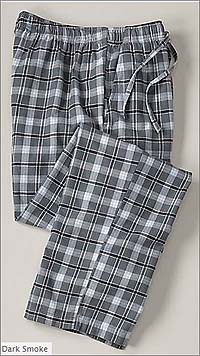
On sale for $30 or $35 for the long ones. Click here.
+ TAC flashlight from Outback Flashlights.

Best LED flashlight ever. Comes in many colors. $9.95. Photographs better in bright yellow. Click here.
Favorite cartoon: Harry’s Rules. If you can do business without them, do it. If you need them to chase your money, they work. But get the best.


Harry Newton who was once short BlackBerry but then covered it when he got concerned they’d sell the company. Wrong! It’s going lower. This is a sad story of a company whose success translated into huge arrogance that blinded management to the reality that its competitors were eating its lunch. and by the time it woke up, it was far too late.
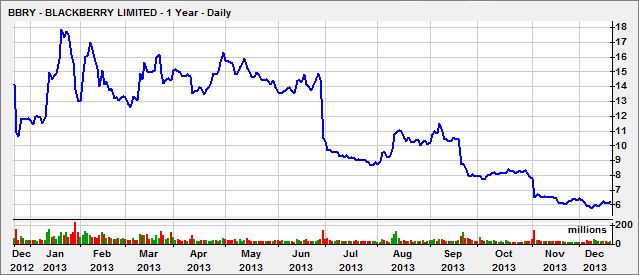

Blackberry is a fool’s bet.
Thought everyone would understand: I was recommending shorting it, not buying it.
up 15% today…not much of a fools bet today
Go ahead & buy it. I think it’s be great for you to jump in today. And don’t inch in incrementally (bit by bit), plunge in big time.
I realize that.