Some of my most intelligent friends fret about the stock market. They think it’s a gamble they can’t control and, most likely, will lose. One complained on the weekend that his money manager is “ripping him off with outrageous fees.” Others simply don’t like managing money and would rather let someone else “manage” their money.
Why am I writing this? I got hit with a bunch of these on the weekend. I’m blown away. Why anyone would work all their life to earn a nice retirement nestegg and then abandon it to a stranger? Boggles my brain.
The easiest solution: Grab some index funds like FMILX and some low-fee Vanguard funds like VXF, VBR, and VTI and live happily ever after. High fees — like those charged by many money managers — really do add up, and can really cut into your long-term returns. Avoid all front-end loads.
Check out some favorite stocks — look at the column on the right on my web page.
Meantime, where goes the stockmarket? Clearly, I feel positive. and so does a piece from Sunday’s New York Times, Sunday Business section:
Maybe there’s life in the old bull yet?

Worried about the stock market? There’s no shortage of reasons to fret.
Weak economic data, lackluster earnings reports and a severe correction in the Internet and biotech sectors have shaken many investors.
Yet none of that fazes Laszlo Birinyi. The gloom that has descended over the market recently is for him a source of good cheer.
Why? “We’re in the last stage of a great bull market,” he said in a phone conversation last week. “It’s the exuberant phase.”
Yet investors aren’t acting all that exuberantly, which is a good thing, he says, because the long rally underway since early 2009 is likely to end only after the party becomes dangerously wild. From that perspective, a dose of sobriety is salutary, a good sign. It suggests that the bull market has plenty of room to run.
“Most of what passes for news about the market is really noise,” he said. “You need to stop and think and do your research. When you look deeper, you see a different picture.”
What he sees is a largely benign environment for stocks – a generally happy picture that he has painted, with relatively minor alterations, since he became one of the first prominent strategists to recognize that a major bull market started more than four years ago.
Mr. Birinyi, 70, is a veteran market hand: He headed equity market analysis for the old Salomon Brothers brokerage firm, where he worked with Michael R. Bloomberg, the former New York mayor, and Michael Lewis, the author, most recently, of “Flash Boys” (Norton), a critique of high-frequency trading in the stock market. Mr. Birinyi now runs his own independent money management and research firm in Westport, Conn., Birinyi Associates. He recently published a book, “The Master Trader” (Wiley) in which he levels a critique similar to that of Mr. Lewis, though he quibbles with Mr. Lewis’s characterization of the market as “rigged.”
“I’d put it another way,” he said. Opaque electronic trading has made it much harder to track money flows in the market, he said, and to trade with precision at certain moments, particularly at the market opening. That, he said, tilts the odds so they are “badly skewed against the individual trader.” Like Mr. Lewis, Mr. Birinyi says regulators need to be more vigilant in protecting the public interest.
Still, he observes that ordinary investors who have stayed in the market since March 2009 have generally reaped enormous profits, amid many worries along the way. That upward trend is likely to persist, he says, along with the worrying.
“The conditions for a bull market remain intact,” he said. “But we’re in an advanced stage now, and you’d expect that some things would change.”
In this sense, he says, some of the apparent bad news of the last few months should be re-evaluated. Much of it is actually positive, he says. For example, after many warnings – including one in this column in March – that biotech and Internet stocks appeared to be reaching irrational levels, those two sectors have deflated, falling more than 15 percent since their peaks earlier this year. Valuations in these areas had gotten out of whack, and it’s only reasonable that they have fallen, in his view.
But the rout hasn’t spread to the overall market. The Standard & Poor’s 500-stock index, which tracks the large-capitalization stocks that comprise the bulk of most portfolios, is clinging to positive returns for the year and has continued to set nominal records, most recently on May 13. (Adjusted for inflation, however, the index is still about 7 percent below its 2000 peak.)
“The overall market is shrugging off the tech and biotech problems, and that’s important,” Mr. Birinyi said. Investors are differentiating among individual stocks and sectors, and shares of many of the biggest companies remain buoyant. Stocks like Oracle, Intel and Apple have all gained in value this year. Because Apple has the largest market cap of any stock, it has an outsize influence on major indexes like the S.& P. 500; its strong recent performance is far more important for the great majority of investors than that of numerous smaller tech stocks combined.
The earnings and economic data shouldn’t be a source of worry now, either – at least not the way he sees things. Analysts have complained about an impending sharp decline in corporate earnings for the last few years, only to be proved wrong, and, he said, so long as the economy stays reasonably strong, earnings will be robust enough to drive the stock market.
As for the economy, he shrugs off the feeble first quarter for the gross domestic product. It rose only 0.1 percent, inflation-adjusted, in the latest government estimate, and may well drop into negative territory when the data is updated Thursday.
But he points out that G.D.P. estimates are notoriously unreliable – they sometimes change significantly years later. While recent data for the second quarter appears stronger, he prefers to look at the stock market itself for clues about the economy. Shares of Caterpillar, the heavy-equipment maker, have been strong, signaling that investors believe that robust industrial growth is coming, he said. Similarly, he said, NVR, a home-building stock, has risen smartly. “That tells me that the market is very comfortable with the housing sector,” he said.
The persistence of low interest rates has surprised him. “We didn’t expect that at the beginning of the year,” he said. The implications of this for stocks are complex but generally positive: Low rates may aid a continuing stock-market rally because they make stocks more attractive in a bake-off with bonds.
Because the market has already risen so much, the biggest gains are probably behind us, he says, and his own short-term projections have been careful: He predicted that the S.& P. 500 would reach 1,900 in this quarter, and it has. Barring a catastrophe (an unexpected war, for example) it seems most likely to him that the market’s momentum will continue to trend upward.
That’s why, from his perspective, what others are calling bad news is actually good. It’s dampening the exuberant spirit that may one day stop the bull market in its tracks.
But, he says, we’re not there yet.
What’s to know about emerging markets: Most are kleptocracies. The people in charge run the country as if it were theirs. A handful of favored people get super rich. They do this by grabbing the best businesses for themselves. Check out who owns the local cell phone company. It’s the military or the bosses. Or the military may be the bosses, as in Egypt. Where there is concentration of power in few hands, there is little progress for the country, or the vast majority of the population. The country is held together by force of the military, and their secret police. The populace regularly gets upset. Think the French Revolution, the Arab Spring, Zimbabwe, Russia, the Iranian Revolution, and the mess in Egypt — from the ouster of Mubarak, the election of Morsi and then his ouster by General Sisi. Imagine having investments in Egypt with these continuing political turbulences?
Suffice, I’m not a fan of emerging markets. Solid investments — like the ones you and I want — are reliant on the rule of law, which most emerging markets lack big-time. Which brings me to the most interesting piece I read all weekend. Ask yourself: Would you like this guy running your country? This is an amazing look into a dictator’s brain. Here’s the beginning of the piece:
Egypt’s New Strongman, Sisi Knows Best
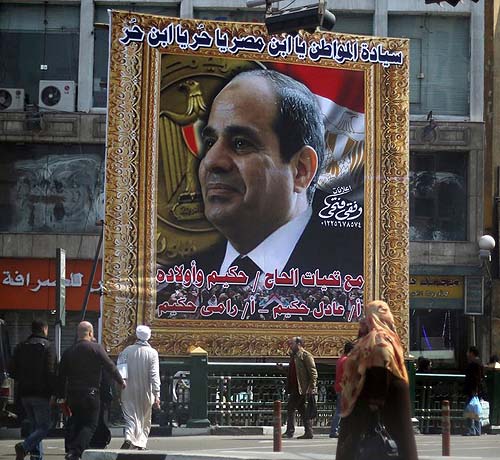
A banner for the soon-to-be-elected president, Abdel Fattah el-Sisi, displayed in Cairo in March. Credit Amr Abdallah Dalsh/Reuters
CAIRO – Abdel Fattah el-Sisi, the former army officer soon to be Egypt’s president, promises to remedy Egypt’s crippling fuel shortage by installing energy-efficient bulbs in every home socket, even if he has to send a government employee to screw in each one.
“I’m not leaving a chance for people to act on their own,” Mr. Sisi said in his first and most extensive television interview. “My program will be mandatory.”
Mr. Sisi, 59, disciplined and domineering, is universally expected to become Egypt’s head of state after a pro forma election scheduled to begin Monday. He has already been the nation’s paramount decision maker since he ousted Egypt’s democratically elected president, Mohamed Morsi, last summer.
Now, more than three years after the Arab Spring uprising raised hopes of a democratic Egypt, his move into the presidential palace will formally return Egypt to the rule of a paternalistic military strongman in the tradition of Gamal Abdel Nasser, Anwar Sadat and Hosni Mubarak.
In his long rise to power and a compressed, three-week campaign, Mr. Sisi has shown that he, too, sees himself as a morally superior father figure responsible for directing and correcting the nation, with a firm hand if needed.
“You want to be a first-class nation?” he asked of Egyptians, in a leaked recording of an off-the-record conversation with a journalist-confidant. “Will you bear it if I make you walk on your own feet? When I wake you up at 5 in the morning every day? Will you bear cutting back on food, cutting back on air-conditioners?”
“People think I’m a soft man,” he added. “Sisi is torture and suffering.” …
He has quickly displayed a certain nostalgia for the Nasserite state dominance of the economy that set the stage for six decades of stagnation. He has proposed government projects to force down prices and profits as well as to irrigate and give away vast areas of desert. And he has expressed frankly condescending views of the public.
The military, Mr. Sisi told fellow officers in a leaked recording of a meeting last December, is “like the very big brother, the very big father who has a son who is a bit of a failure and does not understand the facts.” Urging patience with public criticism of the army, Mr. Sisi asked: “Does the father kill the son? Or does he always shelter him and say, `I’ll be patient until my son understands’?”
You can read the rest of the New York Times’ piece on Sisi. Click here.
The best-selling non-fiction book has major errors. The book is Capital in the Twenty-First Century by Thomas Piketty. In it, he argues that, under capitalism, income equality worsens and, as government policy, we ought to tax capital, an especially dumb idea (in my opinion). The Financial Times found Piketty’s errors.
Today, in an email to Business Insider, the French economist said he would soon respond to the FT’s findings of discrepancies in his data in an update to “Capital in the 21st Century”‘s online index. The FT, meanwhile, doubled down on their critique, finding in an editorial that “problems with Prof Piketty’s data undermines his thesis that capitalism has a natural tendency for wealth to become ever more concentrated in the hands of the rich.”
The best description of Obamacare so far :
Remember when Nancy Pelosi said: “We have to pass it to find out what’s in it.”
A physician called into a radio show and said: “That’s the definition of a stool sample”.
I’m sure there’s a moral to this story.
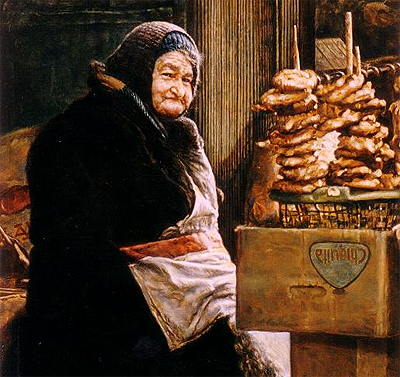
A little old lady sold pretzels on a street corner for a dollar each. Every day a young man passed the pretzel stand. He would leave her a dollar, but never take a pretzel.
Three years passed. The two of them never spoke. One day as the young man passed the old lady’s stand and left his dollar, the pretzel lady spoke to him for the first time: “They’re $1.25 now.”

Harry Newton who discovered this stuff on the weekend:
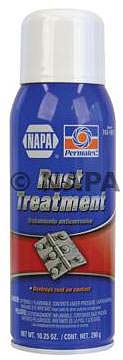
Sand off the rust. Mask the area. Spray this stuff on. Pure magic. Rust is dead on contact. Worked on my old car and a metal post. My favorite get-rich formula with invented stuff in a bottle remains New-Skin, the best liquid bandage ever invented. It made the inventor rich beyond his wildest dreams.


GDP and GNP are generally made up numbers, the only relevant number one receives from the government is tax revenue. If sales tax collections are higher than retail sales are better regardless of any government statistic.
If the IRS is collecting more money than the economy is better companies do not pay taxes when they are losing money.
It may be simple and crude but it is a reliable indicator
A very informative and easy to read book explaining the poor economies in Latin America, a land rich in people, minerals, farm land and such is “Liberty For Latin America: How to Undo 500 Years of State Oppression” by well respected Latin Author Alvaro Vargas Llosa. Even in democracies, the Latin ruling class, be they right wing or left, are a special class taking care of their own. Not lands of equality under the law.
Harry, I sure as heck wouldn’t want to be breathing in atomized phosphoric acid. Yuck. Good old Ospho has been on the market since just after WWII. No one who lives within 20 miles of salt water (and maintains their own stuff) can live without it. Wear gloves and eye protection. Put it on a rag and wipe it on. Let it get black and dry. Paint over it. Spray on? Oh goodness, where is the EPA when you really need them?
Harry, wrt Obamacare description…remember, you help put that criminal fool in office. Should shame you every day.
Harry, try to help the economy. What are you doing driving an old car?
Because I actually like my 2002 Subaru Outback station wagon. I only drive it on weekends for tennis and shopping. Even at 12 years old, it’s still hasn’t got 50,000 miles on it.