We’re hanging nicely in, as the market edges up.
Morningstar has a piece arguing that mutual funds that charge less (i.e. lower fees) do much better for their investors than those who charge more. Surprise. Surprise. For the story, click here.
Beware Chinese IPOs: Their track record sucks. From today’s Financial Times (the pink paper):
Previous flotations have failed to bring big rewards by By John Plender

Richard Qiangdong Liu, founder, chairman and CEO of JD.com speaks to employees as JD.com
has its initial public offering (IPO) on the Nasdaq exchange on May 22, 2014 in New York City. JD.com is a
popular online Chinese retail site.
What is happening to investors’risk appetite? The continuing downward pressure on US Treasury bond yields indicates a degree of caution in the air. For their part equity investors have been retreating into size and quality. There has also been a global sell-off in technology stocks after a period in which demand in the IPO market for shares in companies that made no money knew no bounds.
Yet there are pockets of gung-ho risk-taking in global markets where caution is being thrown to the winds. Untried instruments such as contingent convertibles in banking, for example, are finding enthusiastic buyers, reflecting the manic search for yield. Still more intriguing is the renewed American interest in Chinese company IPOs, despite the raft of accounting frauds that emerged from the now notorious Chinese reverse mergers on the Nasdaq exchange in recent years.
Last week JD.com, the Chinese online direct sales company, was successfully floated on Nasdaq at a valuation of more than $25bn despite never having made a profit since inception. This followed the earlier successful IPO of Sina Weibo, China’s answer to Twitter, which was also lossmaking. Yet corporate governance at JD.com compares unfavourably with US tech companies. Given the dual voting share structures and crony boards that exist at the likes of Google and Facebook, that is a serious stricture.
Governance shortfalls
At JD.com Richard Liu, the founder, combines the role of chairman and chief executive while retaining 83.7 per cent of the voting power despite owning only 18 per cent of the total equity.
Nasdaq still, despite the record with Chinese companies, allows foreign issuers to apply lower corporate governance standards of the home country, which in this case is the Cayman Islands, not China. The Cayman jurisdiction is flabby on independent representation in the board room, so outside shareholders lack an important protection they badly need in the light of other governance shortfalls.
The directors and executives, along with their assets, are in China, which means any infringement of outside shareholders’ rights cannot be addressed effectively through the US courts.
American investors’ ownership rights are also weak because property rights in China are notoriously vague and changeable at official whim. Nor are they likely to see any hard cash from the company since it does not propose to pay out dividends. Quality of information (or lack of it) is likewise an issue. No formal assessment of internal control was conducted before JD.com’s flotation. What the directors do know is that there is a material weakness in control because not enough people in the company have adequate knowledge of US accounting principles.
Why, then, are investors prepared to plunge in where governance angels fear to tread? The answer is that JD.com is already the largest online direct sales company in China by transaction volume. You do not have to believe it will achieve its stated goal of becoming the largest ecommerce company in the world to see the case for a directional bet to acquire exposure to a high growth economy that is preparing to rebalance from investment and exports to consumption-led growth.
Disappointing returns
Lack of profit simply reflects heavy investment in growth. As with tech stocks in the US there is also a temptation to regard such investments as a lottery ticket on the company dominating a large new growth market or disrupting a large existing market by initiating a process of creative destruction.
The same arguments will no doubt be applied to Alibaba, the much larger Chinese ecommerce company that is expected to float in the US later this year.
Yet buyers should beware because China is no exception from the norm in IPO markets whereby big gains can be made on day one, yet longer-term returns disappoint. Between 1993 and 2013 168 companies from Hong Kong and China went public on organised stock exchanges in the US, not including those notorious reverse mergers.
Jay Ritter, a professor of finance at University of Florida, calculates that in the three years from flotation the average return on these 168 IPOs was minus 3.6 per cent, or an average of minus 1 per cent a year. Investors who bought the S&P 500 would have earned an average 23 per cent or about 8 per cent a year. In fact, Chinese stocks have performed dismally over the period regardless of where they were traded.
China thus performs a function in global markets that Latin America performed in earlier centuries. It is a place of boundless promise with an endless capacity to part investors from their money. The novel feature is that China has performed this trick while delivering astonishingly high economic growth.
The writer is an FT columnist.
If you buy stock in a startup:
1. Get a written agreement that they will send you quarterly and annual reports, and all press releases.
2. Get some warrants (in case the thing actually works).
3. Get on the board or a board advisor, with access to all the materials the board sees.
For God’s sake, don’t give them money and walk away. You need to be involved. Otherwise it will be a bust. Trust me.
Have an idea for a new product? Don’t humiliate yourself by begging bucks from your friends and family. Don’t dilute the equity in your company. Put your idea on Kickstarter. You’ll raise the money you need. But not have to give away any — nada, zilch, gornisch — equity in your company. Here’s today’s example:
The iStick – World’s First USB Flash Drive with Built-In Apple Lightning Connector (according to today’s press release):
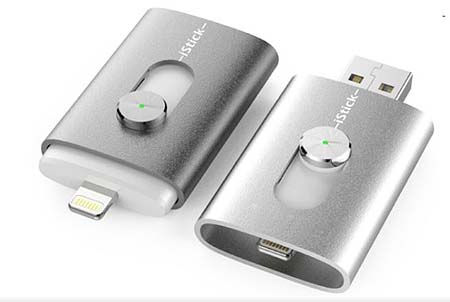
The iStick sought $100,000 on Kickstarter. They’ve raised $750,000+ in two weeks, with still three weeks to go. It’s a neat idea, if it works. The iStick will be available in August, they say.
Everyone calling or emailing you and wanting money is a scam. Everyone. That includes the “IRS,” credit card companies and magazines wanting your subscriptions renewed. There are emails from credit “credit alerts,” from Nigerian, Brazilian, Saudi Arabian and other “princes” who have money for you. Don’t accept their money. I’ve already spent your money.
Clearly, no reason ever to buy a GM car. Ever . GM’s disgusting behavior knows no bounds. 13 deaths from a faulty ignition switch and still counting. And who’s knows what other life-snatching faults are in today’s GM’s cars they haven’t told you about?
GM willfully ignored the ignition switch problem for years until it finally caught up with them. And still they hide the facts from their victims and their families. To be as disgusted as I am, read yesterday’s New York Times cover story: Click here.

Harry Newton who daily searches for true happiness.
Once upon a time, he thought true happiness was having a president who does what he says he will do, like getting out Afghanistan, asap. Now I read in today’s paper:

What’s wrong with end-2014?
Perhaps true happiness is something more mundane? Like having a toilet you can leave the seat up?

Harry, I cannot believe you feel sorry for these alleged victims. The cars lost power. It should not be the end of the world. You lose power steering and power brakes, but you don’t lose steering and brakes. Besides it seems these people were intoxicated and not wearing seat belts. This was a minor problem blown way out of proportion.
13 people died. GM covered the defect up for years. Some of the victims were drunk. Some didn’t wear seat belts. Not none deserved to die because GM’s air bags did not explode. GM knew about this problem for years and willfully ignored it.This is a scandal of monumental proportions. No one should ever buy a GM car — coming from a company with this dishonesty and willful disregard for human life.
I remember an old friend telling me, “one day the best part of your day will be sitting on the toilet and reading the paper.” So, wrong old man it’s sitting on the toilet with my iPad.”
Harry, this is easily your best column ever. PLease skip the stock market & devote your daily column to toilets and crappers.
Harry, it only took me 40 years to understand the true meaning of happiness and it is extremely simple…
Happiness = seeing beauty in everything and being grateful for the experience
Skip investing. No one is interested. They’re only interested in ….. toilet seats. Keep on reading.
There is at least one woman in the world who puts the seat up for her husband, just because she loves him so much.
I bet I know who that woman is. She’s a beautiful, intelligent, handsome lady.
Hmmm. 🙂
Sad, isn’t it, that our most profound writings get crickets, but when we talk about toilet seats – or the toilet paper coming out the top or the bottom – the comment spigot comes on in full force.
I will say that these days I am training my brain to be more fascinated by the deep than the superficial, in the hopes of not being sucked down the brain drain with the rest of our culture!
Happiness is being happy with where you are in the moment. Some are just easier to be happy than others…
Harry, I enjoyed your cycling limelight article and enjoy your daily blog too. Please keep this going no matter how many others try to pooh on it. Please take a minute to check out my cycling campaign website and if anyone is moved, take some positive action.
http://pages.teamintraining.org/gba/ambbr14/tab94583
I’ve had my own john in two houses since 1977. It’s the only way to live. I can leave the seat up and I don’t encounter female chemicals or clothes.
I do enjoy true happiness…with totally separate bathrooms…”I” leave the seat up!