There are two types of funds: Those you can sell. And those you can’t.
Funds are run by managers for managers for the fees. End of story. For the fees.
Years ago, funds of all ilk — private equity funds, leveraged buyout, distress — used to return huge IRRs. 30%+ a year was not uncommon.
Zillions of funds got created in 2005 and 2006. Then the world collapsed in 2008. The funds are inching their way — often returning their investors 3% a year and their managers huge 2% fees on funds raised. Now the managers are earning more than their investors.
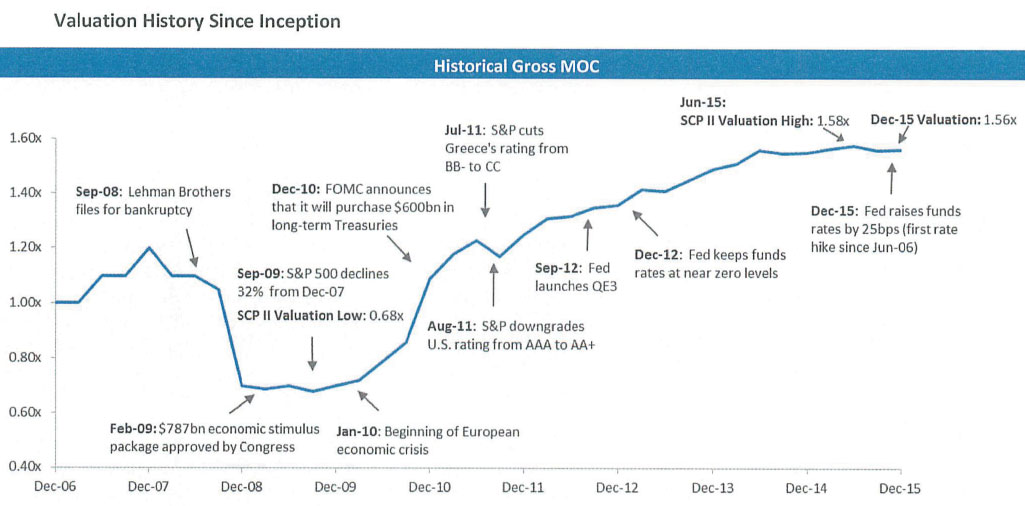
I suspect that most fund managers know it’s all over for new funds. Many are hanging on. Typically their 2% expires after ten years. But this fund (see chart) just extended its management deal (and fees) for another year (without asking for my vote).
I invested in 2005 in this fund. That figure of 1.56x is actually misleading. That’s gross, before fees. After fees, it’s only 1.38x. That’s a return of 3.27% a year to me. Heck I would have been much better off buying muni bonds. At that time, they were paying 5% triple tax-free. A real return of close to 8%. (If you can’t see all of this chart, click on it.)
There are lessons:
1. The world changes. There’s always another financial crisis. (We’re actually overdue for one.) I would have far better off dumping everything in 2008 and going into the stockmarket. (I couldn’t. I was locked into this fund.) The S&P 500 has averaged 7.42% over the past ten years.
2. Management changes. I was sold on this Citigroup fund because of its excellent management. But it left and Citigroup sold the fund to Stepstone, which actually is doing a much better job than Citigroup ever did.
3. Keeping track of all this and knowing that there’s nothing you can do is supremely aggravating. At least to me.
4. There’s always a wrinkle. It’s a wrinkle investors usually know nothing about. Another fund I was invested in charged each portfolio company $200,000 a year for “management services.” Hence even less incentive to sell the companies, close the fund and give investors (like me) our money back.
5. A distress fund I am in is giving me a million silly reasons why it can’t sell the final remaining assets. It needs to clean them up…. But it’s really about the fees. They’re afraid I might reveal their name. I will — if they don’t close the thing down and give me my money back.
6. Stay away from funds.
The stockmarket is turning down?
Are there stocks to short? For starters: Delta (DAL), Macys (M), Walmart (WMT).
But not BHP which just reported its largest loss ever ($6.4 billion) and cut its dividend by 76%. You’d think it would be a great short, what with commodity prices in the tank.. But look at its chart over the past year:
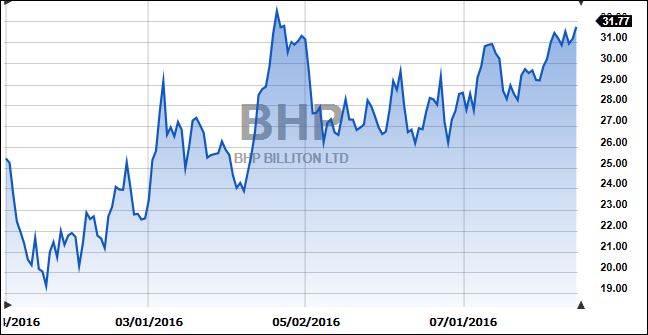
A huge loss and the stock stays up. (It’s down a few pennies this morning.) Go figure.
Don’t get suckered into opening this email.

The attachment is a virus. You don’t want it. You didn’t win the German lottery — probably because you never bought a ticket.
The bad guys are getting really good at fooling us. Don’t open attachments. Delete them instantly, if not sooner.
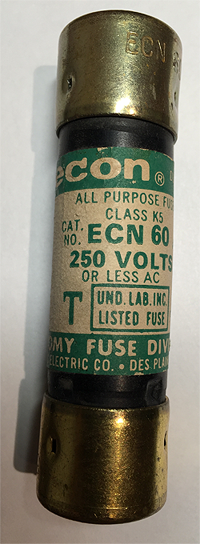
Here’s why you need battery backup at your desk. This antique fuse fizzled for half an hour before finally dying. It knocked out my FiOS Internet and my monitors — but not my laptops or my iPhone, which had batteries. I turned on my iPhone’s Personal Hotspot, which works well as backup Internet, albeit a slow one.
A $140 backup like this APC device will keep your computers running while someone finds and replaces the fuse — it was in the basement. One day our building will get circuit breakers.
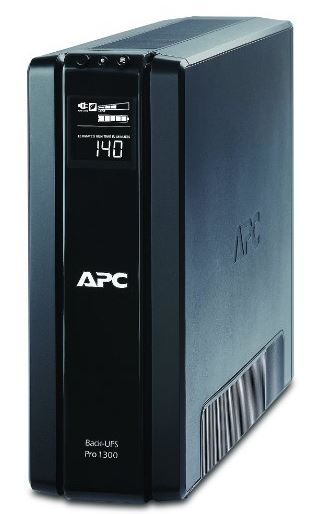
To buy this highly rated gadget, click here.
Are we any safer? The Atlantic just wrote a mini-book on the subject by excellent writer, Steven Brill:
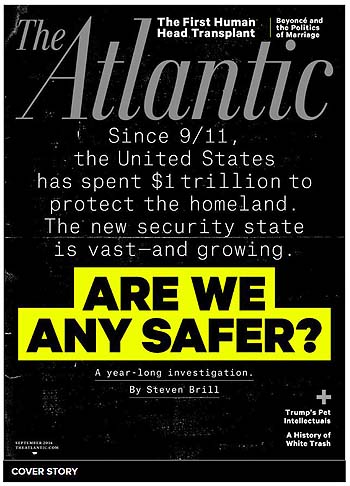
His conclusion is Yes, we are safer. But it’s not easy.
These paragraphs grabbed my attention:
Reaching the Kid in His Basement
Because finding such homegrown cases is difficult (not everyone blabs online, let alone in a restaurant, about their bad intentions), a new homeland-security acronym has come into vogue: CVE, or “countering violent extremism.” CVE is a program that aims to reach people who are so alienated or unstable that they may be susceptible to isil’s appeals.
Last September, President Obama authorized the creation of the $50 million CVE program, to be run by a new Office for Community Partnerships at DHS. A big part of the effort has been making DHS’s “If you see something, say something” campaign more effective. Beginning as a billboard tagline created by the New York City transit system’s ad agency, the program has become an effective message enlisting the public to alert authorities if they notice something or someone that seems suspicious, such as a suitcase left unattended on a train. George Selim, the director of the Office for Community Partnerships, works with a staff of about 30-as well as with Jeh Johnson personally-to encourage leaders in Muslim communities to look for signs of trouble more subtle and further upstream than abandoned luggage, such as teenagers in schools or at mosques who appear disaffected.?
“All the data from Boston to Garland to San Bernardino indicate that someone around them knew something but didn’t want to or know how to report it,” Selim, a former Justice Department community-relations liaison, told me.
Johnson, who has thrown himself into the CVE effort, says that when he goes into Muslim communities, he tells people that he understands profiling. His grandfather, he explains, was called to testify before the House Un-American Activities Committee, because “in 1949 any black man with a Ph.D. was suspected of being a Communist.” He says he tells Muslim community leaders that he “will be your public champion, but that I have an ask, too, which is `Help us help you with homeland security. It’s your homeland too.’?”
Another aspect of Selim’s work involves reaching out directly to that kid “sitting in the glow of their laptop in their parents’ basement.”
His office has been giving grants and running contests at colleges and universities that form student teams to compete for prizes in internet and social-media messaging aimed at countering isil’s online recruiting. “We recognize that government is not a credible messenger for that demographic,” Selim explains. “So we have recruited peer-to-peer messengers.” With the State Department-and Facebook (“to add to the cool factor,” Selim says)-as co-sponsors, he contracted with a private consulting firm that has now persuaded 101 colleges and universities around the world to establish courses, backed by a $2,000 U.S.-government stipend per school, offering academic credit to students who create these peer-to-peer anti-jihad social-media campaigns.?
Get ready for winter. It’s coming, one day.

It’s hot, humid and sticky in the north-east. Really awful.

Harry Newton who is hearing airline horror stories. A United flight from Bangkok to Dulles was cancelled and 350 passengers stranded because the pilot called in sick and United couldn’t rustle up a replacement pilot. Flying is getting worse for reasons I mentioned yesterday.Don’t check bags. Pare down. Carry on. My new motto.
Backup. Back up. The summer brings storms and electricity surges, brownouts and blackouts. Keep backups. Keep battery backups. Run your life better than the airlines do theirs.

Gee Harry…it was 54 degrees this morning in Payson…humidity around 15%
Apparently Soros is extremely negative about the stock market and he has a reputation for correctly calling these disasters. Should we hide or take our chances? That is THE question.
Soros always has an counter agenda.