This chart comes from here. It shows companies which have recently raised their dividend. Ones raising it in the last seven days are highlighted.

A guest on CNBC this morning said companies which consistently raise their dividend are better investments than those who simply pay a high dividend.
Fidelity’s Active Trader Pro is neat. I have been buying and selling stocks and options through Fidelity. I like them because their web system is more “logical” and as cheap as any one else. But I wanted something I could see see price changes in real time. That’s their Fidelity Active Trader Pro, which they turned me onto last night. So far, I’m most impressed.
Great new cheap choices in phone and video calling.
+ My nephew in Australia put the Skype app on his new iPhone 4 and called me. I was on Skype on my PC. The phone conversation was crystal clear, and free.
+ My new Lenovo X201 has a built-in camera. Using Skype, I make full-frame video calls to other laptops with Skype. Those calls are free also.
+ My new iPhone 4 has Facetime. When I call someone with an iPhone 4, I also am now doing a video call. The quality is stunning.
If you have grandchildren (I will one day), Skype, a laptop and a video camera is the technology to use. Buy it this weekend. Do it. Trust me on this one.
Starting a business has never been cheaper. Are you listening, my lady friends? This comes from the September 6 issue of Fortune.
Building A Faster, Cheaper Startup
The growing power of technology and social media has made starting a business simpler than ever.
MTV and Oxygen media veteran C.J. Kettler opened electric-bike retailer Ben Franklin’s Wheels last spring. It took three months, and the total cost was less than $40,000. Here’s how she did it, vs the way she might have done it 10 years ago:
1. Incorporation
Kettler bypassed a slower and costlier law firm, filling out forms directly on USLegal.com
Then Three Weeks / Now Two Weeks
2. Branding
A branding agency was once the only option for professional logos. This time Kettler posted her request on Crowdspring. com and chose from 65 submissions. For the website she used open-source software, not WordPress.
Then 15 Weeks / Now 19 Days
3. Marketing
Before, ad campaigns required time-consuming mockups and buying space several weeks ahead of time. Now, Kettler will use signage, social media, and Google’s Adwords, which she can buy the moment she wishes to advertise the store’s “opening.”
Then Three Weeks / Now As Needed
4. Employee Costs
Kettler can hold off on payroll services until the business has proved itself, relying on PayPal to compensate writers for the site and two students that work bike-selling “events’.
Then Full Time / Now As Needed
5. Rent
Ben Franklin’s Wheels has no retail space and no inventory, relying on orders made from pop-up stores at public events. The corporate office: a P.O. box.
Then Yearly Rental / Now Temporary
Such a bargain. My friend, the broker, presented me this great investment opportunity. All it needs is a new $35,000 kitchen. That brings it up to just under a ridiculous $1,000 a square foot.

Such a bargain. And they say we are in a recession. New York City’s residential real estate remains in nose-bleed territory.
iPad in bed solved. Finally, I can read a book on my iPad in bed. Susan insisted I buy Apple’s official iPad case. She was right. It’s a miracle of design, providing protection and the ability to make the iPad stand up in various positiions.


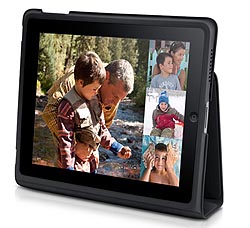
I can also watch two movies in bed on one iPad charge. I recommend the case — $40.
The Rabbi’s Sound Advice
A man goes to see his Rabbi. “Rabbi, something terrible is happening and I have to talk to you about it.”
The Rabbi asked, “What’s wrong?”
The man replied, “My wife is poisoning me.”
The Rabbi, very surprised by this, asks, “How can that be?”
The man then pleads, “I’m telling you, I’m certain she’s poisoning me, what should I do?”
The Rabbi then offers, “Let me talk to her, I’ll see what I can find out and I’ll let you know.”
A week later the Rabbi calls the man and says, “I spoke to your wife. As a matter of fact, I spoke to her on the phone for three hours. You want my advice?”
The man anxiously says, “Yes.”
“Take the poison,” says the Rabbi.
His dying words
The wife and I were sitting around the breakfast table one lazy Sunday morning.
I said to her, “If I were to die suddenly, I want you to immediately sell all my stuff.”
“Now why would you want me to do something like that?” she asked.
“I figure that you would eventually remarry and I don’t want some asshole using my stuff.”
She looked at me and said: “What makes you think I’d marry another asshole?”

Harry Newton who derives great pleasure from his reading. I’m guessing he loved this New York Times piece because he relates to it, especially Woody Allen’s views on faith, religion and aging. Newton and Woody Allen are weird:
Woody Allen on Faith, Fortune Tellers and New York
Asked on Tuesday morning if it was appropriate to wish him a happy Jewish New Year, Woody Allen made it clear that such formalities were not necessary. “No, no, no,” he said with a chuckle, seated in an office suite at the Loews Regency hotel. “That’s for your people,” he told this reporter. “I don’t follow it. I wish I could get with it. It would be a big help on those dark nights.”

At 74, Mr. Allen, the prolific filmmaker and emblematic New Yorker, has hardly found religion. But the idea of faith informs his latest movie, “You Will Meet a Tall Dark Stranger,” which Sony Pictures Classics is to release next Wednesday. In the film, as the marriage of a London couple (Anthony Hopkins and Gemma Jones) unravels, the wife seeks comfort in the supernatural, which has unforeseen consequences on the marriage of her daughter (Naomi Watts) and her husband (Josh Brolin).
“To me,” Mr. Allen said, “there’s no real difference between a fortune teller or a fortune cookie and any of the organized religions. They’re all equally valid or invalid, really. And equally helpful.”
Mr. Allen spoke with Dave Itzkoff about his new film, how its themes resonate in his life and whether he has made his last movie in New York. These are excerpts from that conversation.
Q. The ideas of psychic powers and past lives, or at least people who believe in them, are central to your latest film. What got you interested in writing about them?
A. I was interested in the concept of faith in something. This sounds so bleak when I say it, but we need some delusions to keep us going. And the people who successfully delude themselves seem happier than the people who can’t. I’ve known people who have put their faith in religion and in fortune tellers. So it occurred to me that that was a good character for a movie: a woman who everything had failed for her, and all of a sudden, it turned out that a woman telling her fortune was helping her. The problem is, eventually, she’s in for a rude awakening.
Q. What seems more plausible to you, that we’ve existed in past lives, or that there is a God?
A. Neither seems plausible to me. I have a grim, scientific assessment of it. I just feel, what you see is what you get.
Q. How do you feel about the aging process?
A. Well, I’m against it. [laughs] I think it has nothing to recommend it. You don’t gain any wisdom as the years go by. You fall apart, is what happens. People try and put a nice varnish on it, and say, well, you mellow. You come to understand life and accept things. But you’d trade all of that for being 35 again. I’ve experienced that thing where you wake up in the middle of the night and you start to think about your own mortality and envision it, and it gives you a little shiver. That’s what happens to Anthony Hopkins at the beginning of the movie, and from then on in, he did not want to hear from his more realistic wife, “Oh, you can’t keep doing that — you’re not young anymore.” Yes, she’s right, but nobody wants to hear that.
Q. Has getting older changed your work in any way? Do you see a certain wistfulness emerging in your later films?
A. No, it’s too hit or miss. There’s no rhyme or reason to anything that I do. It’s whatever seems right at the time. I’ve never once in my life seen any film of mine after I put it out. Ever. I haven’t seen “Take the Money and Run” since 1968. I haven’t seen “Annie Hall” or “Manhattan” or any film I’ve made afterward. If I’m on the treadmill and I’m scooting through the channels, and I come across one of them, I go right past it instantly, because I feel it could only depress me. I would only feel, “Oh God, this is so awful, if I could only do that again.”
Q. You recently told the European press that shooting movies in New York had become too expensive. Do you think you’ve made your last film here?
A. My first choice would always be New York. It would be my fondest wish — to work where you live is of course the most luxurious privilege, and I’m sure I will film here again. But the few dollars I have go further in certain places. The cities I’m talking about — London, Paris, Barcelona — these are very cosmopolitan, and they’re like New York. I can afford it a little bit easier. To me it’s a privilege to shoot in New York, and I don’t mind it being extra. I just have to have it, to be able to afford it. I would always make the picture in New York for $15 million that I could make elsewhere for $12 million, if I had $15 million. But if I don’t have the money, then I can’t do it.
Q. It’s not a situation in which these European cities have rolled out the red carpet for you, whereas New York took you for granted?
A. New York has always been cooperative and helpful and a pleasure to shoot in. But the European countries do give you an enormous amount of cooperation. I still occasionally have to make cuts in my film to work there, too. I’m always working with less money than I need. It’s axiomatic.
Q. Were you prepared for the firestorm of media coverage you set off by casting Carla Bruni-Sarkozy in your next movie, “Midnight in Paris”?
A. I was very surprised at the level of journalism that occurred in relation to her. She has a small part in the movie — a real part, but it’s a small part. And I shot with her the first day, and then all the papers said she was terrible, and I did 32 takes with her. Of course I didn’t even do 10 takes with her. This was just a magical number that some guy created in a room. Then they printed that her husband came to the set and was angry with her. He came to the set once, and he was delighted. He felt she was a natural actress and couldn’t have been happier.
Q. That would make a good blurb for the movie poster.
A. For some reason, the press wanted to say bad things about her. I don’t know if they had something against the Sarkozys, or it was a better way to sell papers. But the fabrications were so wild and so completely fake, and I wondered to myself, Is this what happens with Afghanistan and the economy and matters of real significance? This is a trivial matter. That’s a longwinded answer to your question: I was not prepared for the amount of press that was attached to the picture because of Madame Sarkozy.
Q. When you’ve got down time between projects, as you do now, how do you spend it?
A. I do the usual stuff. I take my kids to school in the morning. I go for walks with my wife, play with my jazz band. Then there’s the obligation of the treadmill, and the weights, to keep in shape, so I don’t get more decrepit than I am. I generally don’t see the big Hollywood movies. I saw “Winter’s Bone” the other day and liked the movie very much, loved all the performers. And when I was in Paris, I got a chance to read a certain amount, Tolstoy and Norman Mailer. Things that had slipped through the cracks over the years.
Q. I half-expected to see you at that 12-hour performance of Dostoyevsky’s “Demons” that Lincoln Center Festival produced over the summer.
A. No, no, I’m a lowbrow. I read that material, more out of obligation than enjoyment. For enjoyment, for me, it’s a beer and the football game.
Enjoy the weekend. Hug the kids and, oh yes, back up your computer’s hard drive.
