I hate the way politics is playing out as we approach the November elections.
I class myself as a practical, caring conservative. I want the economy to do well. I want everyone to have a chance. And I don’t like messing up the environment by loosening the few policies we do have — like clean water and exhaust emissions.
I recognize that getting-it-right ideas can spring from any party. Today we have too much outright dismissing of other people’s ideas. Republicans are not the font of all wisdom. Nor are Democrats. I’m fearful of people in power too long. Power corrupts. Absolute power corrupts absolutely.
I like a good contest. It brings out the best in everyone — especially tennis players. Coming up: the Australian semis and finals. Nadal is out. But Roger is still in.
One of the Democrat’s front runners is Bernie Sanders. He’s never had a real job. He’s never met a payroll running a business. He’s always worked for government.
His policies — if implemented — would cause havoc.
The best explanation of the havoc comes from a piece “If Bernie wins” by Damon Linker in the The Week. Some excerpts:
The prospect of the Democratic Party choosing as its standard-bearer one of the most left-wing candidates ever to seek the presidency raises all kinds of questions: Given that as recently as 2015 more than half the respondents in a Gallup poll said they wouldn’t vote for a socialist, would Sanders face insurmountable obstacles in the general election? Or would his deployment of populist rhetoric make him uniquely well placed to win back formerly Democratic states that Trump managed to carry in 2016? If Sanders did manage to beat Trump, would he sweep enough left-leaning candidates into office with him to make it possible to fulfill the hopes of his supporters? Or would he be stymied by Congress at every turn, bitterly disappointing those who voted for him and inspiring some of them to embrace greater political militancy in the future?
Some of these scenarios sound hopeful, others ominous. But even the possibility that seems most optimistic — Sanders winning and enacting large parts of his agenda — comes with serious risk. The problem isn’t that the kind of democratic socialism Sanders favors is incompatible with economic growth and prosperity. It’s that the sharply polarized character of the American political system ensures that any serious attempt to shift toward socialism would produce a severe case of whiplash that could do immense economic damage.
Imagine it: Sanders wins the White House in a landslide and, with the help of left-leaning super-majorities in Congress, swiftly begins to fulfill his campaign promises. Taxes surge to levels not seen in decades, including a reversal of Trump’s corporate tax cut. Medicare is massively expanded to include all Americans, putting the health insurance industry out of business and upending the status quo in the health-care sector (hospitals, doctors, and nurses in every region in the country would be affected). Higher education also undergoes radical change, as student loans are forgiven and public universities and colleges stop charging tuition. The financial sector faces major new regulations, with effects rippling outward to corporate America, which also has to absorb (in addition to large tax increases) a raft of new labor and environmental regulations. Meanwhile, deep cuts to defense spending hit military contractors hard.
Let’s assume for the sake of argument that these changes wouldn’t produce federal budget deficits of such magnitude that they lead to economic disarray, and that the country wouldn’t face an Ayn Rand-style capital strike in which captains of industry horde their wealth and ingenuity to protest the prospect of confiscatory taxation and onerous regulation. Much of what Sanders aims to achieve already exists in Scandinavia, and those (much smaller and more homogeneous) countries enjoy solid levels of economic growth and prosperity. Sanders wants us to believe the same thing could be achieved in the United States, and let’s stipulate for the moment that it could — at least in theory.
The problem comes when we confront political reality in the United States — and especially the uncertainty that attempting such massive reforms would inject into the economy.
For decades, policies have favored free markets and sought to create an environment in which business could prosper and thrive. Over the past three years, these broadly pro-business tendencies have been enhanced by an administration that has drastically cut corporate tax rates and worked to gut regulations, with promises of more to come. What Sanders is proposing to do would overturn this arrangement. It would mark one of the most radical changes in American history.
That in itself would leave businesses reeling. But just as destabilizing would be the looming 2022 midterm elections. In 1994, two years into Bill Clinton’s presidency, voters responded to the administration’s effort to pass a health-care reform bill by handing over control of the Congress to Republicans for the first time in 40 years. In 2010, two years into Barack Obama’s presidency, passage of the Affordable Care Act led to the Democrats suffering the biggest losses for either party in a midterm election since 1938. (The GOP picked up 63 seats that year — 22 more than the Democrats took from Republicans in the so-called “blue wave” midterm election of 2018.)
Clinton’s and Obama’s health-care proposals were ambitious in their moments, but they would be dwarfed by what Sanders would try to achieve if he were to win the presidency. It’s therefore quite possible and even likely that the 2022 midterm elections would produce a major backlash and lurch to the right. Businesses will know this — which means they will know that they know nothing about what to expect during the opening years of a Sanders administration.
That uncertainty would be poison for the American economy, as planning for hiring and expansion becomes close to impossible. The resulting contraction would not — or not simply — be a function of rapacious and greedy capitalists seeking to protect their income and wealth. It would also, and perhaps primarily, be a reasonable response to insecurity about the immediate future.
Economic growth depends on smart long-term planning. One important reason why democratic socialism works in Scandinavia is that there is a broad consensus in its favor, allowing businesses to know what they can expect. But there is no such consensus in the United States. On the contrary, there is deep dissension, and a long, entrenched tradition of resistance to anything resembling socialism that guarantees furious opposition and makes backlash and reversal highly likely. That’s not a situation in which socialism is likely to thrive, as it must, by generating strong economic growth and revenue to pay for robust social programs and services.
For a glimpse of how America’s growing partisan clashes can generate uncertainty and dysfunction, think about what’s happened in international affairs over the past three decades. Administrations have swung wildly from the liberal internationalism of George H.W. Bush and Bill Clinton to the aggressive unilateralism and neoconservatism of George W. Bush, to the revived internationalism of the Obama administration, and finally to the chaotic and impulsive unilateralism of the Trump administration.
Our allies rejoiced when Obama was elected and even rewarded him with a Nobel Peace Prize that was mostly an expression of deep gratitude for the return of what they thought would be a strong partner in seeking to uphold an ever-expanding liberal international order. But Trump’s insulting and impetuous behavior on the world stage has taught them that the Obama administration was only an interlude and that the American norm is now wild oscillations from one administration to the next. What they’ve learned is that the U.S. can no longer be trusted or relied on.
A Sanders victory would herald the expansion of this distrust and unreliability into the domestic economic realm — and business will be perfectly justified in pulling back, uncertain both about how much the socialist’s proposals for radical change will affect their bottom line and whether a Republican victory two or four years later might reverse it all.
Just as foreign policy can’t function well in an environment where the countries of the world don’t know what to expect from one American president to the next, so the economy won’t grow if the business sector finds it impossible to plan more than a few months in advance. It’s important to see that this problem is not a function of socialism per se, but of our country’s polarization.
Our differences are now so great that a change of party can signal a shift to an entirely different worldview. That isn’t a situation in which elected officials should attempt a political revolution.
Clearly, I’m not voting for Bernie.
You can read the full piece here.
I guessed right on Apple.
I continue to love my iPhone 11 Pro Max. I took the photo of the Nike sneaker below with it. Nice camera?
I listened to Apple’s one-hour conference call last night. What impressed me was how many areas Apple is surging on. When I first met Tim Cook, I wondered if he would ever get Apple on the creative momentum that Steve Jobs had it on? The answer from last night’s call is a resounding YES. I’m impressed. And I’m glad that Apple is now my biggest holding. I won’t go through the conference call. Please listen to it on replay.
Harry’s realization about banks
If you don’t borrow from your bank, I can’t — for the life of me — think of one “service” your bank provides that you can’t get cheaper, faster, safer and easier elsewhere — like your online brokerage company.
Banks should be the best business in the entire world. They get their raw material (money) from millions of people who leave their money with them for free. Then the banks take most of that money and lend it for people to buy houses, cars, etc. A business with no cost of goods sold. Nirvana.
It’s a wonderful no-brainer business — until the bank gets greedy and gets into businesses it doesn’t understand — like wealth management, liar and ninja loans and trading.
The banks are behind even on the basic technology of banking. Fidelity verifies me with my voice. And my wires are done instantly. My bank questions if it’s me by asking dumb questions, like where I was born, where I met Susan, who else is on my bank account, and when I was born. They ask them again and again. And they expect paper instructions and they have long waits… And they make gruesome mistakes like sending my same wire twice and then taking 14 days to get my money back.
Try Fidelity. It’s so much more efficient.
Tennis’s collateral damage
Play tennis every day (like I do) and your feet lengthen and widen.
I’ve gone from an 11 to a 12 and now to a 12.5 wide or 13.
I just bought four pairs this morning to test my new size.
It’s weird.
Favorite cartoons

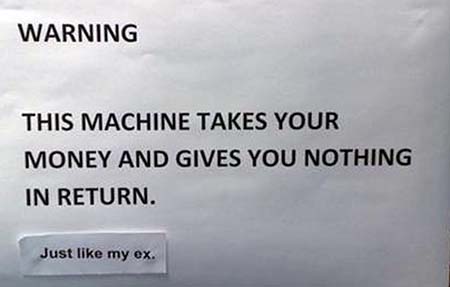
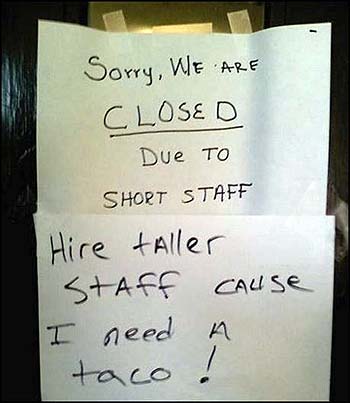
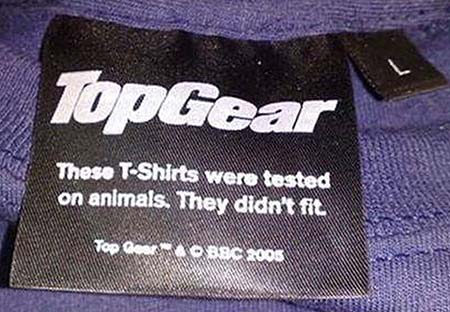
Nike and Nordstrom
Nike has a store in the ultra-glitzy, new Nordstrom store on West 57th Street, New York City. I bought a pair of these as a special present for a special lady friend of mine — my favorite real estate broker, Nan Schiff.
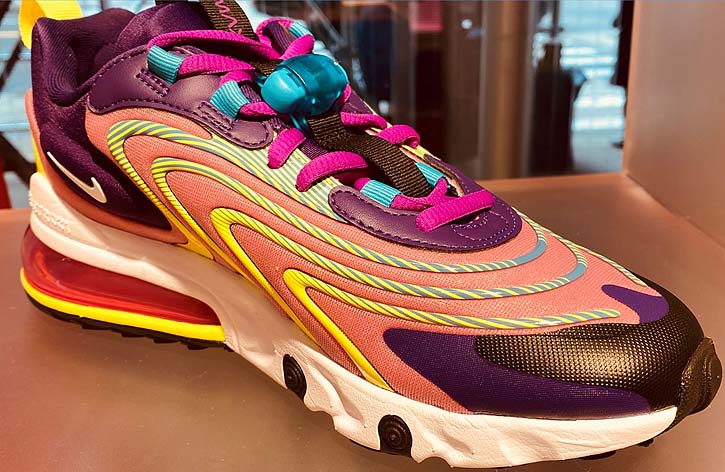
If you want a pair, it goes by the catchy name of Nike Air Max 270 Reach ENG. They make a variation in men’s also. But the women’s is better. Nike’s stock is over $100.
A spectacular new apartment building
It’s 111 West 57 Street. It’s positioned exactly in the center of Central Park. Yesterday I visited a three bedroom, full-floor apartment on the 43rd Floor.

The views are incredible. The apartment I saw was full-floor, about 4,500 square and around $26 million. If I were 40 and rich, it would be a great place to bring up a family. You will not believe the views, nor the attention to detail in the building and in the apartment. They have a web site. Click here.
And stop kvetching to me about the market
It won’t last because it’s low volume or because we’re all going to die of the coronavirus….or I’ll get hit by a bus traveling to tennis (most likely scenario).
I didn’t get hit this morning at 7:00 AM. The bus driver politely sounded his horn as he overtook me. Nice man.
See you tomorrow — Harry Newton

That building is an eye sore. Don’t they have a height restrictions in New York?
Yes they do. You have to go through many hoops to build something this tall.
Some have tried tricking voters into believing that Sanders is the American version of Nordic-style socialist democrats. This isn’t true. At every stage in his adult life, Sanders has been an unabashed apologist for communism. Sanders has made it clear who he really is, voters should take him at his word. https://www.washingtonexaminer.com/opinion/bernie-sanders-isnt-a-democratic-socialist-hes-an-all-out-marxist
My doctor now says that there are numerous cases of coronavirus in the U.S., especially New York City, that are unreported. He said the CDC is afraid if it’s reported that thousands of New Yorkers have coronavirus the people in town will go berserk. Myself, I don’t care, I’ve never been a fan of New York City. I just pray for you and all New Yorkers because this coronavirus is no way to go. In the late stages the ill person develops spasms and is in incredible pain.
What delicious irony if the Resist/Never Trump movement results in President Sanders. In this case I hope he Berns the entire economy to the ground.
111 West 57th- hmmm, what happens when the electricity goes out and there is no elevator service?
I’m guessing they have an emergency generator or two. I hope they’re made by Generac.(GNRC), which is doing well.
It is hard to imagine that anyone who reads this column would vote for Sanders or Warren – unless they are planning to short the market.
Two of the reasons that “socialism” works in Scandinavia are that a. it isn’t socialism – the state does not control the means of production – and b. the defense of Europe has been outsourced to the United States, which allows them to get by with minimal defense spending that is then used to prop up domestic spending.
Everyone’s on board. It’s a very homogeneous place.