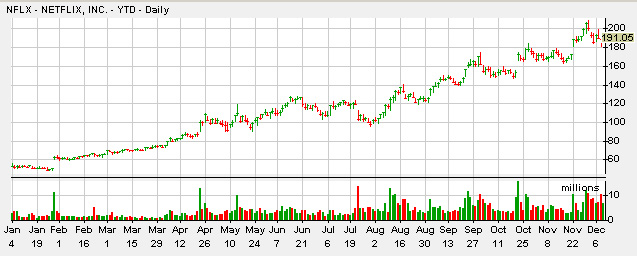
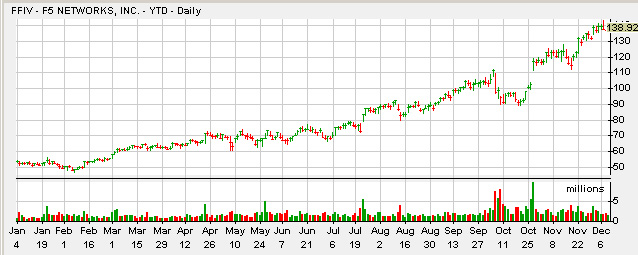
Both of these high-fliers just got added to the S&P 500. That means lots of mutual funds can now, and must now buy them. And they will undoubtedly go higher.
My friend, Scott Udine, money manager, told me this morning,
“Investors need to remember that stocks can move a lot farther and faster than most think are reasonable. Momentum is a very powerful force”.
Lots of cash. Few opportunities? The Wall Street Journal has a piece this morning.
Corporate America’s cash pile has hit its highest level in half a century.
Rather than pouring their money into building plants or hiring workers, nonfinancial companies in the U.S. were sitting on $1.93 trillion in cash and other liquid assets at the end of September, up from $1.8 trillion at the end of June, the Federal Reserve said Thursday. Cash accounted for 7.4% of the companies’ total assets—the largest share since 1959.
So, what’s wrong with cash, Mr. Wall Street Journal? Why the guilt trip on corporate executives? We live in hugely-uncertain times.
Cash is king — for all of us. Keep a stash of cash — at least two years of expenses.
But where to stash your cash? the Wall Street Journal did a piece recently:
Why Savings Account Rates Are So Pathetic
By RON LIEBERSavers just can’t catch a break.
Because of persistent low interest rates, anyone looking for decent returns that are also safe has had a tough time this year. Most of the best savings accounts, for instance, don’t even top a 1.5 percent annual yield.
Sure, some people have made out nicely in this environment. If you have a hefty mortgage, are able to make your payments and have enough equity, you can refinance into a 30-year loan with an interest rate that begins with the number four.
That still seems like a miracle. But many of the people who qualify for refinancing are already comfortable and the low rates are just a bonus.
It’s older people with not much of a mortgage left who are really getting hurt here. The low interest rates keep payouts for newly purchased annuities low, for instance. Insurance companies have been citing the low rates when trying to raise prices on long-term care policies. (Their actuaries guessed wrong too, but that’s a whole other tale.)
And if you’re living on a fixed income, you may be spooked by the stock market collapse a couple of years ago and have little appetite left for risk and no slack for further declines.
That’s understandable, but the earnings on your savings may not be keeping up with real-life inflation, the kind that includes rapidly increasing health care and other expenses that older people bear the most. And even if you aren’t paying higher prices, it’s still disappointing to earn so little on money you want to be there when you need it.
If this sounds like you and you’re increasingly frustrated, all of this poses a basic question: Isn’t there some institution, somewhere, that can pay just a little bit more? What is stopping that from happening?
There are at least seven things that are getting in the way.
LOWER PROFITS Here’s the way things are supposed to work and normally do: Banks take in deposits and then lend that money out.
And here’s what’s happening more frequently now: People are doing a better job of spending less than they earn, but any leftover money is going toward paying down debt, not taking on new debt.
So to the extent that banks have deposits, they can’t lend them out in the quantity they used to (or aren’t because of tightened credit policies). Instead, they buy Treasury bills, according to Bill Hampel, the chief economist for the Credit Union National Association. And those don’t pay as they once did because of the interest rate environment. Nor do they deliver the kind of returns the banks would get if they were lending the money under normal conditions.
The resulting lower profits make it harder to raise the rates that savers earn. Meanwhile, lingering losses from loans pose their own enormous pressures.
THE REALITY OF THE FED If money is so cheap, why can’t financial institutions give us a bit more? After all, banks can just get money from the Federal Reserve and pay close to nothing for the privilege.
Well, at least in theory they can, but only so much and only for so long. “You don’t really want to borrow money like that if you’re a bank,” said Dan O’Malley, who runs PerkStreet, which sets up customers in a checking account with a debit card that can pay back 2 percent in rebates. “It looks bad to regulators, like you didn’t have enough deposits to plan your business well.”
While PerkStreet has been extremely aggressive with its debit card rewards, it does not plan to top the interest rate tables when it introduces a savings account next year. “I don’t think it’s sustainable,” said Mr. O’Malley, who noted that many banks that once topped the charts now pay much less, while crossing their fingers that customers won’t leave in anger. “We don’t want to pump and dump.”
THE F.D.I.C. RATE POLICE Last year, I wrote about the curious case of Ally Bank. Its troubled parent was the recipient of federal bailout funds, and competitors successfully persuaded the Federal Deposit Insurance Corporation to pressure Ally to lower the rates it was paying to consumers.
Nobody wants a run-in like that with the F.D.I.C. (and regulators of all sorts are probably happy to see institutions paying out less if it means they can become more stable). And wouldn’t you know it? Some of the best-paying accounts right now are not traditional banks or credit unions. Instead, these rates come from Sallie Mae and American Express, both new to the online savings game. Both seem healthy enough to stay out of the F.D.I.C.’s cross hairs.
CREDIT UNION LAGGARDS It’s a bit surprising that credit unions, which exist to serve members rather than shareholders, don’t pay more. Surprising, that is, until you consider what it really means to serve.
Credit union members putting money into certificates of deposit would love to earn more, and they often do get a bit more than they would from a nearby megabank. But members who are borrowers want to pay less for their loans, and they often do.
“Borrowers are owners just as much as savers are,” said Mr. Hampel of the credit union association.
THE PROBLEM WITH WINNING But why not just pay us a bit more, even a quarter of a percentage point? Surely there must be an institution strong enough to do that or willing to do it to build good will.
Even in this environment, however, companies may not need all of the potential deposits. Sallie Mae started its savings account and C.D. offering this year to raise money that it could then lend out for student loans. It is offering one of the best rates in the country, a 1.3 percent annual percentage yield, but it’s not alone atop the rankings.
Still, that’s good enough for the company. “We don’t need more than the amount that is coming in,” said Joe DePaulo, Sallie Mae’s chief marketing officer. “You raise deposits to the point where it’s appropriately sized for the investment opportunity you have.”
RATE CHASERS And if a bank does pay much more than anyone else, it runs the risk of attracting hot money. These are often big piles of cash, which is nice, except that the account owners move it all out again if rates at a competitor become just a wee bit higher.
“If you’re in the 90th percentile, you’re probably targeting rate shoppers,” said Shamir Karkal, chief financial officer of BankSimple, which doesn’t intend to rank quite that high when it introduces a new kind of bank account in 2011.
Mr. DePaulo of Sallie Mae made a similar point. “You have to be worried about overpricing and underpricing and the dynamic on the loan side,” he said, adding that he hasn’t seen any hot money fleeing yet, but is certainly watching for it.
LAZY CUSTOMERS Many big banks continue to pay well below 1 percent. Why? Because you let them. Sure, it’s a bit inconvenient to open a separate, higher-yielding account and link it to your bank account when you’re not getting all that much more for the privilege. But because many people don’t bother doing that, many megabanks continue on their merry way, paying absolutely pathetic savings account rates.
Look, I’m no apologist for any of these institutions, but I’m reasonably sure that they refer to people who have money in their low-interest accounts as suckers. And if nobody kept money there anymore, they’d have to improve their offerings.
You can eke out a bit more by moving money to smaller banks that offer the new breed of high-interest checking accounts that require you to use your debit card a lot and to sign for purchases. This may require giving up access to a branch, however, which some people are unwilling or unable to do.
Or you can try to earn more on the rewards side, through a bank like PerkStreet or a savings plan like SmartyPig’s, which also requires you to spend money to get the biggest possible return.
My tactic is to keep spare cash at BankDirect, an online bank that pays 100 American Airlines frequent-flier miles each month for every $1,000 I have on deposit. There’s a bit of risk here because you need to redeem the miles to get any return.
But the yields can easily run 2 percent or more depending on the retail price of the flights or premium-class upgrades you redeem your miles for. (The miles have also helped me qualify for lifetime platinum status on the airline, which I will hit in the next couple of days.) Plus, you pay no taxes on the miles you get; that’s not the case for interest you earn.
Yeah, the miles aren’t worth much, and the 5 percent interest rates on savings accounts from several years ago would certainly be preferable. But at least you can fly to a beach free and worry there about when you’ll be able to do a little better.
Teaching children about business. School doesn’t teach business skills. Here’s the list I shared with my kids at the Harry S. Truman high school in Bronx a few days ago. These are skills they — in fact, all of us — need. In no particular order:
1. Technology familiarity. Software programming. A kid who knows how to program is a thousand percent more value than one who doesn’t.
2. Selling.
3. Public speaking.
4. Accounting. Balance sheets. Finance.
5. Marketing.
6. The logic of product design and product positioning.
7. Writing. Most adults can’t write well enough to get their ideas across.
8. Listening to your customers. Most executives don’t. But successful ones do. Some actually follow up.
And you thought Amazon (and eBay) were always cheap. Amazon and eBay are selling the new, hot Nikon D7000 at way above retail. Which brings me to:
Question: Why did God invent Christians?
Answer: Because someone has to pay more than retail.
Thoughts on WikiLeaks. Julian Assange is an idiot. He should never has messed around with those girls in Sweden. There’s a target painted on his forehead. A whole bunch of insecure government people are gunning for him. He knows that. He should be squeaky clean.

Julian Assange is actually Australian.
The facts are simple: Everything WikiLeaks has published is known, or easily discoverable by every country in the world. In fact, nothing we’ve heard from WikiLeaks has been a surprise. Put it on the level of amusing reading.
The U.S. Government should ignore him and pay more attention to doing fewer dumber things — like those exposed by WikiLeaks. For example: it’s now time to get completely out of Afghanistan and Iraq. History of the past three thousand plyus years shows empires brought down by wars they couldn’t afford and financed with debt they couldn’t service. Sound familiar?
Six months to live. Part 1.
Doctor: I’m sorry. But you only have six months to live.
Patient: What now?
Doctor: Move to Nebraska and marry a Jewish princess. It will be the longest six months of your life.
Six months to live. Part 2.
Doctor: You have six months to live.
Patient: But I can’t pay your bill in six months.
Doctor: You can another six months.
Less serious ailment.
Doctor: Mrs. Cohen, your check came back.”
Mrs. Cohen: “So did my arthritis.”
Brilliant prognostication.
Doctor: You’ll live to 60.
Patient: I AM 60.”
Doctor: “See! What did I tell you?”
The hard diagnosis.
A doctor holds a stethoscope to his patient’s chest.
Patient: Doc, how do I stand?
Doctor: That’s what puzzles me.
The patient’s cell phone.
Doctor: Nuh?
Patient: I have a ringing in my ears.
Doctor: Don’t answer.

Harry Newton who loves the locker room at the tennis club. Why one player had three wives, each of whom felt obliged to get a boob job, also called breast augmentation. My friend from Indianapolis tells me that 36% of the sophomore girls in schools in ritzy Carmel (a suburb) also had breast augmentations. the cost is between $3,000 and $10,000 for both. Apple’s products are number one on Christmas lists. I hear that Apple Computer announced today that it has developed a computer chip that can store and play high fidelity music in women’s breast implants. The iTit will cost between $499 and $699 depending on speaker size. This is considered to be a major breakthrough since women have always complained about men staring at their breasts and not listening to them.
Apologies for all the bad jokes today. I got carried away. The stuff in Indianapolis is apparently true, however.

We love your blog theme can you tell us the name of it and where you downloaded it? thanks.
I was at the airport the other day, talking to a woman. Suddenly her phone started to ring. She ignored it. Seesm she carried it tucked inside her bra.
It was one of those “once in a lifetime moments” when I said in my finest “Prince Charles” British accent “Excuse me madam, do you realize your breast is ringing?”
Maybe you had to be there, but those around is thought it was funny.
They tell me my black eye will be gone is 2 to 4 weeks.
> the cost is between $3,000 and $10,000 for both.
Both? Have they ever had a buyer that asked for just one?
Who knows? Stranger things have happened. I'm guessing you might get only one if something happened to the other one. I'm amazed at the trend and the expense. But heck, it's not my money, nor my children.