Concentrating on something you control is the best way to growth your money.
Your own company. Your special acting/ artist career.
There are a myriad of investment “strategies” for getting money to live on when you’re old.
Dollar cost averaging is the least painful, easiest way to assure your old age. Every month you dump $x of your income into an ETF. I like VGT. VTI (the S&P 500) is fine, but doesn’t grow as fast.
With dollar cost averaging, you look at the results maybe once every five years. This strategy will always work (i.e. grow and be profitable) in the long-term. That’s because stock prices always go up in the long-term. Always!
Want better gains? Pick individual assets — but you must spend the time to study. Which artist’s paintings will skyrocket. Which stocks have a winning niche. Whatever you study, you’d better love it. The blog you’re reading is a labor of love and study. I don’t charge. Others do. They want to make subscription fees. I want to make money from learning. That’s what this blog is about. Teaching me by my writing my thoughts. It’s worked so far.
No matter how much you study, individual asset-picking strategy will mess up– simply because no one can predict the future. Who knew that this grotesque painting would one day be worth millions?

Can you imagine the model asking Picasso to show how he had painted her? nd then this?
The BIG theory is called Modern Portfolio Theory. Because you can’t predict, it says you should diversify. The most recommended diversification strategy is x% bonds, y% stocks. As you get older you get more bonds, fewer stocks – e.g. 60% bonds, 40% stocks, when you’re an old geezer (like me).
When things get squirrely in stockmarkets (like recently) “professional” managers (like superannuation funds) will switch out of stocks into bonds. That’s what many did recently. I did too. My recent blogs pushed the heady 5% plus yield I could earn on treasuries – to offset the decline in equities I figured was coming (wrongly) as the Fed aggressively hiked interest rates.
I wasn’t completely daft. I still kept some stocks. And my treasuries were all profitable. It was just suboptimal. And it was insane for money managers like CalPERS who have to pay pensions with their earnings. Treasuries don’t cut it. I can live on my treasuries income. They can’t.
There is a better way for them and for us. It’s taking a small percentage of our portfolio and buying an “insurance policy” in the form of out-of-the-money put options. These things are much better than the normal house or insurance we buy. If we burn our house, we get what it costs to rebuild the cost. If the market crashes big-time, our out of the money put options could be worth thousands of times what we paid for them.
Recently hedge funds have been set up to pursue this strategy. They buy these put options. If there’s no disaster, these options will expire valueless. So ten years of no disasters will mean ten years of losses for these hedge funds. But, on the eleventh year there’s a big disaster – a Black Swan event like a Pandemic – and bingo, ten years of losses are recouped and then some. In fact, lots of “some.”
For example, there’s hedge fund called Universa. Its tail-hedging strategy made more than 1,500 percent when the S&P 500 lost more than 15 percent in a year. What’s more, since the strategy only required a small slice of an investor’s holdings — say 2 or 3 percent-the amount of cash left over for stocks or other risky assets was much higher than in a portfolio with gold, bonds, or francs. A standard bond hedge, for instance, typically required a 30 or 40 percent position in fixed income.
There’s more to this.
Think Harry Newton (i.e. me) and my dumb portfolio strategy in 2023. Had I dumped all of my money into my favorite tech stocks – Nvidia, Tesla, Google, Meta, Netflix, Amazon, Microsoft. Taiwan Semi, Trade Desk, Super Micro Computer, etc. – and spent three per cent of my portfolio money on buying out of the money puts (now valueless), I would be much richer (and happier, because I was right and now had more money to give to my favorite charities).
What got me on this track was this new book by a brilliant Wall Street Journal writer. I couldn’t put it down. And then I needed several days to mull what I read and come up with the words I wrote in this blog. If you care about your money, you owe it to yourself to read the book. I read it cover to cover in one long sitting.
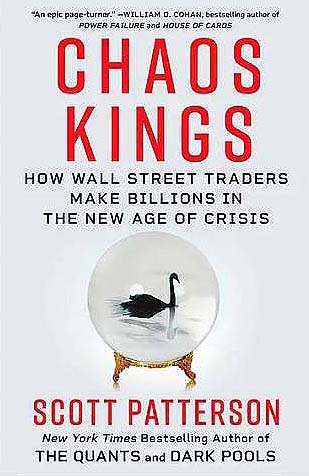
You can buy the book here. I like the Kindle edition because you can highlight the good bits. Then Amazon’s clips them to your own special notes page on one of Amazon’s servers. It’s so much more brilliant (and useful) than buying a print book and using a yellow magic marker.
As yet, I haven’t bought any long-term, out-of-the money puts. I’m mulling and researching. I love the idea.
Last Friday, one of CNBC’s brightest called Kelly Evans wrote this
It’s rather poignant that Harry Markowitz–the father of modern “index” investing–passed away in late June, in the midst of a stock-market year that pretty much no one saw coming.
It was supposed to be a year of “modest” returns, recession’s arrival, and “The End of FANG.” Instead, the Nasdaq has soared 32% year-to-date, the S&P 500 is up 16%, and the Dow would be joining them if it had replaced Intel with Nvidia, but instead is only up 4%. Strategists have been scrambling to keep up. Stock pickers and active managers are in some cases doing fine, in other cases doing quite poorly, and in some sectors facing existential crises.
All of which feeds Harry’s point, that you shouldn’t try to pick stocks or time the market (especially as an individual investor). Instead, you should just be as broadly diversified as possible, at low cost, and with minimal turnover of your holdings.
There’s a fun story, actually, about how Markowitz, a mathematician, wound up applying his work on statistical distribution to the stock market. As his friend and colleague Mark Hebner told us the other day, it was all because a stock broker happened to be in the adviser’s office when Harry went in to discuss his dissertation ideas one day, and suggested he apply those insights to the stock market. (Hebner has a library of Markowitz interviews here.)
This was back in the early 1950s, and Harry’s ultimate research piece on “Portfolio Selection” became a core building block of the “diversification” principle that ultimately gave rise to the huge move over the past several decades towards index investing.
When I spoke with Mark earlier this week, I asked him if he saw the investing world today as the triumph of Harry’s ideas in practice. He said no–or not yet, anyway. Too many individual investors are actively trading index ETFs, he said, as opposed to just picking a handful of diversified indexes–US, international, large-cap, small-cap, etc.–to lock away.
I told him I was skeptical of the need to hold, for instance, international stocks at all, which typically underperform and have extra currency risk, but Mark insisted this is a key part of the Harry strategy. “The bigger the universe of stocks you hold, the more you narrow the distribution of possible returns in a given year” to something closer to the 10% average that stocks roughly return over time, he said.
In other words, the broader array of stocks you hold–including international stocks, which outperformed into and during the global financial crisis–the more likely you are to earn the market’s long-term average in a given year, as opposed to finding yourself in one sharply underperforming asset class. But most people don’t want to give up the potential 60% upside in a single stock or ETF they think they can identify ahead of time. Unfortunately, they often end up underperforming as a result.
And does Mark, whose own firm is called “Index Fund Advisers,” worry that index investing itself has become a bubble now? No, he said, but he did emphasize that just owning the S&P 500 is not the full diversification that he or Harry envision (“it means big-cap, small-cap, value, growth, foreign and domestic,” as Harry once said.)
For what it’s worth, Harry was also a big fan of rebalancing, and his diversification included into bonds as investors get closer to retirement age. So yes, a lot of this has been incorporated into the modern investing world. But as the last couple years of “meme stock” mania have shown, we still seem to have a long way to go.
Great Dollar Savings tips
+ My Subaru takes regular gas. Susan’s Mercedes takes premium gas. We both get the same mileage per gallon. Except that her gallons cost $1 more than mine do. That’s why they call it “premium” gas.
+ Nike makes a better sneaker. Subaru makes a better car. Wilson makes a better tennis ball. (Penn balls are terrible.) LG makes better washers and dryers. Lenovo makes the best Windows laptop.
+ Michael, my son, likes Windows 11 because it’s more like a Mac. I hate it because my favorite software won’t work on Win11, but will on Windows 10.
+ My 10 mg statin works wonders – for me. No muscle aches.
+ Yeti makes the best insulated containers. They keep my tennis water ice-cold.
+ Personal Hotspot on your iPhone endows your laptop with Internet Wi-Fi. Amazingly useful.
+ Mission Impossible, Oppenheimer and Indiana Jones are much better in IMAX.
+ Don’t ever buy motorized blinds. The motors break. The distributor has left town. The manufacturer is out of business. You get the message.
+ Damage by water leaks can be hugely expensive. Our radiant under-floor heating system sprung a tiny leak. A year later: $35,000 of damage. One good way of saving your tussy is something smart water monitors and automatic water shut-off called Moen or FloLogic which sits on your incoming water line and alerts you via Wi-Fi to the tiniest of leaks. Not cheap. Honeywell and Moen make cheap units that detect water on your floor and alert you via Wi-Fi. These gadgets are very useful in your laundry and your basement. You need all this stuff.
+ Sensing the stress Elon is under with Twitter, Zuck obviously rushed Threads out. Threads has a fraction of the features of its competitors, and lacks even a desktop interface or a search function. I’m guessing Zuck has teams working to get Threads more fully featured. Zuck also forgot to check. There’s another Threads. It’s team management software. It confused me. Now I subscribe to both. Didn’t Zuck check?
+ Auto backup to the cloud can be cumbersome and unreliable. Many vendors offer it. For individuals (not companies) I prefer several USB flash memory sticks and a backup laptop. When your main laptop is hacked or drowns (.e.g. a car accident), you can switch instantly to your backup, and worry about fixing your main laptop later. No panic. No mess. Simple.
+ SPAXX is a money market fund into which Fidelity sweeps your cash. It presently pays 4.8%. A nine-month treasury is paying 5.43%.
+ If you live in any of the hot places like Arizona or Texas, you should buy yourself an emergency generator from Generac or Kohler and hook it up to your AC units.
If you have any favorite Dollar-Saving-Tips, please send them my way.
Everyone should have a spec. Mine is BIRD
It’s a sneaker company with a great reputation and over-priced shoes pitched wrongly.
The Wall Street Journal did a piece “How Allbirds lost its way.” Click here.
Allbirds pushed eco-friendly shoes, when consumers (like me) simply wanted decent, comfy sneakers.
I think management will eventually figure it out and the stock will be worth more than its present $1.31,
I’ve bought as low as $1.19. Hence I’m up bigtime. My son Michael who knows something about sneakers thinks BIRD will one day be worth $5. We’ll see.
Alcaraz’s secret to winning Wimbledon
Last time he played Djoko, he cramped up and lost. This time he gulped pickle juice and won.
According to the BBC,
“Pickle juice contains sodium, potassium and vinegar and the obvious conclusion would be that it replaces sodium and salts lost when playing sport in a hot and humid environment like the Australian Open thus prevent cramping,” said Dr Ranchordas.
“However, how it really works is that it triggers a reflex in the mouth which sends a signal to stop muscles from cramping. That’s why it is drank at the onset of cramp.
“It stops cramping 40% faster than drinking water.”
For the BBC’s piece, click here.
I did a search on pickle juice and found this “wonderful” product on Olivemypickle.com

All this for $85.41.
I tried drinking some straight pickle juice this morning and couldn’t stop coughing for ten minutes. The stuff tastes really awful. I’m still looking. Anyone got any ideas? I want to play as well as Alcaraz.
My grandchildren are at camp
They’re not learning spelling. Here’s Peter’s letter to his grandparents (Susan and me):

Peter is 6. See if you can figure out what he’s saying. It’s cute. More fun than Wordle.
Here’s Peter in the flesh. He can charm the wings off a butterfly.

Let me know your thoughts on long-term puts and your best dollar saving tips.
See you tomorrow, or so. Harry Newton
