I must recommend stocks, or at least be clever. Or at minimum, be funny. That’s my daily imperative.
Today I declare semi-failure.
I’ve been searching for new, hot stocks, with little success. I remain optimistic, but not desperate. Our present bunch (see list on right) is doing OK. And my non-working cash is doing OK, some of it in Australia at 6.3% — which, as they say in Australia, is better than a slap in the belly with a cold fish.
Top Ten Performing Stocks of the S&P 500 in 2011, according to the Street.com. (Maybe one or two are nuggets?)
+ CBS
+ Helmerich &Payne (HP)
+ Cabot Oil & Gas (COG)
+ CB Richard Ellis (CBG)
+ Marathon Oil (MRO)
+ H&R Block (HRB)
+ Tesoro (TSO)
+ JDS Uniphase (JDSU)
+ Big Lots (BIG)
+ Micron (MU)
Gold is trading around its all-time high. Octogenarian, long-time stock picker writes:
March 28, 2011 — I’ve always referred to Barron’s as the “Bible of Wall Street.” I’ve always loved Barron’s because it was Barron’s that put me in business, through a series of 30 articles on Dow Theory and technical analysis that I wrote from 1958 to the 1990s (my articles were published through the efforts of Robert Blieberg, late editor of Barron’s.
Barrons has been published by Dow Jones & Company since 1921. The magazine is named after Clarence W. Barron, one of the most influential figures in the history of Dow Jones, and considered the founder of modern financial journalism. Dow Jones also publishes The Wall Street Journal.
In March 1903, Barron purchased Dow Jones & Company for the sum of $130,000, following the death of cofounder Charles Dow. In 1912, Barron appointed himself president, a title he held until his death and one which allowed him control of The Wall Street Journal; while the Woodworths published the paper.
Clarence Barron expanded the reach of his publishing empire by merging his two news bureaus into Dow Jones. By 1920, Barron had expanded the daily circulation of The Wall Street Journal from 7,000 to 18,750, and over 50,000 by 1930. He also worked hard to modernize operations by introducing modern printing presses and expanding the reporting corps.
In 1921, Barron founded the Dow Jones financial journal, Barron’s National Financial Weekly, later renamed Barron’s Magazine,and Barron served as its first editor. He priced the magazine at 10 cents an issue and saw circulation explode to 30,000 by 1926, with high popularity among investors and financiers. Barron was an avid follower of the Dow Theory as taught by the great Dow Theorist, Robert Rhea.
Barron’s newspaper was, for years, in favor of the gold standard, but more recently it has been taking a more neutral stance toward gold. For instance, in the current issue of Barron’s I was surprised to see on the front cover the following sub-title: “For gold fans, it’s gut-check time.” This seemed to suggest an unhappy future for gold.
I turned to the article which was written by Barron’s columnist, Michael Santoli. In the article Santoli refers to a Jeffrey Christian who believes that gold is “near a cyclical peak,” a situation, warned Christian, that could see gold correct as much as 15%.” In the same article, Santoli writes about Mark Lundeen, a well-known metals analyst, who believes that gold is ready to enter “a new phase” that will see the broad entrance of the public.
After reading the article, I wondered why Barron’s had placed such a negative take on gold on its front page. On thinking it over, I realized that bad-mouthing gold sells newspapers.
Gold has been rising steadily for ten years. The great majority of Americans have never bought an ounce of gold nor a share of the gold ETFs. It’s human nature to dislike a bull market that you’ve never been part of. It makes investors angry to see gold rise from 255 to over 1400 an ounce, when they’ve never been part of this phenomenal bull market. When you’re not part of a huge bull market, it’s human nature to want to see that bull market unravel. My conclusion — negative articles on gold will sell. Frustrated investors want to read articles that are negative regarding gold.
As for Jeffrey Christian’s thesis regarding a cyclical top in gold, I want to add a few thoughts on cycles. I’ve been reading about and studying cycles for decades. My response has always been, “Where are cycles when you need them?” Translation — “Cycles don’t work.”
Cycles always depend on periodicity. This is a form of pre-determinism. I don’t think price action in any item can be accurately analyzed in terms of periodicity or pre-determinisn. To put it bluntly, I’ve never seen or studied a cycle that actually “works.” Wait, I do believe in one cycle, but it is not based on periodicity. The cycle I believe in is based on human nature.
There’s an up-cycle based on the proclivity of humans to turn bullish on some item and ultimately over time to become too bullish and too optimistic regarding that item. Then there’s the other side of the cycle when the bull sector becomes overly bullish and overly enthusiastic (greed). The cycle then turns down and prices decline to the point where people become overly pessimistic and finally their building pessimism turns to what I call “the give-up phase.” But remember, the cycle of human emotions is not based on timing or periodicity. The up-down cycle may begin at any time. No one knows when a cycle is about to begin and in what particular item.
The wind-up of all the above is this — no one knows when the bull market in gold will end. All predictions are no better than random guesses by amateurs or professionals who should know better. Predictions from so-called “experts,” no matter how ridiculous, tend to SELL in the investment business.
Investors will cling to any prediction on the thesis that a prediction, right or wrong, is better than the stress of uncertainty.
If a prediction, by sheer luck, turns out to be correct, the predictor will use his “prediction” as a sales gimmick. If his prediction turns out to be wrong, the predictor never mentions it again, and it is soon forgotten.
The whole subject brings up a Russell adage as follows: “Watch the gifted analyst who has been wrong for a considerable period of time. He is now close to being correct. Watch the “brilliant analyst” was has been correct for an extended period of time. He’s about to be miserably wrong. “Which is what I think of ‘genius analysts’ who offer predictions.”
There’s no cup of gold in the investment world. I’ve spent the better part of my life searching for one, and at the age of 86 I can report, “No luck.”
Cheap Flights. Cheap Flights. You’ll love this YouTube video. Click here.
Russian drivers are so good. At least for amusement. Click here.
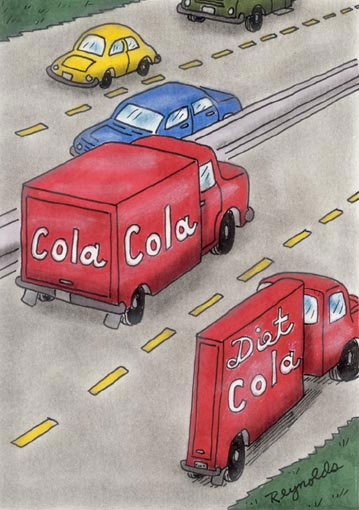
Sweet cartoon:

Harry Newton who is reading several books on investing, looking for nuggets. So far, very few.

Check out the refiners (TSO mentioned above, VLO, WNR). WNR is one of the more speculative names. It tracks the “crack spread” pretty well and the crack spread is in an uptrend.
Harry- I love your comment “And my non-working cash is doing OK, some of it in Australia at 6.3% — which, as they say in Australia, is better than a slap in the belly with a cold fish.”…it makes me chuckle because the concept of getting paid while you invest is really fundamental!
reminds me of an investing lesson my uncle gave me many years ago in my youth he said “that dividends from stocks and interest from bonds is “real money!!” and you can't beat that!!” so basic but so true
btw you ever get a slap on the belly from a cold fish? LOL
Howie
Harry,
The Octogenarian speaks! For whatever it's worth I have been invested in gold and silver bullion and mining stocks for almost 8 years. During that time I have listen to and read many comments by the experts, without a doubt Jeffrey Christian is one of the best if not the best. Mr. Christian has been interview many times by Jim Puplava on financialsense.com. Both men are extremely knowledgeable regarding all aspects of precious metals because they both have businesses that are directly involved with pm investments. Mr. Christian has rarely been wrong in the past regarding pm timing, but he has been wrong. Currently the pm market is on the one had extremely bullish, especially silver investors, and on the other hand many are anticipating the 15% pullback. The extremes are as “extreme” as I've ever seen them. I am sitting tight what all of my pm investments. As a side note the really powerful money that already has their bullion (which is few) is now looking at diamonds and those who mine them.
Finally, Harry since you mentioned something about potential hot stocks I just thought I'd throw one out that being GTLT.ob. Take a look at this little telcom (making money @.08 per share) based in Virginia with an outstanding and seasoned management team. Take a look at the insider buying over the last 4 years. Listen to the last cc. I have been accumulating for 3+ years and now have a rather large position. Best of luck to all.