I spent much of yesterday resarching, studying and talking to experts about mortgage REITs — especially NLY, AGNC, MITT and one that’s new to me — CYS.
I’ll write my report for Monday’s column. (We had a long concert last night.) Suffice, I continue to like them and have not sold any. In fact, at $18 or under, MITT is “the big bargain” of the space. Once it’s fully invested — within a couple of months — it will bounce back ( i.e. capital appreciation) and you’ll get a high divdend. Here’s a report on MITT from the industry’s best mortgage REIT analyst. Click here.
Suffice, I’m not worried about the SEC. I understand what they’re doing. They’re very wary of mortgage REITs where there’s an external manager, who gets a high incentive fee — that could bolster short-term profits and hurt long-term viablity.
The stockmarket in general. Another rule is sell Rosh Hashanah (September 29, 2011). Buy (ten days later) on Yom Kippur. This rule avoids most of September, historically the worst month. And this month is shaping up to just awful. To wit: Europe is still a mess. The President’s job plan is won’t work, since his last two didn’t work. This one is more of the same. The American consumer is cutting back.
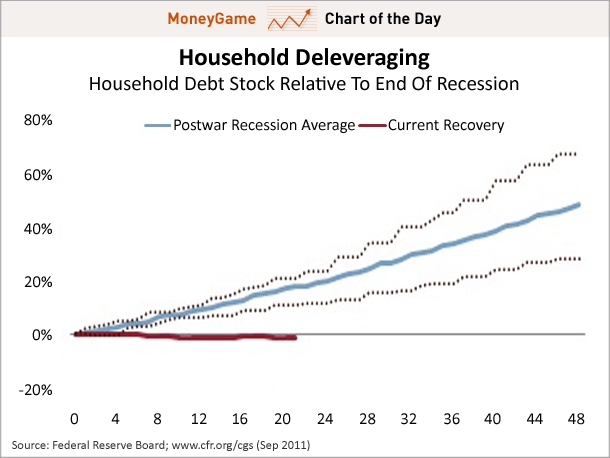
Here’s what MoneyGame wrote to accompany their chart:
The big news of the day is that Ben Bernanke is growing skeptical of monetary policy, which is totally logical given that he seems to be grasping the unique, deleveraging nature of the recession.
In a nutshell: When households are shedding debt, making debt cheaper does basically nothing.
But what is deleveraging, and what does it really mean?
This chart from CFR sums it up pretty nicely. For the first time ever, total household debt has shrunk, even as the economy has notionally “recovered.”
Even if it were just flat, that would make this recession wildly abnormal, and as you can see it’s actually going down.
Don’t waste your money on Kicktarter. It’s a neat idea. Someone posts an idea, takes money from thousands of people to build the idea and then maybe, just maybe, delivers the product to all the people who paid. I gave them $25 for a capacitive stylus so I could tap messages on my iPhone. They had the idea long before anyone had thoughts. Since then a dozen or so companies, including BoxWave, have delivered. Kickstarter still has my money and I don’t have their caapacity stylus nor a refund. “Ripoff” is agood description.
By the way, BoxWave’s $15 capacitive stylus works like a charm. I have one. Susan has one and loves it also.
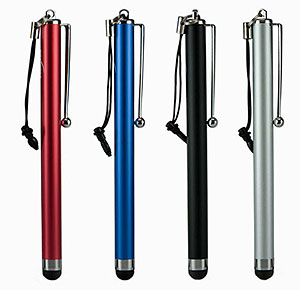
The little dingle dangles are for insterting them in your earphone hole. Stops you losing them.
Invading Afhanistan. Then and Now. There’s a new book. It’s big — 912. pages.
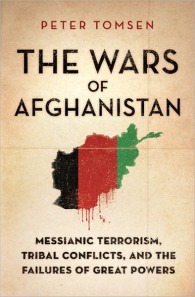
An excerpt of a review in the latest issue nof Foreign Affairs reads:
DEJA VU ALL OVER AGAIN
Although the British and Soviet wars in Afghanistan may be the closest analogues to the United States’ experience today, Tomsen starts his tale from the beginning. He usefully summarizes 3,000 years of Afghan history, during which the Greeks, the Romans, the White and the Black Huns, the Mongols, the Moguls, the Persians, and the Turkmens all tried to dominate the land. Every campaign eventually came to naught, either because the invader paid insufficient attention to local culture or because he sought to impose centralized control on ferociously independent tribes and clans. The pattern was basically the same each time: a brutally competent conqueror sweeps through Afghanistan, wreaking enough carnage to terrify all his enemies into submission, but he soon finds himself mired in a swamp of tribal customs and feuds that he does not begin to comprehend. When he loses enough in men and gold, he retreats — not infrequently with fewer limbs than he had when he arrived.
Unlike previous invaders, the British troops that marched into Afghanistan in 1839 did not come to conquer; such a goal would have been far too expensive for the frugal bureaucrats back home. Instead, they aimed to place a puppet on the Afghan throne, or at least to establish a buffer between British India and the expanding tsarist Russia. The newly installed monarch would govern far more justly than his ousted rival: his British patronage was proof of his enlightenment. The British, much like the Soviets and the Americans decades later, were amazed to discover that Afghans did not believe in their benevolence. Suspicion quickly flared into insurgency, and when the British pulled out of Kabul in 1842 with a convoy of 16,000 troops and camp followers, only a single survivor (the assistant surgeon William Brydon) reached the border town of Jalalabad alive. Still, the lesson did not sink in. The British intervened in Afghanistan again in 1878 to compel the Afghan emir to at least accept a British diplomatic mission, and within just two years, they were left with some 3,000 dead or wounded. The Third Anglo-Afghan War, waged just after World War I to repel an ill-advised Afghan raid into British-held territory, lasted barely three months but killed 236 Britons in action. In each case, the colonial power arrived with increasingly modest goals — and left with those goals only barely met.
You know by now I’ve very against this war and maintain a blog — StopAfghanistan.org. You can read the entire Foreign Affairs article here.
The Second Affair.
A middle-aged couple had two beautiful daughters but always talked about having a son.
They decided to try one last time for the son they always wanted
The wife got pregnant and delivered a healthy baby boy.
The joyful father rushed to the nursery to see his new son.
He was horrified at the ugliest child he had ever seen.
He told his wife: ‘There’s no way I can be the father of this baby. Look at the two beautiful daughters I fathered! Have you been fooling around behind my back?’
The wife smiled sweetly and replied: ‘No, not this time!’

Harry Newton who will be able to see tennis on ESPN2 and CBS this weekend. The men’s final, because of the rain delays, will now play on Monday. Today it’s sunny in New York. Big tip: When you buy pricey tickets for a sporting event, check the seller’s policy on rain delays. Some events will give you a rain check. Others — like the U.S. Open — tell you to go fly a kite. They offer no rain delays, no refunds, nothing — unless you buy outrageously expensive rain insurance — typically adding 7% to 25% on the price of your already-pricey ticket.
Thoughts on shorting the Euro against the US dollar?

Harry – NLY , AGNC, MITT, and CYS is a suckers bet. NOTHING is paying close to those yields of 14 – 18%. When something seems too good to be true it usually is – certainly that holds true in investing (Madoff returns, Enron etc). The small risk is that interest rates rise then the whole game is over. The larger risk is that the Fannie Mae, Freddie Mac, and other financing agencies no longer are viable and instead of these companies being able to finance their activities they will be forced to liquidate. Then your stock with 18% yield will be cut in half or get wiped out altogether and you won’t have a chance to get out. Is oit really worth getting this dividend if your principal investment gets cut in half or worse?Think about – quality companies are paying generous dividends of 4% or5% (ge, MRK, JNJ etc) . These companies you continue to tout and pump are paying outrageous and unsustainable dividends, With higher yields come higher risks- that is a basic principal of investing. You seem to ignore all of your own investing advice when you continue to pump these stocks …shame shame….
I agree – a yield of 10% or more on a bond is called a “junk bond”. What do you call a stock with a dividend yield of 18%? An accident waiting to happen. This is a scam. They are playing mortgage spreads and it is a house of cards.
Yea Harry,
It makes perfect sense to me, get all troops out of Afghanistan and the NY City wouldn't be experiencing any kind of terrorist threat today, and Israel would feel safe too!…….oh sure Harry, I understand theirs so much more to it than that……that's why we need liberal intellectuals like you to teach us. And by the way don't worry about Iran, they're actually the peace makers in all of this. I always wondered why don't we just bomb all of the weapons manufacturing facilities in Afghanistan?